Newsletters


A new genetic study published in Science suggests that the cats living in European homes today did not arrive with early farmers in the Neolithic period, as many researchers had assumed. Instead, nuclear DNA from ancient remains points to modern domestic cats (Felis catus) spreading into Europe from North Africa roughly 2,000 years ago and being more closely related to African wildcats than to early Levantine populations.
The research team analyzed the genomes of 70 ancient cats, dating back up to 11,000 years, from archaeological sites in Europe and Anatolia (modern Türkiye), along with 17 modern wildcats from Italy, Bulgaria and North Africa.
Taken together, these data indicate that the animals that would give rise to modern domestic cats did not establish themselves in Europe until the first millennium of the Common Era, rather than during the rise of agriculture several millennia earlier.
Evidence of cats living near people has been found at archaeological sites across Europe, Africa and Asia for more than 10,000 years, including bones and artistic depictions showing that humans and felines interacted in various ways. It has not always been clear, however, whether these animals should be considered fully domesticated.
According to the study, two main centers of early domestication have been identified so far. One is the Neolithic Levant, where a cat was buried alongside a human roughly 9,500 years ago, suggesting a special relationship within early farming communities.
The other is Pharaonic Egypt, about 3,500 years ago, where mummified cats and images of cats eating from dishes near people point to a more formal role for these animals inside households.
The authors note that earlier work relied heavily on limited skeletal remains and on mitochondrial DNA, which is inherited only through one parental line.
Those constraints, together with the small number of cat genomes analyzed until now, meant that hypotheses about when, where and how cats were domesticated were “poorly supported by empirical evidence.”
The new project instead uses nuclear DNA, which covers the full genetic blueprint stored in the cell nucleus, to build a broader picture of ancestry and dispersal.
Previous genetic studies based on mitochondrial DNA had suggested that cats may have reached Europe from what is now Türkiye with Neolithic farmers about 6,000 years ago, and then again from Egypt around 2,000 years ago. These studies linked the modern domestic cat back to the African wildcat (Felis lybica lybica), which is native to parts of North Africa and the Near East.
By contrast, the new nuclear DNA analysis shows that modern domestic cats are more closely related to modern African wildcats than to modern Levantine wildcat populations. In other words, the main lineage that leads to today’s house cats appears to have spread from North Africa into Europe relatively late, instead of being carried in by the first agricultural communities thousands of years earlier.
The authors therefore argue that Neolithic movements of people did not bring in the direct ancestors of modern domestic cats, even if other cat lineages were already present on the continent at that time.
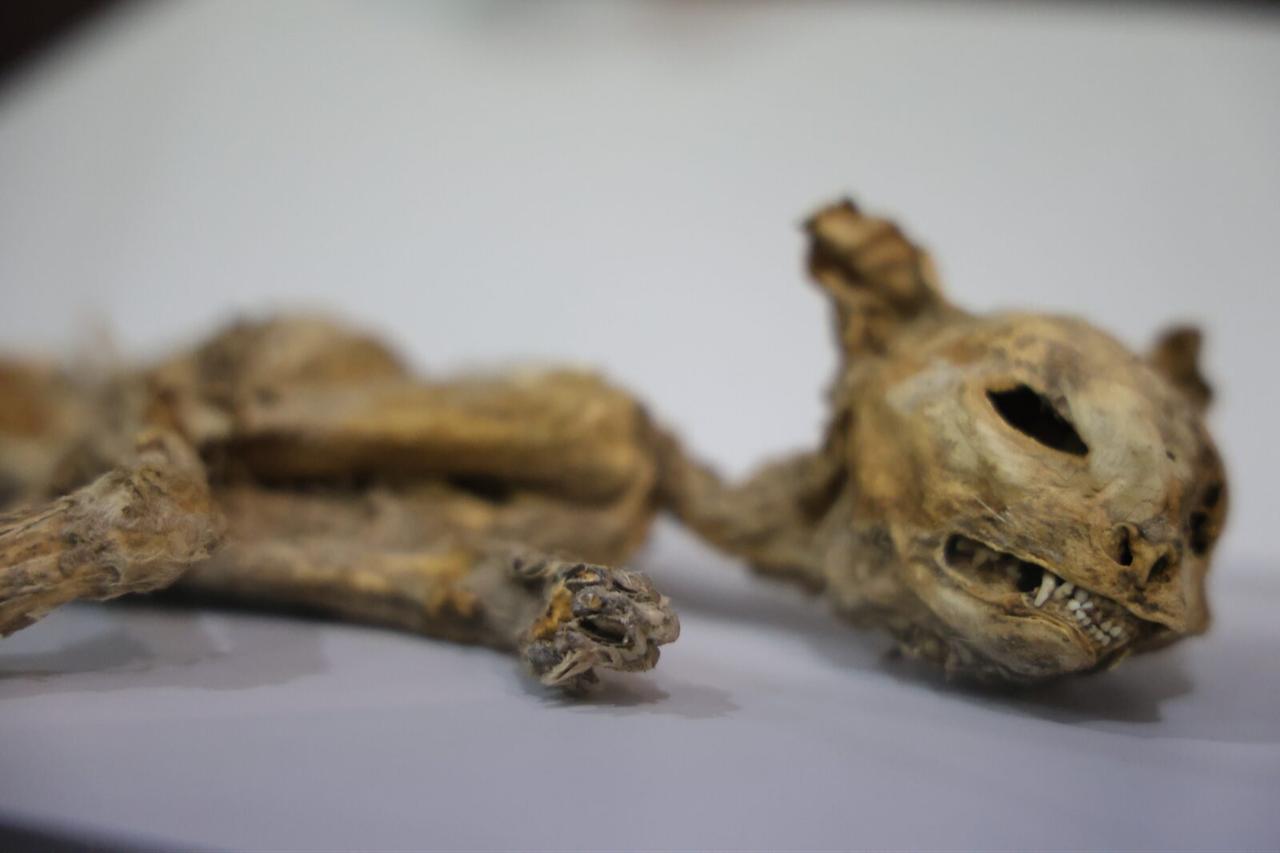

Long before North African cats arrived, Europe already had its own wildcat species, Felis silvestris. DNA from the new study shows that this native European wildcat appears in genetic records earlier than 2,000 years ago, in contrast to the African wildcat lineage that underpins modern domestic cats.
The researchers identify signs of admixture between F. silvestris and F. l. lybica, which can explain earlier findings of hybrid animals. These mixed populations seem to have had varied roles in different societies.
Referring to evidence from Italy and Bulgaria, the authors write that “the relationship between humans and wildcats in Europe was possibly based on exploitation for fur and food,” but they add that “more complex sociocultural and symbolic relationships should not be discounted,” as indicated by wildcat remains placed in a bell-shaped vase in Bronze Age Partanna in Sicily and a feline clay head from Chalcolithic Bulgaria.
Despite this range of interactions, the new genetic work suggests that European wildcats did not give rise to the lineage that would later spread domestic cats across the continent. Instead, the decisive contribution appears to have come from North African populations of F. l. lybica that only reached Europe much later.
The team also reports a distinct population of cats on the island of Sardinia. According to the study, these Sardinian wildcats came in through a separate wave of migration from northwest Africa, rather than from the same source as the main domestic cat lineage.
Because the sample of wildcat genomes is still small, the authors treat this finding as preliminary, but they highlight its importance.
They write that the data “allow for hypothesizing that domestic cats and Sardinian wildcats derived from two genetically distinct populations in North Africa, represented in our dataset by Tunisian and Moroccan wildcats, respectively.” This points to a split within North Africa itself, with different wildcat populations feeding into different later histories.
The study underlines that there are still gaps in the record. More ancient DNA from Egypt and other regions would help pinpoint the exact source populations that led to modern domestic cats and clarify how they spread from one region to another.
Even so, the authors argue that their results already change the framework for thinking about feline domestication. As they put it, “Our results offer a new interpretive framework for the geographic origin of domestic cats, suggesting a broader and more complex process of domestication that may have involved multiple regions and cultures in North Africa.
Efforts should continue to narrow down the original source population(s) of present-day domestic cats and to clarify the cultural and socioeconomic processes that led to their domestication and promoted their global dispersal.”


 Set as preferred source
 Set as preferred source



 3 min read