Newsletters


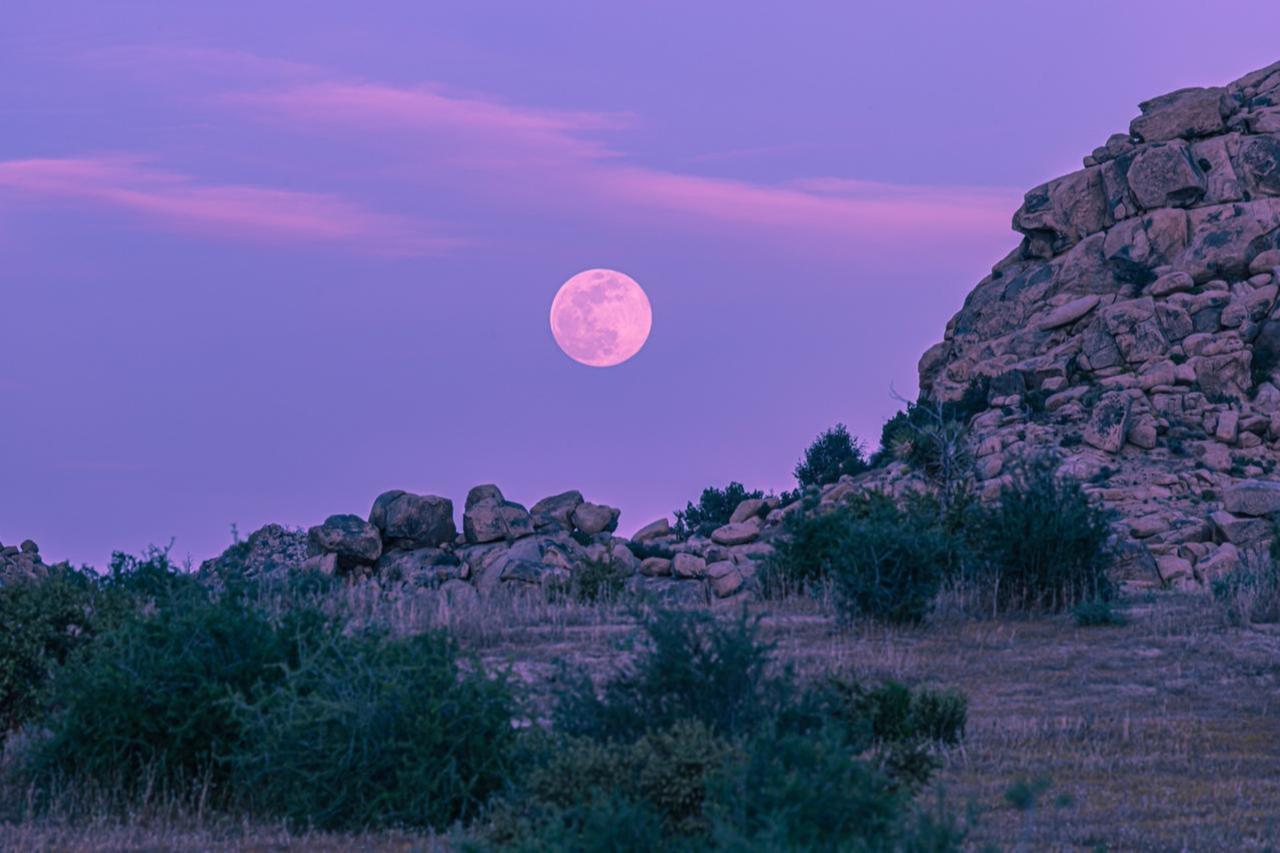


Skywatchers across the world will be able to observe May’s full “flower moon” on Friday, May 1, as it rises after sunset and remains visible through the night.
While full moons occur roughly every 29 days, this one stands out because it coincides with a micromoon, meaning it will appear slightly smaller and dimmer than an average full moon due to its distance from Earth.
The moon will also appear nearly full on April 30, giving observers a wider viewing window across time zones, making this one of the most highly anticipated events of this year's lunar calendar.
In Türkiye, the moon will reach peak illumination at approximately 8:23 p.m. local time (GMT +3), though it will appear fully illuminated to the naked eye both the night before and on the night of May 1.
Across Europe, peak timing comes earlier in the evening, while in North America, the exact moment occurs during daylight hours, making post-sunset viewing the best option.
After sunset, the moon will rise low in the eastern to south eastern sky before climbing higher across the southern horizon overnight and setting toward the south west at dawn.
No telescope is required for viewing, although a clear horizon and low light pollution will improve visibility. Weather conditions will vary by region, with cloud cover determining how clearly the moon can be seen.
The name comes from seasonal naming traditions rooted in Indigenous and agricultural cultures, where each full moon reflected changes in the natural world.
In May, that meant the widespread blooming of flowers across the Northern Hemisphere, marking a period of growth and warmer weather.
Other traditional names for this lunar phase include the “hare moon,” “milk moon,” and “corn planting moon,” each tied to regional practices and farming cycles.
This year’s flower moon occurs near apogee, the point in the moon’s orbit when it is farthest from Earth.
Because the orbit is slightly elliptical, this distance can vary by tens of thousands of kilometers between its closest and farthest points.
As a result, the moon may appear marginally smaller and slightly less bright than a typical full moon, although the difference is subtle and often difficult to detect without comparison images.
A second full moon will follow on May 31, known as a blue moon, a relatively regular occurrence that happens every two to three years when two full moons fall within a single calendar month.
Beyond its astronomical significance, the flower moon is also interpreted in astrology as a moment of intensity, transition, and emotional clarity, as it falls in the sign of Scorpio this year.
Astrological readings describe this phase as one that brings hidden dynamics to the surface, often linked to truth-telling, personal boundaries, and unresolved tensions.
Rather than introducing new beginnings, it is more commonly associated with culmination, where past decisions, relationships, or efforts begin to show their consequences.
Across zodiac signs, interpretations suggest different areas of life come into focus:
Astrologers generally frame this full moon as a period of release and recalibration, where individuals are encouraged to confront what is no longer working and make space for change, rather than a time for immediate action.


 Set as preferred source
 Set as preferred source


 3 min read