Newsletters


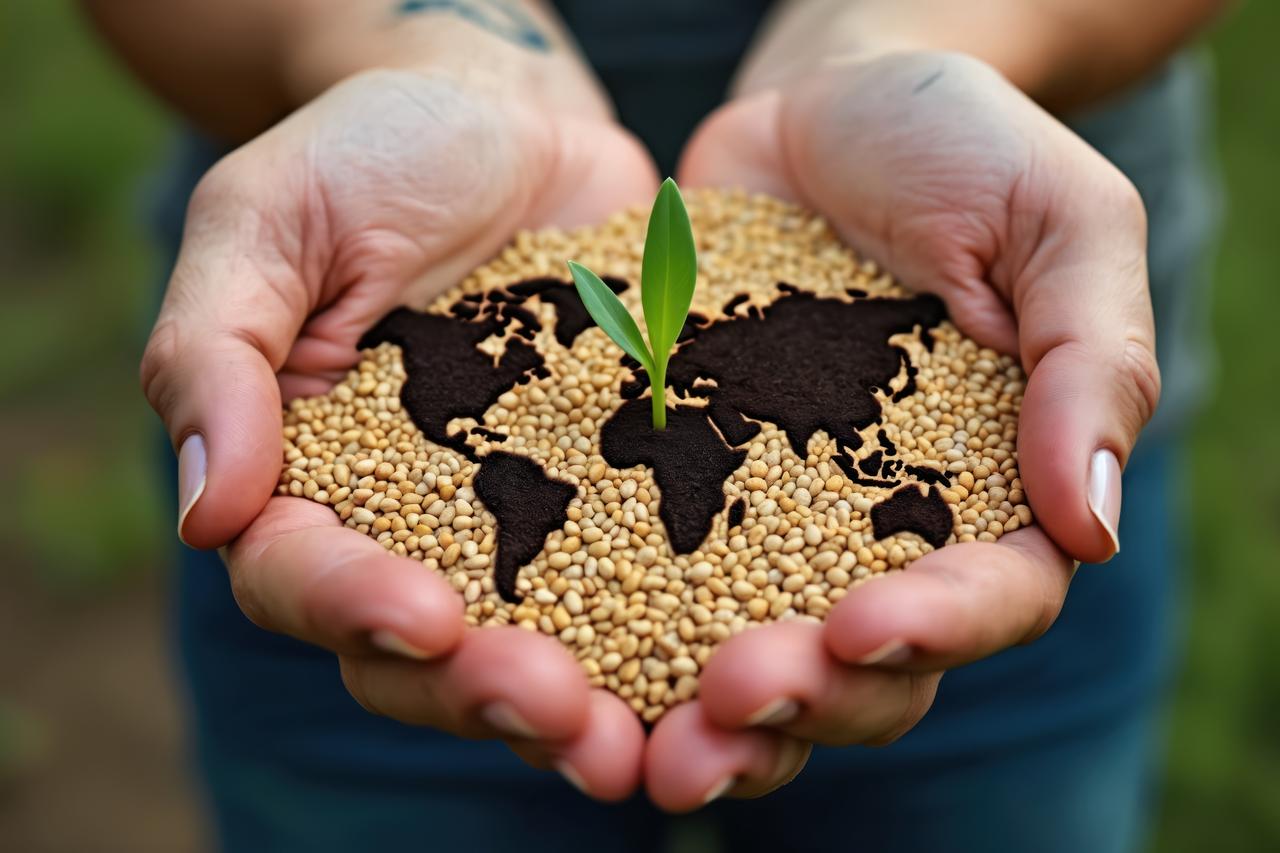


Food security is increasingly shaping national security strategies and foreign policy agendas, as countries that can control supply chains or influence how populations access food gain a clear geopolitical edge, according to experts.
A recent multi-part report by Anadolu Agency highlights how disruptions in food supply, rising prices, and access challenges are no longer just economic concerns but are directly feeding into broader security frameworks.
From inflation-driven unrest to supply shocks triggered by export restrictions, food has become a tool that countries both rely on and compete over.
Food shortages and price spikes are now widely seen as catalysts for instability, particularly in fragile states, where limited access to basic goods can quickly trigger public unrest or place governments under pressure.
Countries that dominate global trade in key commodities such as grain or energy can impose export restrictions during crises, setting off chain reactions in import-dependent regions.
Recent disruptions linked to the Russia-Ukraine war in the Black Sea have shown how delays in grain shipments and concerns over port security can push up prices across regions such as the Middle East and Africa.
Similarly, export limits on staples like rice by some Asian countries have triggered ripple effects across global markets.
In conflict zones, including Sudan, the Democratic Republic of Congo, Palestine, and Myanmar, food insecurity has become intertwined with ongoing violence, reinforcing the idea that access to food is no longer separate from security concerns.
David Laborde, Director of the Agrifood Economics Division at the Food and Agriculture Organization (FAO), underlined that food crises rarely stem from a single cause but rather build up through overlapping pressures.
He pointed to countries such as Sudan and Yemen, where drought, water shortages, and conflict overlap, while reliance on imports makes these nations highly vulnerable when prices rise.
Laborde also stressed that widening income inequality, climate-related shocks and the long-term economic fallout from the COVID-19 pandemic have all contributed to worsening conditions.
Highlighting the scale of the issue, he said that 673 million people are currently living in chronic hunger, linking this directly to growing disparities where some populations have become wealthier while others have fallen further behind.
Laborde also noted that water stress is intensifying due to population growth, shifting consumption patterns, pollution, and climate change, while agricultural chemicals are further contaminating water resources.
Climate change, he added, is directly disrupting natural water cycles, making food production less predictable.
Experts increasingly frame food as a diplomatic tool, with Laborde emphasizing that countries capable of controlling supply chains or influencing neighboring populations’ access to food hold significant strategic leverage.
He recalled how disruptions to grain flows during the Russia-Ukraine war and earlier crises such as the Arab Spring showed that rising food prices can push populations to the brink, even triggering mass protests and conflict.
Referring to past unrest, he noted that high food prices led people to say, “This is enough,” before taking to the streets.
He also pointed to ongoing humanitarian challenges in Gaza, where restrictions on food movement have demonstrated how access constraints can directly affect civilian populations, while investments in agriculture could help communities sustain themselves.
Food policy expert Kunter Ilalan argued that the growing link between food security and national security stems not from abstract threats but from measurable supply and cost dynamics that directly affect stability.
He described hunger not merely as an indicator of poverty but as a factor that can erode social order, creating conditions that armed groups and local power networks can exploit for recruitment and legitimacy. In this sense, food insecurity acts as a multiplier of conflict risk.
Ilalan also noted that the global map of food production is being reshaped by climate variability, conflict lines, energy costs, and financial pressures, reducing the advantages of some traditional producers while opening up opportunities elsewhere.
Within this shifting landscape, Türkiye stands out due to its geographic position at the crossroads of Europe, the Middle East, the Caucasus, and the Black Sea basin.
This location gives the country not only the ability to produce but also to help shape regional supply systems and logistics corridors.
He suggested that with the right strategy, Türkiye could move beyond being a supplier to becoming a “system-building actor” in regional food geopolitics.
However, he also pointed to key vulnerabilities, including dependence on imported fertilizers and energy, water stress, and financial volatility.


 Set as preferred source
 Set as preferred source




 6 min read