Newsletters


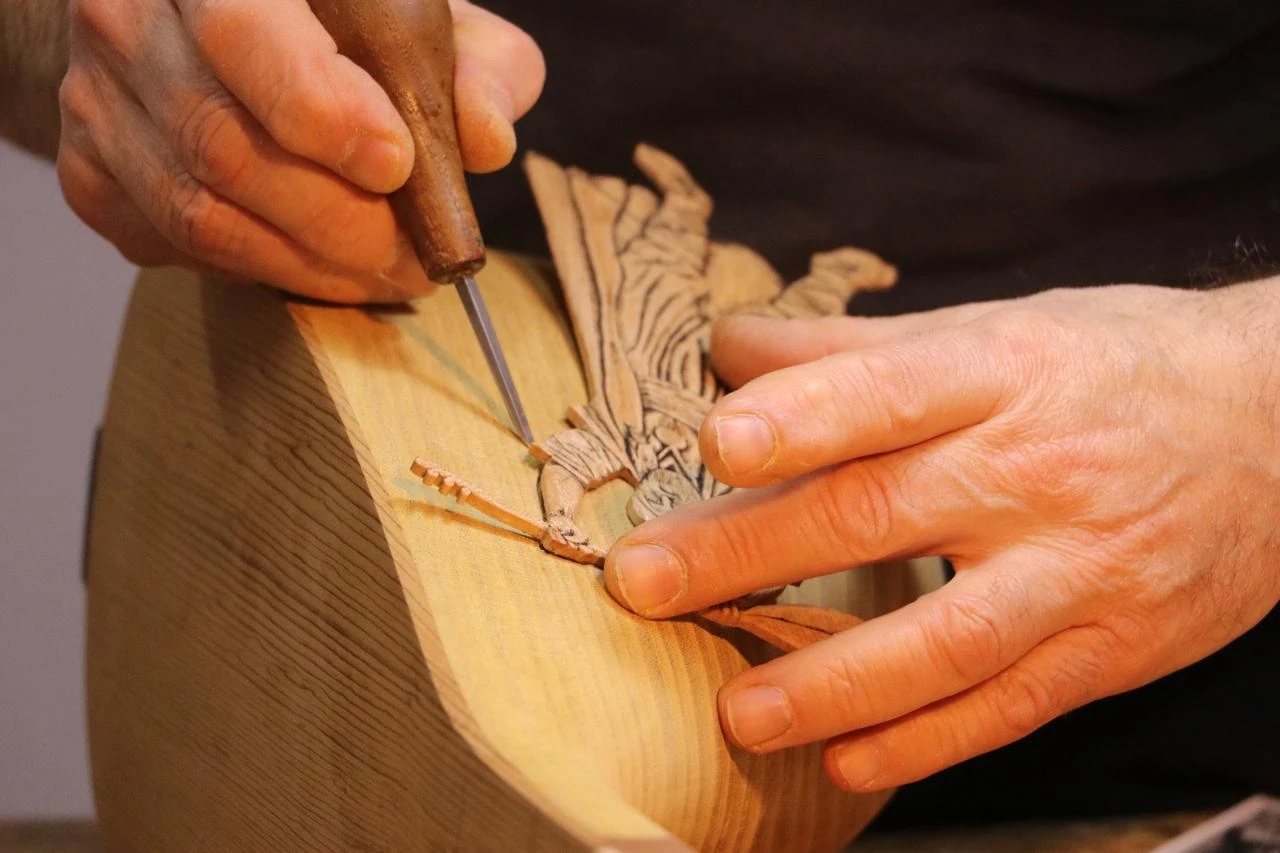


Pertev Aslan, a wood-carving artist based in Tekirdag, combines traditional craftsmanship with folk music by engraving portraits of celebrated Anatolian folk poets, alongside motifs drawn from their work, onto baglama instruments.
Aslan applies the art of naht—a traditional craft based on carving, cutting, inlaying, and embossing wood—to the baglama, a long-necked stringed instrument central to Turkish folk music.
Using wood carving, inlay, and fretsaw techniques, Aslan creates custom decorations on instruments that are delivered to him pre-assembled. In his works, he depicts prominent Anatolian folk poets such as Asik Veysel, Muharrem Ertas, Neset Ertas, Haci Tasan, Nesimi Cimen, and Pir Sultan Abdal.
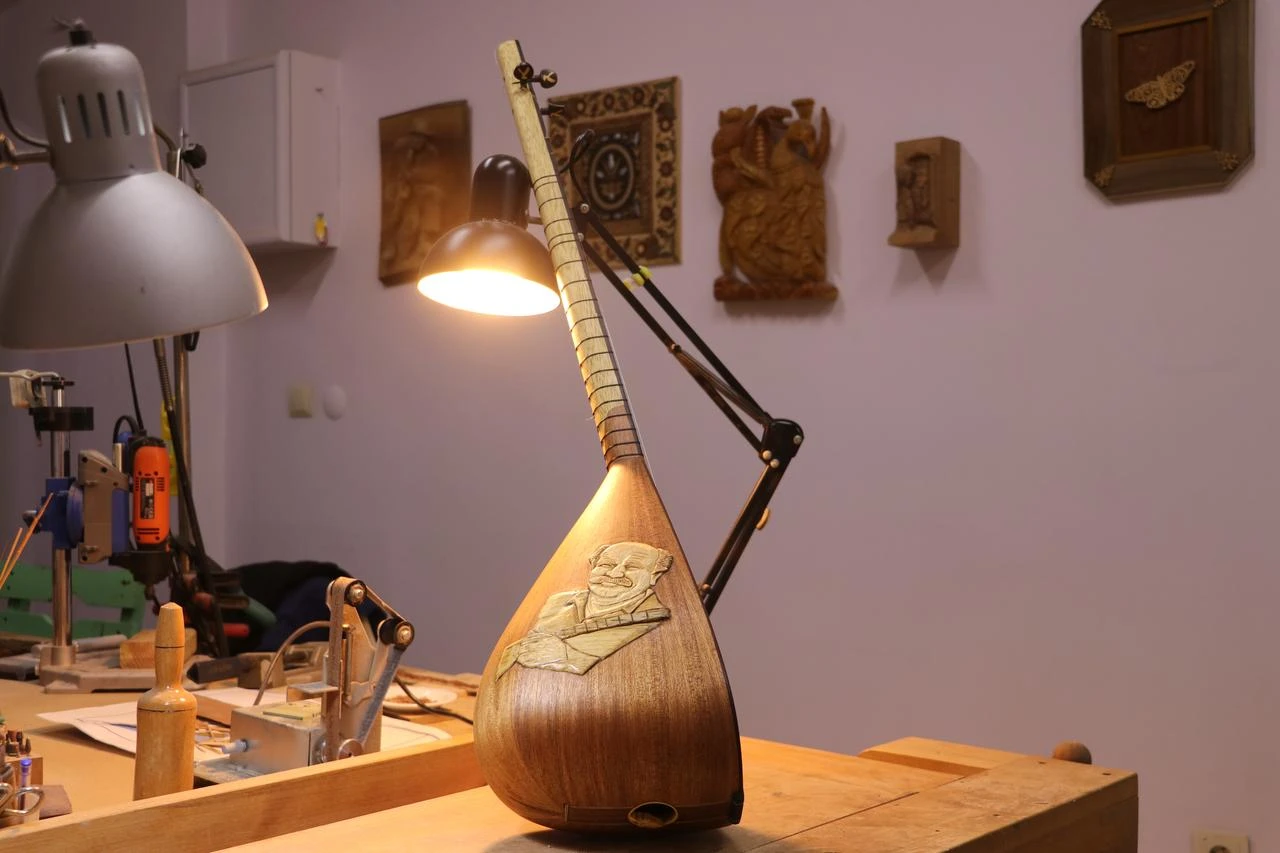

Noting that naht art relies on the skilled application of wood carving, inlay, and fretsaw craftsmanship, Aslan says, "In my work on baglamas, I create custom decorations for each piece.
"I carve the portrait of the folk poet and create motifs inspired by their songs and life. For example, on Nesimi Cimen's baglama, we used the theme of a dove. This way, each baglama becomes a unique piece that carries the characteristics of that particular poet," he stated.
Aslan noted that the naht carving applied to each baglama requires a month of meticulous work.
Emphasizing that his work goes beyond mere craftsmanship, Aslan said, "Making the instrument itself is a craft, but the decorations applied on top of it are art. Some of my works are displayed in a baglama museum in Germany. To date, I have prepared around 10 baglamas for the museum."
Noting that the baglama is a vital symbol of Anatolian culture, Aslan added that people have expressed their joys and sorrows through the instrument for centuries.
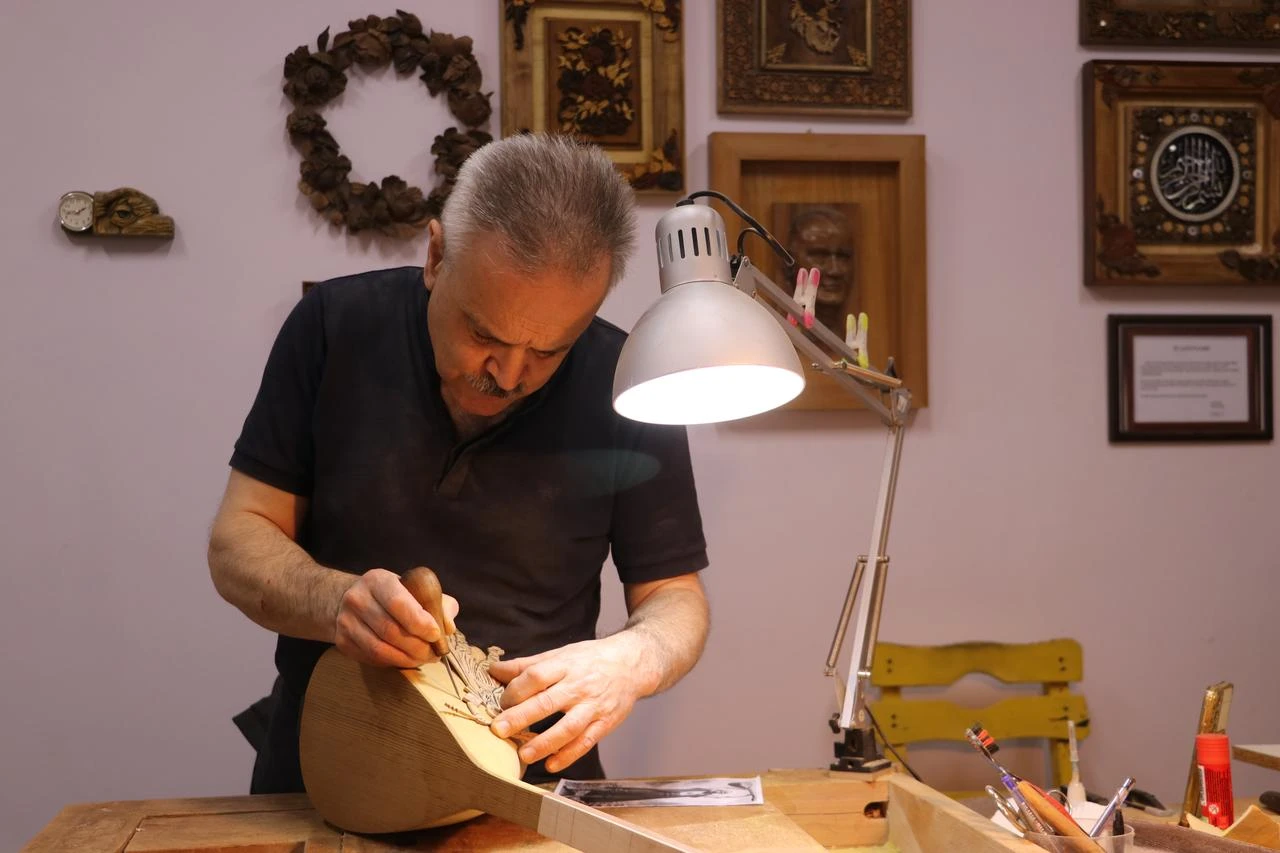
Aslan noted that he creates his works on baglamas suitable for professional performance, adding: "If I work on an ordinary saz, it loses its meaning. The baglamas I prepare are instruments of a quality that can be used on stage."
He explained that he works improvisationally, taking care to reflect his mood into each piece. Admitting that he sometimes takes apart sections he is dissatisfied with to redo them, Aslan recounted that the baglama he created featuring Nesimi Cimen moved the poet's son, Mazlum Cimen, to tears.
 2 min read
Aslan said that being contacted by Mazlum Cimen boosted his motivation. "Having him call me was a great honor for me. I have experienced similar feelings with my other works as well. These responses are the most valuable reward for the work I do."
Aslan noted that his works allowed him to meet many artists and art enthusiasts, and said these encounters bring him great happiness.


 Set as preferred source
 Set as preferred source


 1 min read