Newsletters


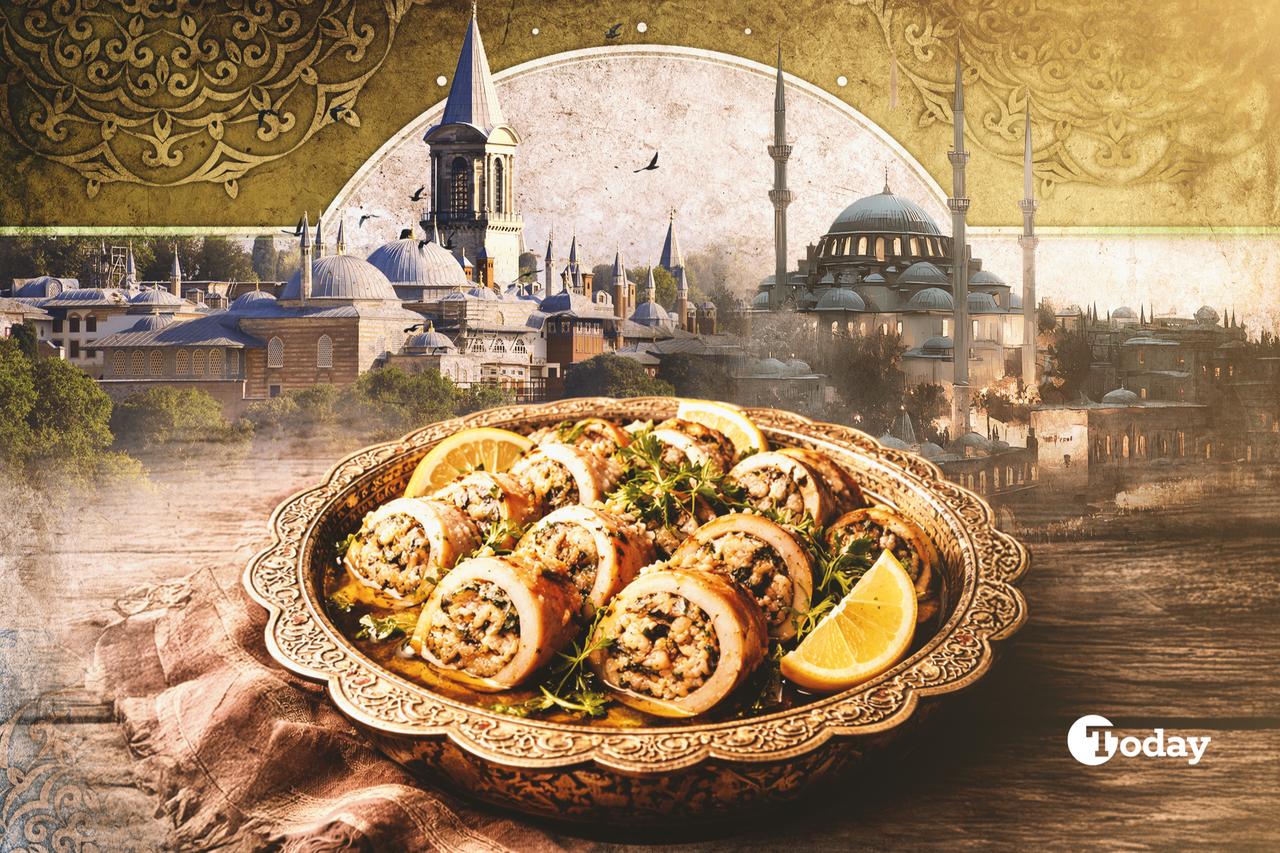


Stuffed squid arrives milk-white and cylindrical, sliced into neat rounds, the mint-flecked rice visible where its insides should be. It does not explode, nor announce itself.
Where mutancana stages a coup, stuffed squid files paperwork and waits to be noticed. If it ever had a PR team, it was fired for excessive enthusiasm.
This is not feast food. It's compliance food.
And compliance, it turns out, doesn't just have staying power; it has the entire apparatus of Byzantine monasticism backing it up.
At Constantinople's Monastery of Stoudios, the kitchen didn't answer to appetite.
It answered to the "typikon": a manual for ensuring that nothing unexpected happened at mealtimes. Meat: forbidden. Dairy: forbidden. Eggs: forbidden. Fish: feast-day only. Oil: regulated. But squid?
Squid had eight arms, no bones, and a gift for changing color. Nobody had bothered writing a regulation for that. This wasn't a loophole born of legal creativity but an oversight rooted in taxonomic confusion. Medieval monks, confronted with a creature that was neither fish nor fowl, gave up and let it pass.
In a kitchen governed by prohibitions, the safest ingredient was the one that caused the least disturbance. Squid entered not with applause, but with a shrug.
These kitchens had one job: keeping a refectory of monks upright through "Orthros" without provoking visions of dinner where the Transfiguration should be. Under such circumstances, inspiration was a liability. What they needed was a delivery system for calories that could be produced at scale and prompted few theological queries.
Practicality, in other words, had already begun to shape the squid’s destiny long before anyone thought to romanticize it.
Squid long pre-dates the Roman Empire. It was already a trick in older Mediterranean repertoires: Athenaeus’ banquet literature, for example, quotes comedians who rattle off stuffed squid dinners as casually as mullet or eel, the sort of thing a table orders without comment.
The Romans, of course, took it further—not by invention but intensification. Apicius specifies pepper, honey, vinegar, and garum, a necessary violence to such resistant flesh—an edible mantle, in technical terms.
The squid's hood was popular from the outset for a simple reason: it formed the perfect vessel—literally. Rice stretches protein; onion and herbs mask inconsistencies. Pine nuts and currants appear only when the calendar permits a minor luxury. The whole thing functions like a thermal bag for institutional competence.
When the Ottomans took Constantinople in 1453, they kept the dish and renamed it "kalamar dolmasi". And "dolma" is far from poetry. It's an administrative category—a filing system for food. Things that are stuffed belong to a family of things that are stuffed. Peppers, grape leaves, zucchini, squid: all members of the same bureaucratic genus.
No one writes epic poems about things organized alphabetically, but such sorting systems survive regime change.
The shift from Byzantine monastery to Ottoman meyhane (Turkish tavern) affected the dish’s attitude rather than its essence. Now the squid absorbs alcohol, holds the space between courses, and gives the table something to argue about that isn't politics.
I ate it last at Asmali Cavit in Istanbul, just off Istiklal, where it arrived in the second wave of meze—after the cold dishes, before anyone had committed to grilled fish. One piece had a currant in it, which sparked the usual fight about sweetness in savory food.
The argument itself felt inevitable, almost built into the structure of the dish. Stuffed squid provokes just enough disagreement to animate a table, but never enough to derail it.
Its genius is operating in the middle distance. It’s not cold, not hot; not a starter, not a main. Ordering it signals a specific kind of table—one where food arrives gradually, in response to appetite and argument, and no one is in a hurry. Someone spears a piece. Another goes for the rice. The conversation drifts toward politics, then philosophy, then back to politics, pretending to be philosophy. The squid holds the line.
It travels well because its structure is adaptive rather than precious. Along the Dalmatian coast, "punjene lignje" swaps rice for breadcrumbs—a wheat-country solution to the same problem. Greek islands add feta, provoking outrage from purists. Black Sea kitchens use bulgur. The grammar stays the same; the grain changes.
But here's what no menu mentions: stuffed squid isn't loved.
It's not the thing anyone orders first or remembers later. It appears on the table without fanfare, tends to be eaten without comment, and disappears into the broader rhythm of the meal. Its absence wouldn't provoke complaint so much as quiet bewilderment—the way you'd notice a familiar building suddenly gone from a street you walk every day.
This is how institutional food works. It survives less through charisma than through relentless functionality.
Stuffed squid is still here centuries after Stoudios has gone because it continues to do a job that needs doing: absorbing irregularities, bridging courses, giving tables something to share while they figure out what they actually want to eat. It's the load-bearing wall of Ottoman meze culture—so fundamental to the structure that removing it would cause things you didn't expect to collapse.
The Byzantines understood this early: the dishes that survive are rarely crowned, they’re commissioned. They persist not because anyone loves them, but because they solve problems without asking to be admired.
Mutancana needed a sultan’s commendation; stuffed squid belongs to the table itself. It shows up, does the work, and asks nothing in return. Empires fall. Menus change. The squid keeps getting stuffed.

Ingredients
1. For the squid
2. For the filling
Prepare the squid
Make the filling
Stuff
Braise
Finish


 Set as preferred source
 Set as preferred source


 3 min read