Newsletters


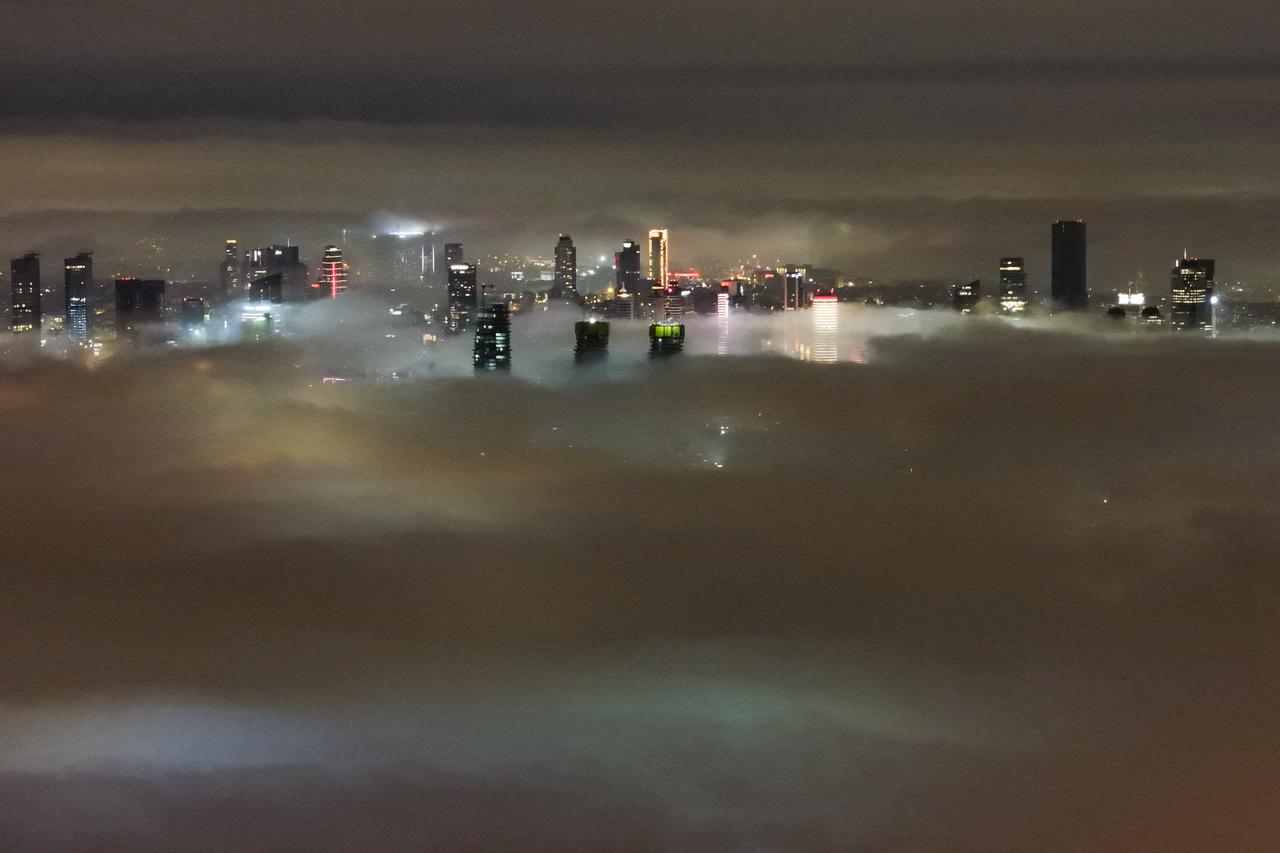


Air pollution in Istanbul fell by 36% in January compared with the same period last year, according to a study conducted by Istanbul Technical University (ITU).
The research was carried out by Prof. Dr. Huseyin Toros of ITU’s Faculty of Aeronautics and Astronautics, Department of Meteorological Engineering, examining air pollution levels for January 2025 and January 2026.
The study analyzed particulate matter (PM10) data recorded by air quality monitoring stations operated by the Ministry of Environment, Urbanization and Climate Change and the Istanbul Metropolitan Municipality (IMM).
According to the findings, average PM10 levels across 24 monitoring stations stood at 26.5 micrograms per cubic meter in January 2026, down from 41.5 micrograms in January 2025.
This represents a 36% year-on-year decrease in particulate matter–related air pollution.

In January 2026, the highest PM10 concentration was recorded at the “Kagithane 1” station with 46.4 micrograms per cubic meter. It was followed by “Tuzla” with 44 micrograms and “Sancaktepe” with 39.8 micrograms.
The lowest pollution level was measured at the “Sultangazi 1” station with 8.4 micrograms per cubic meter. Other low readings were recorded at “Buyukada” with 11.8 micrograms and “Sariyer” with 15 micrograms.

Across the city, particulate matter pollution decreased at 21 stations, increased at two stations, and remained unchanged at one station.
The sharpest decline in particulate matter pollution compared with January last year was recorded at “Sultangazi 1,” where levels fell by 83%. This was followed by “Kadikoy” with a 53% decrease and “Bagcilar” with a 52% decrease.
By contrast, PM10 levels increased the most at the “Yenibosna” station, rising by 35%, and at “Arnavutkoy,” where pollution increased by 25%.
Average particulate matter concentrations (µg/m³):
Evaluating the findings, Professor Dr. Toros said air quality remains one of the world’s most critical challenges, as polluted air directly affects public health and future sustainability.
“If quality air is not breathed, health is adversely affected. This increases healthcare costs and leads to workforce losses,” he said.
Toros stressed that fossil fuel use has risen sharply over the past 100 to 150 years.
“We obtain energy by burning an energy source that has accumulated underground for millions of years, but in doing so, knowingly or unknowingly, we release large amounts of pollutants into the atmosphere,” he said.

Toros identified motor vehicles as the leading source of urban air pollution, noting that Istanbul has around 6 million vehicles.
Traffic congestion and stop-and-go driving increase exhaust emissions as well as particulate matter released from brake pads and tires, he said.
He emphasized the importance of raising public awareness through regular measurement and data transparency.
Toros noted that 37 air quality monitoring stations operated by the ministry and IMM provide real-time data accessible via mobile devices and computers.
Toros said ITU evaluates air quality monthly and compares consecutive periods after data quality control.
“In January last year, the average dust value across Istanbul was 41.5 micrograms. In December, it was 35.9, and in January this year it reached 26.5 micrograms,” he said.
“This shows a 36% improvement compared with January last year and a 26% improvement compared with December.”
He said emission sources did not change significantly between the two periods, as schools were on midterm break and industrial activity continued.
“The most important reason for the improvement in air quality is meteorological factors,” Toros said, noting that January this year was rainier and windier.
Rain and wind help disperse pollutants, improving air quality, he added, while stressing that individual behavior change also plays a key role in protecting clean air.


 Set as preferred source
 Set as preferred source


 1 min read
 1 min read