Newsletters


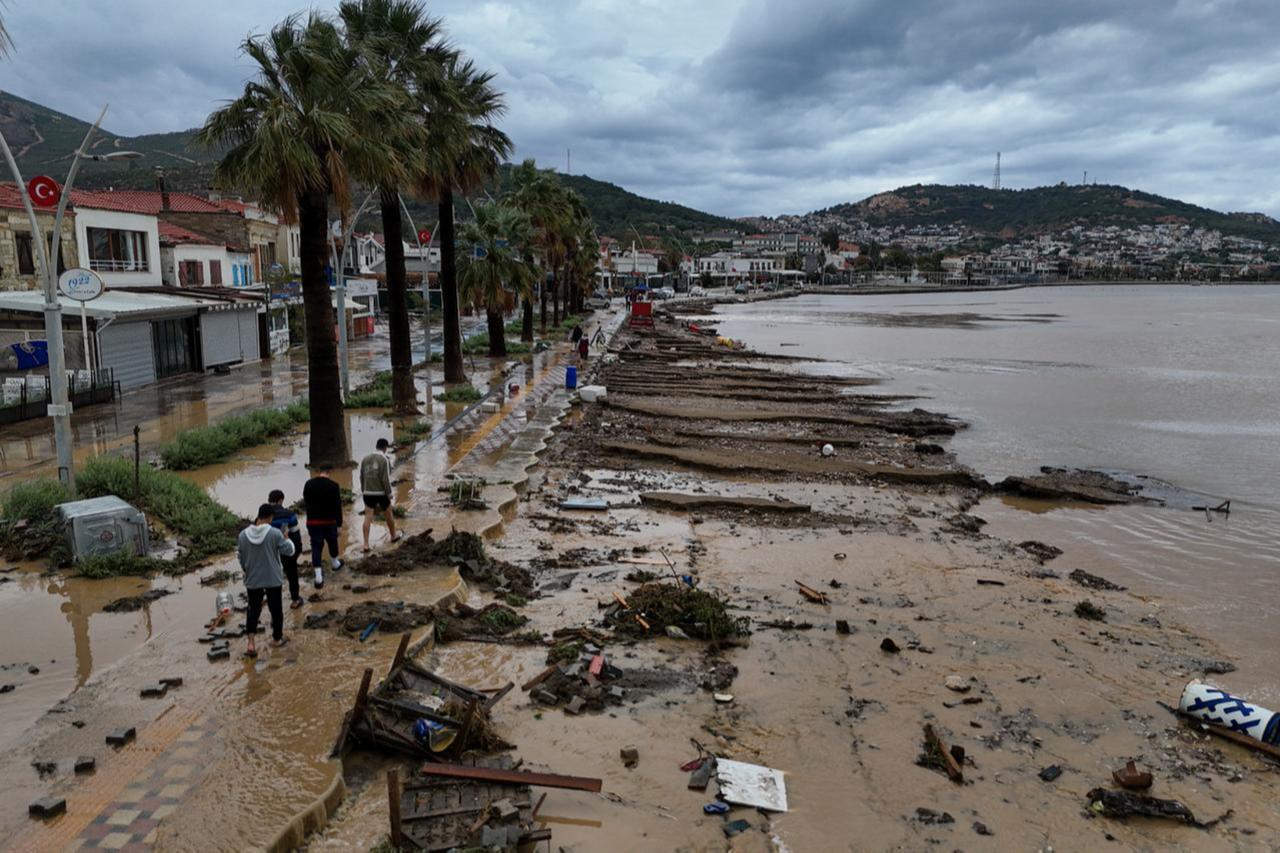


Izmir has already received more rainfall in the first five months of 2026 than its long-term annual average after a period of unusually wet and unstable weather across the western Turkish province.
According to data from the Turkish State Meteorological Service’s 2nd Regional Directorate, Izmir recorded 734.6 kilograms of rainfall per square meter from the beginning of the year to midday on May 24.
This has already pushed the city above its long-term annual average of 730.5 kilograms per square meter.
The figure marks a sharp change from last year, when the province received 430 kilograms of rainfall per square meter over the entire year.
Rainfall was particularly strong in the first months of the year. Izmir received its heaviest monthly totals in January and February, before the wet weather carried on through spring and into May.
Professor Sermin Tagil, a faculty member at Izmir Bakircay University’s Department of Geography, said this year’s extraordinary rainfall and sudden downpours were linked to extreme weather events triggered by global climate change, as well as strong low-pressure systems moving in over the Mediterranean.
Tagil said sudden temperature shifts after long dry periods had raised sea surface temperatures in nearby waters above average, loading the air with excess moisture.
She noted that this moisture built up at a time when temperatures were also running above seasonal norms, increasing instability in the atmosphere.
When this humid air came together with cold air from the north, Izmir received intense rainfall in a short period, surpassing annual averages and setting what she described as historic records.
Tagil pointed to stratospheric warming over the polar region as the main factor behind the broader pattern. Stratospheric warming refers to a sudden rise in temperatures high above the Earth’s surface, which can disrupt normal air circulation and affect weather systems far away.
She said this process had kept weather systems over the region for longer than usual, instead of allowing them to move north.
“This situation causes weather systems that should normally move away from us and shift farther north to remain over our region,” Tagil said.
She added that the pattern was not limited to Izmir or Türkiye but formed part of a wider cycle affecting the eastern Mediterranean basin.
Although the rainfall has raised questions over whether it will be enough to ease the impact of the dry years of 2023, 2024 and 2025, Tagil described the recent rain as a welcome development.
“Models show us that this unstable weather will continue this summer,” she said.


 Set as preferred source
 Set as preferred source


 2 min read