

 Newsletters


In Türkiye's western Manisa province, one of the country's key agricultural regions, Sultani seedless grapes are being dried on racks to change from their distinctive green hue to brown before being sent to market.
A large portion of the grapes grown since ancient times in the Gediz Basin, which stretches from Izmir's Menemen district to Manisa's Sarigol district, are dried before being offered for sale.
Farm workers, who begin the harvest at sunrise to avoid the midday heat, wash the grapes they cut from the vines with a mixture of water, olive oil and a potassium carbonate solution known as "posata" to make them shine and protect them from the sun's scorching rays.
The Manisa Plain has taken on shades of green, yellow and brown due to the grapes being left to dry in drying areas for eight to ten days. The grapes, dried under close watch to protect them from rain and other environmental factors, are then sent to businesses for sale.
Some producers, however, prefer a natural drying method that takes up to 20 days without using any mixture.
Most of the Sultani seedless grapes grown on approximately 100,000 hectares (247,105 acres) in the Gediz River Basin are dried before being sold on foreign markets.
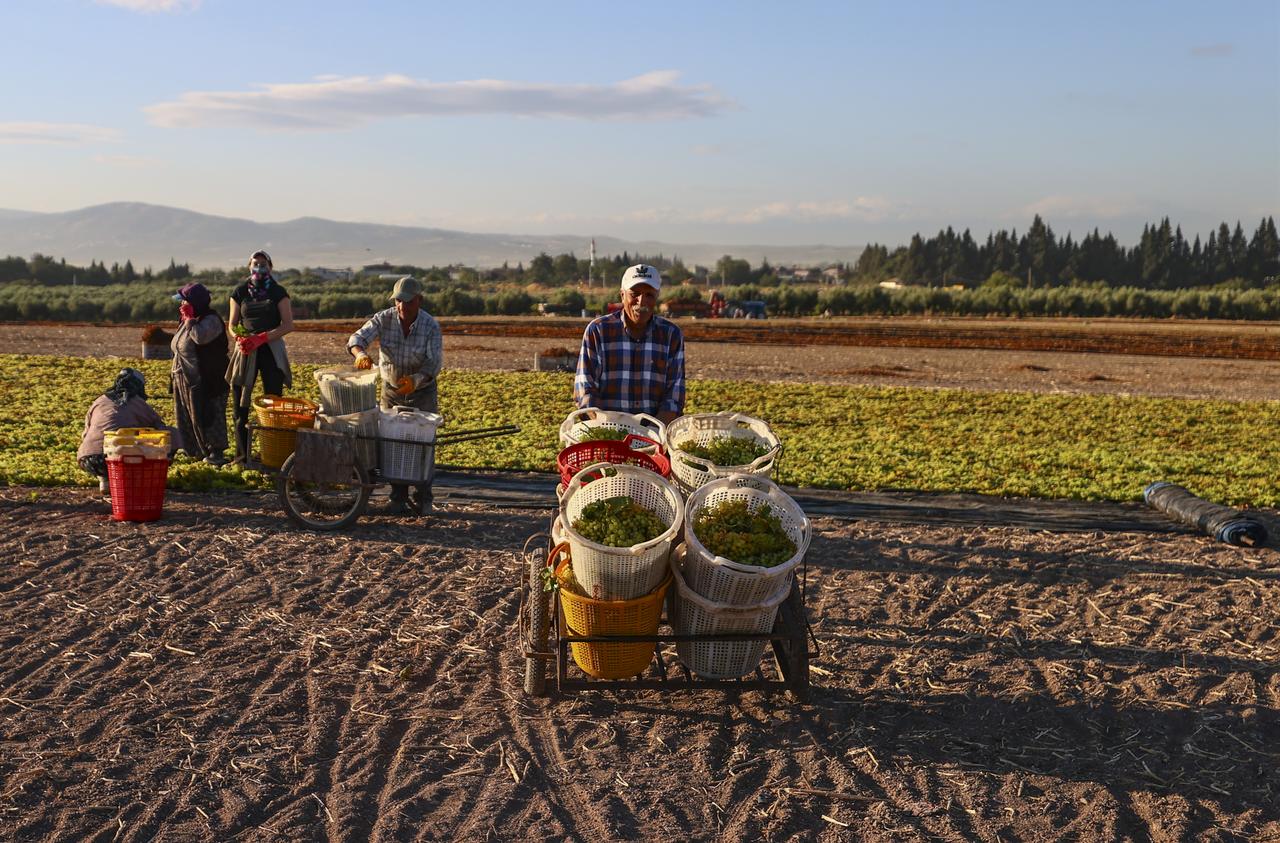

Aydogan Okur, head of the Saruhanli Chamber of Agriculture, stated that the 2026 grape harvest in the district began 10 to 15 days later than usual and that tip burn caused by extreme heat had negatively affected the yield.
Okur said that heavy rainfall and moderate temperatures normally raise expectations for the harvest, but that the recent heatwave had negatively affected production.
"Our 2026 grape harvest began 10 to 15 days late. We experienced tip burn due to extreme heat. This significantly affected the grape yield," he said.
He drew attention to the quality of grapes grown in Saruhanli, saying, "As Saruhanli, we rank first in quality in the Manisa region. We are the district in Manisa that can grow crops using the least amount of pesticide."
Farmer Nejdet Akar also noted that grape yield was high this year, but that berry development remained weak. Akar added that producers' attention is focused on the raisin harvest and the base price to be set for purchases made through the Soil Products Office (TMO).


 Set as preferred source
 Set as preferred source


 1 min read
 1 min read


