Newsletters


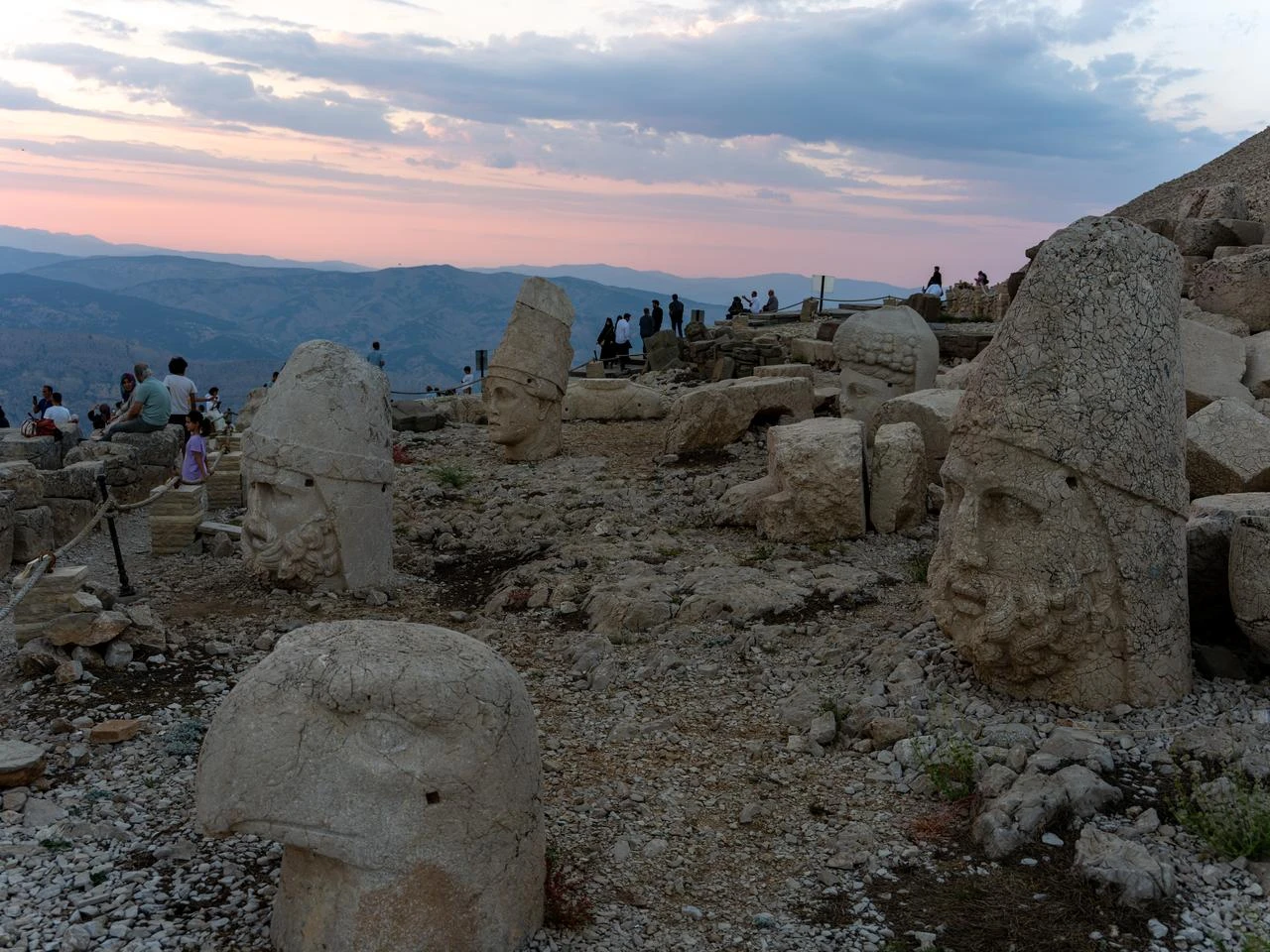
The Mount Nemrut archaeological site, listed as a UNESCO World Heritage site, has been drawing large crowds of domestic and international visitors this summer, particularly around sunrise and sunset.
Located at an altitude of 2,206 meters (7,238 feet) in the Kahta district of Adiyaman, Mount Nemrut welcomes visitors with its historical monuments and its unique views of sunrise and sunset.
Tourists who travel to the region to see the giant statues surviving from the era of the Kingdom of Commagene experience the historical atmosphere up close, taking photographs at the summit.
 1 min read
The summit of Mount Nemrut becomes especially crowded during the summer months, when visitor numbers rise. One visitor, Huseyin Kavak, said that he had traveled to the site from Usak.
Kavak, who said he had come to Mount Nemrut to watch the sunset, said, "This place is very impressive. We want to see the natural beauty here and also promote it to those around us. Like every part of our country, Mount Nemrut is very beautiful too. It's quite crowded."
Another visitor, Yesim Kilinc, said she visits Mount Nemrut every year to watch the sunrise and sunset. Many others stated that the Mount Nemrut archaeological site is the best place to watch the sunset.

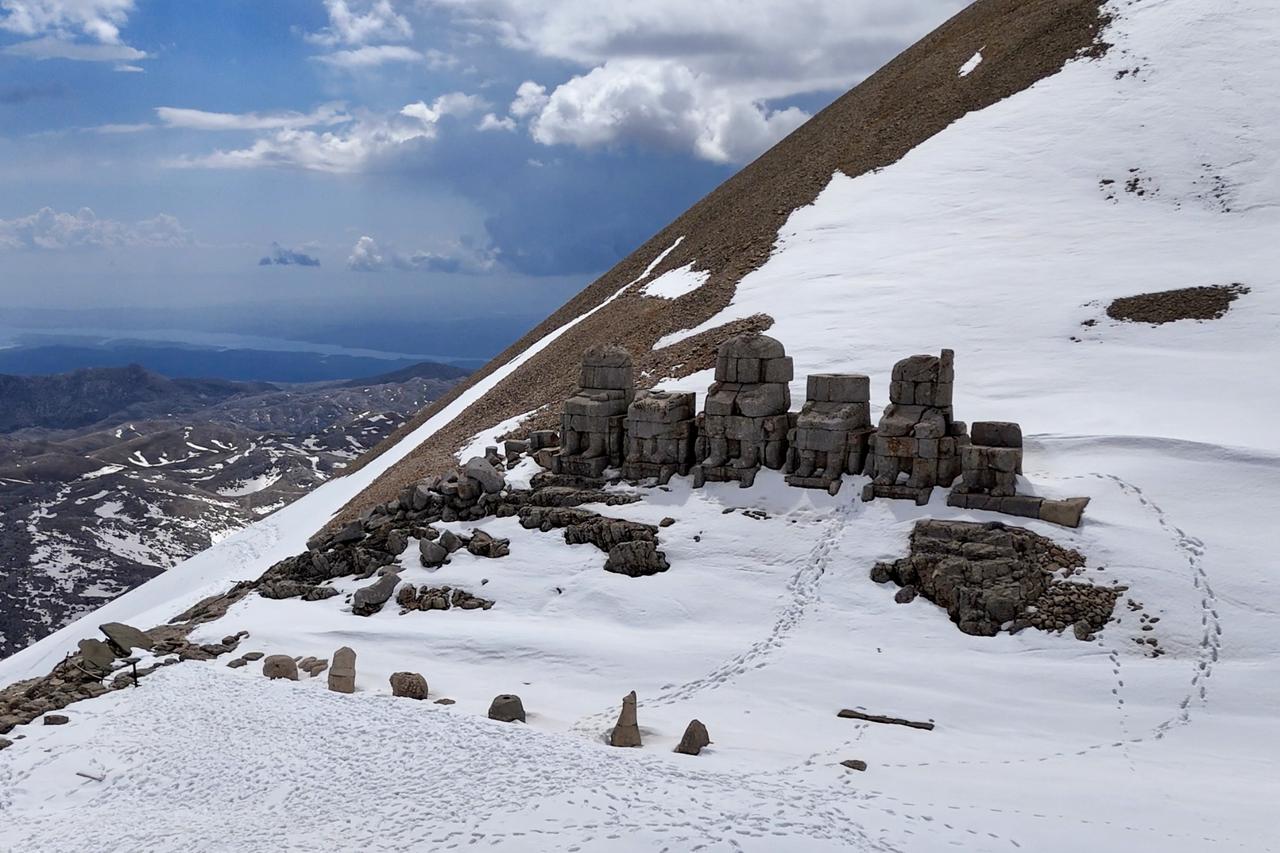
Mount Nemrut sits atop one of the highest peaks of the Eastern Taurus mountain range in southeastern Türkiye.
The site was built in the 1st century BC by King Antiochus I of Commagene as a monumental tomb sanctuary dedicated to himself and to a pantheon of gods drawn from both Greek and Persian mythology, reflecting the Kingdom of Commagene's position as a cultural bridge between East and West.
The summit features colossal stone statues, some originally standing as tall as several meters, depicting the king alongside deities such as Zeus and Apollo. Though the heads of the statues have toppled over the centuries and now lie scattered on the ground, they remain among the most striking archaeological sights in the region.
The site was largely unknown to the outside world until a German engineer, Karl Sester, rediscovered it in 1881, and it was added to the UNESCO World Heritage List in 1987.


 Set as preferred source
 Set as preferred source


 1 min read