Newsletters


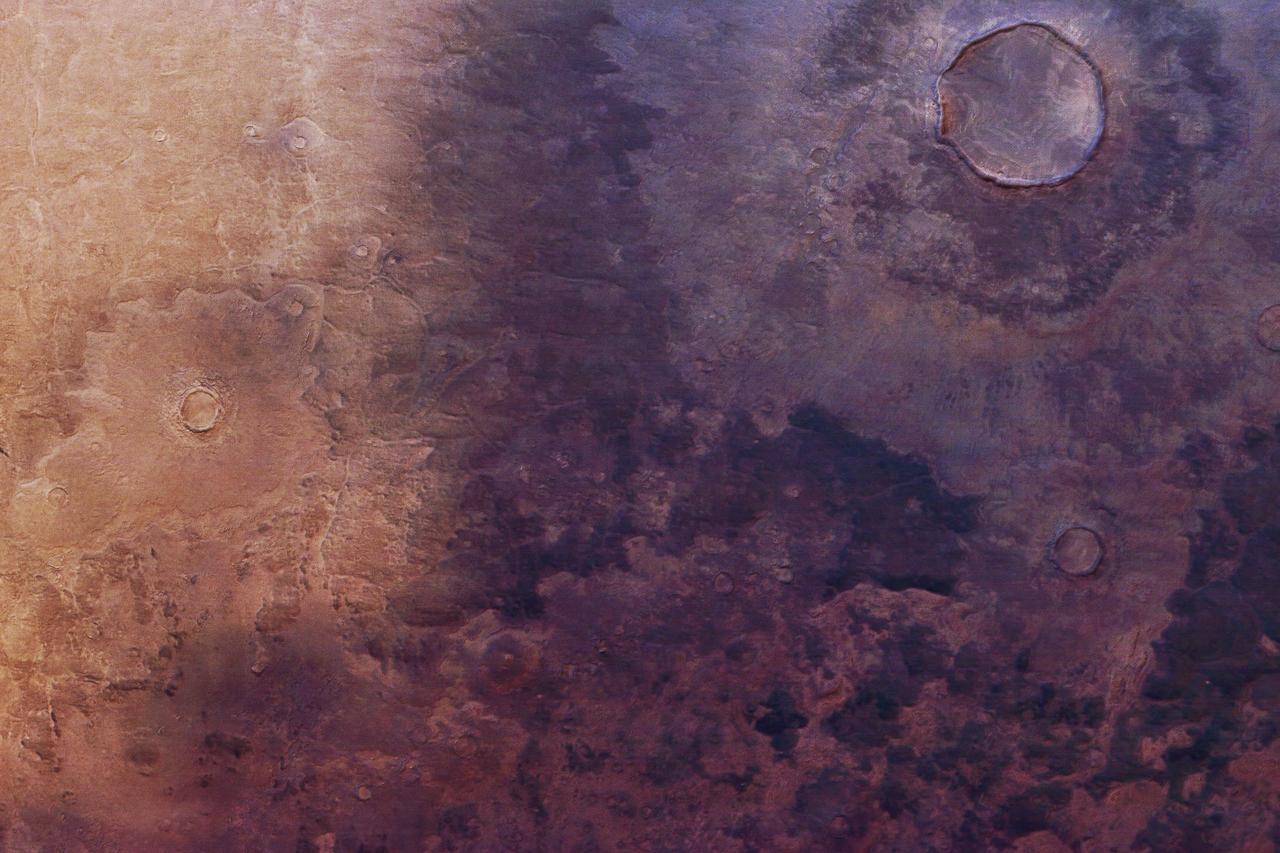


A massive dark patch has been moving across the Martian surface for 50 years.
This shadowy structure sits in Utopia Planitia, a giant basin in the northern hemisphere of the planet. It consists of volcanic rocks and ash from ancient eruptions that occurred millions of years ago.
These materials contain minerals like olivine and pyroxene from a time when Mars remained geologically active.
New photos from the European Space Agency (ESA) show the patch has expanded significantly since 1976.
The southern boundary of this dark terrain moved at least 200 miles further south over the last five decades.
This suggests an expansion rate of roughly four miles per year. Scientists believe that Martian winds drive this movement. These winds scour the surface and redistribute volcanic deposits. ESA representatives shared two possible theories for the change.
"The spread of the ash over the last 50 years has two possible explanations: either it has been picked up and moved about by Martian winds, or the ochre dust that previously covered the dark ash has been blown away," ESA stated.
Researchers currently lack a definitive answer.
They continue to study images from the Mars Express orbiter. This mission has provided fresh views of the planet for over 20 years.
High-resolution stereo camera technology captured the latest orbital data. This information helps scientists understand how the Martian environment changes over short periods.
Utopia Planitia is one of the largest plains on Mars.
It has attracted scientific interest for half a century. The Viking 2 lander arrived there in 1976 to conduct biological experiments. More recently, China's Zhurong rover explored the region.
Data from the Chinese mission suggests a large ocean once covered this area. Scientists even mapped a potential shoreline.
The region contains several notable features:
This buried ice holds significant implications for the search for extraterrestrial life. Evidence also suggests a major climatic shift occurred in the region 400,000 years ago.
Every new image from the Mars Express orbiter provides another clue about the history of the planet.


 Set as preferred source
 Set as preferred source



 2 min read