Newsletters


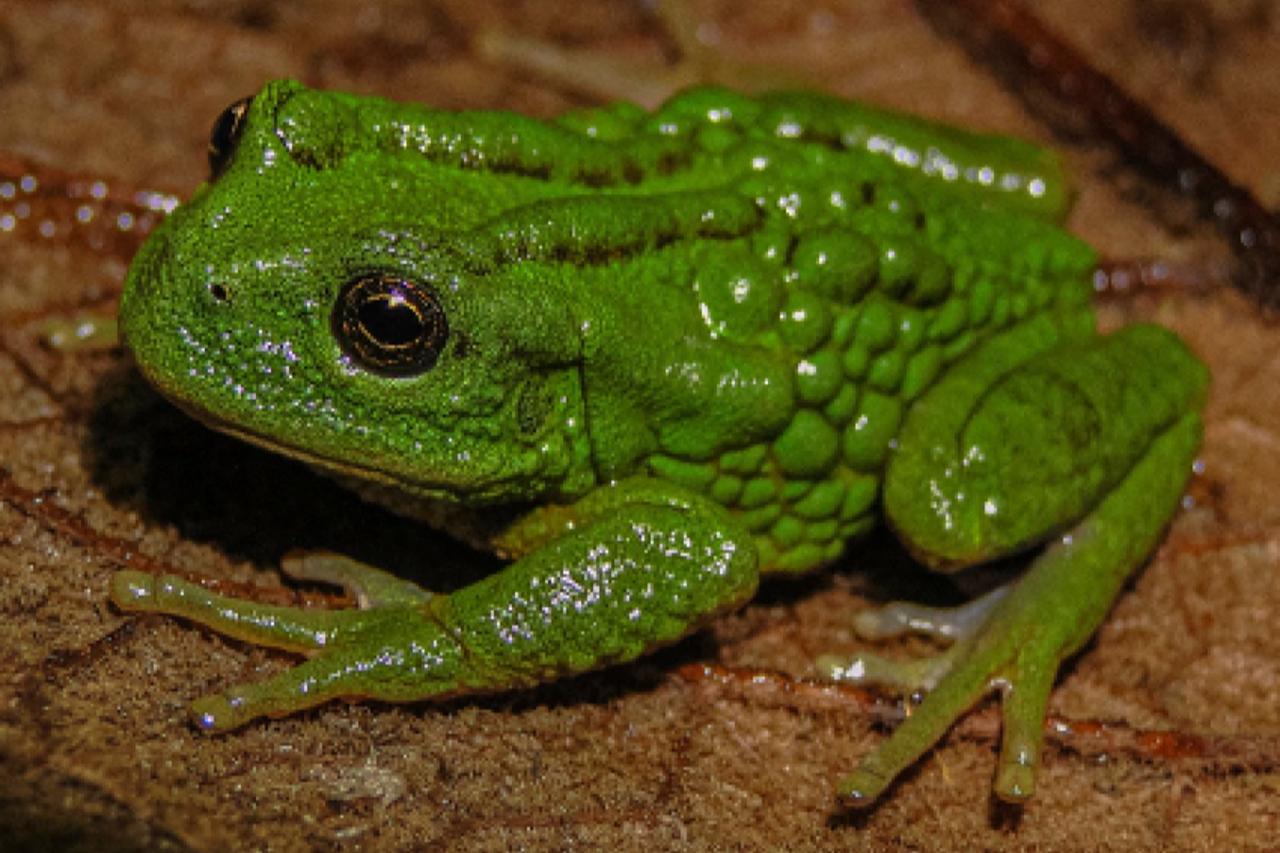


Scientists have identified a new species of miniature marsupial frog in the Peruvian Amazon, one that carries its young in a natural pouch on its back rather than relying on water for egg development.
The discovery, announced Wednesday by the Ceja de Selva Research Institute for Sustainable Development, adds to a growing body of evidence pointing to the biological richness of South America's mountainous rainforest ecosystems.
The new species, formally named Gastrotheca mittaliiti, was found in a mountainous ecosystem in the Amazonas region of Peru, near the border with Ecuador.
It measures 1 to 1.3 inches (2.7 to 3.3 centimeters) in length and is characterized by its bright green coloration and small protuberances on its back.
The exact number of specimens in the wild remains unknown.
What distinguishes Gastrotheca mittaliiti from most other frogs is its reproductive mechanism.
While the majority of frog species depend on aquatic environments for egg development, this marsupial frog uses a dorsal pouch to nurture its young, a trait that gives the genus its marsupial designation and that researchers say makes the find scientifically significant.
The species belongs to the genus Gastrotheca, a group of marsupial frogs native to Central and South America known for this distinctive form of parental care.
Despite the significance of the discovery, researchers warn that the species faces serious risks.
The study classifies the amphibian as being at "high risk" due to the effects of climate change and fires set by farmers clearing land in the region, both of which are degrading its habitat.
Manuel Oliva, director of the Ceja de Selva Research Institute for Sustainable Development, told Agence France-Presse (AFP): "This is further evidence of the enormous natural wealth we possess. … If we continue our research, there are many species still waiting to be discovered."


 Set as preferred source
 Set as preferred source



 1 min read