Newsletters


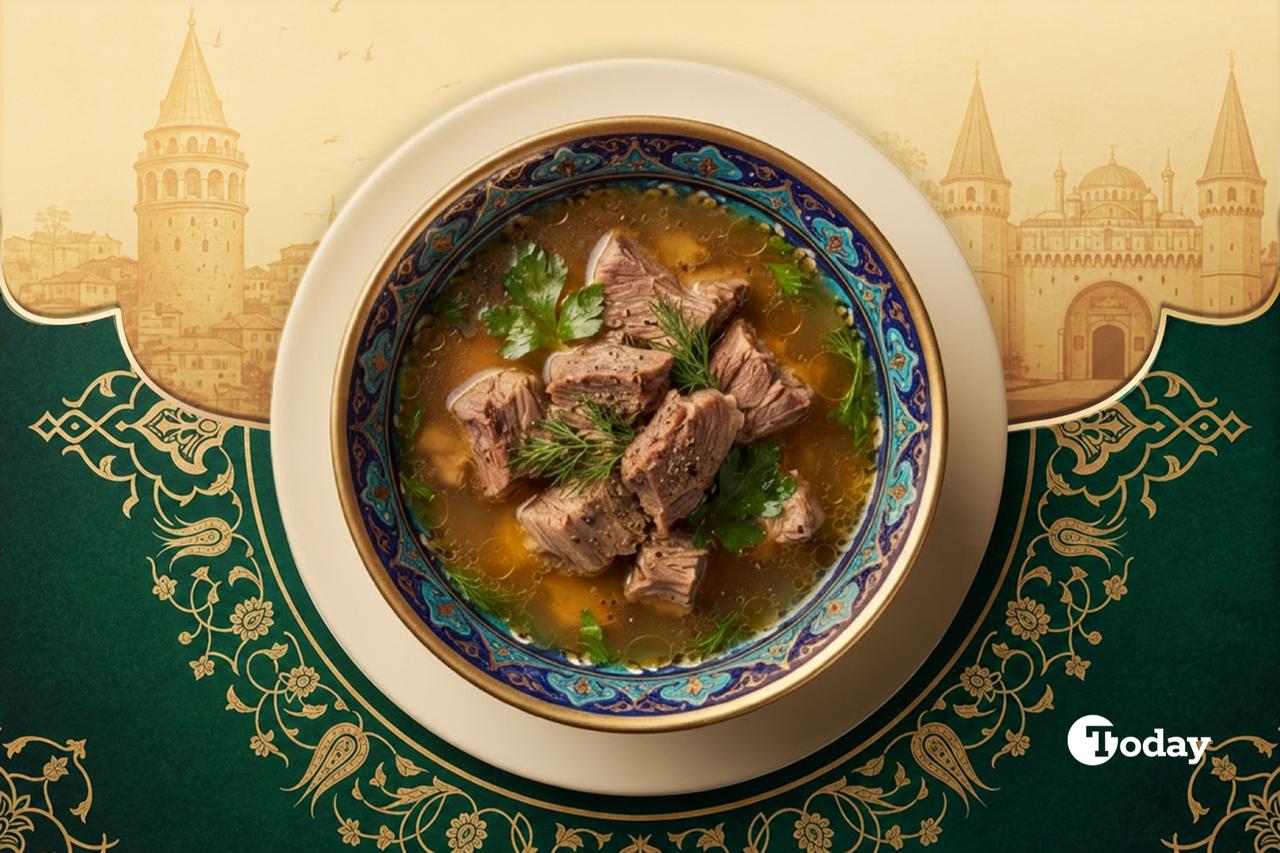


Let’s be clear: I have a reliable nose. It has never once failed me on the holy binary of fire and food. Wood smoke, charcoal, meat over heat—the override kicks in instantly, all higher reasoning suspended, feet half-levitating. In this one respect, I have the cognitive architecture of a Labrador.
Which is why what happened near the Aqueduct of Valens took years to make peace with.
The aqueduct still strides across the Fatih district as if the city were an inconvenience it has decided to tolerate. Fourth-century Roman stonework, in service for some 1,400 years, now straddling a six-lane road with the serenity of something that has outlasted every opinion ever held about it.
I was about 300 metres north of it when the smell arrived. My nose registered something unusual about the cooking, and after that there was no staying on course. Soon my schnoz delivered me to a shop that was half butcher, half living room—essentially a room with a pot and a few tables. You know the score. One man behind a counter, who isn’t expecting you and gives no sign of adjusting to your presence. Here, he was turning down a stove with keci haslama, boiled goat, on it.
The goat had not been marinated, spiced, charred, or otherwise persuaded to be anything more socially acceptable. It had been boiled, which is to say it had been given the time to become fully, irreducibly itself, and emit the sort of smell that would make a horse retch.
Two men were already eating. They watched me sit down with the attentive interest of people who have identified the afternoon's entertainment.
I ordered, and the goat arrived pale and dense in its broth, shivering with gelatinous intent, a slick of yellow fat on the surface, and a side of crushed garlic and dried chilli. The garlic is not decorative—it's the thing that makes the dish edible, the way a diplomatic interpreter makes certain conversations possible: necessary, professional, not entirely comfortable.
I ate it. The locals watched me eat it. They were, without being unkind, delighted. Perhaps because they were watching someone encountering the one animal that never had a system built around it.
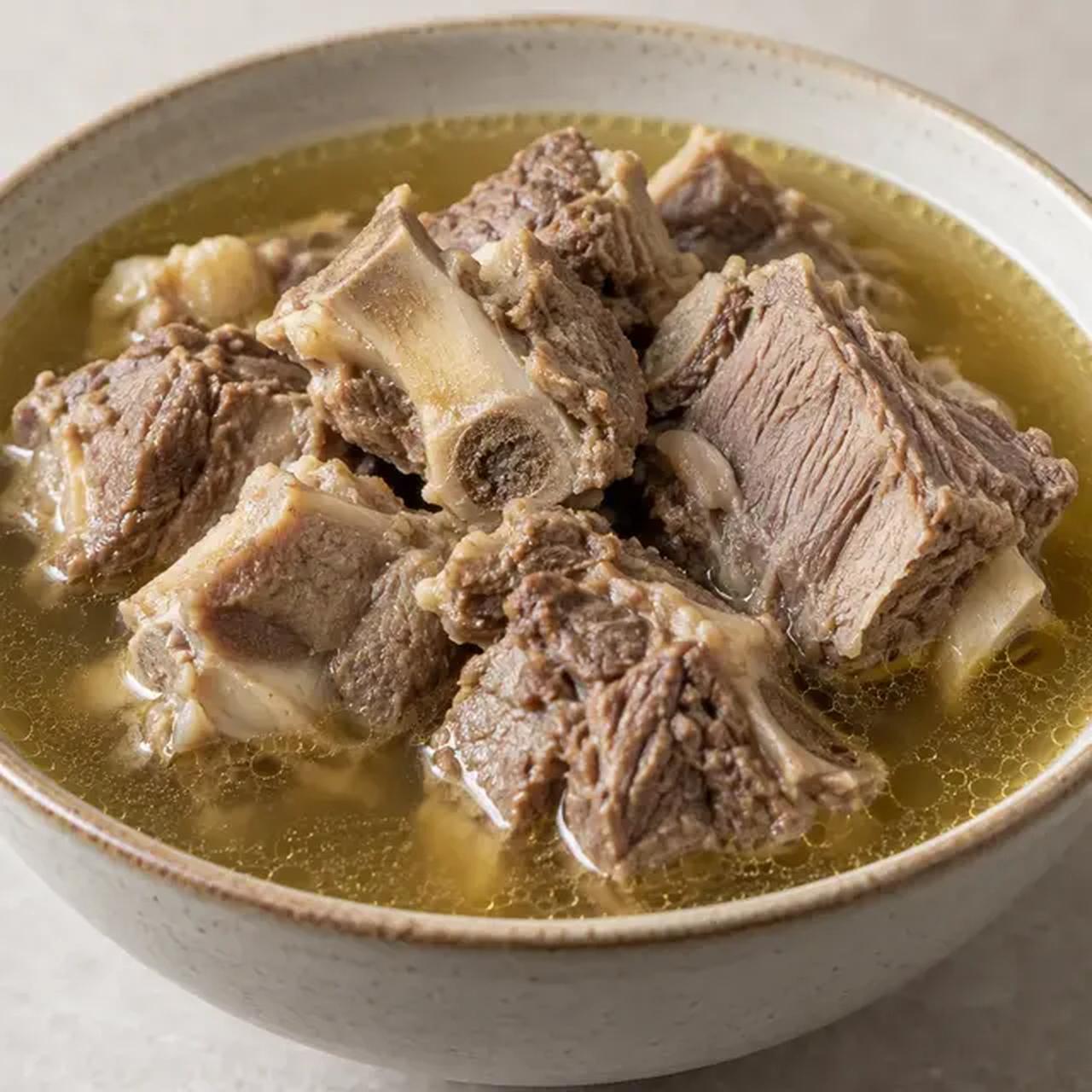

Sheep had the system. For most of Ottoman history, Istanbul fed itself mutton through the celepkesan system—drovers under state contract, moving flocks of hundreds of thousands of sheep on foot from the Balkans and central Anatolia to the capital's butchers, taxed, quota'd, and later farmed out to tribal contractors like the Cihanbeyli, who received grazing rights and tax exemptions in exchange for keeping the empire's meat supply intact.
This infrastructure endured for centuries because mutton was the meat the palace, the army, and the ordinary Istanbullu all agreed mattered. Goat merely turns up in the record as an aside. It was consumed, certainly, but never earned a supply chain of its own. In fact, late Ottoman sources tend to mention it mainly as something available, alongside beef and pork, "for the Christian community," an oblique, semi-polite way of saying it lived outside the paperwork that mattered.
It had form on this front. Goat turns up in Byzantine sources—Anthimus' sixth-century dietary treatise, for instance, lists it as commonly esteemed alongside lamb and mutton — but those are the generic mentions of an agricultural manual. The most famous account of a specific goat, served on a special occasion, comes from a man who received it as an act of diplomacy he was too offended to recognize.
In June 968, Liutprand, Bishop of Cremona, arrived in Constantinople as ambassador for the Holy Roman Emperor Otto I, sent to negotiate a marriage alliance between two courts that each considered the other's claim to the title "Roman emperor" a bit of a cheek.
Liutprand was seated 15th from the emperor, without a tablecloth, and served, according to his own furious account, food so drowned in oil and the fermented fish sauce, garum, that he found it barely edible. Worse, it was paired with a wine that tasted, he complained, of pitch and plaster.
What he'd actually been given was wine cut with pine resin and gypsum, the standard Byzantine method for the day, the direct ancestor of the retsina still drunk in Greece—not a defect, in other words, but reflective of local tastes, the same bottle anyone at that table would have been pouring for themselves.
Then, a few days later, the emperor sent him one of his favorite dishes, taken from his own table—a young goat (oglak), stuffed with garlic, onion and leek, and doused, inevitably, in the same fish sauce Liutprand had just spent several paragraphs describing as an affront to God.
So within the space of one embassy, Liutprand managed to read two separate pieces of Byzantine taste—the wine everyone at court drank, the dish the emperor personally favored—as fresh evidence of how little Constantinople thought of him. He went home and wrote a furious, blow-by-blow dispatch, and never once paused to wonder whether the insults were largely his own invention.
What the goat got, even at the absolute top of Byzantine society, was never the state banquet. It was a private aside, sent from one man's own portion, outside the protocol that governed everything else on that table.
Six centuries later, in an empire that had replaced Byzantium entirely, the same animal was still living outside the system—this time the sheep bureaucracy—and for the same reason. It doesn't need an empire's permission, nor a drover, quota, or guild. It needs water, a pot, and someone hungry enough to wait.
Which is more or less what I was doing, 300 meters from a Roman aqueduct, watched by two men who'd seen my kind before. Liutprand had the emperor's own goat put directly in his hands (it's chapter 20 of his report, if you want to look it up) and still managed to write it up as an insult. I had a version of the same animal, boiled by a man who'd never heard of him, and no complaint whatsoever.
Ingredients
1.2kg goat shoulder, bone-in, cut into large pieces (lamb shoulder if goat is unavailable)
1 onion, halved
2 bay leaves
1 tsp black peppercorns
Salt For the table: 4 garlic cloves, crushed, with a pinch of salt; dried chilli flakes; crusty bread
Method
Cover and simmer
Place the goat in a large pot with the onion, bay leaves and peppercorns. Cover generously with cold water. Bring to the boil, skim off the foam thoroughly, then reduce immediately to the gentlest possible simmer.
Wait
Partially cover and simmer for three to four hours, until the meat yields with no resistance at all. Add salt only in the final 30 minutes—salting too early toughens the meat. Do not add spices, herbs, tomatoes, or anything else. The goat has not asked to be argued with.
Serve
Ladle the meat into bowls with plenty of its own pale broth. Set the crushed garlic and chilli flakes alongside, in a small dish, not stirred in.
Notes
On the garlic: It is not decorative. It is the thing that makes the approach possible — a diplomatic interpreter between you and the bowl, necessary and not entirely comfortable.
On restraint: Every instinct will tell you to season the cooking water. Resist it. The entire argument of this dish is that the animal becomes more itself with nothing but water and time, and a recipe that interferes with that has missed the point before it's begun.
On substitutions: lamb shoulder behaves itself in roughly the same way, though with noticeably less conviction.
On garnish: there isn't one. If a version of this arrives with a sauce, a marinade, or a forty-eight-hour preparation note, you are eating something else, possibly something very good, but not this.


 Set as preferred source
 Set as preferred source



 1 min read