Newsletters


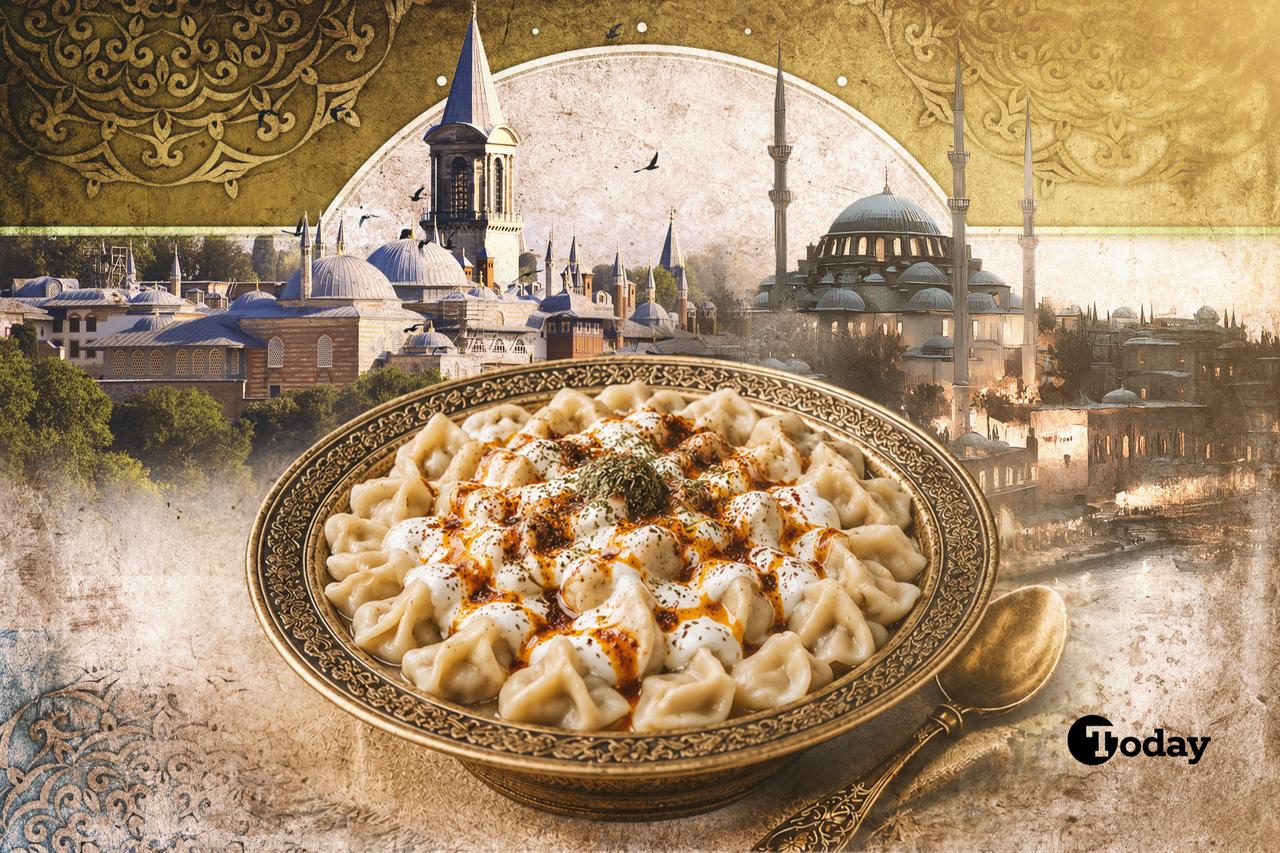


There is a Chinese legend in which Zhuge Liang, the great general of the Three Kingdoms period, is brought to a halt by a river deity demanding human heads as tribute. This being awkward, not to mention poor for morale, he sends in meat-filled bread rolls shaped like heads instead, and the deity lets it go.
The story is supposed to explain the origin of mantou, the Chinese steamed bun, and therefore, via a glorious tangle of culinary migration, Turkish manti too. It is a splendid place to begin because manti has a genius for masquerade, spending centuries changing shape while retaining something like the same name.
The word got around. Mantou. Manti. Mandu: Chinese, Turkish, Korean. The same family resemblance, the same doughy consonants, yet wildly different outcomes. In modern Mandarin, mantou means an unfilled steamed bun. In Türkiye, manti is a tiny, filled dumpling. In Korea, mandu is the broad term for dumplings.

And it didn’t travel west in a lacquered casket carried by silk-robed gastronomes. Instead, it moved with Turkic and Mongol armies, whose riders carried versions of it frozen or dried and boiled over campfires.
Being portable, durable and better than barely edible, it was military-ration logic in its purest form.
The dainty little parcels now laid reverently in yogurt and chilli butter began life as the steppe equivalent of pot noodles; the sort of thing you might gobble while checking whether your horse had wandered off.
Then matters become wonderfully murky with the mythology aiming at continuity, while the historical record suggests a dish repeatedly slipping out of focus.
The earliest written Ottoman recipe resembling manti turns up in the 15th century with Muhammed bin Mahmud Shirvani steaming dumplings filled with minced lamb and crushed chickpeas, a dish that was scented with cinnamon and sharpened with vinegar. This is close enough to count but also different enough to annoy a purist.
Suddenly, it vanishes into the bureaucratic fog. The first printed Ottoman cookbook, published in 1844, does not even use the word manti. Instead, it offers Tatar boregi, which circles the same idea but omits the garlic yogurt, which is like recounting the Auspicious Incident (1826) and forgetting to mention the artillery.
An 1880 cookbook then uses the word manti for something layered, doughy and minced, but not in any way recognizable as the neat little parcels anyone in modern-day Türkiye would defend with any gusto. For quite a while, the dish appears to have been living under aliases.
Finally, we reach Kayseri, where manti ceases to be merely food and becomes some sort of household tribunal.
There is a tradition that when a couple is engaged, the groom’s mother visits the bride’s house and the bride must make manti. The smaller the dumplings, the more accomplished she is. Forty on a spoon is the target; a magnificently unreasonable goal.
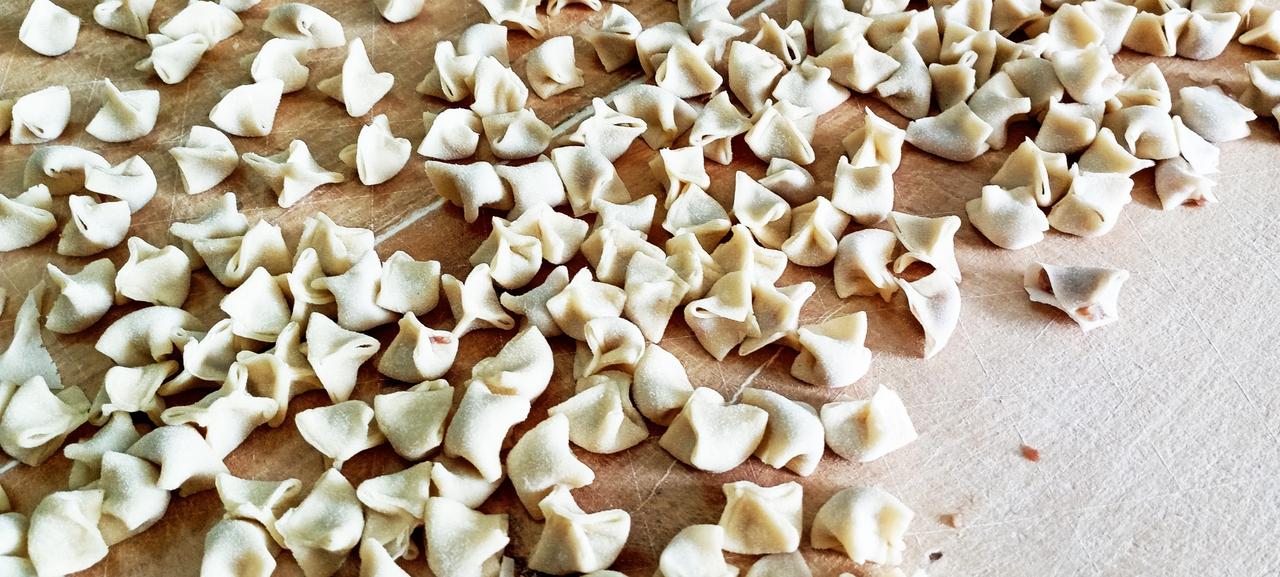
Really, it’s less of a recipe and more of an audition, turning dinner into a practical exam in dexterity, patience and nerves. The spoon is the measuring rod. The mother-in-law is the examiner. The filling, roughly half a chickpea’s worth, is the physical proof that somewhere in the making of this woman, no one took shortcuts.
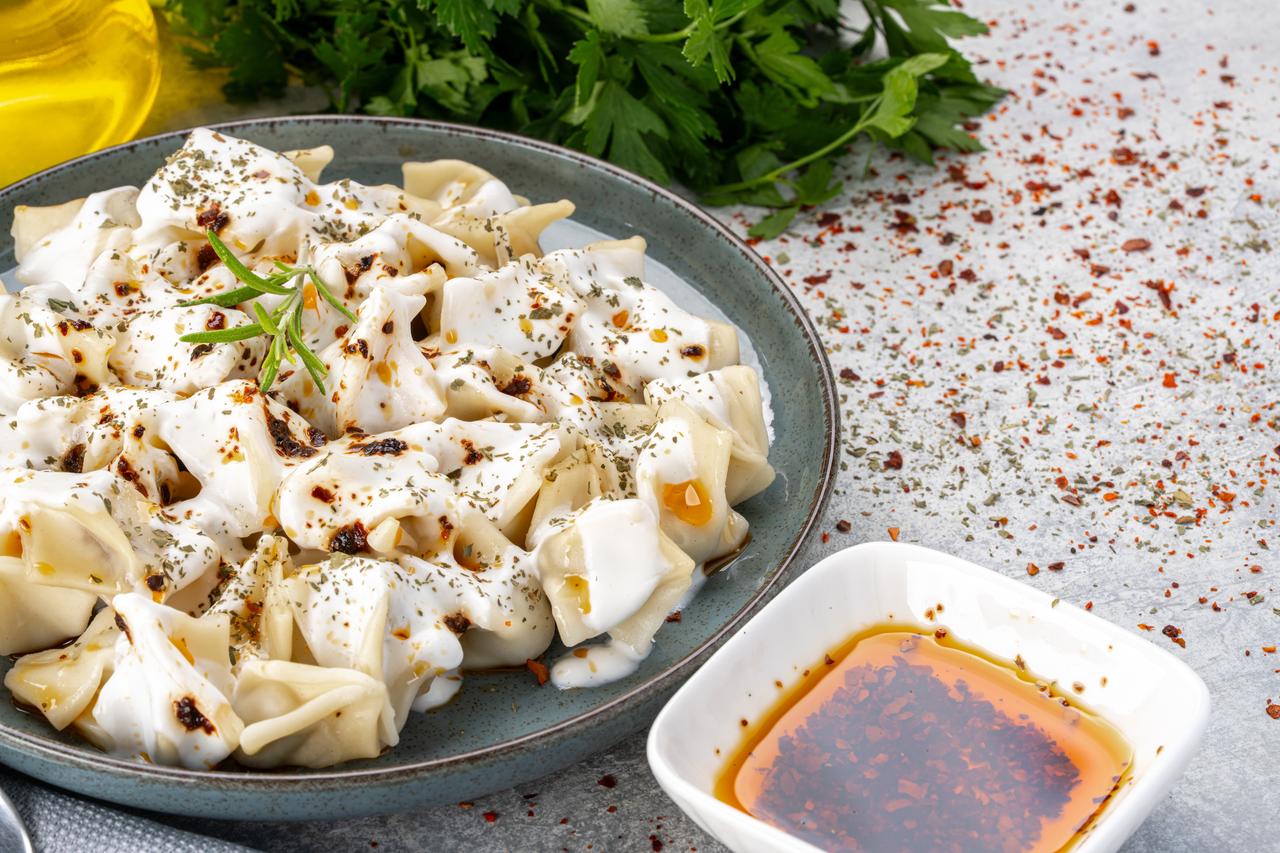
The yogurt matters because it comes from the same world as the dumpling itself. It is not some later Ottoman flourish spooned on by cooks in search of epicurean ecstasy but part of the older steppe inheritance: the dairy food culture of Central Asian nomads, for whom yogurt was a staple rather than a garnish. The sauce is not an addition. Manti swims in it like a fish in water.
And that, really, is what makes manti so satisfying to think about. It starts as a fake severed head, evolves into practical camp food that canter across Eurasia.
It keeps the name here, loses it there, changes meaning elsewhere, falls in and out of textual notice, and eventually lands in central Anatolia as an object of intense civic and domestic seriousness, resembling nothing quite so much as a spy.
The comparison with tortellini is irresistible. Italy took the same basic idea—tasty fillings wrapped in dough—and went for plushness, generosity and voluptuousness.
Manti went the other way, toward austerity and exactitude, getting smaller and smaller until the wrapper became not merely casing but something deeper.
The filling is almost incidental. What matters is finesse, control, repetition, the whole forty-on-a-spoon thing. This is not a dumpling pleading to be adored; it is asking that we take ourselves as seriously as it takes itself.
Which is a remarkable destiny for a fake head in a river.
Recipe for manti (serves 4)
Ingredients
Dough
Filling
Yogurt sauce
Butter sauce
Method
1. Prepare the dough
Combine the flour, egg, water and salt into a fairly stiff dough. Knead until smooth, then rest for 30 minutes.
2. Mix the filling
Mix the meat with the grated onion, salt and black pepper.
3. Roll, cut, and shape
Roll the dough thin and cut it into small squares. Put a tiny amount of filling in each square and pinch them closed.
4. Boil the dumplings
Bring a pot of water to a boil. Drop the manti in and cook until the dough is tender and the filling is cooked through.
5. Prepare the sauces
Whisk the yogurt with garlic and salt.
Melt the butter and stir in the pul biber, plus a little tomato paste if using.
6. Assemble and serve
Serve the manti with the garlic yogurt on top, then spoon over the hot butter sauce and finish with dried mint.
For Kayseri-style
The difference isn't a radical recipe shift, but the scale. The dumplings are made much smaller and far more exactingly.


 Set as preferred source
 Set as preferred source


 3 min read