Newsletters


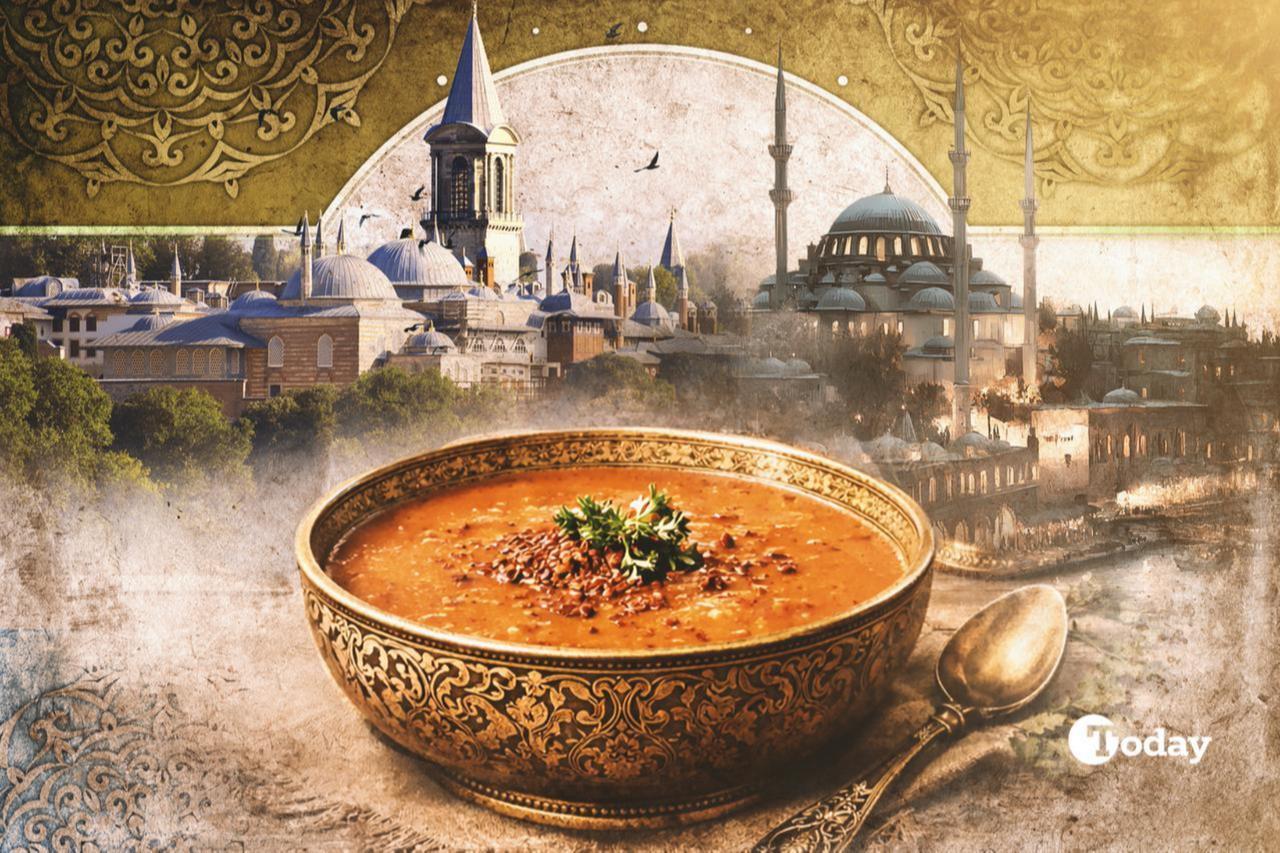


If winter insurance came in a bowl, it would be tarhana.
Technically, tarhana is a soup made from fermented wheat and yogurt, dried into a coarse powder, and reconstituted with water or stock when needed.
In reality, it looks like what happens when porridge gives up on itself. It sits in the bowl, the color of old putty, grainy, sour, and faintly resentful. There's no theater, no sizzle and no garnish straining for its five seconds on TikTok.
Just a beige soup built for deep cupboards rather than TV studios, the kind that seems permanently on the verge of a long, weary sigh.
In a village outside Kayseri, I watched a woman named Ayse make it the way her grandmother had taught her. Cracked wheat was mixed with yogurt in a basin wide enough to bathe a child and left to ferment in the August heat until it smelled of controlled rot.
After three days, it was spread across cotton sheets on the roof to dry, where it hardened into pale shards resembling dropped crockery. She swept them into jars with a broom. The whole operation had the emotional register of doing the washing up.
"For winter," she said. No elaboration or romance, just the acknowledgment that a hostile season exists, and you'd be an idiot not to prepare for it.
Tarhana is not the sort of food we’ve been trained to talk about—as pleasure, identity or status. It is what happens when a geography refuses to cooperate, and the people get practical. Hot summers, freezing winters, grain, dairy, and the annual certainty that at some point the larder will be empty and the sheep thin.
In that landscape, flavor is secondary. Longevity is the point. So you mix what you have, let the bacteria do their quiet work, and turn the perishables into powder.
Fermentation extends protein beyond its natural lifespan. Drying removes the need to beg ice from your neighbor. And what you're left with is a powder that weighs almost nothing, keeps indefinitely, and can be reconstituted by anyone who can boil water.
This is not artisanal. This is what you eat when artisanal packs a tote bag and leaves for Karakoy, where lunch rarely arrives without a backstory, and the winter moves in.
Ottoman armies marched on it. Not because anyone loved it, but because it could be boiled anywhere without complaint. You do not need ancestry here, or long lines of cultural transmission: only wheat, yogurt, and a climate that wants you dead five months of the year. The solution presents itself with the inevitability of water running downhill.
In Athens, an elderly cook once informed me that "trachanas" was superior to "tarhana" by at least a dozen centuries, the proof being that Greeks used wheat while Turks used bulgur—“broken grain,” he said, wrinkling his nose as though the Ottomans had taken a perfectly good cereal and kicked it down the stairs out of spite.
Bulgur is parboiled wheat. The same grain, simply cooked earlier. His edifice of precedence rested on a processing step. I didn’t have the heart to tell him. Turkish historians perform the same manoeuvre with Ottoman palace records, as though the Sublime Porte had patented fermentation. Both sides mistake recurring solutions for family heirlooms.
The version I ate in Kayseri was thickened with tomato paste—a New World gatecrasher the original wouldn't recognize, but might tolerate with the weary pragmatism of anything that has survived much worse.
Across the Black Sea, they use cornmeal. In the Levant, chickpeas intrude. On the Aegean islands, the onions are fried in olive oil first, turning the whole thing gold. Tarhana absorbs these variations the way a civil service absorbs reforms: it nods politely and carries on.
If tarhana is anything, it is always present. Always waiting for the moment when the question stops being "what shall we eat?" and becomes "what can we eat?" At which point tarhana stops looking dull and starts looking indispensable, the way a drainage ditch stops looking ugly once it's the only thing keeping the house from floating away.
It travelled with the Anatolian families who moved to Istanbul in the 1960s and 70s, bringing tarhana with them in biscuit tins and knotted cloth bundles.
In neighborhoods that had once considered themselves securely urban, the soup marked the arrival of people who kept one eye on winter even in a city that prided itself on mildness. At first, it was the sign of a bumpkin, but within a generation, it was simply dinner.
In contemporary Istanbul, tarhana occupies an awkward social tier.
It is too ordinary for the tasting menu and too provincial for the aspirational brunch. You are unlikely to see it foamed or deconstructed; it does not lend itself to irony. Yet in apartments where both parents work and rent rises faster than wages, a jar of it still waits at the back of the cupboard.
It is stirred on weeknights when time thins and appetites sharpen. Not as performances of heritage or nostalgia, but as a quiet nod that the city remains, for all its glass and cranes, subject to the same arithmetic as the plateau.
Tarhana is made when no one is hungry and eaten when everyone is. In that asymmetry lies its entire intelligence: it converts surplus into patience, heat into insurance and boredom into continuity. Cities can rise and fall around it, and cuisines can keep reinventing themselves for tourists. February, however, keeps its schedule. And tarhana keeps quietly answering it.


Ingredients
Optional: a spoonful of thick yogurt to finish
Method
1. Start with the base: In a saucepan, melt the butter over medium heat. Add the onion and cook slowly until soft and translucent—not browned. Stir in the garlic and cook for 30 seconds.
2. Add the tomato paste and cook it for a minute or two, letting it darken slightly and lose its raw edge. Stir in the pul biber.
3. Mix the tarhana with a ladleful of cold water to form a loose paste. This prevents lumps. Add it to the pot.
4. Pour in the stock slowly, whisking as you go. Bring to a gentle simmer. It will thicken steadily over 10–15 minutes. Stir occasionally to prevent sticking.
5. Tarhana should be thicker than broth but looser than porridge. Add hot water if necessary.
6. Taste and add salt only if needed. A squeeze of lemon sharpens the sourness rather than masking it. If you want luxury, swirl in a spoonful of yogurt at the end.
Serve hot, ideally with:


 Set as preferred source
 Set as preferred source


 3 min read