Newsletters





In the early morning light reflecting off the Sea of Marmara, when the call to prayer is still echoing off the minarets of Istanbul and the Bosphorus gurgles beneath a silvery fog, there’s a sound unlike any other outside my hotel window.
The clank and clatter of the three-wheeled red simit cart is luring me to a curbside breakfast, as it always does when I visit the city.
My simit vendor, Abdullah, is a mighty important man in these parts. Wearing a crisp white gown, he’s a culinary troubadour, peddling rings of dough with the fervor of an evangelist and the swagger of a street poet.
Ahh, yes, I remember the first time I encountered simit—not in a flash of epiphany but in a cloud of inspired sesame seeds while in town on a reporting trip during the mid-1990s. The current Turkish president, Recep Tayyip Erdogan, was the mayor of Istanbul at the time.
“You try… Bu sirketten olsun,” the simit merchant on the Ortakoy pier urged, waving the aroma of a hot one beneath my nose. Yup, in Istanbul, your first one is always on the house.
My hands were clumsy, jetlagged, and emotionally unprepared for the crisp ring that snapped between my fingers, a crunch that said, “Yes, I’m better than a bagel,” with an almost brazen confidence.
Don’t be shy. Ask for another if you’re hungry. Simit aficionados on social media estimate Turkish bakers annually churn out nearly a billion of them. At about ₺20 or 50 cents each, the simit is a steal.
And an obsession.
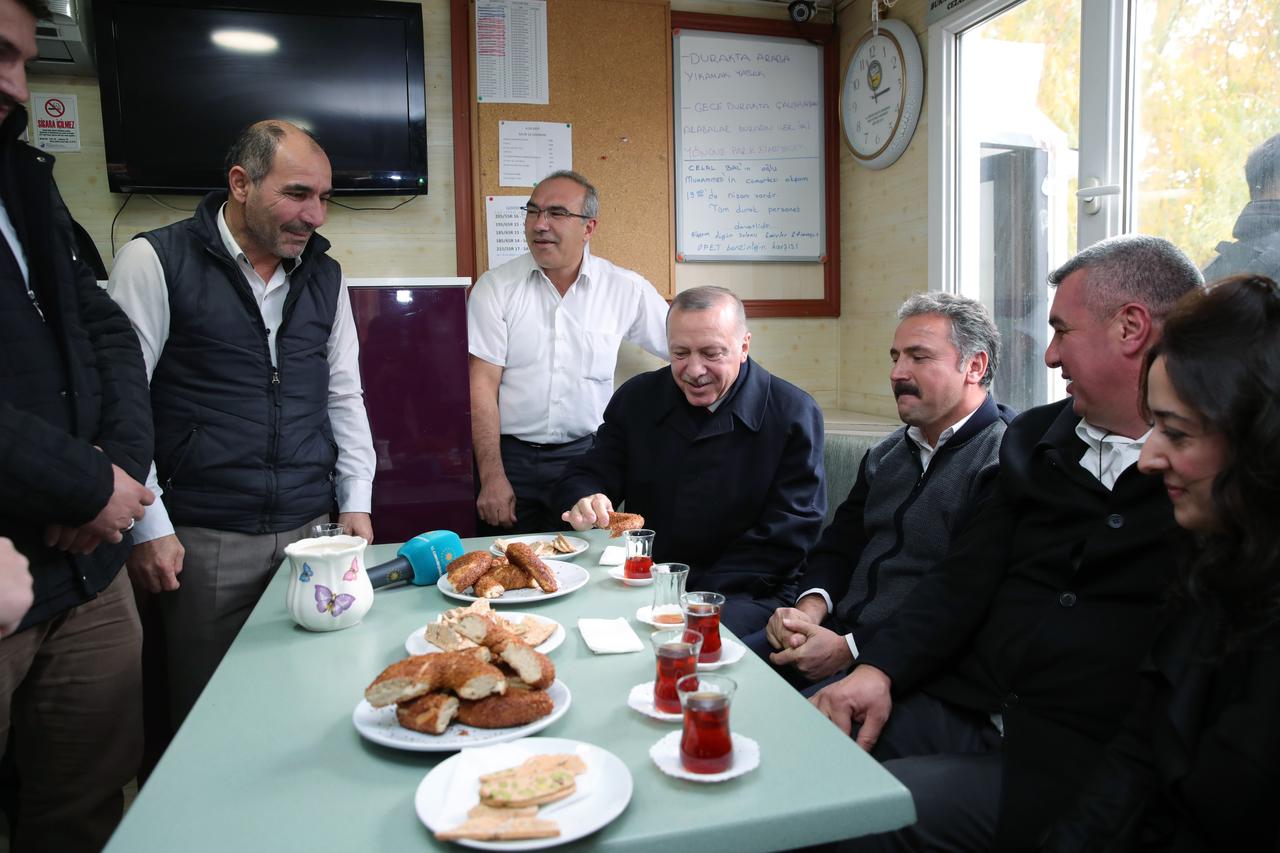

“Erdogan sold simits when he was a teenager,” a fellow passenger on the ferry across the Bosphorus added. Now I was really hooked—a news peg. Decades later, I long for just one bite of the singular simits whispered to emerge from the ovens of the Cumhurbaskanligi Kulliyesi presidential palace in Ankara.
The veritable simit, for the uninitiated, is a sesame-crusted breakfast ring beloved across Türkiye, particularly in Istanbul, where it’s as essential to life as black tea and unsolicited advice from your cab driver.
These joyful loops are dark gold, half-pretzel, half-bagel, and 100% irresistible. The simit is chewy, where a Parisian croissant is flaky, sturdier than a New York City bagel, saltier than a Georgian khachapuri, and comprehensively covered with sesame. Imagine a pretzel that fell in love with a sunflower field and never looked back.
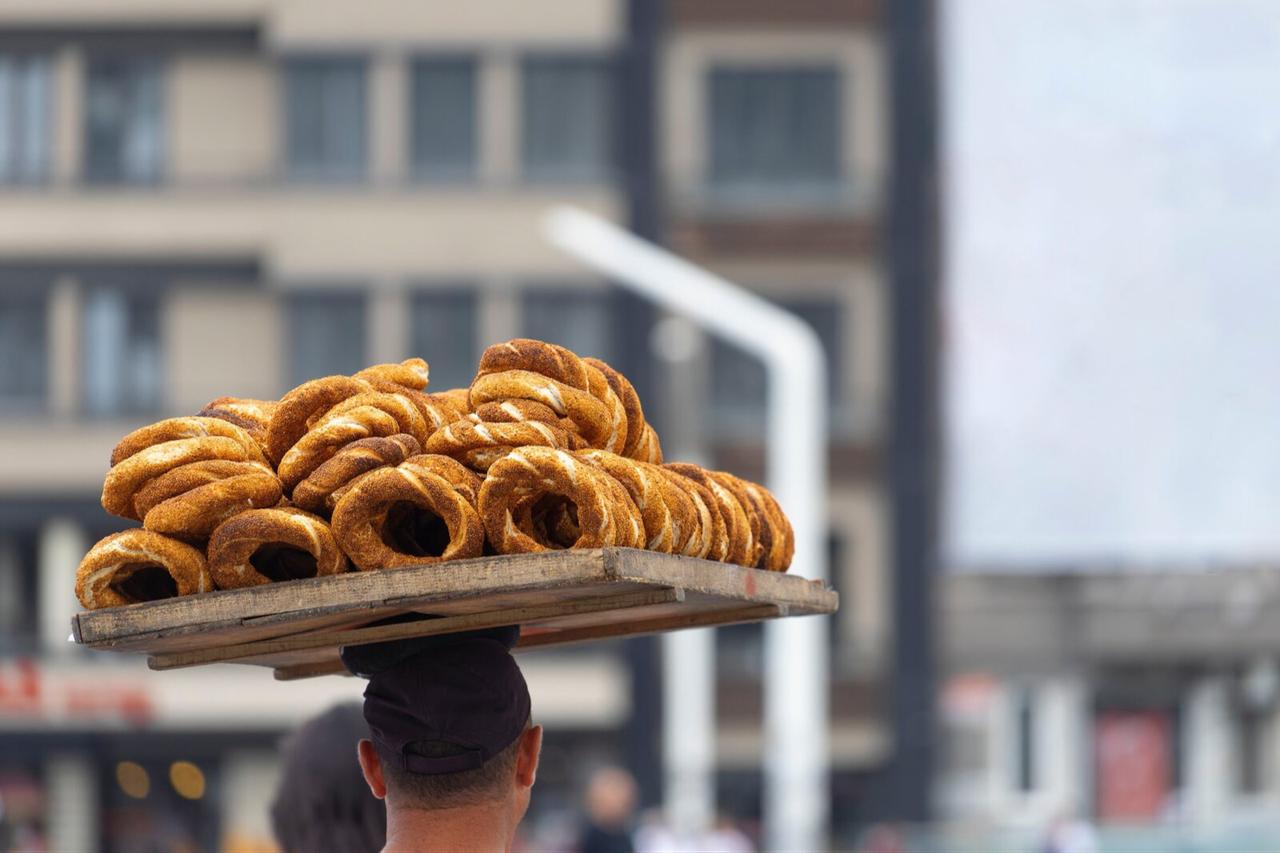
The history of the simit—which derives from an Arabic word meaning “white bread”—stretches back centuries. While the humble pretzel is said to date back to medieval Europe and bagels to Jewish communities in Poland, the simit’s lineage is rooted in the Ottoman Empire, where street vendors once carried them in towering pyramids balanced on their heads.
By the 16th century, simits were so trendy in Istanbul that the city enacted laws to control their price—an early example of regulating carbohydrates. In fact, the simitci, the simit seller, became an iconic urban fixture, a figure as emblematic of Istanbul as the seagulls swooping over Galata Bridge.
In Istanbul, everyone has an opinion on the perfect simit.
“Best?” scoffs a retired English-language teacher walking through Sultanahmet. “There’s no best,” Leyla says, eyes narrowing. “There’s only today’s simit. If it’s hot, it’s divine.”
As I see it, pretzels are cute, bagels are for smoked salmon and croissants are for those who fear commitment. Simit? I’ll proudly take the sycophantic leap: the simit is the sun around which all breakfast orbits.
And yet, even in Istanbul, there are different riffs on the classic ring. Not all simits are created equal. Some are drenched in sesame; others are sparingly kissed.
A few artisanal bakers have experimented with molasses glazes, an echo of the Ottoman tahinli simit—a sweeter, shadowy cousin that yelps of dessert more than breakfast. I don’t like them. (Note to President Erdogan: There ought to be a law.)
I live in Paris, a city of light, love, and an unrelenting and richly deserved reputation for culinary snobbery. Must my quest for the perfect simit end at the Turkish frontier?
I’ve scoured dozens of Paris neighborhoods, where croissants are revered like holy relics, asking bakers to fill my canvas bag with simits. I would have done better demanding baguettes baked in England.
Eureka! Near Canal Saint-Martin, there’s a small stand operated by a Turkish immigrant who identifies himself as Cem. His simits are more than crisp, sesame-crusted halos. Back in Istanbul, simit is breakfast. In Paris, simit is a unicorn, a revelation worthy of spray-painting graffiti on a wall:
"Pretzels handshake. Simits embrace.
Bagels are forever serious. Simits is eternally playful."
If a croissant is a French love song, the simit is an Istanbul street shanty you sing with sauce on your chin.
Some say it’s the sesame that possesses you. Others praise the ritual: picking up a warm one, cracking it open, then wandering the streets that smell of history.
I always leave Istanbul with pockets full of sesame seeds, then drift through Paris in search of simit anecdotes.
The truth, murmured between bites in two very different cities, is clear. The simit is not just a lump of bread. It’s a story you taste, a morning you remember, a ring-shaped, sesame-coated bridge that spans the manifold cultural divides between East and West.
Sure, you can chew on its distant cousin’s pretzel, bagel, and croissant, but only simit delivers that singular crackle and chew that provides the soundtrack to sunrise.
So, if you’re ever in Istanbul before dawn, follow the clatter of the carts. In Paris, be patient, and when you find one, bite with reverence.
After all, the perfect simit isn’t found. It’s earned.


 Set as preferred source
 Set as preferred source


 3 min read