Newsletters


Century-old trees in Istanbul's natural protected areas, including along the Bosphorus—the strait dividing the city's European and Asian sides—are being documented through detailed survey plans that record each tree's species, age, health, and coordinates, according to Istanbul University-Cerrahpasa Forestry Faculty.
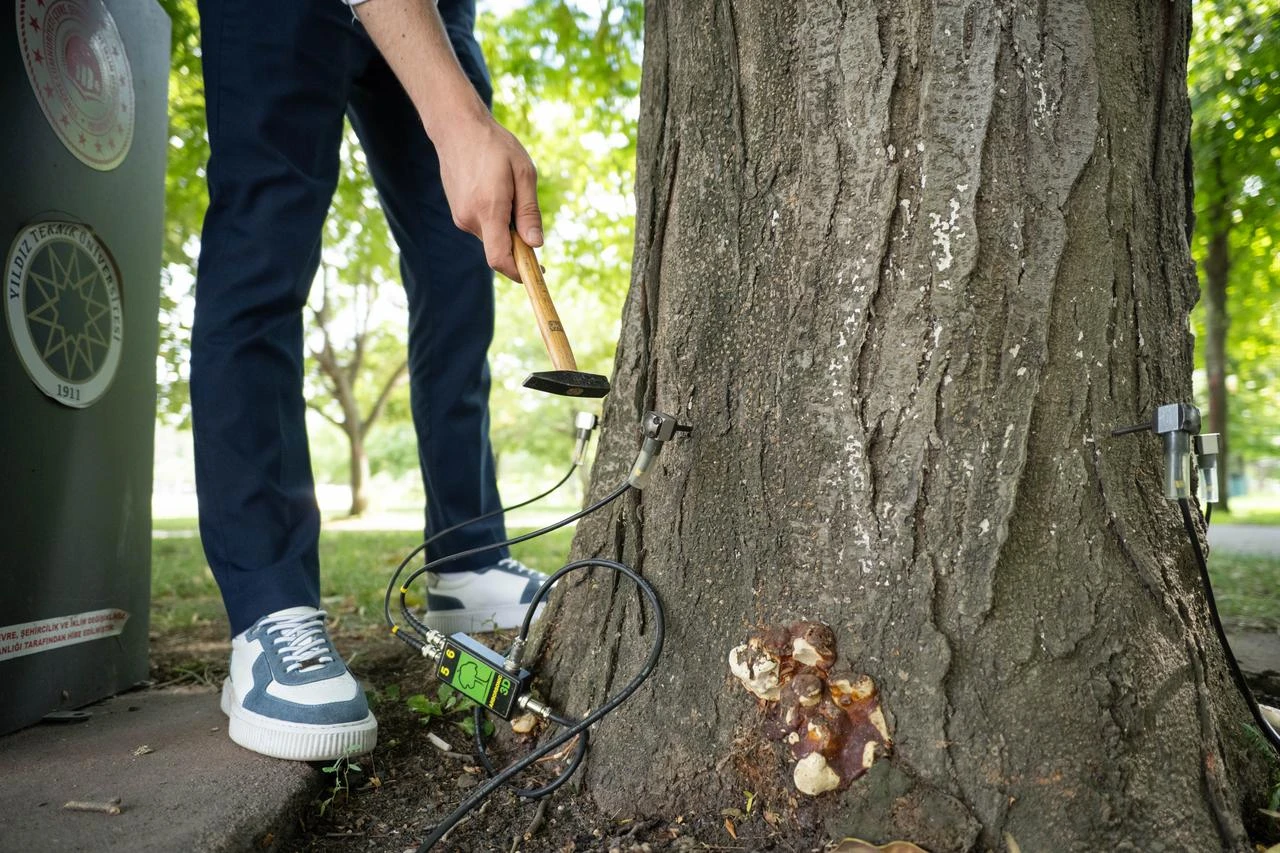
Trees showing signs of internal decay are further examined using acoustic tomography, a technique likened to an MRI scan, to determine collapse risk before any maintenance work is approved.

The surveys, known in Turkish as "rolove," function as an identification record for each tree.
Foresters catalog a tree's species, age, diameter, height, crown width and health condition, along with signs of disease, fungal growth, monumental status and aesthetic value.
Coordinates are then digitized, allowing every tree within a protected natural site to be mapped for future maintenance and conservation work.
Any intervention on a tree within a natural protected site—including pruning, mechanical reinforcement, removal of dead branches or removal for safety reasons—requires an expert report and approval from relevant authorities, according to the faculty.
Individuals and institutions cannot intervene on their own judgment, even when a tree appears fully dried out.
Serhun Saglam, a faculty member at Istanbul University-Cerrahpasa, said, "Survey plans and reports are prepared so we do not harm nature."
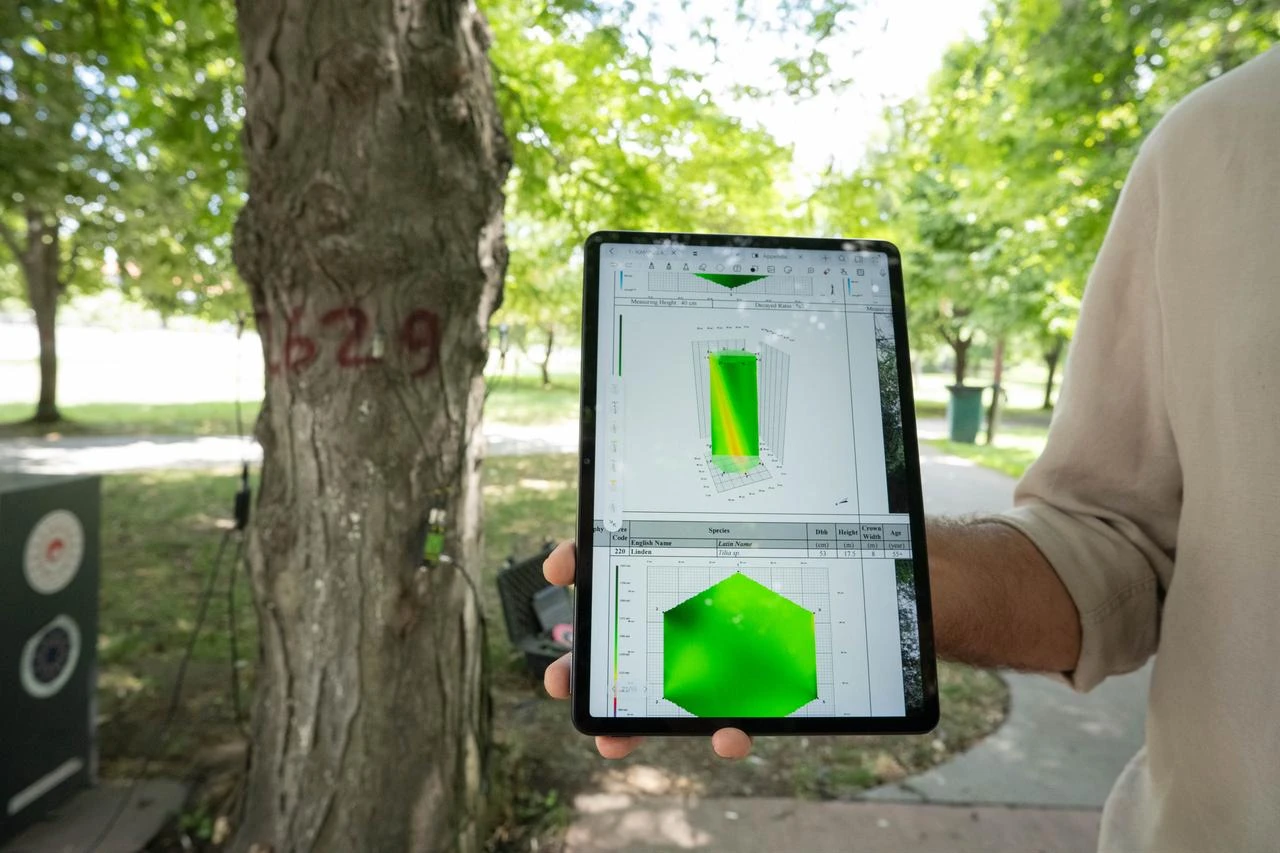
Once a survey is complete, trees suspected of internal decay undergo acoustic tomography. Sensors placed on the trunk measure how sound waves travel through the wood, producing three-dimensional images that reveal decay, cavities or structural weakness inside.
The findings are combined with other data—including the tree's species, root structure, height, lean and the wind load at its location—to calculate collapse risk, rather than relying on decay alone.
For trees found to be at risk, pruning to reduce crown weight is typically the first response, followed by mechanical support systems where needed, according to the faculty.
Removal is not the priority; the goal is to preserve older and monumental trees while maintaining public safety.
Acoustic tomography has been used in Istanbul for approximately 16-17 years, with early studies concentrated in heavily used public groves.
In Beykoz Korusu, a wooded park on the Bosphorus's Asian shore, a tree collapse years earlier resulted in three deaths, an incident cited as underscoring the need for systematic risk assessment.
Subsequent analysis and monitoring have since reduced similar incidents, according to the faculty.
Coordinate-based survey records also allow unauthorized interventions in protected natural areas to be identified after the fact, using aerial photographs and geolocation data, the faculty said.
At Yildiz Technical University's Davutpasa Campus in Istanbul, survey plans and acoustic tomography are being carried out on trees as part of the university's sustainability efforts.
The Davutpasa campus ranks in the top 50 among more than 1,700 universities worldwide in the GreenMetric ranking and is the second-ranked university in Türkiye on that list.
The assessments are intended to extend the lifespan of the campus's tree inventory alongside the university's environmental initiatives, according to the faculty.


 Set as preferred source
 Set as preferred source




 6 min read