Newsletters


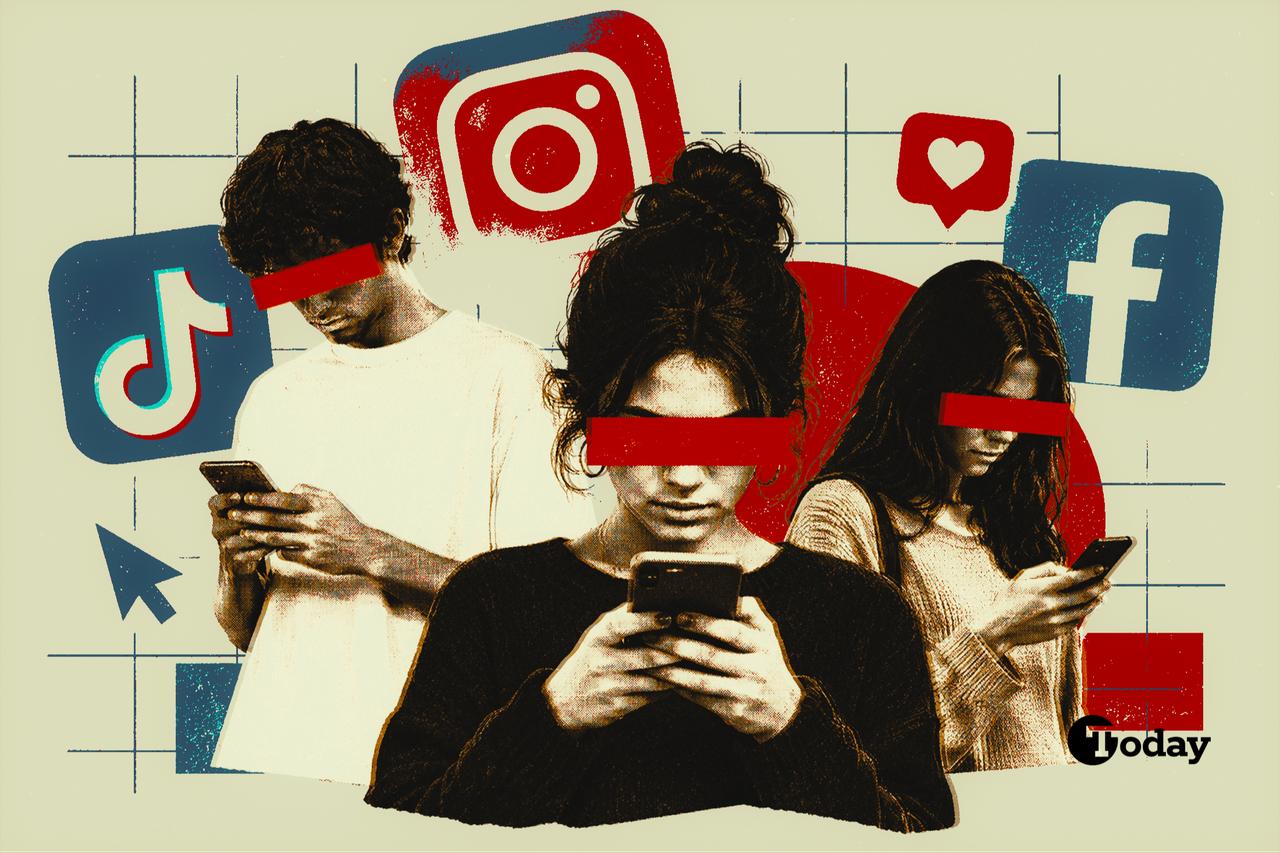


Step onto a commuter ferry in Istanbul during rush hour and watch the Bosphorus glide by outside the windows. Inside, passengers are transfixed by their screens, endlessly flicking from post to post. The world outside shifts and sparkles, but inside, the scrolling never stops.
Attention does not necessarily mean enjoyment. Social media can leave people overwhelmed or drained, yet habit, clever platform design, and the urge to stay connected draw them back again and again.


Social media used to be a simple way to keep up with people you knew. Now, most of what you see is recommendations, short videos, and posts from accounts you might not have chosen to follow.
Slides presented during Meta’s 2025 U.S. antitrust trial showed that only 7% of time spent on Instagram and 17% on Facebook was devoted to viewing posts from friends. In 2023, those figures were 11% and 22%, respectively.
These numbers do not reveal the reasons behind our choices, but they do show how little time we now spend looking at friends’ posts.
Platform design has played a role in this change. Feeds used to show posts from accounts people followed, but now recommendation systems have taken over. They keep people’s attention with short videos, endless scrolling, and notifications.
Speaking to Türkiye Today, Gul Esra Atalay, dean of the Faculty of Communication at Uskudar University in Istanbul, noted the shift: “We initially started using social media because these platforms facilitated interpersonal communication and helped us maintain our social ties. Today, however, those functions have taken a back seat.”
Atalay believes that this change can leave users feeling adrift, swept along by a constant stream of new topics and information they never chose.
“Although we consume a great deal of content, we may continue scrolling without seeing what we are actually interested in or experiencing a sense of satisfaction,” she says.
There is always another post to see, so it is easy to keep checking even when the content no longer feels rewarding.

Frustration does not always lead people to quit social media, though. Some cut back, but many find themselves opening the same apps out of habit.
In Türkiye, social media remains widespread. According to the Turkish Statistical Institute (TUIK), 71.7% of people aged 10 and older had used social media in the previous four weeks in 2025, compared with 33.9% in 2015. DataReportal estimated 62.3 million social media user identities in the country, an 8.3% increase over one year.
Other markets show a different pattern. A Financial Times analysis of GWI data covering 250,000 adults found that average daily social media use in developed markets fell almost 10% from its 2022 peak, reaching two hours and 20 minutes by the end of 2024. The figures point to a decline in time spent online in those markets, but they do not explain why.
These datasets measure different things: time spent online in developed markets and the number of users in Türkiye. Neither captures fatigue, and a drop in one place does not mean the world is logging off.
Atalay says she has not observed a widespread move away from social media in Türkiye. Instead, people may mute notifications, post less or pause their accounts for a while without abandoning the platforms altogether.
She warns that more up-to-date, thorough user research is needed before drawing strong conclusions about these trends.
That distinction matters. Feeling weary of social media and actually choosing to leave are two very different things.

Habit is a powerful force. Endless scrolling, constant notifications, and ever-refreshing recommendations make it effortless to return and discover something new each time.
Atalay points to curiosity, fear of missing out and instant rewards as reasons people continue using platforms despite fatigue.
“We turn to social media to rest and clear our minds, but end up leaving with a different kind of fatigue,” she says.
Yet habit is not the only thing that makes leaving social media difficult. People rely on it to nurture relationships, join in conversations, and stay in the loop.
In Türkiye, Atalay says, political, economic and social developments can make users feel compelled to check for updates, even when they would rather disconnect.
“Stepping away from social media can also mean distancing oneself from current events and social developments,” she explains.
Family and close relationships are another anchor keeping people on social media. Cutting back might be simple, but letting go of a lifeline to loved ones is much harder.
An experiment involving university students offers a glimpse of that social pressure. Participants said they would pay about $55 to retain access to TikTok, but about $24 to have it disabled for everyone on campus. The contrast suggests that other people’s presence may influence how individuals value a platform.
In this way, social media use is not always about enjoyment. Sometimes, it is simply a way to keep pace with others who remain online.

If both platform design and social pressure wear people down, stepping away on your own may only scratch the surface.
A 2025 study of 20 randomized trials found that digital detoxes led to small improvements in well-being. This suggests breaks can help, but they are not a full solution.
Atalay also says that spending time away from digital platforms can give temporary relief. For lasting change, she believes companies should prioritize user well-being, and users and society should push for better platform practices.
She encourages people to reflect on their relationship with social media and ask whether their habits truly serve their needs.
“It is important to transform our use of social media from an automatic habit into a conscious experience,” she says.
But if scrolling no longer brings satisfaction, why does logging off still feel like letting go of something much larger?


 Set as preferred source
 Set as preferred source



 2 min read