Newsletters




Türkiye has significantly expanded its national and international healthcare cooperation, signing 18 agreements with 11 countries across three continents in 2025, according to the Health Ministry’s E.U. and Foreign Relations Director General Aziz Alper Biten.
Speaking to Anadolu Agency, Biten said the agreements cover a wide range of areas, including health technologies, research and development, health information systems, medical devices and pharmaceuticals, health investments, policy development, health tourism, training of foreign medical staff, treatment of foreign patients, and emergency and disaster response.
Biten said Türkiye’s health transformation process laid the foundations for its current system, enabling the country to become a global actor exporting healthcare services, knowledge, and technology through strong infrastructure, modern hospitals, and advanced technologies.
He noted that Türkiye now plays a proactive role in global health governance, working closely with international organizations, particularly the World Health Organization and the United Nations.
To date, Türkiye has contributed to 152 international health-related texts and shared data for 26 international surveys and studies.
According to Biten, Türkiye has moved beyond being a passive participant and has become an influential voice in international health cooperation, while also maintaining inclusive partnerships with organizations across the Turkish and Islamic world.

Biten said Türkiye has signed 309 agreements and memoranda with 100 countries so far, and continues to expand cooperation under a new vision.
“In 2025 alone, we signed 18 agreements with 11 countries from three different continents,” he said, adding that cooperation this year included Albania, Uzbekistan, Mali, Indonesia, Kazakhstan, Azerbaijan, Kyrgyzstan, Kosovo, Mongolia, and the Turkish Republic of Northern Cyprus.
He also highlighted Türkiye’s support for medical operations and healthcare training abroad, citing kidney and liver transplants carried out at the Recep Tayyip Erdogan–Bishkek Kyrgyz-Turkish Friendship Hospital, alongside training and experience-sharing with local health professionals.
Biten said Türkiye plays an active role in Syria’s reconstruction, supporting the rebuilding of health infrastructure, strengthening preventive healthcare services, planning healthcare human resources, and advancing digital health systems.
He stressed that preparedness for disasters and emergencies remains a priority, noting that Türkiye has provided health services during crises such as the cholera outbreak in Sudan, the earthquake in Afghanistan, the Syria process, and the Gaza crisis.
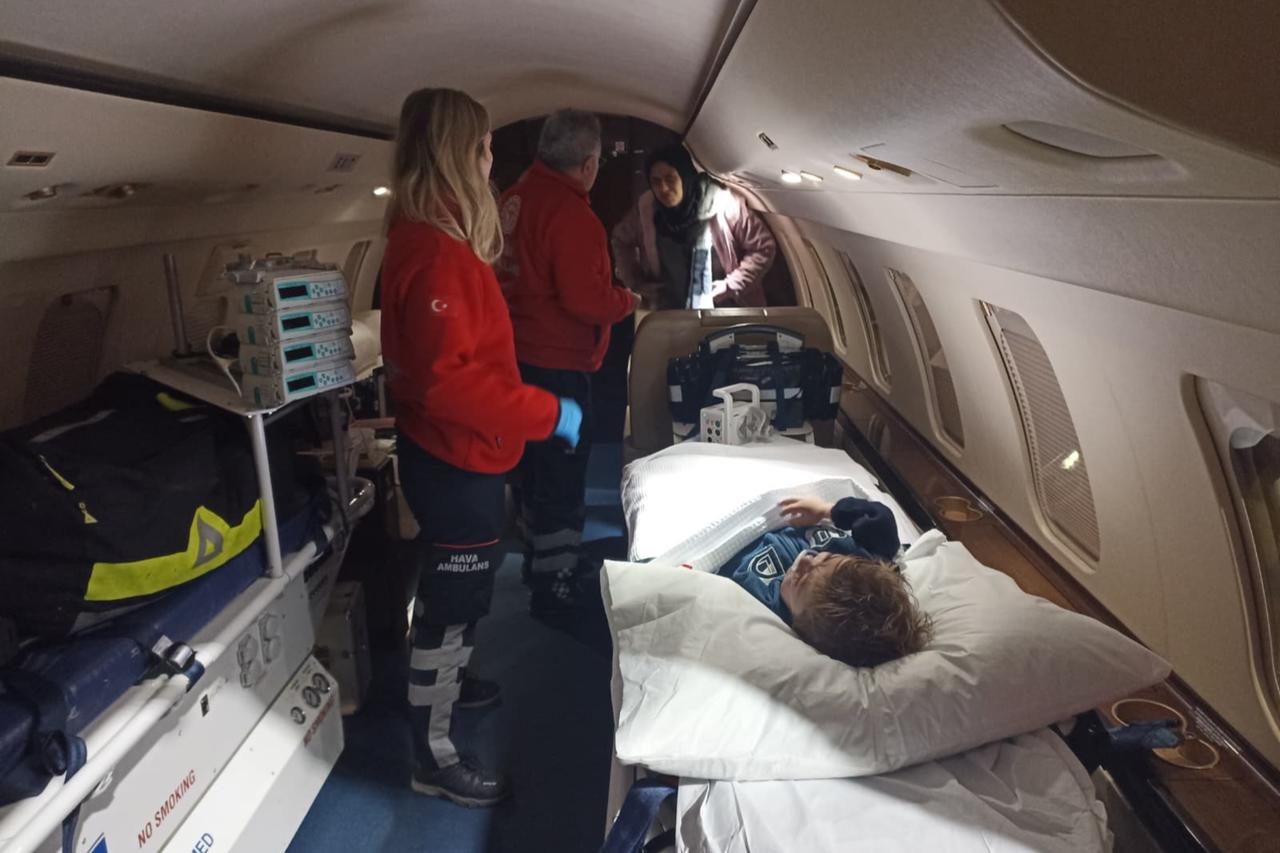
Since evacuations began from Gaza, Biten said many Palestinian patients and their companions have received healthcare services in Türkiye.
He added that Türkiye also manages the diplomatic processes of its overseas “friendship hospitals” and continues to provide health assistance to countries in need.
Biten said the ministry adopts a project-based approach, with the European Union being a key partner.
Joint projects with the E.U. focus on combating infectious diseases, climate change, cancer, emergency and disaster response, mental health, and migrant health.
“We closely monitor the global health agenda,” Biten said, adding that Türkiye evaluates international funding opportunities and potential partnerships that benefit the country, while acting as a bridge between global best practices and domestic health policy implementation.


 Set as preferred source
 Set as preferred source


 1 min read
 1 min read