Newsletters


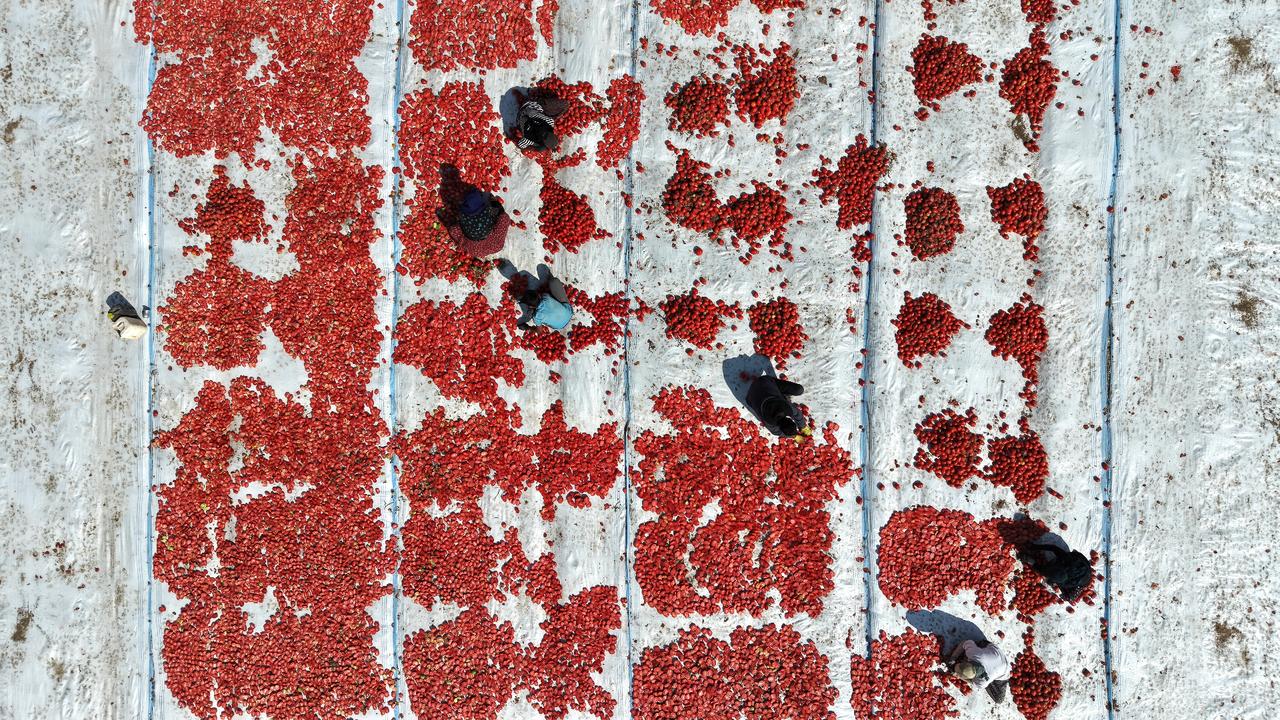
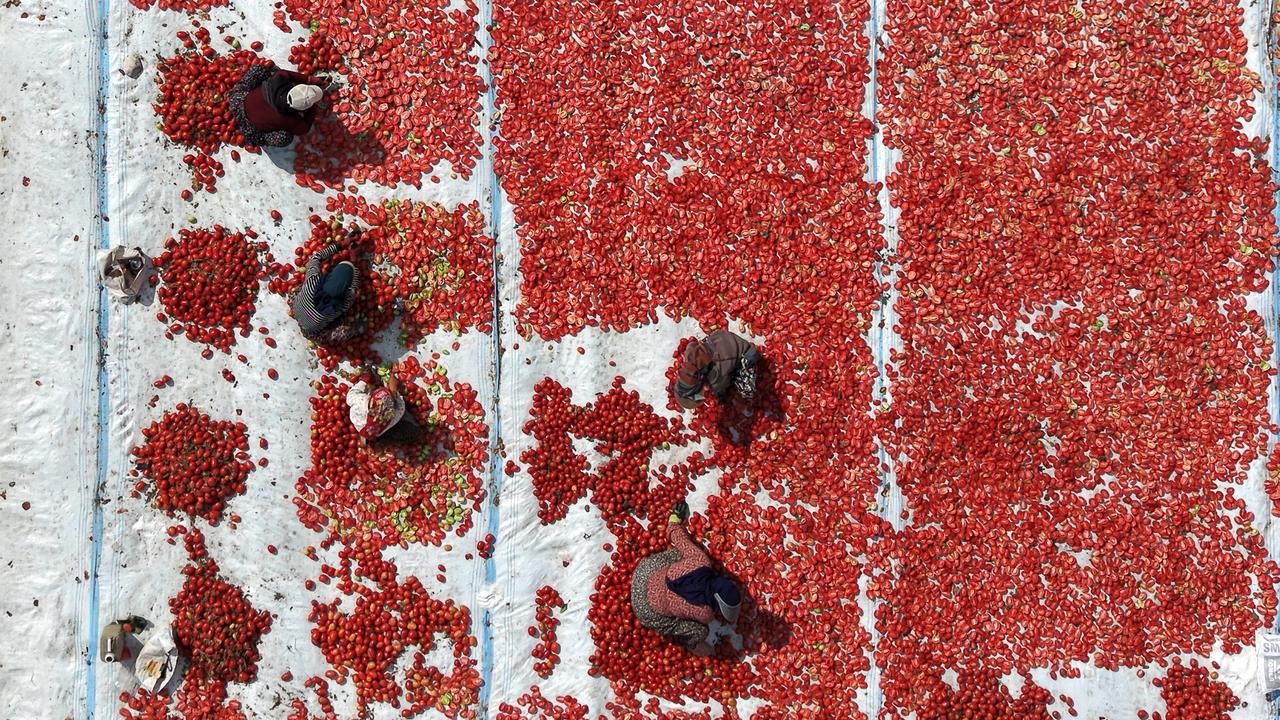
Seasonal workers spread harvested tomatoes on white sheets to dry in Yesilhisar, Kayseri, on Oct. 8, 2026.
The work began in July and continues into autumn. Yesilhisar sits at the foot of Mount Erciyes.

Drying takes about eight days there, because the cool highland air slows the process. In the Aegean and Southeast, it takes only a few days.
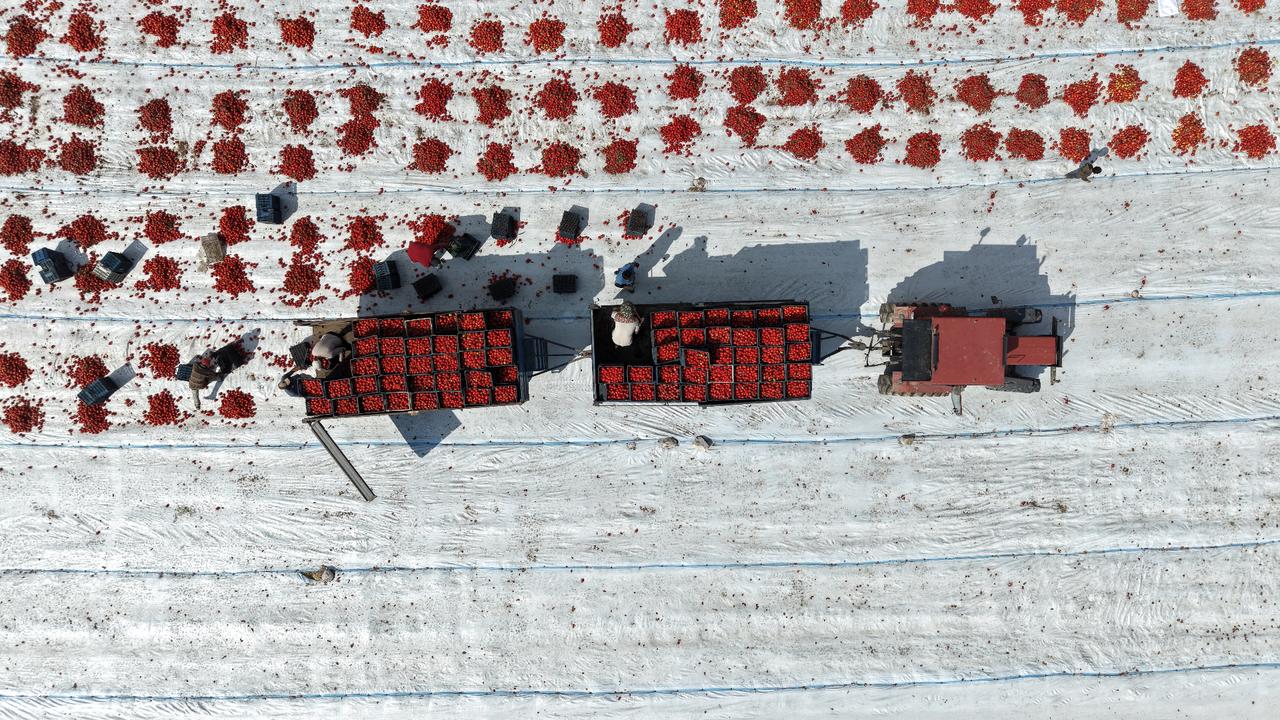
Families spread the halved tomatoes one by one across the sheets. When harvest begins, almost every field has a work crew of 45 to 50 people. The sun does the drying.
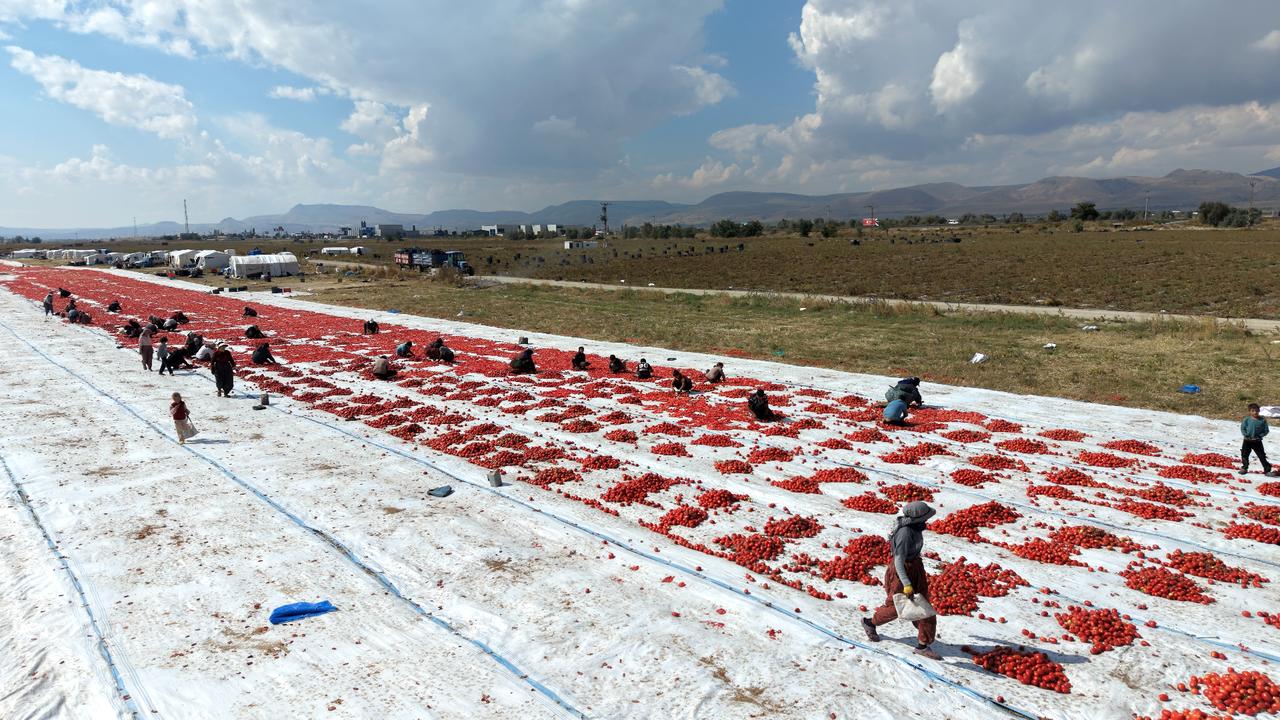
The seasonal workers come from Sanliurfa. Each year they travel about 600 kilometers with their families, arriving in mid-April and returning home toward the end of the year.

The workers, families from Sanliurfa, spend the spring and summer weeding sunflower, sugar beet and squash fields by hand before the tomato harvest begins.
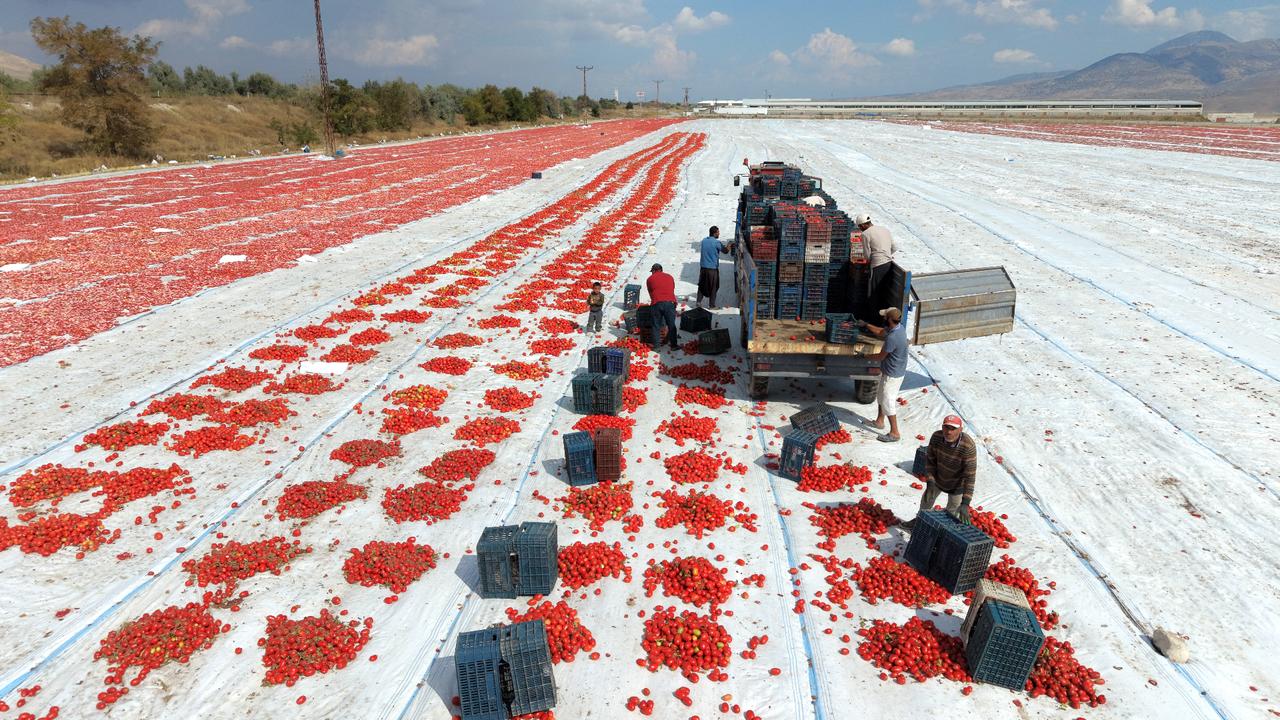
This season’s drying tomatoes cover about 1,500 decares of the Yesilhisar plain. Local producers shifted from potatoes and sunflowers to drying tomatoes, which are easier to sell because they keep longer than fresh ones.
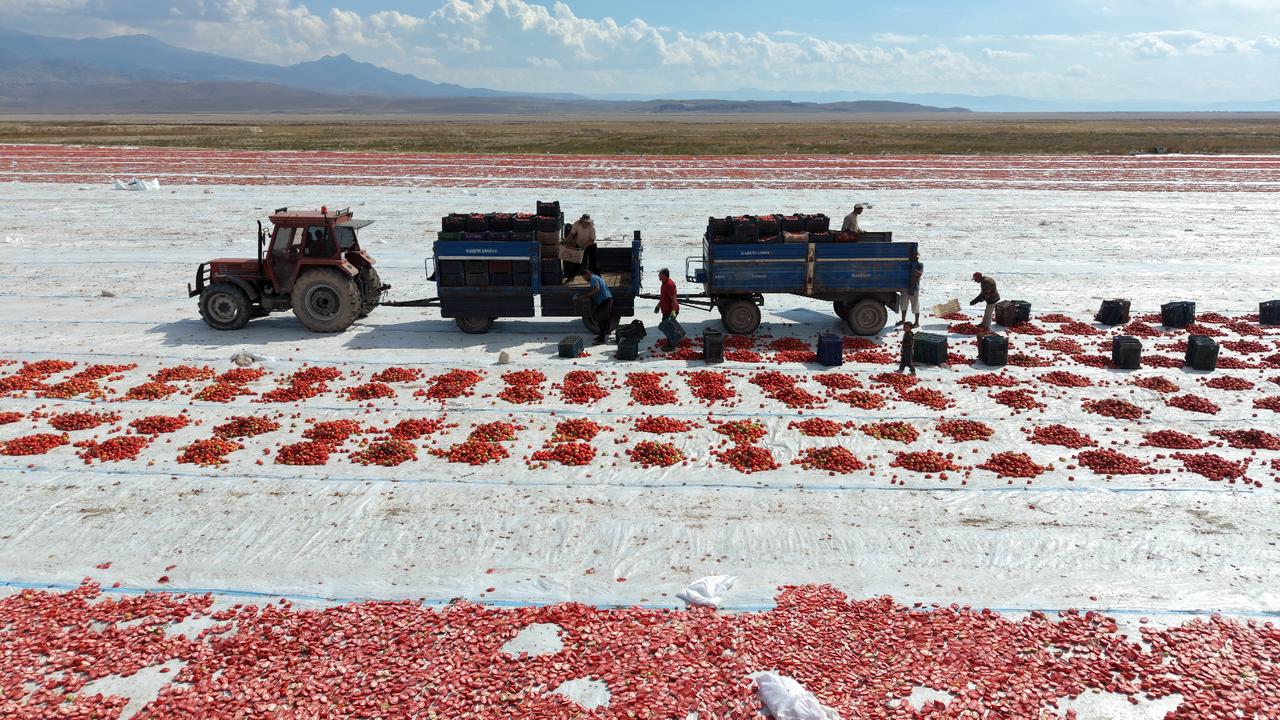
Once dried, the tomatoes are sorted and packed for export. Producers say shipments go to 10 countries, led by the United States and Italy.
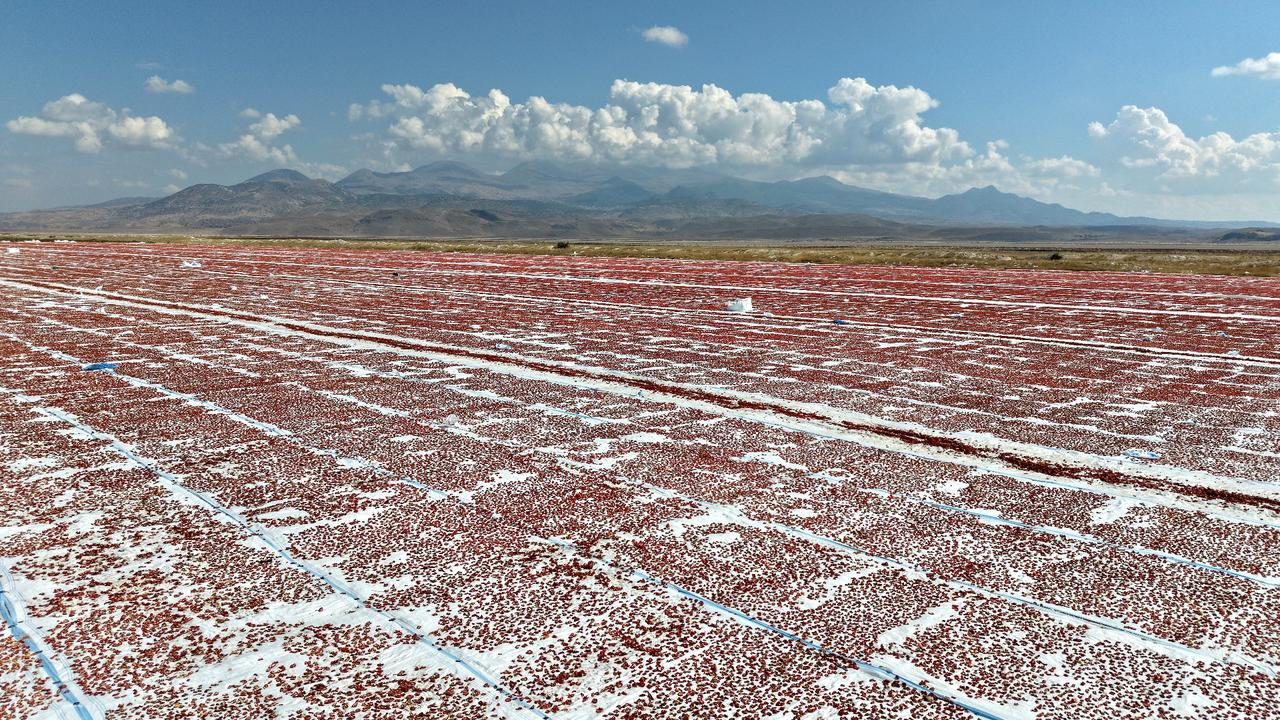
The Chamber of Agriculture also lists Brazil, the Netherlands, Germany, Belgium and the UK as destinations.
According to Aegean Exporters’ Association data, Türkiye’s dried tomatoes reach 91 countries. The Kayseri harvest is a small part of that trade.
 4 min read
 2 min read


 Set as preferred source