Newsletters


Turkish defense giant Aselsan's counter-drone suite 'DRONEDEF' successfully neutralized targets across three different scenarios at the company's Golbek Test Center.
Meanwhile, Roketsan simultaneously disclosed that its Alka directed-energy laser weapon system, already operational in the Turkish Armed Forces (TAF), is being scaled to far greater power outputs to keep pace with accelerating drone threats.
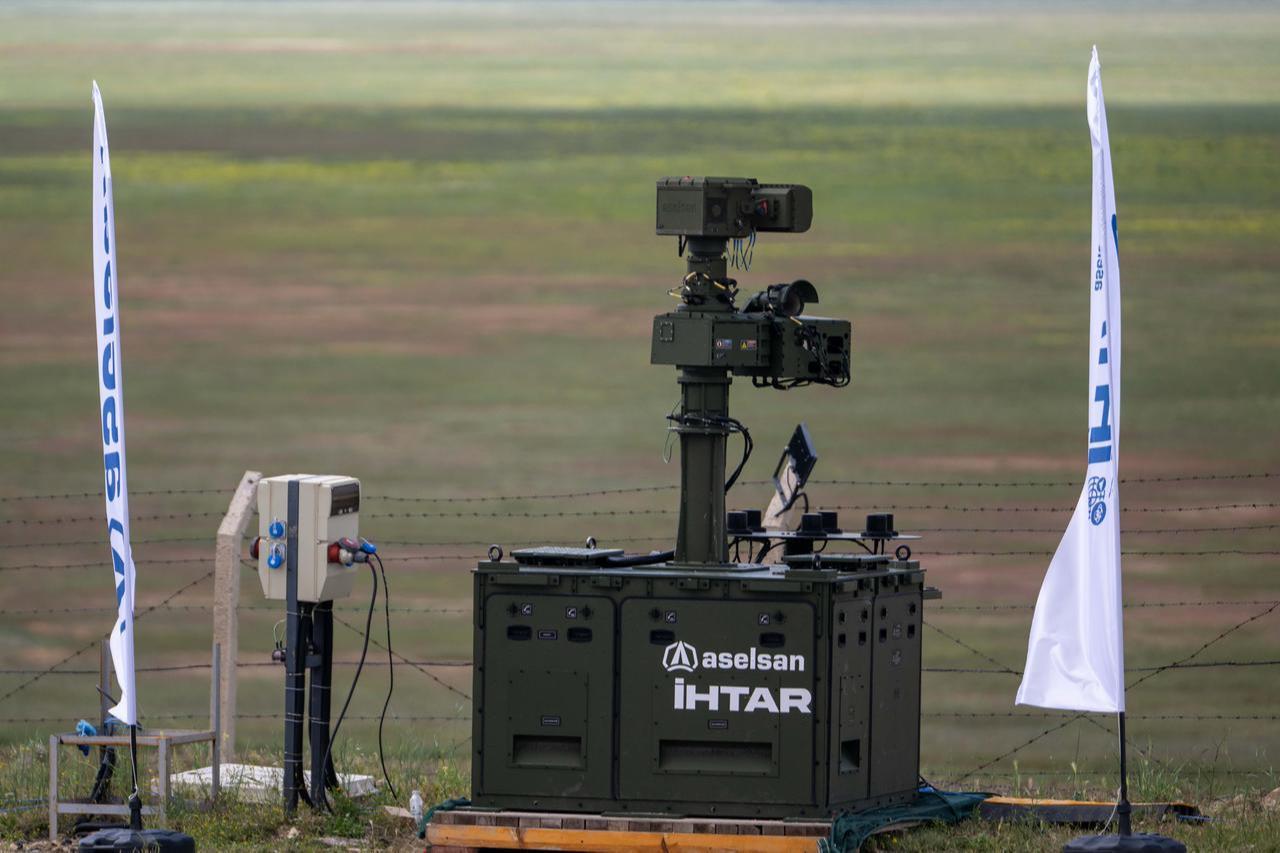

Aselsan assembled the DRONEDEF countermeasure suite to address mini- and micro-class unmanned aerial vehicle threats.
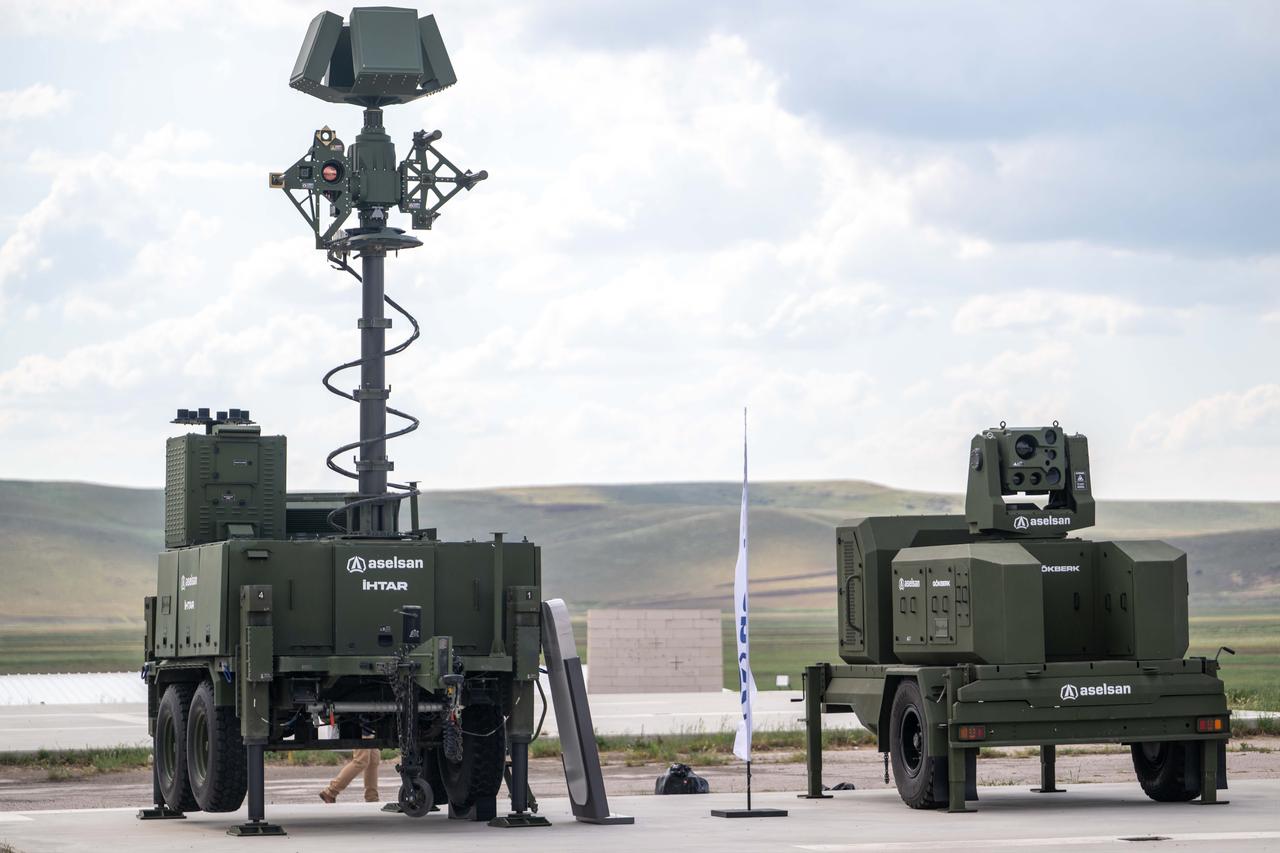
The set includes the Ihtar Anti-UAV System for detection and soft-kill electronic warfare, the Gokberk 5/10 kilowatt laser weapon system, the Korkut 25 fragmentation munition weapon system, the Gokalp Autonomous Interceptor UAV, the Ejderha High-Powered Electromagnetic Anti-UAV System, the Sahin Lite and Sahin Dual weapon systems with fragmentation munitions, and the Migfer FPV drone self-defense system.
During the demonstration, Ihtar, Ejderha and Gokberk were tested.
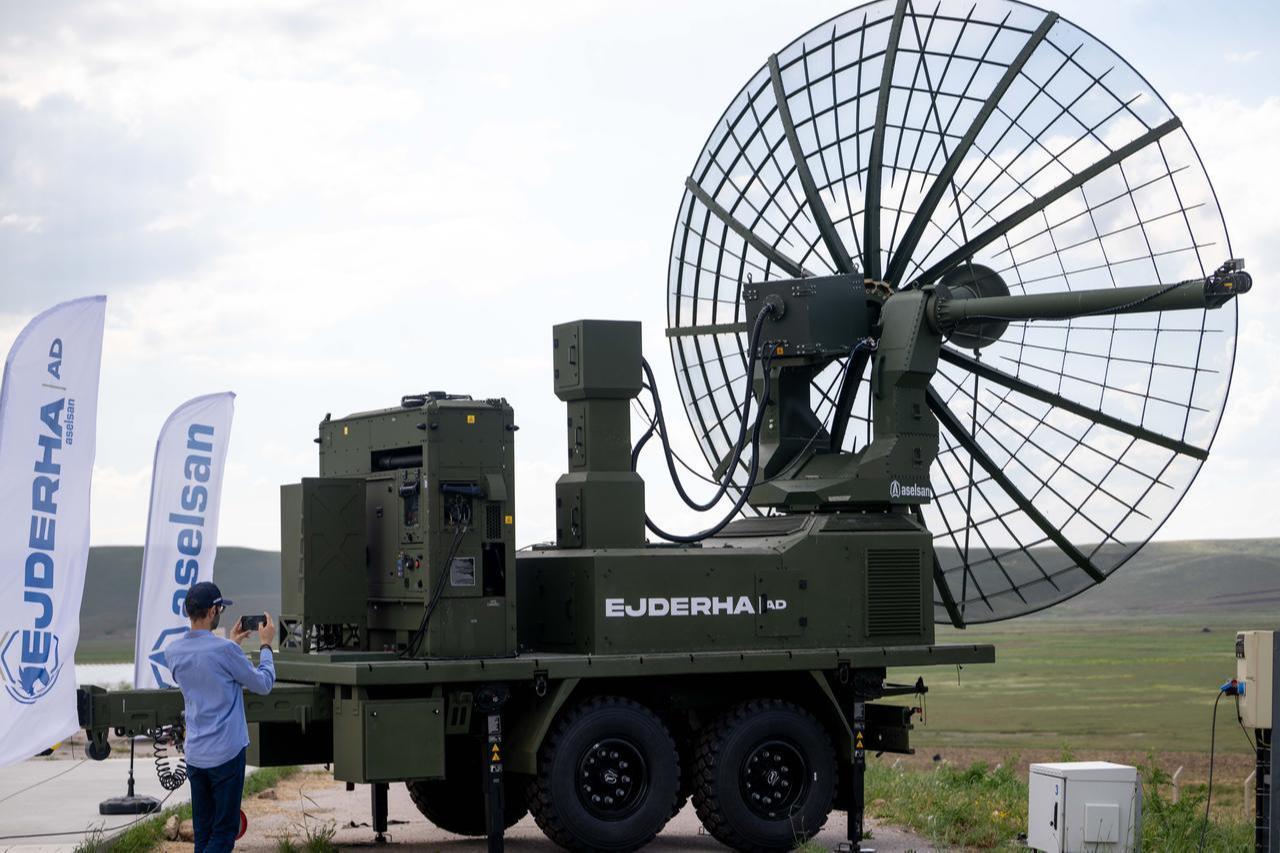
Swarm drones approaching from multiple directions were first detected by the Ihtar Anti-UAV System, which is equipped with an AURA 200G radar unit. Two drones from the swarm were neutralized by Ihtar within seconds.
The command-and-control subsystem then allocated the remaining threats to the physical neutralization subsystems.
Ejderha and Gokberk tracked the remaining UAVs using Ihtar data, then engaged them once the targets entered the firing range.
Ihtar integrates AESA radar technology, advanced image processing algorithms and programmable FPV jamming capabilities within a single architecture, enabling early detection and high-accuracy identification.
Ejderha, mounted on a mobile platform, uses vacuum electronics technology to generate high-powered electromagnetic waves that disable targets' electronic systems.
Gokberk provides physical destruction using a laser weapon within the layered air defense architecture.
Roketsan Weapon Systems and Integration Director Koray Dayanc told Türkiye's state-run Anadolu Agency (AA) that directed-energy development began in 2018-2019 specifically to protect critical infrastructure against drone threats.
After winning a competitive tender against Aselsan and TUBITAK Bilgem, the winning criterion being the only solution to destroy a single drone, the Alka system entered service, and deliveries began.
The system has progressed from an initial 2.5-kilowatt output to 5 kilowatts and then to 10 kilowatts. At the 10-kilowatt level, Alka is currently operational and performing active-duty missions.
"Detection and identification times have been shortened; we have made updates to our radar. We are also working on transitioning to new radar technologies to detect more targets," Dayanc said.
He said artificial intelligence algorithms had been embedded directly into Alka's command-and-control system to reduce operational response time as drone numbers increase.
"We have taken measures to shorten both the detection time and the prioritization, as well as the timing that falls on the operator. We are updating it. We continue to improve every day based on feedback from the field," he said.
Depending on plate thickness, strike zone and laser output energy, drones can be neutralized within one to five seconds, Dayanc said.
"Every day we increase our energy. As our energy increases, this time gradually shortens," he noted.
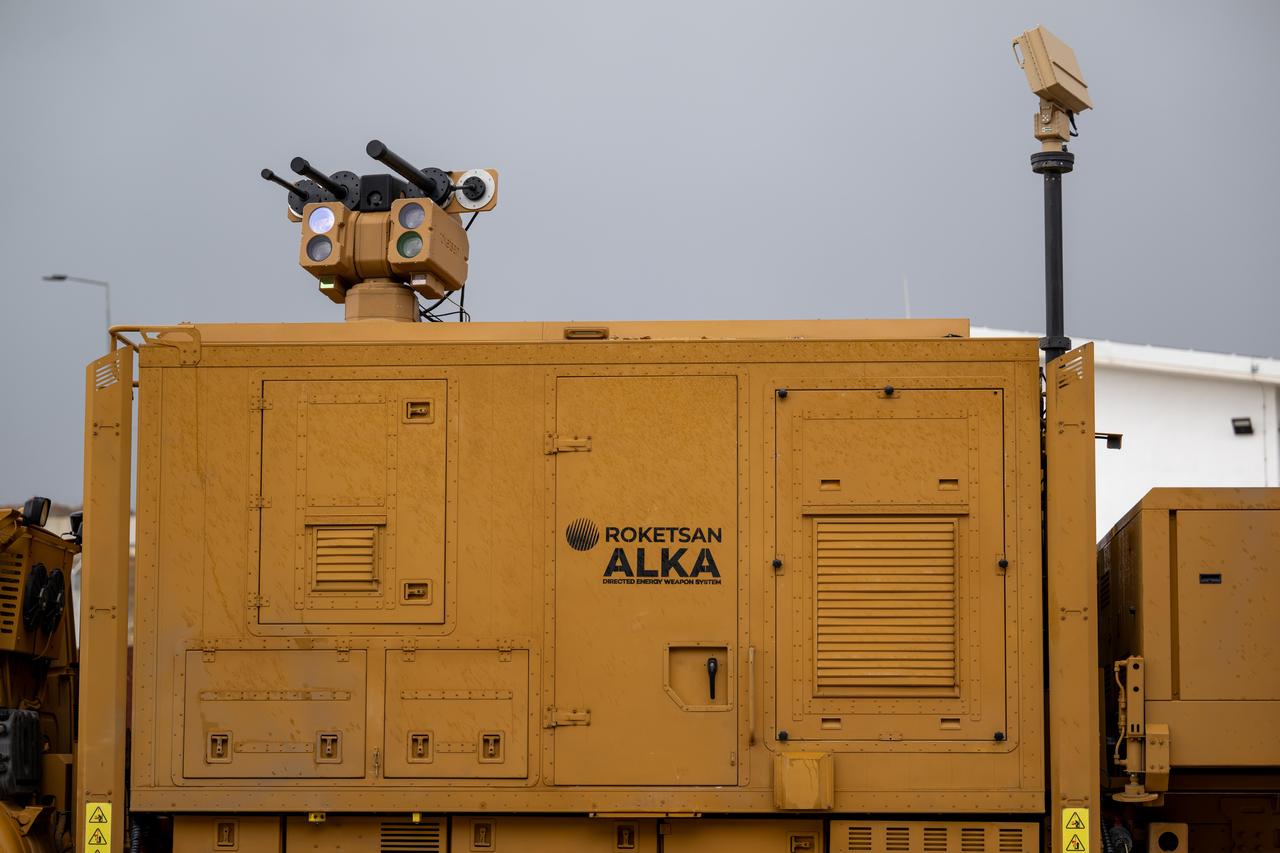
Positioning Alka as the final hard-kill layer of the Steel Dome multi-layered air defense concept, Dayanc said the system's power trajectory would be aggressive.
"We need to advance perhaps 5, 10, or 20 times rather than in a 2x2x2 manner. Because threats are developing very rapidly and asymmetrically. Therefore, we will also increase the power multiplier rapidly," he said.
"As Roketsan, Alka is an infrastructure and directed-energy system we keep in continuous development. We are advancing with the operational experience and field feedback we receive so as to solve the future needs of the Turkish Armed Forces as well. In particular, we are positioning Alka as the laser power of Steel Dome, as a multi-layered air defense element, performing hard-kill duties at the final point," Dayanc concluded.


 Set as preferred source
 Set as preferred source



 2 min read