Newsletters


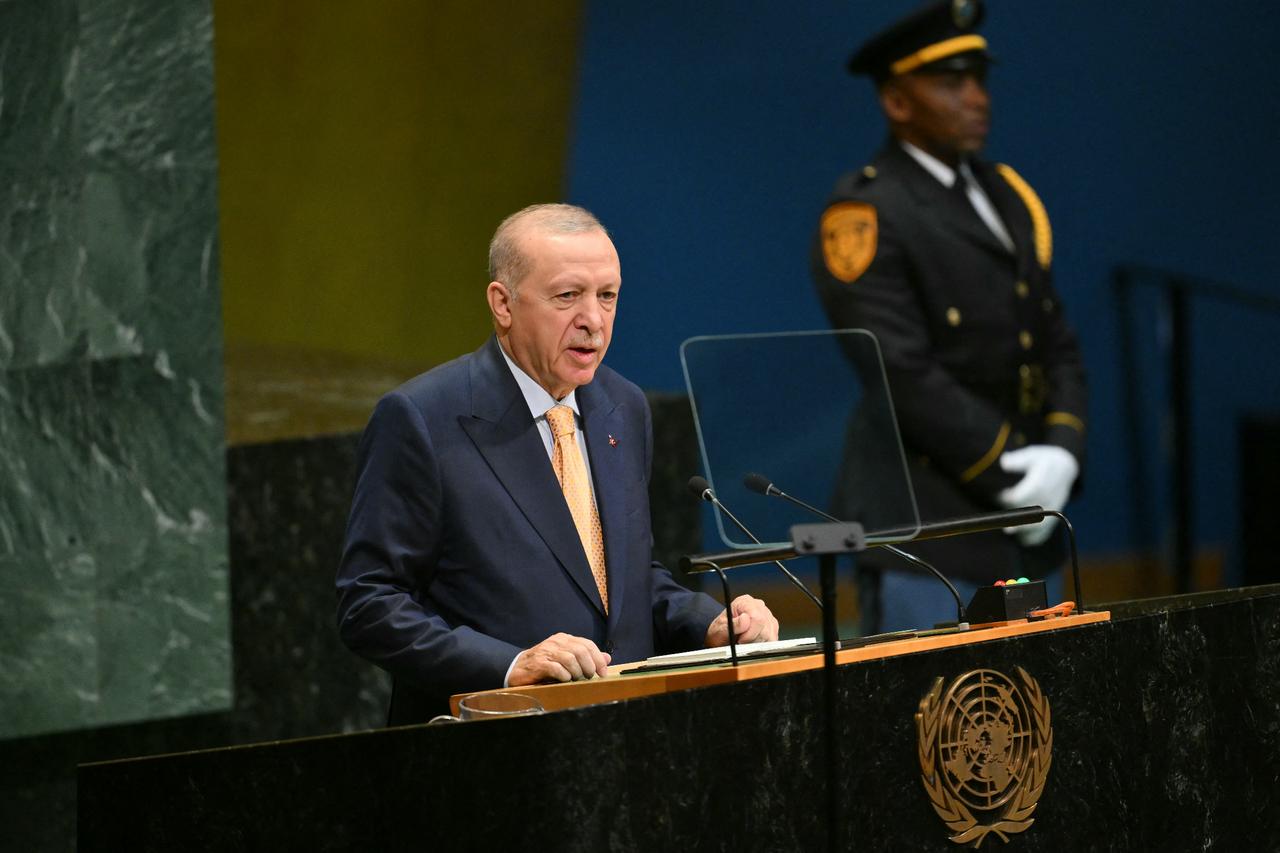


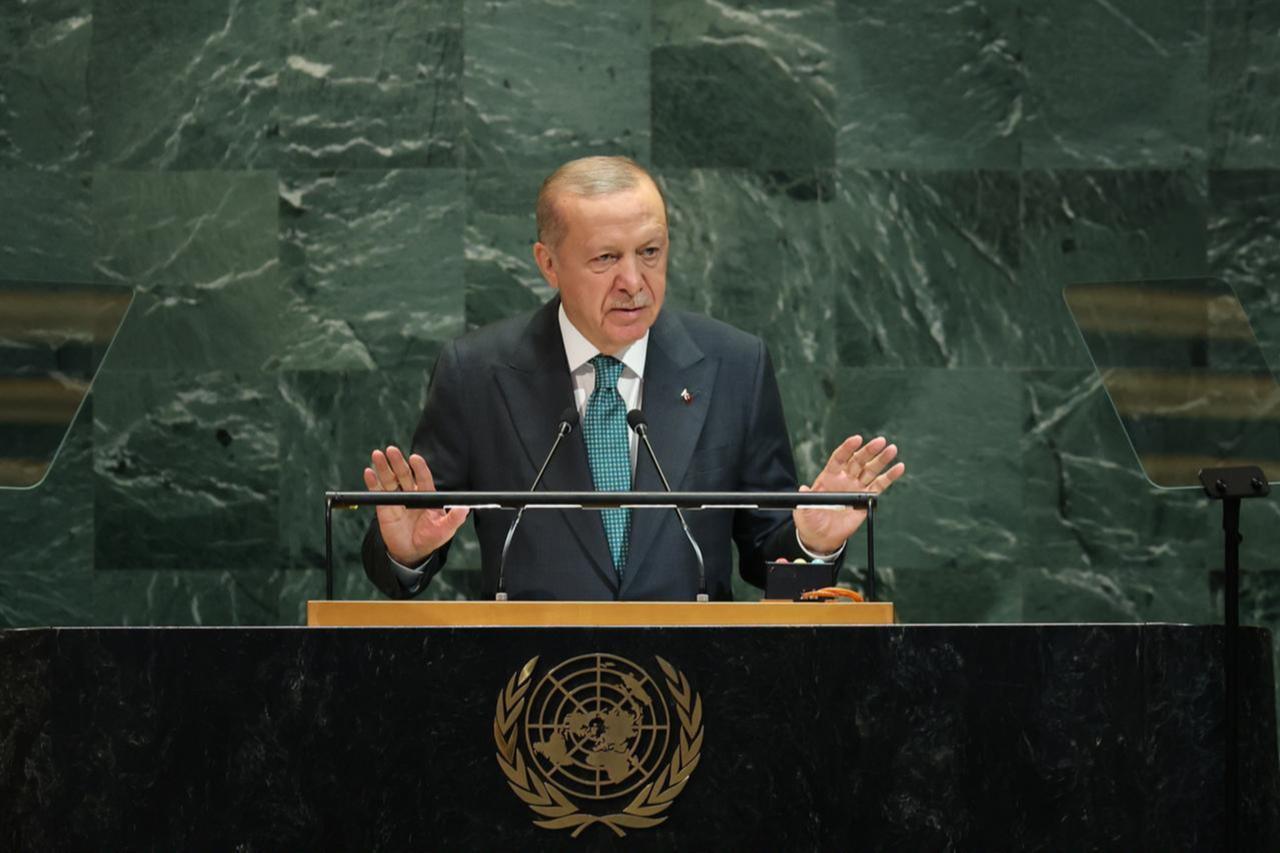
President Recep Tayyip Erdogan told the United Nations General Assembly on Tuesday that Gaza has become "the world's largest children's cemetery" and accused Israel of pursuing what he called a "genocidal mentality," in a speech marking his 16th address to the world body.
Erdogan said more than 1,500 Palestinians in Gaza have been killed even after a ceasefire brokered with the involvement of President Trump and other countries, including Türkiye. He said the Palestinian resistance movement had agreed to move into the second phase of the peace plan, but that the Israeli government was refusing to halt what he described as its occupation.
Speaking from the General Assembly podium, Erdogan said that over the past three years, 74,000 people in Gaza, most of them women and children, had been killed as a result of what he called Israeli state terrorism. He said residents of the territory were still searching through rubble for missing relatives and recovering the bodies of spouses, children and parents.
He said children who had lost hands or feet in Israeli attacks were attempting to attend school using wooden prosthetics, and that more than 70 percent of hospital generators in Gaza were currently out of service because of fuel shortages.
"Gaza is not only the world's largest children's cemetery today, it is also the region with the highest rate of child amputees in the world," Erdogan said, adding that he considered Gaza "the most inhumane, most shameful concentration camp of our time."
He also said the West Bank was experiencing its most severe period of settler violence.
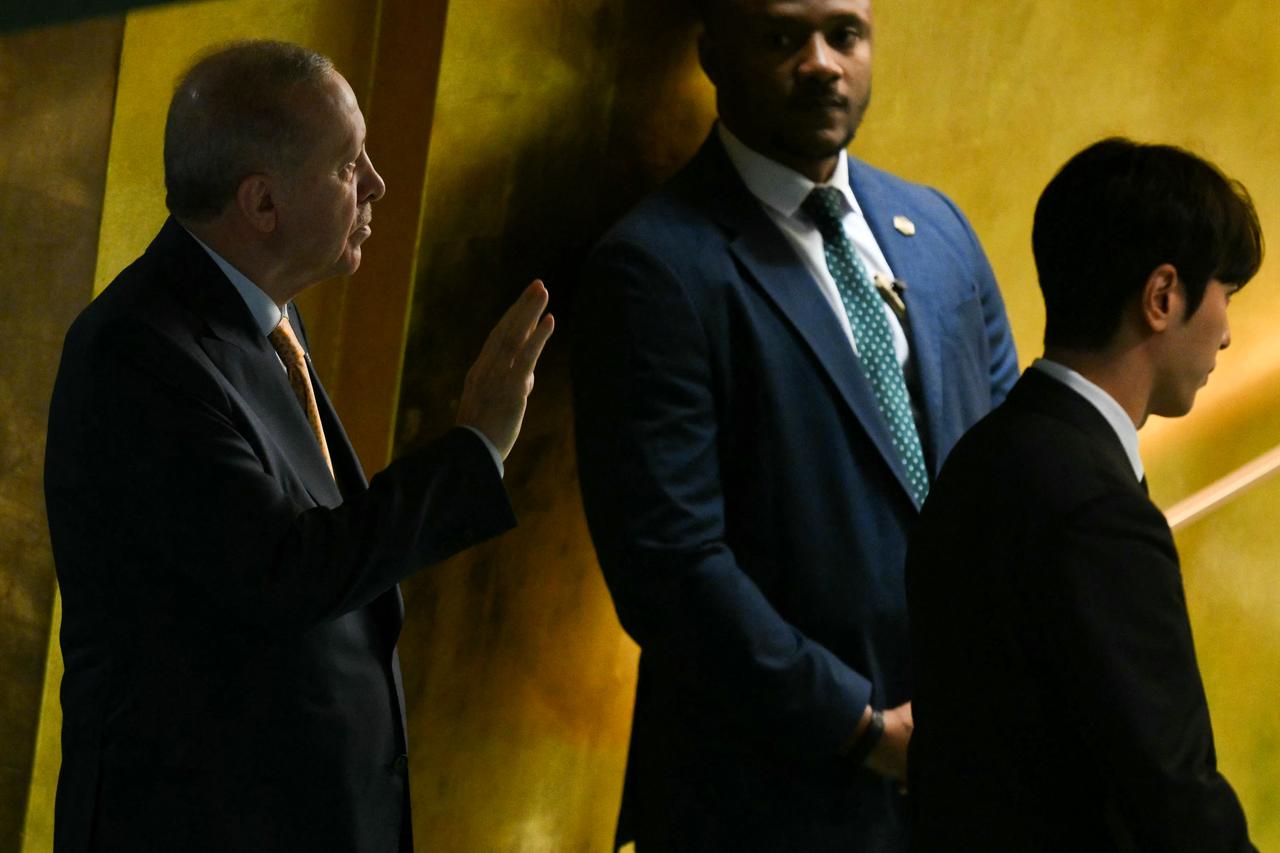

Erdogan opened his remarks by voicing regret that Palestinian Authority President Mahmoud Abbas had been unable to attend the General Assembly session for a second consecutive year. The vast majority of UN member states formally recognize the State of Palestine.
"This injustice toward our Palestinian brothers and sisters wounds consciences," Erdogan said, adding that even in Abbas's absence, Türkiye would continue to act as the voice of what he called a free and sovereign Palestinian state, as it did the previous year.
He renewed a call for all countries that have not yet recognized the State of Palestine to reconsider that position.
Erdogan also thanked UN Secretary-General António Guterres, whom he described as a friend, for carrying out his role with impartiality and courage over nearly a decade in office.
Turning to the broader state of international affairs, Erdogan referenced the founding charter of the United Nations, signed more than 81 years ago, in which member states pledged to save future generations from the scourge of war and to uphold human dignity, justice and international peace and security. He said humanity was still waiting for that founding commitment to be realized.
He said the past 12 months had seen more than 60 conflicts and wars worldwide, making it one of the bloodiest periods of the past three decades, and that hundreds of thousands of people had been forced to leave their homelands as a result.
Erdogan said the United Nations, created eight decades ago to safeguard peace and security, had become unable to carry out that mission, and that the organization was "losing blood." He said people in Palestine, Lebanon, Sudan and other crisis zones who had placed their hopes in the UN were left deeply disappointed.
He said he found this year's General Assembly theme, focused on restoring trust in the international system, especially fitting, and voiced support for Guterres's UN80 reform initiative aimed at strengthening the organization.
Erdogan framed his remarks on Gaza as a matter of conscience rather than personal politics. "This is not Tayyip Erdogan's personal issue," he said. "This is a humanitarian issue. It is a matter of conscience for all of us."
Erdogan devoted a significant portion of his address to what he described as the failures of the UN Security Council, arguing that the body's structure leaves the will of more than 190 countries subject to the preferences of five permanent members. "The world is bigger than five," he said, repeating a phrase he has used in previous UN addresses, and said the council must be reformed on that basis.
He laid out five principles he said should guide a more just international order: ending the practice of applying international law differently to powerful and weak states; relying on regional ownership to break deadlocks, citing Türkiye's role in facilitating the Black Sea grain corridor as an example; restoring cooperation and open diplomacy to the center of relations between states; addressing widening global income inequality through shared development and connectivity; and ensuring technology remains human-centered rather than deepening a divide between countries that have access to it and those that do not.
Erdogan said an international system built on impunity, in which wrongdoers escape consequences, is destined to decay.
Erdogan cited a defense pact Türkiye has formed with Pakistan and Saudi Arabia as an example of regional actors taking ownership of security matters, saying the arrangement was intended to produce solutions to regional problems from within the region. He said Türkiye continues working with relevant parties to end the conflict in the Gulf and warned against allowing hostilities there to spread to neighboring areas.
On Gaza, he said Türkiye remains committed to an agreement it signed a year earlier and said reconstruction of the territory must begin without delay, calling on the assembly to increase pressure on Israel toward that end. He said attempts to suffocate a Palestinian state would ultimately fail, and that he hoped to see the realization of an independent, territorially contiguous Palestinian state based on 1967 borders with East Jerusalem as its capital.
Turning to Syria, Erdogan said that following the fall of what he described as 14 years of oppression through the Dec. 8 revolution, the country has entered a new path under President Ahmed al-Sharaa, and that Türkiye would continue to stand by the Syrian people despite internal and external provocations. He said Türkiye's support for strengthening state authority and stability in Iraq is complete, citing cooperation on the Development Road project and other transportation and energy initiatives.
On the war between Russia and Ukraine, Erdogan said Türkiye continues contacts with both parties aimed at restoring safe navigation in the Black Sea, securing food security and preventing the conflict from spreading further, and said recent attacks on commercial vessels in the Black Sea are unacceptable regardless of who carries them out. He said freedom of navigation in the Strait of Hormuz must also be protected.
Erdogan said Türkiye wants existing disputes in the Aegean and eastern Mediterranean resolved on the basis of good neighborly relations and international law, and repeated a proposal for an Eastern Mediterranean Conference to build common ground.
He renewed a call, which he said he has made in previous General Assembly sessions, for recognition of the sovereign equality of Turkish Cypriots and an end to what he called the inhumane isolation imposed on them, and invited the international community to recognize the Turkish Republic of Northern Cyprus and establish political, diplomatic and economic relations with it.
He said Türkiye continues to serve as an island of stability amid regional conflicts, pointing to its growing defense industry and an economy he described as resilient to shocks. He said Türkiye, as an inseparable part of Europe, plays an important role in securing the continent's prosperity and security, citing the NATO summit Türkiye hosted in Ankara in July as concrete evidence of that commitment, and said a Europe that excludes Türkiye from its security architecture cannot become stronger or safer.
Erdogan also addressed the Balkans, calling the region one with which Türkiye shares deep historical, cultural and human ties, and said Türkiye is taking joint steps to deepen unity through the Balkan Peace Platform.
On the South Caucasus, he said Türkiye wants to see lasting peace established between Azerbaijan and Armenia and welcomed the efforts toward a settlement shown by Azerbaijani President Ilham Aliyev and Armenian Prime Minister Nikol Pashinyan, saying Türkiye continues to advance its own normalization process with Armenia.
He said the Organization of Turkic States has grown into a model of regional cooperation, strengthening year after year, and that its 13th Summit of Heads of State, to be held in Ankara on Oct. 30, would open new avenues for the organization. He said the fourth Türkiye-Africa Partnership Summit, to be held in Libya in December, would symbolize more than two decades of institutional partnership Türkiye has built with African nations.
On South Asia, Erdogan said all disputes, including the Kashmir issue, should be addressed through dialogue within the framework of the UN Charter and relevant resolutions, adding that any problem can be resolved if parties act constructively. He said Türkiye's support for ceasefire and lasting peace efforts in Sudan, and for strengthening security, development and institutional capacity in Somalia, is complete, and said preserving stability in Libya is a priority, with any reconciliation process there needing to be led and owned by Libyans themselves.


 Set as preferred source
 Set as preferred source


 2 min read
 1 min read