Newsletters


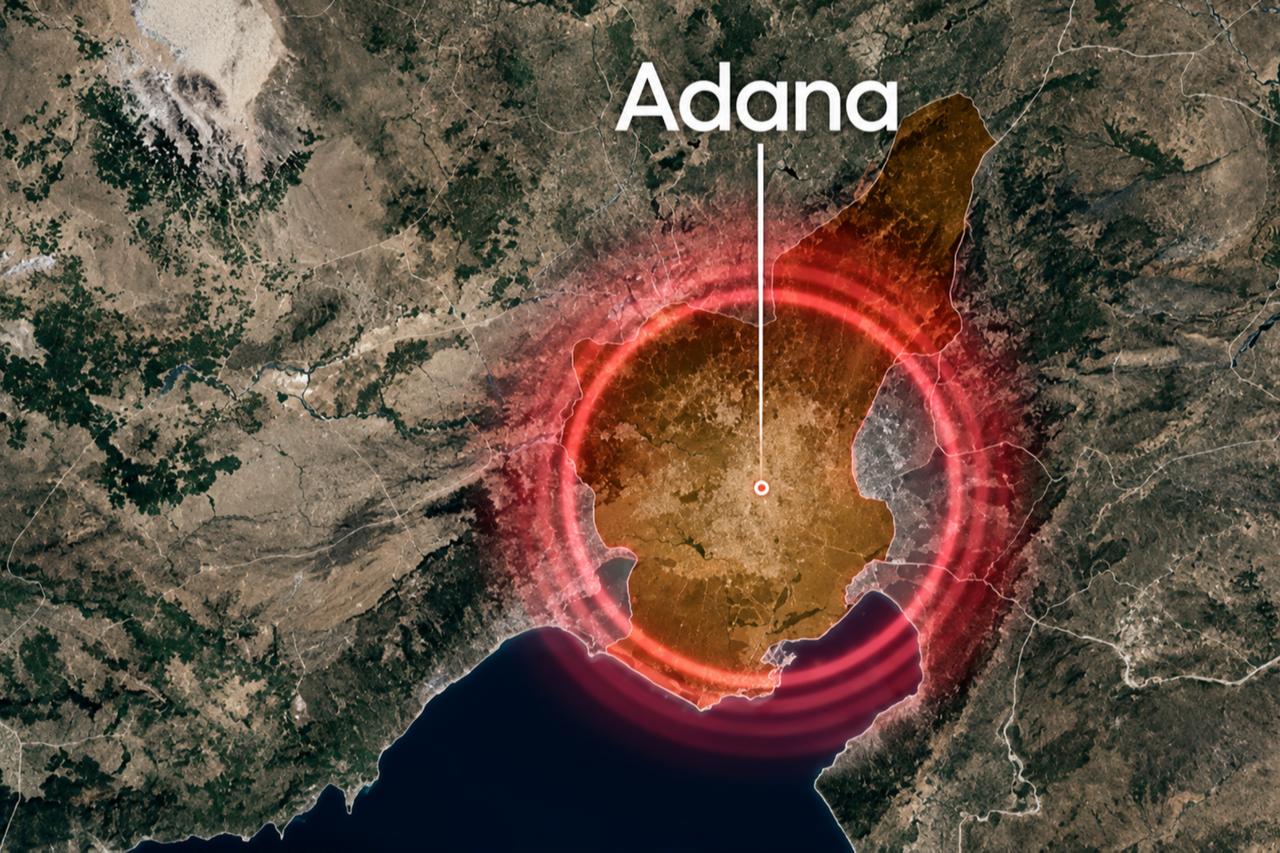


A cluster of earthquakes that struck Adana and neighboring Osmaniye has renewed attention on active fault systems across Türkiye, with experts emphasizing that the latest tremors should be monitored closely while pointing to several other regions capable of producing powerful earthquakes.
The sequence began with earthquakes of magnitude 4.8 and 4.9 in Adana, followed by a magnitude 5.2 tremor in Osmaniye. Speaking to CNN Turk, geologist Professor Osman Bektas noted that the gradual rise in magnitude was concerning, although similar seismic activity has continued in the area since 2023 without triggering a major event.
Bektas said one possible explanation was that the fault had been gradually releasing energy through repeated earthquakes in the magnitude 4 to 5 range. However, he added that the latest sequence needed to be watched because the tremors had built up from smaller events to the magnitude 5.2 earthquake.
"Starting with 4.8 and continuing one after another made us uneasy. There is a possibility of an earthquake above 6, somewhere between 6 and 7," he said.
He nevertheless said residents in Adana should not panic, noting that the Savrun fault had shown a different pattern from the faults involved in the Feb. 6 earthquakes and had repeatedly produced moderate tremors over the past three years.
Professor Suleyman Pampal said the earthquakes in Adana and Osmaniye had occurred on faults belonging to the same broader tectonic system and were not unexpected events.
According to Pampal, the first earthquake occurred south of Saimbeyli near a fault he refers to as the Yarbi Fault, while the Osmaniye earthquake was associated with another east-west fault near Sumbas.
He said the faults in this part of the region are active and generally capable of producing earthquakes around magnitude 5 to 6 rather than events in the magnitude 7 to 8 range.
Pampal added, however, that the larger Yarbi Fault around Saimbeyli could potentially generate a stronger earthquake if it moves.
The wider area remains tectonically active, he said, with numerous faults capable of producing earthquakes around magnitude 6 or higher.
Asked whether earthquakes above magnitude 7 remained a threat in the region, Pampal said the danger existed there as it did across Türkiye.
He drew particular attention to parts of Cukurova and northern Adana built on alluvial soil, which consists of loose sediments deposited by rivers and can amplify earthquake shaking.
Pampal said underground water and soft alluvial ground could intensify seismic acceleration and increase damage, especially where heavy, multi-story reinforced concrete buildings have been constructed.
He argued that building design should take ground conditions into account, warning that even structures built to regulations could face additional risks such as liquefaction on unsuitable soil.
Liquefaction occurs when water-saturated ground temporarily loses strength during strong shaking, causing the soil to behave more like a liquid and potentially destabilizing buildings.
Pampal also highlighted several other parts of Türkiye where significant seismic gaps remain.
He said the Yedisu Fault between Erzincan and Karliova has not ruptured since 1874 and could produce an earthquake between magnitude 7 and 7.5.
Attention also remains focused on the Central Marmara Fault near Istanbul's European coastline. Pampal said the fault lies about 10 to 15 kilometers from shore and includes a segment that has not ruptured since the 1766 earthquake.
"If it ruptures, we know it can produce an earthquake around magnitude 7. This is also one of the places currently in the line of fire," he said.
He further pointed to unruptured segments extending from Celikhan toward Bingol, as well as the Malatya and Ovacik faults, which he said could also produce earthquakes around magnitude 7.
Other areas he identified included active faults around Kayseri, the Ecemis Fault running toward the Mediterranean, and seismic gaps in western Türkiye, including around Sindirgi and the Pamukkale Fault near Denizli.
Pampal said Türkiye's active tectonic setting meant earthquake danger could not be confined to a single region, with multiple fault systems across the country remaining capable of producing damaging earthquakes.


 Set as preferred source
 Set as preferred source


 1 min read
 1 min read