Newsletters


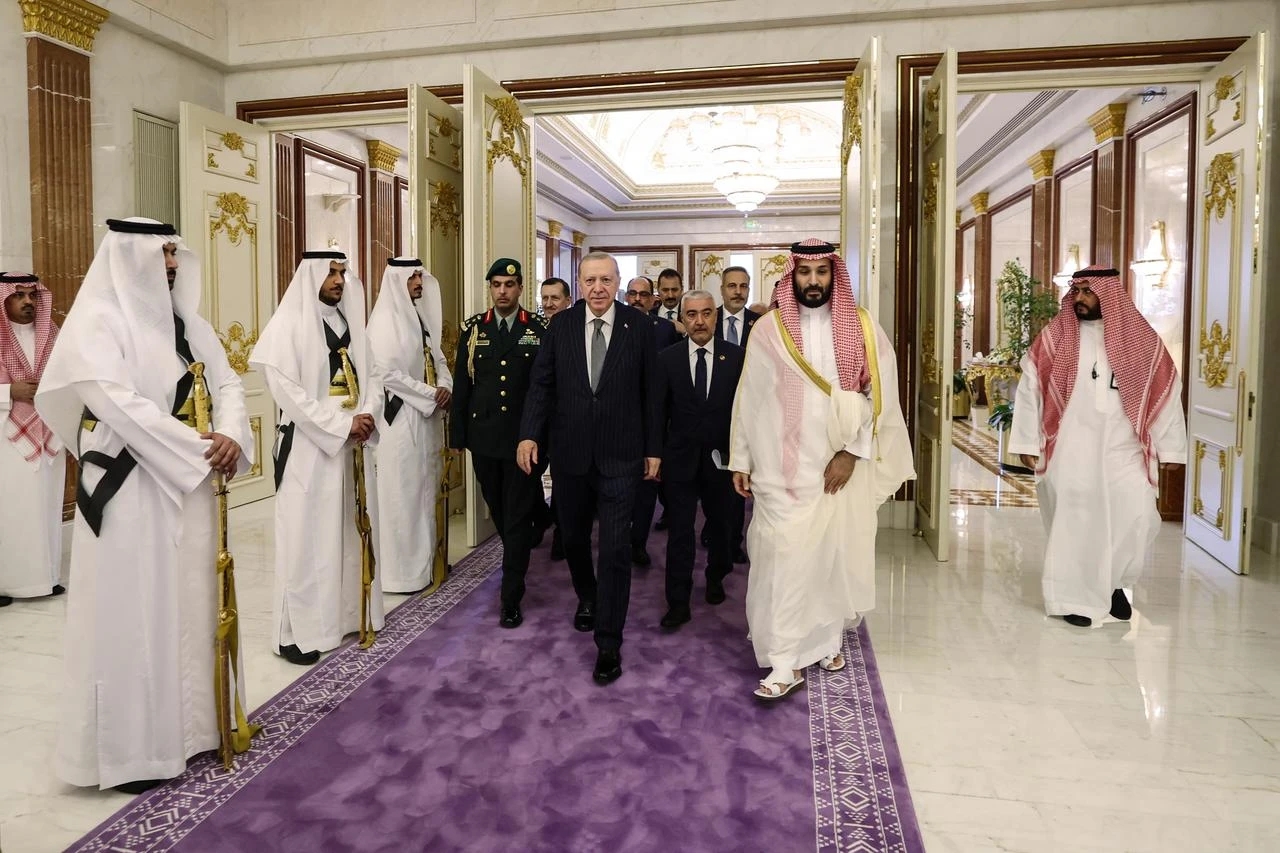


Turkish Vice President Cevdet Yilmaz said the Mecca Joint Defense Agreement "must absolutely not be seen as a structure directed against Iran," describing the pact with Saudi Arabia and Pakistan as a deterrence mechanism rather than an alliance aimed at any specific country, in a wide-ranging live interview on CNN Turk that also covered Syria, the KAAN fighter jet program, etc.
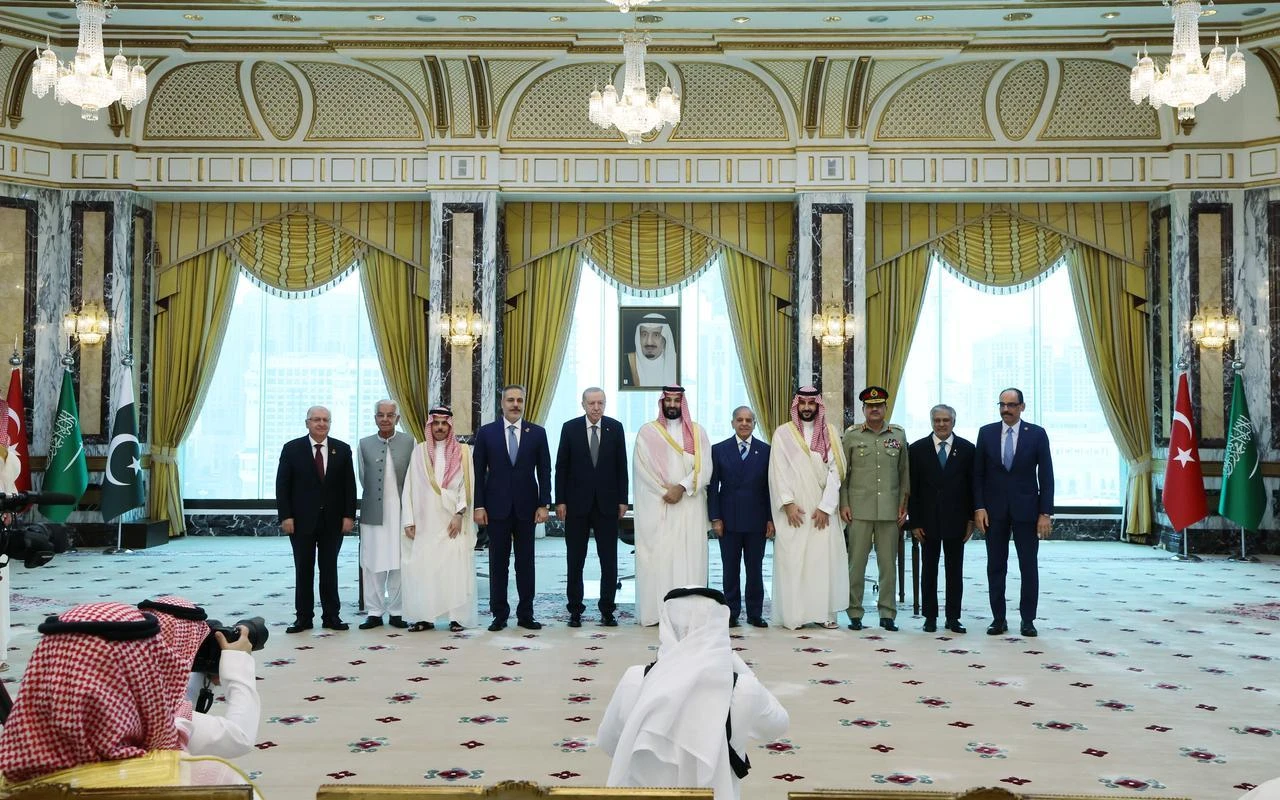
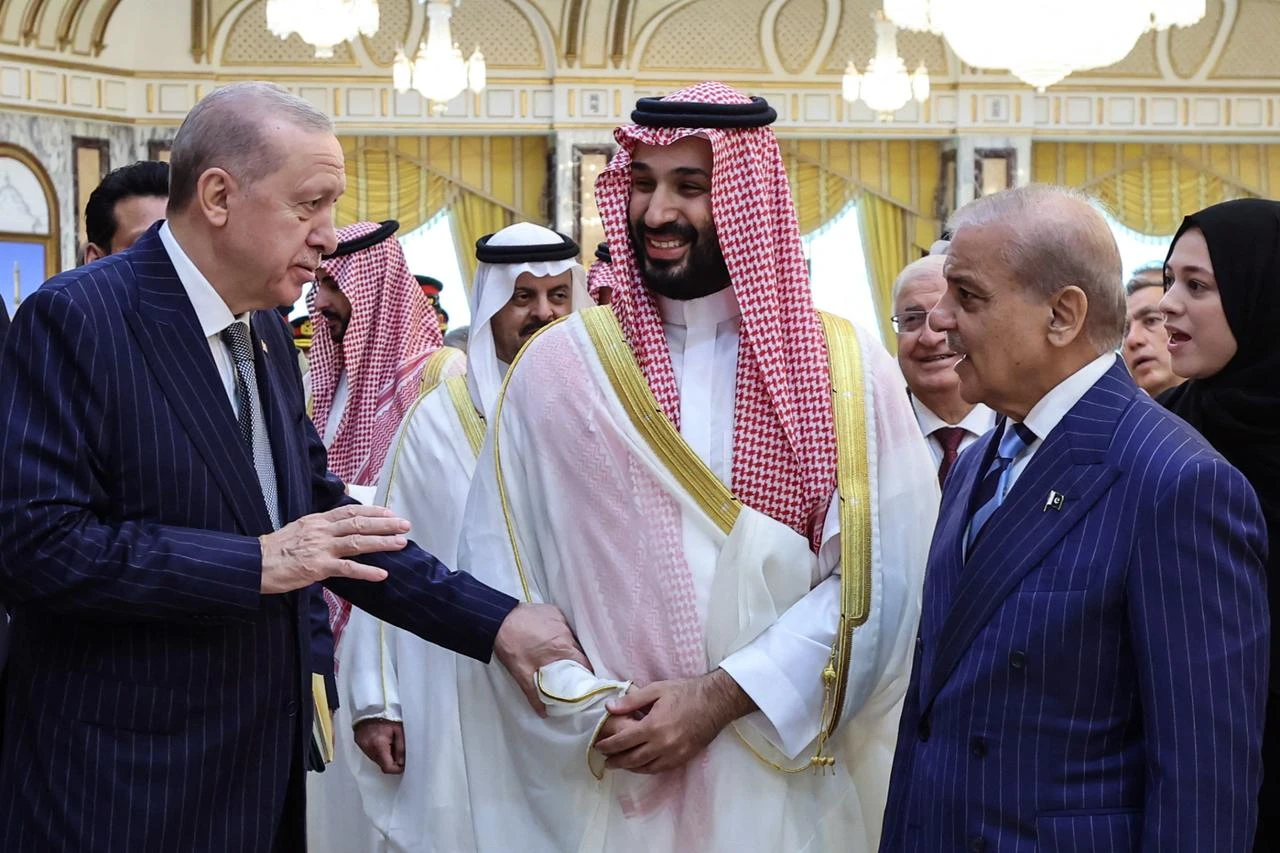
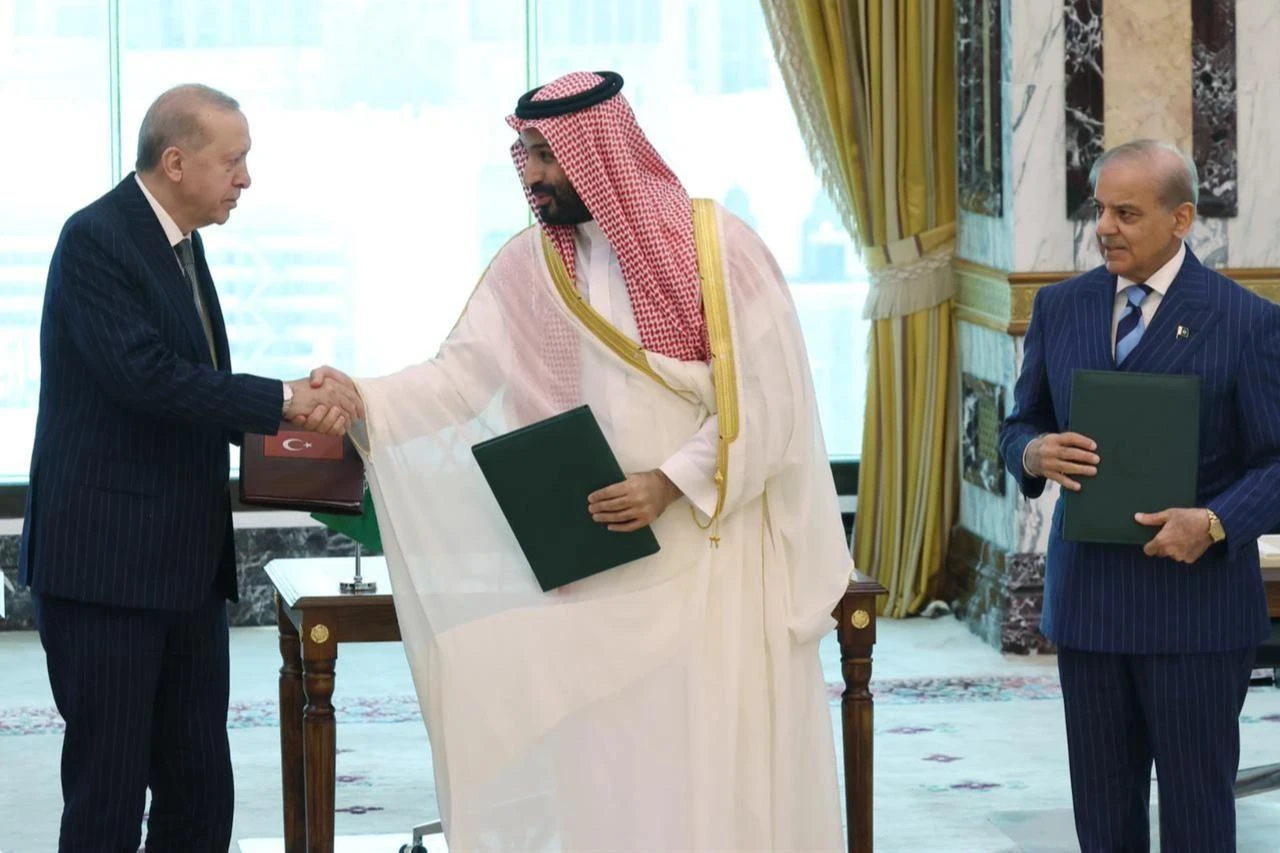
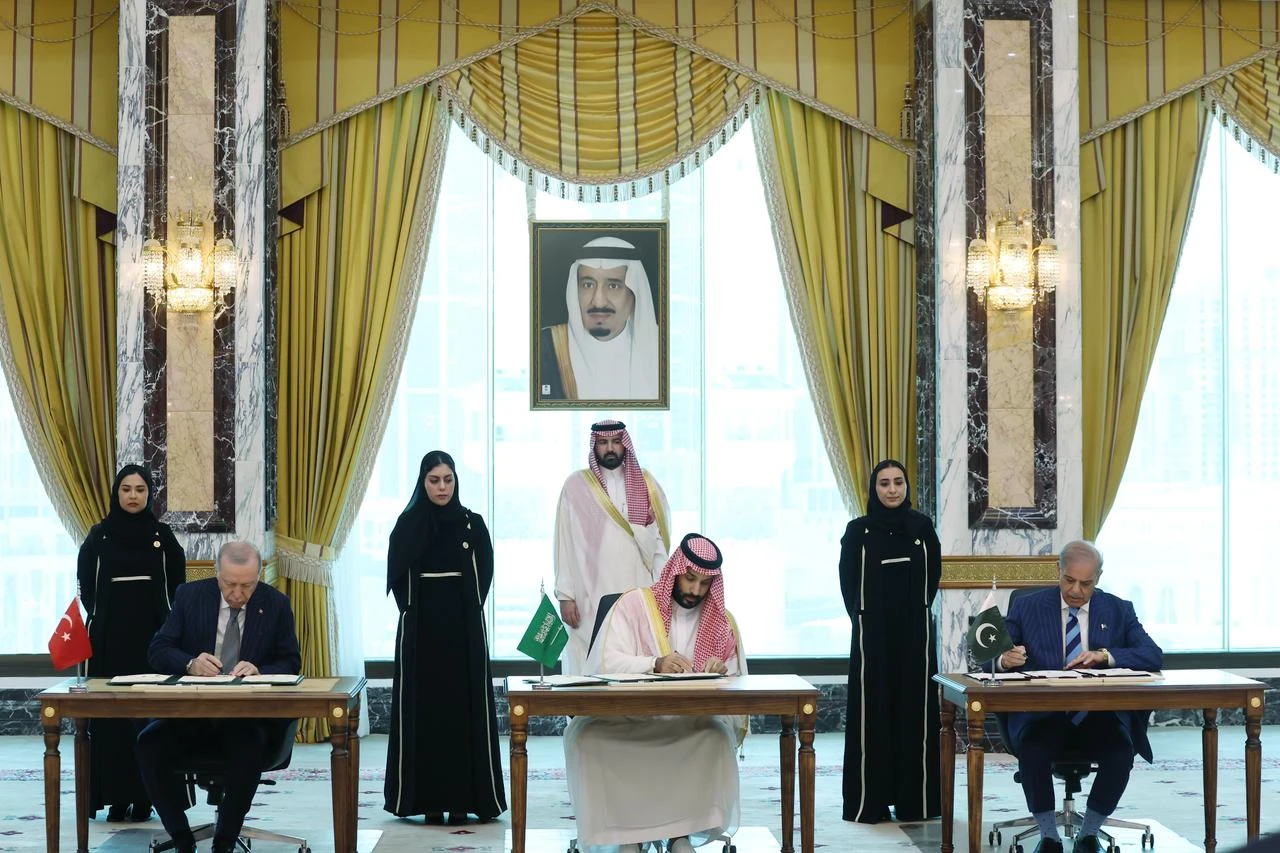
Asked about the Mecca Joint Defense Agreement, Yilmaz called the pact among Türkiye, Saudi Arabia and Pakistan "extremely important."
He said regional cooperation has come to the forefront as the global order weakens.
"There is conflict above us, conflict below us. We are surrounded by a ring of fire. Geopolitical tensions have risen enormously," Yilmaz said.
"In this environment, this agreement between three countries with complementary characteristics is very valuable. Pakistan is, as you know, a nuclear power, has a substantial population and is located in a very important geography. Saudi Arabia is one of the world's leading countries in both energy and finance.
Türkiye, meanwhile, is at a very important point with its industry, particularly its defense industry, its location, and its historical and institutional accumulation. Therefore, the type of relationship established between these three countries will contribute to both regional and global stability," he noted.

Yilmaz emphasized that the agreement should not be viewed as a threat against any party, person or institution.
"This is not a structure formed against anyone. On the contrary, it is a structure formed to strengthen deterrence so that tensions do not arise on certain matters," he said.
"Therefore, it is fundamentally a deterrent mechanism. At the same time, it is a mechanism that increases cooperation, particularly in the defense industry. This is not an alternative structure to NATO or to any alliance we are part of. We need to underline this as well," Yilmaz added.
Noting that the agreement is open to other countries, Yilmaz said, "It absolutely must not be seen as a structure directed against Iran. That is to say, this is not a structure oriented toward any country, any group or any side. This is a deterrent mechanism against risks that could arise from any direction. Fundamentally, it is a mechanism formed to strengthen regional peace and stability and to contribute to global peace and stability."
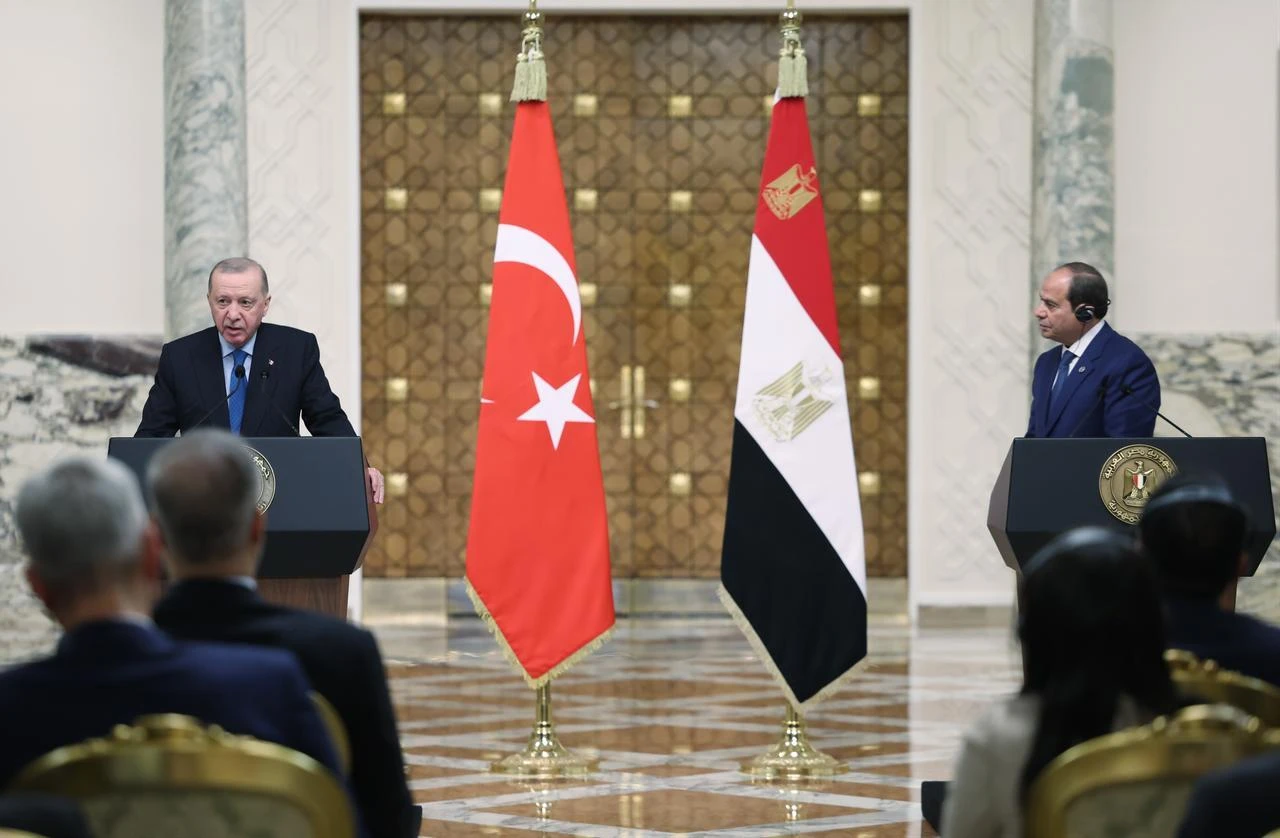
Asked why Egypt was not included in the agreement, Yilmaz said the three founding countries would jointly determine the course of any expansion.
"The joint position of the three countries will determine the course of expansion. Why not? Of course Egypt is a very valuable country, a very important power, militarily, geographically and in terms of population. Therefore, new members may join this structure in the coming period. It is a structure open to that. But the three countries will decide this together, after evaluating it jointly," he said.
Yilmaz said he believes security cooperation will also strengthen economic cooperation, adding that security "does not begin at the borders."
"Your security is formed within much broader global and regional connections," he said.
"Therefore, while Türkiye increases its security by developing its own defense industry, economy and institutional structure, it is at the same time expanding its alliances. But it will also continue to fulfill this role as a deterrent and strong country, both at the regional and global level, as a powerful actor," Yilmaz added.
Asked about international media describing the cooperation as an "Islamic NATO" or "Sunni alliance," Yilmaz said, "Frankly, I don't find that accurate. One should look at it for what it actually is. This is the Mecca Agreement, and it is a regional security agreement. Of course, the majority of the population in all three countries is Muslim. When you look at the Islamic world, unfortunately we see that it has recently been at the center of many conflicts and is in serious need of security. In this sense, I hope this structure will be a means to bring more peace and more tranquility, Allah willing, both to the entire Islamic world and to humanity."
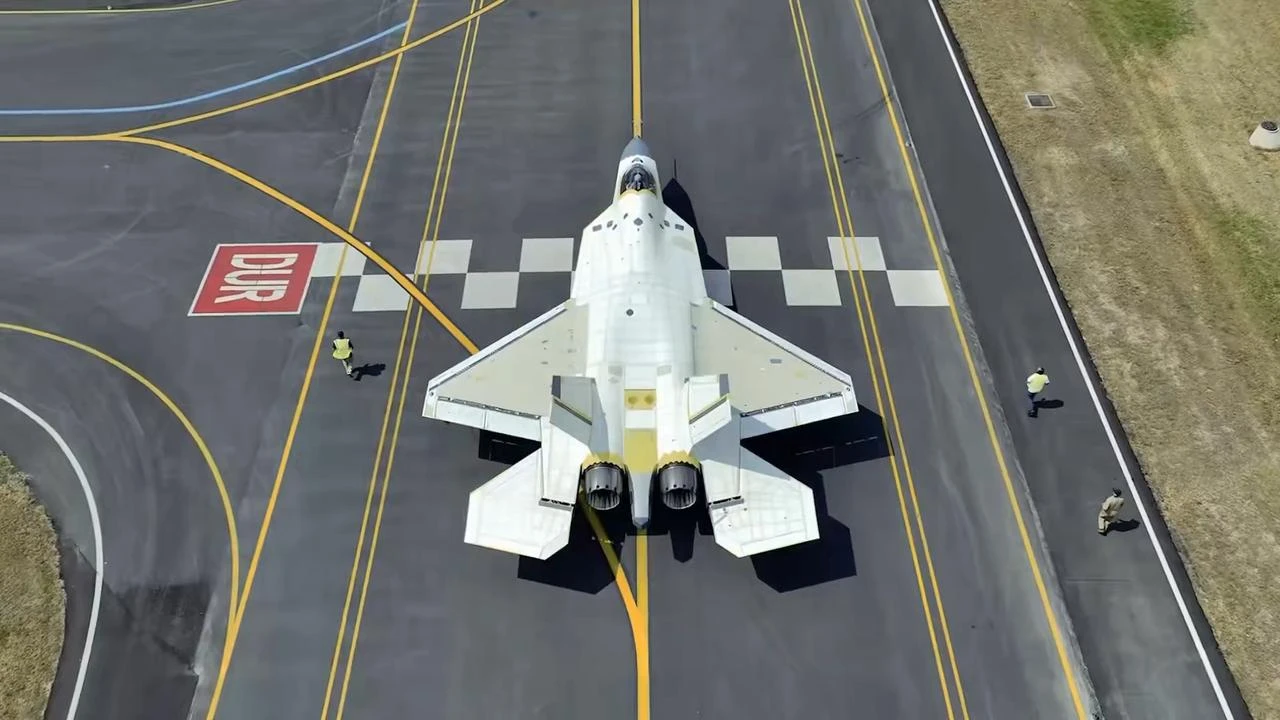
Asked whether Saudi Arabia might take a partnership stake or provide financial contribution to the maturation process of Türkiye's national fighter jet, KAAN, Yilmaz said, "Certainly, it could happen, why not? How many countries did the United States bring into the F-35 program despite having such enormous economic power on its own?
So, at the point we've reached, it makes a great deal of sense to build platforms for these kinds of high-cost projects that require large markets and serious contributions, and to include as many friendly and brotherly countries as possible in this process."
"Technologically, economically and in terms of marketing opportunities, Türkiye has reached a certain threshold on this front. It could be KAAN, or it could be other projects," he added.
"I think an effort that brings many countries into a project on a product basis, sharing responsibilities while also incorporating everyone's contribution to improve the quality of the projects, would be very much the right approach," the Turkish official noted.
Asked about Türkiye and Saudi Arabia's role in Syria's reconstruction, Yilmaz said that process has already begun.
"That process has already started. Certain cooperation has already begun regarding the lifting of sanctions and certain critical infrastructure investments," he said.
"Going forward, Syria's stability essentially means Türkiye's stability. We have all lived through how much this has cost us in the past. Syria is historically a very close country to us; we have very deep historical and cultural ties with the people there.
Therefore, I believe this cooperation will have very positive repercussions in Syria going forward, and likewise positive repercussions in Iraq. The more stable the countries around us become, and the more their prosperity levels rise, the more we, as Türkiye, will also rise," the Turkish official noted.
Asked whether Pakistan's inclusion in the agreement would contribute to developing Türkiye's nuclear-related learning capacity, Yilmaz said, "There will be closer cooperation on every front related to defense. Of course, there will be experience-sharing, cooperation and a much closer dialogue between the militaries and military structures of these countries at various levels. There will be mutual experience-sharing opportunities. There will be preparations to bring standards closer together, to establish similar standards, and to increase interoperability. These are processes that will be carried out militarily."


 Set as preferred source
 Set as preferred source


 2 min read
 1 min read