Newsletters


The mutual defense pact signed by Saudi Arabia, Türkiye and Pakistan is "one of the more important developments of this war," a former U.S. ambassador told CNN, saying it signals a loss of faith in U.S. security guarantees in the region, as the Organization of Islamic Cooperation (OIC), Pakistan's prime minister and other regional governments welcomed the agreement.
Speaking to CNN's Elex Michaelson, Christopher Hill, a former assistant secretary of state and five-time U.S. ambassador who most recently served as Washington's envoy to Serbia, pointed out that all three signatories are U.S. allies.
"They all believe that the U.S. is just not going to be there for them and it's time to step up some regional efforts," Hill said.
The pact, which stipulates that an attack against any one of the three nations "shall be regarded as an attack against them all," reinforces how countries in the Middle East and beyond are reshaping their strategies and defenses after almost six months of war across the region.
Hill said the pact sheds light on "the degree to which the rest of the world is getting worried about how the U.S. manages its interests and its issues."
He added, "You do not see any fingerprints from the U.S. on this."
"It's one thing to be unpredictable, but I think we are becoming unreliable," Hill said.
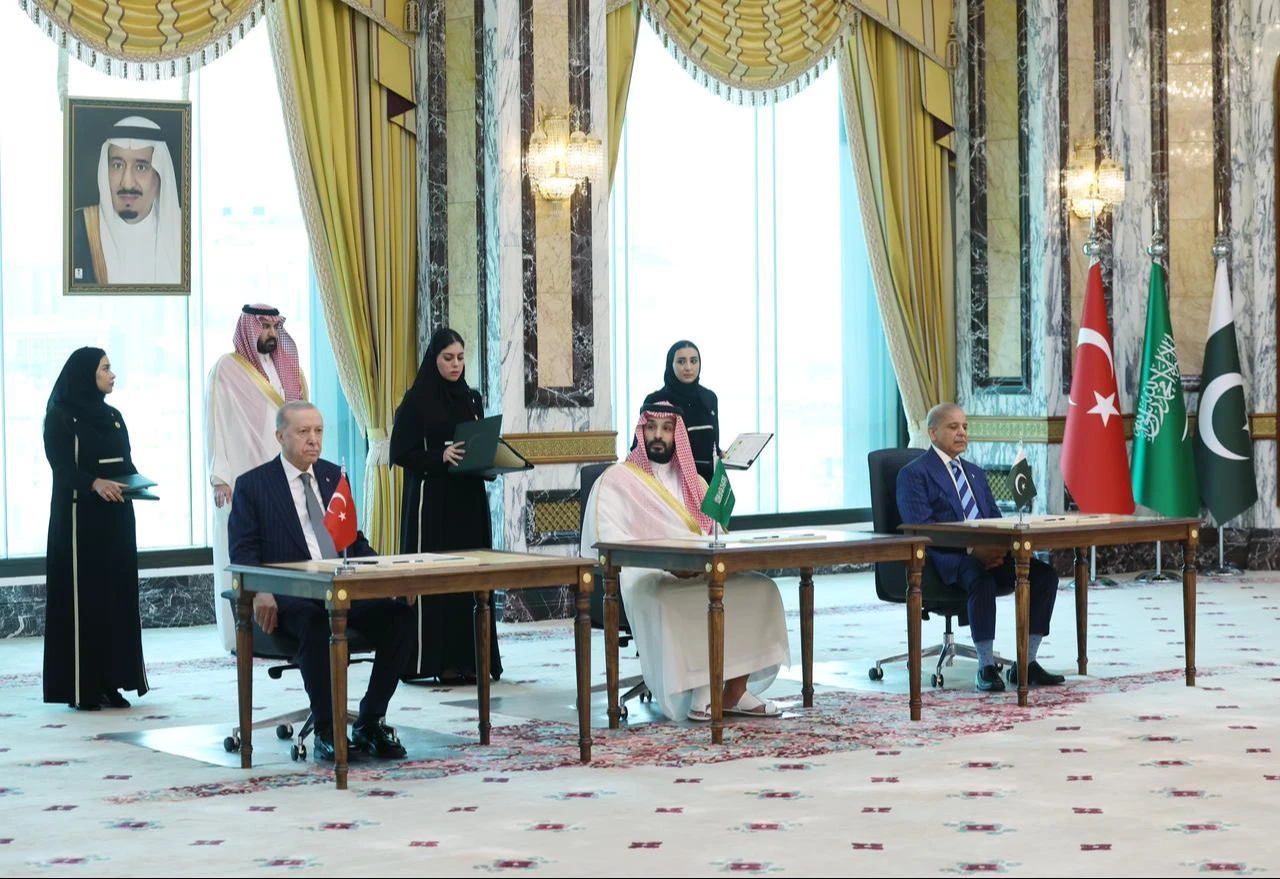

OIC Secretary-General Hissein Brahim Taha welcomed the signing of the Mecca Agreement on Joint Defense in a statement issued in Jeddah on Aug. 7, expressing "strong appreciation and support" for what he called an "important strategic step" reflecting the three countries' commitment to strengthening regional and international cooperation, according to the OIC statement.
Taha said the agreement "constitutes a fundamental pillar for supporting security and stability in the region and across the Muslim world," adding that it "embodies a shared resolve to address growing security challenges and consolidate the principles of solidarity and constructive partnership among Member States."
He commended what he called the "tireless efforts and wise leadership" of the three countries in reaching the "historic Agreement," expressing hope it would contribute to peace and prosperity in the region and for the international community as a whole.
Somalia's Defense Ministry described the pact as "a historic step toward strengthening collective security and defense cooperation," saying it establishes a strategic partnership capable of addressing shared security challenges while advancing long-term defense cooperation among the three countries.
The ministry said it was confident the pact would make a significant contribution to regional peace and stability and reinforce the principles of cooperation, solidarity and shared responsibility, adding that it would serve the interests of the region's peoples while supporting international peace and security.
Bahrain's Foreign Ministry called the pact "a strategic partnership" that would strengthen deterrence and contribute to regional and international security and stability.
The ministry highlighted the three countries' established defense capabilities, extensive military experience and longstanding roles in promoting regional security, saying the agreement represents a partnership among equals, with each country contributing its capabilities toward preserving regional and global security.
Bahrain said the pact complements the Gulf Cooperation Council's collective defense system, enhances its effectiveness and reinforces regional security "through solidarity, integration and partnership among brotherly countries."
The ministry reiterated that "Saudi Arabia's security is an integral part of Bahrain's own security," affirming support for efforts to safeguard regional stability, protect the sovereignty and territorial integrity of states, and advance political solutions to regional issues.
Pakistani Prime Minister Shehbaz Sharif said Friday he was "honored" to sign the Mecca Joint Defense Agreement alongside President Recep Tayyip Erdogan and Saudi Crown Prince Mohammed bin Salman, describing the pact as a historic step for peace and security in the region.
"Honored to sign the Makkah Joint Defence Agreement alongside my dear brothers, HRH Crown Prince Mohammed bin Salman and H.E. President Recep Tayyip Erdogan," Sharif said in a post on X.
He described Saudi Arabia, Türkiye and Pakistan as "three brotherly nations, united by faith, friendship and a shared resolve for peace and security," expressing hope the agreement "will remain a shield of peace for generations to come" and contribute to the prosperity of the three countries and the wider Muslim world.
Sharif also praised Pakistan's Chief of Army Staff, Field Marshal Syed Asim Munir, for his "untiring efforts and utmost dedication," which he said contributed significantly to the conclusion of the agreement.
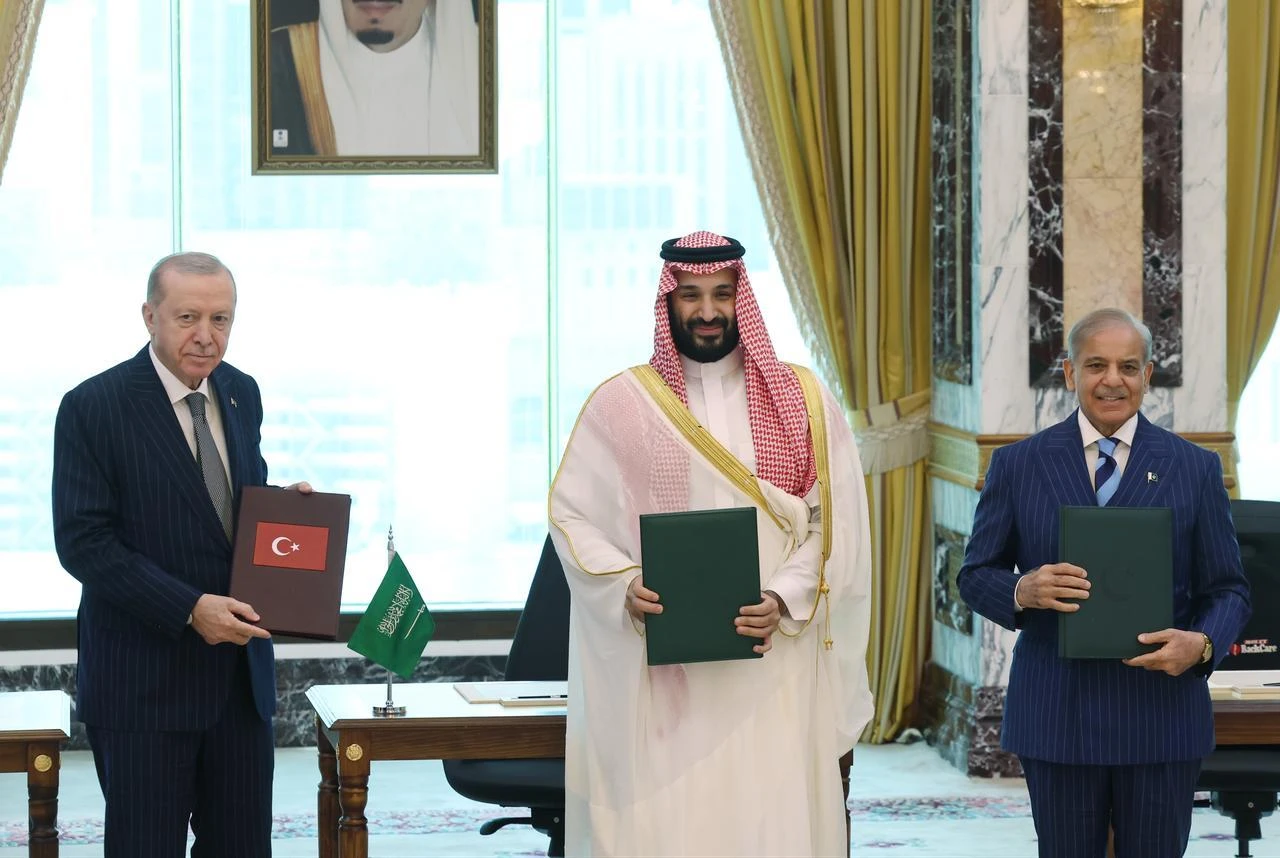
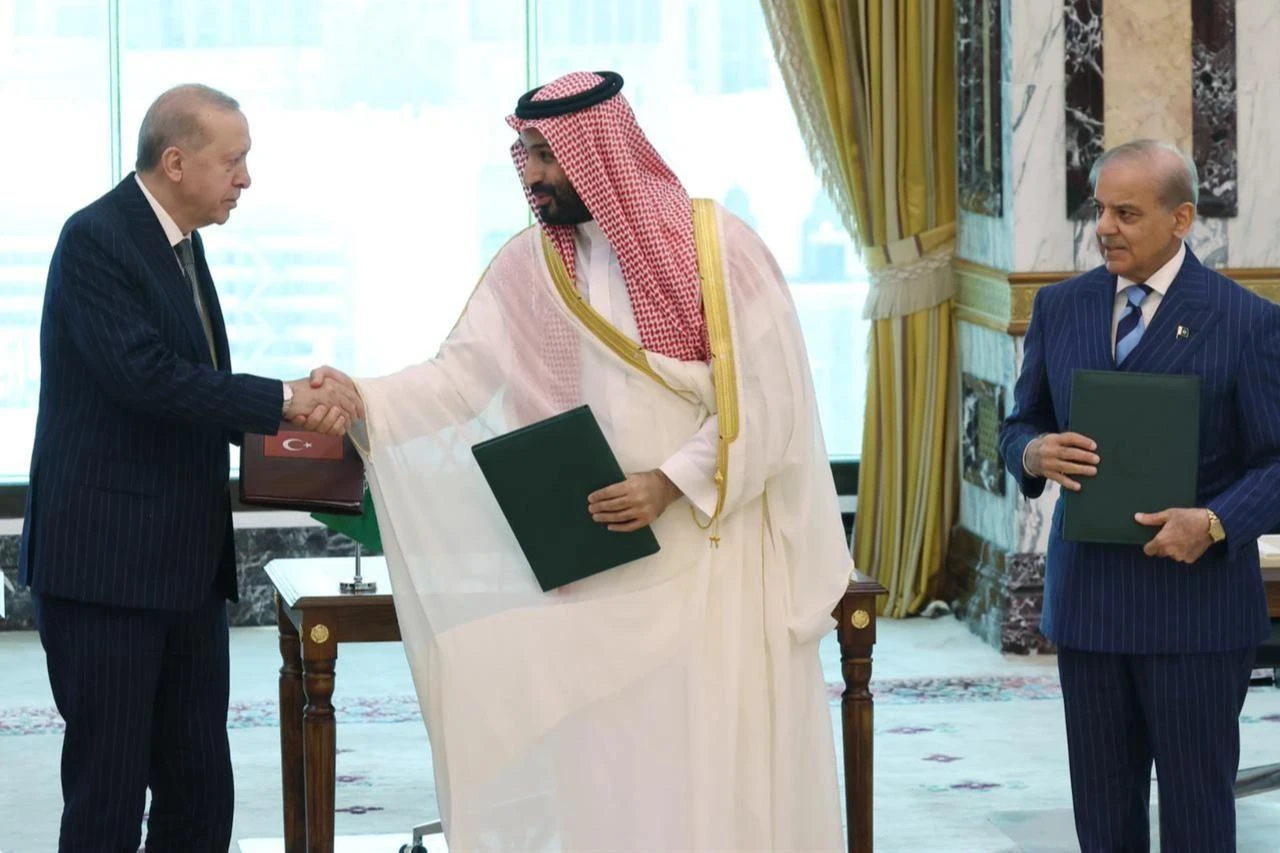
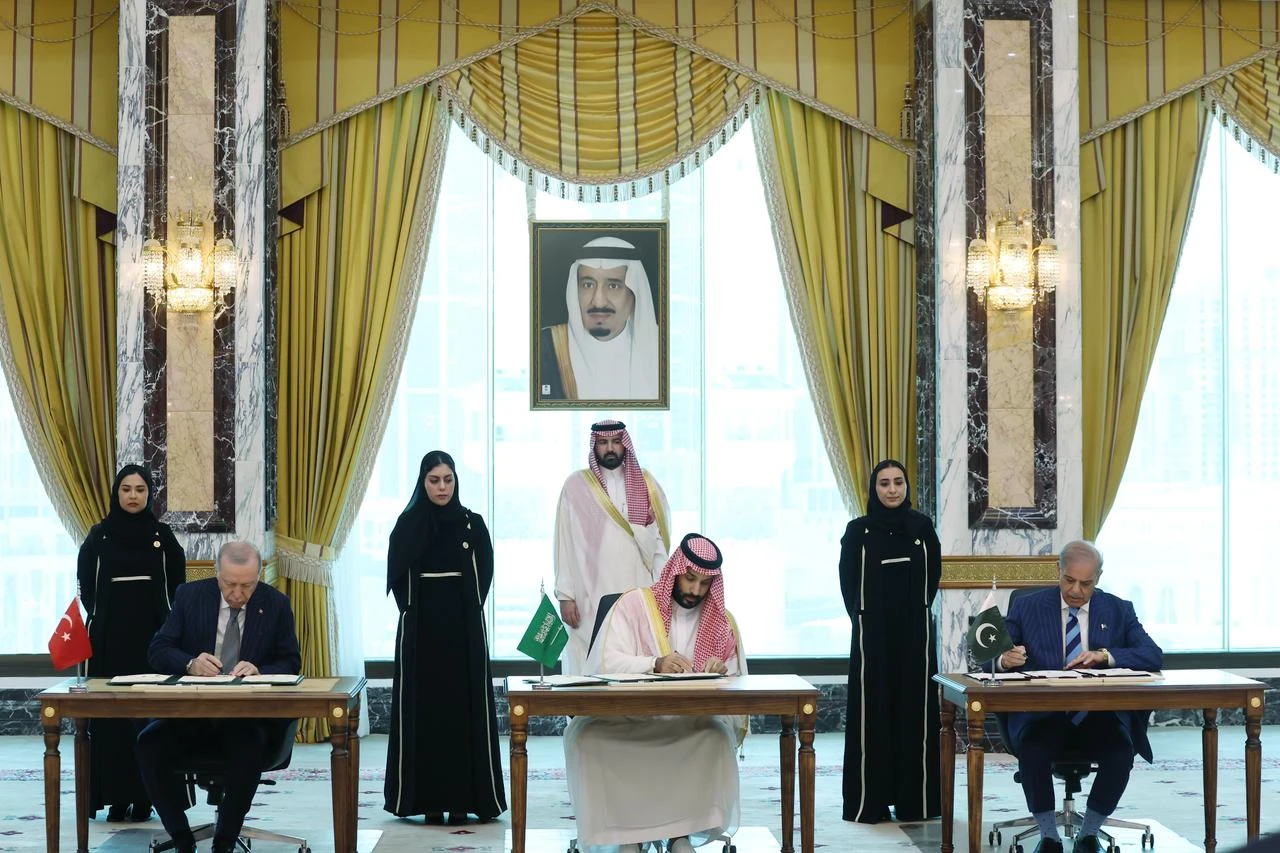
Türkiye, Saudi Arabia and Pakistan signed the joint defense agreement Friday at a trilateral summit in Mecca, pledging to strengthen collective security, deepen defense cooperation and promote peace and stability in the region and beyond.
The agreement was signed by Erdogan, Mohammed bin Salman and Sharif during the summit at Al-Safa Palace.
The agreement is a defense-oriented cooperation arrangement that targets no country and is designed to strengthen commitments to regional and global peace, stability and prosperity through burden-sharing and a common security approach.
The agreement aims to strengthen collective deterrence against any act of aggression and stipulates that an armed attack against any one of the three countries shall be regarded as an attack against them all.


 Set as preferred source
 Set as preferred source


 1 min read
 1 min read