Newsletters


A Saudi official said Friday that a new joint defense pact signed by Saudi Arabia, Türkiye and Pakistan is not linked to "any nuclear ambitions" and does not threaten any country in the region, hours after the three countries formally signed the agreement in Mecca.
"The agreement does not represent an effort to establish a military axis or a sectarian bloc," Deputy Minister for Public Diplomacy Rayed Krimly said in a post on X.
"Nor is it linked to any nuclear ambitions or arms race. Rather, it is focused on building sustainable capabilities," he added.
Krimly said the pact "does not constitute a threat to the security of any country in the region, nor does it represent an escalation of tensions between any two states."
He said the deal "reflects the depth and longstanding nature of the strategic relations among the three countries, which have developed over several decades, and represents the culmination of detailed negotiations conducted over a number of years."
"The Mecca Joint Defense Agreement enables the three signatory countries to develop joint defense capabilities, strengthen strategic deterrence, enhance readiness, and further develop and integrate their respective defense capabilities to jointly address any threats to their safety and security," Krimly said.
He added that the agreement "does not come at the expense of the Kingdom's strong and strategic relations with its Gulf, Arab, and international partners" and "does not supersede or replace any existing bilateral or multilateral agreements between these countries, or between them and other states or international organizations."
Krimly's comments echoed an assessment from an outside expert.
Speaking to Reuters, Mansoor Ahmed of the Australian National University's Strategic and Defense Studies Center said the accord would likely not include a nuclear component, with Pakistan's atomic deterrent focused on what it sees as the threat from India.
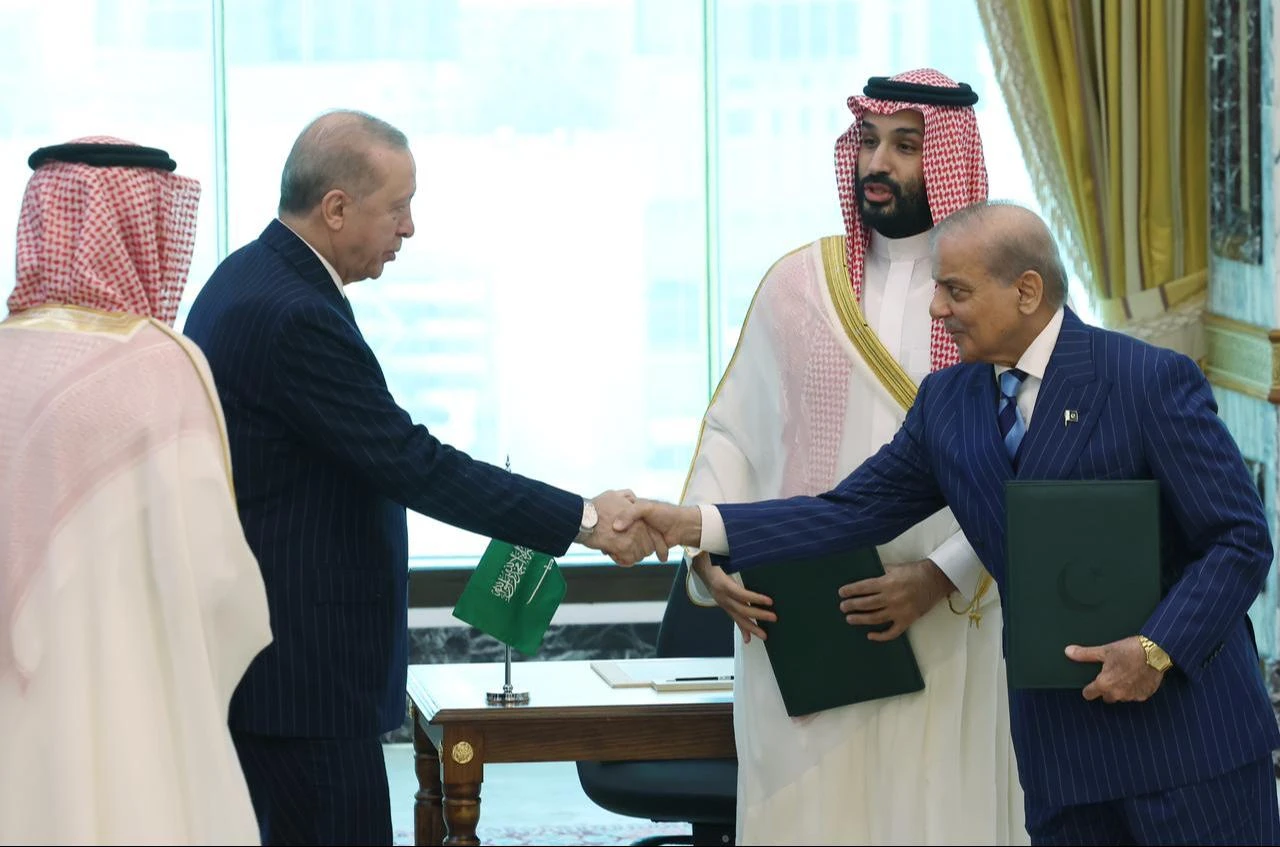

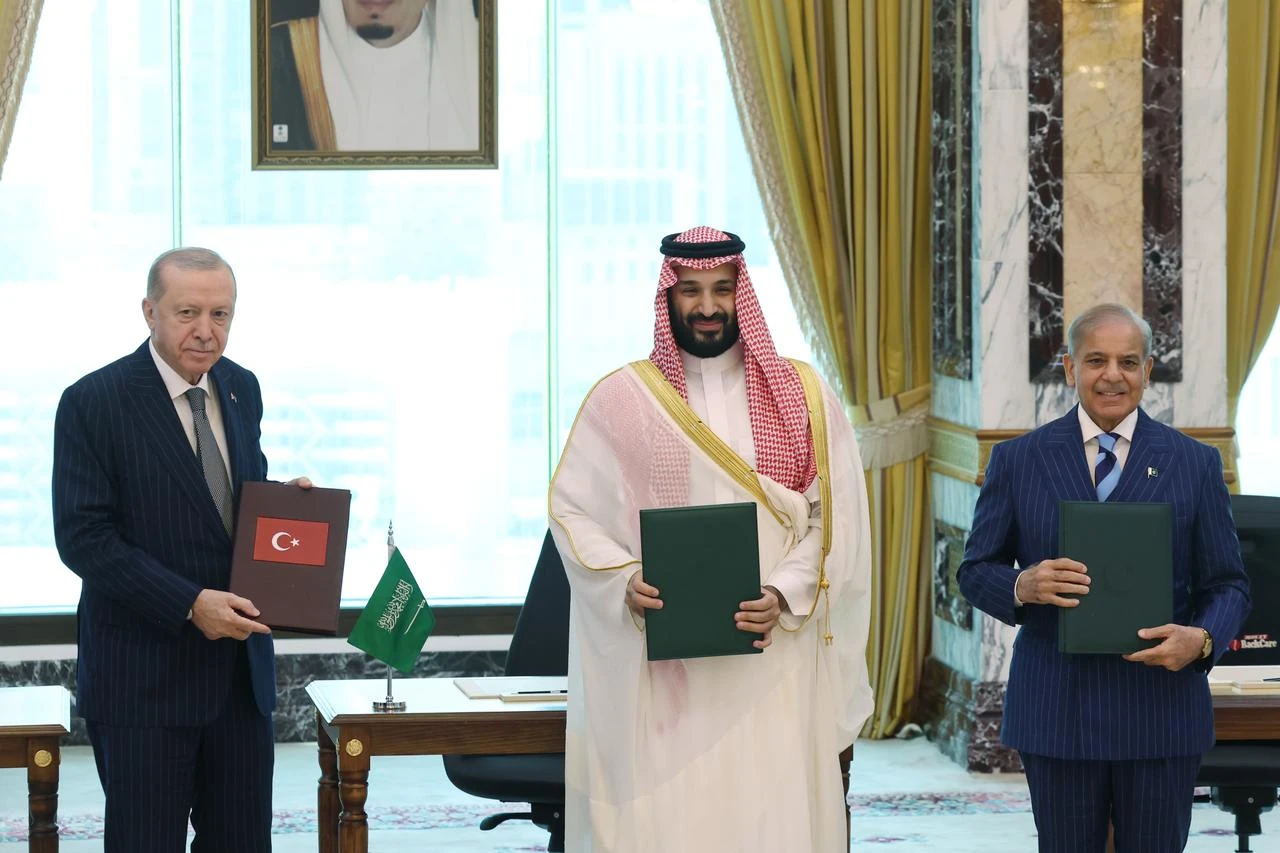
Saudi Arabia, Türkiye and Pakistan signed the pact Friday at a trilateral summit in Mecca amid ongoing violence in the region from Houthi attacks and the U.S.-Iran war.
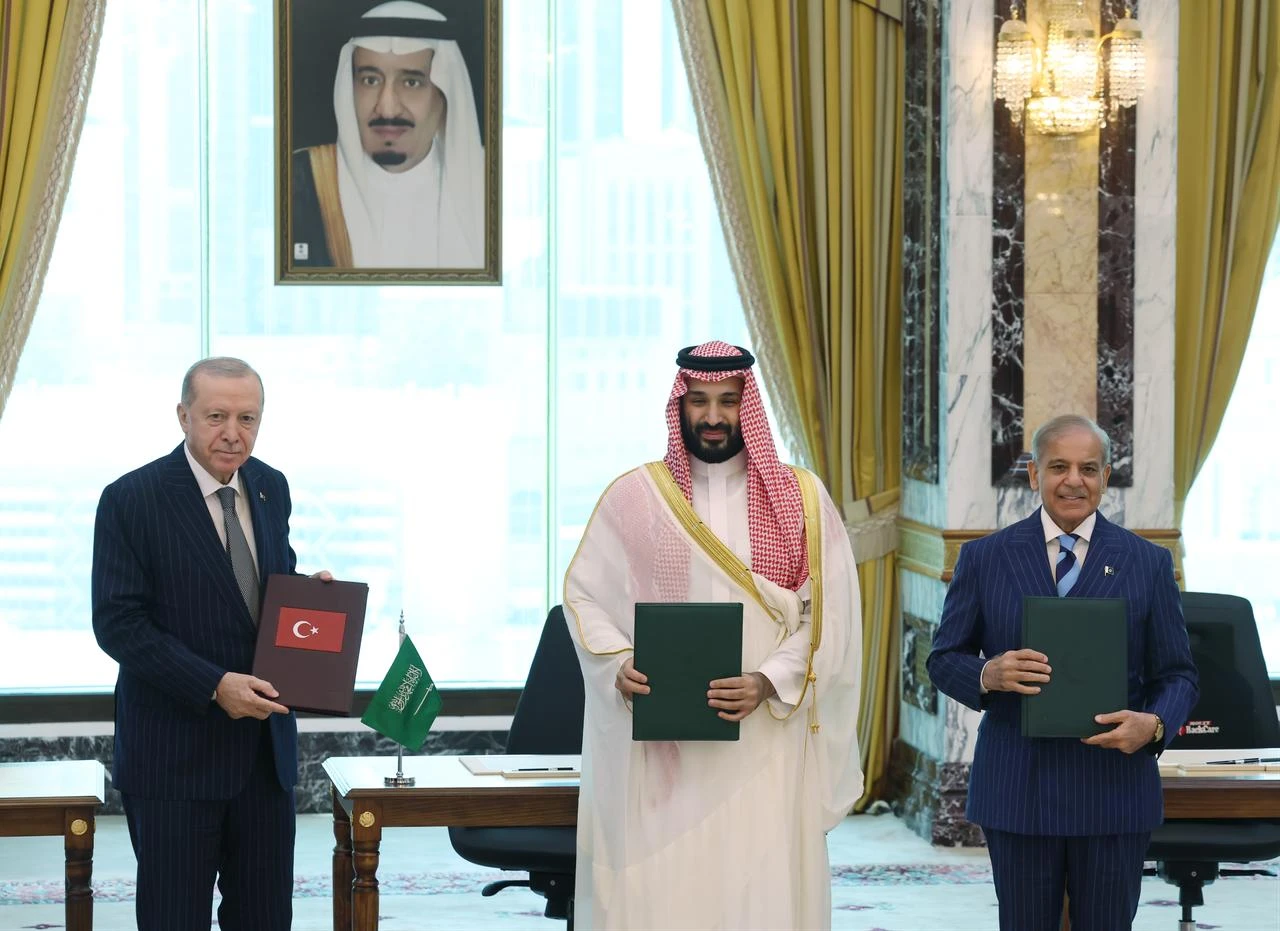
The agreement was signed by Turkish President Recep Tayyip Erdogan, Saudi Crown Prince Mohammed bin Salman and Pakistani Prime Minister Shehbaz Sharif during the summit at Al-Safa Palace, hosted by King Salman bin Abdulaziz Al Saud.
The three countries declared a "shared commitment to further strengthening their collective security and to promoting peace, security and stability in the region and beyond," according to a joint statement published by Pakistan's foreign ministry.
Pakistan's foreign ministry said the pact meant an attack on any member would be regarded as an attack on all, calling it "intended to strengthen collective deterrence."
The joint statement did not detail the specific commitments or obligations each country accepted under the agreement.
A Turkish official said the agreement was defensive in nature and was not directed against any specific actor. He further said it was open to other regional countries, and did not abrogate or replace any existing bilateral or multilateral arrangements, Reuters reported.
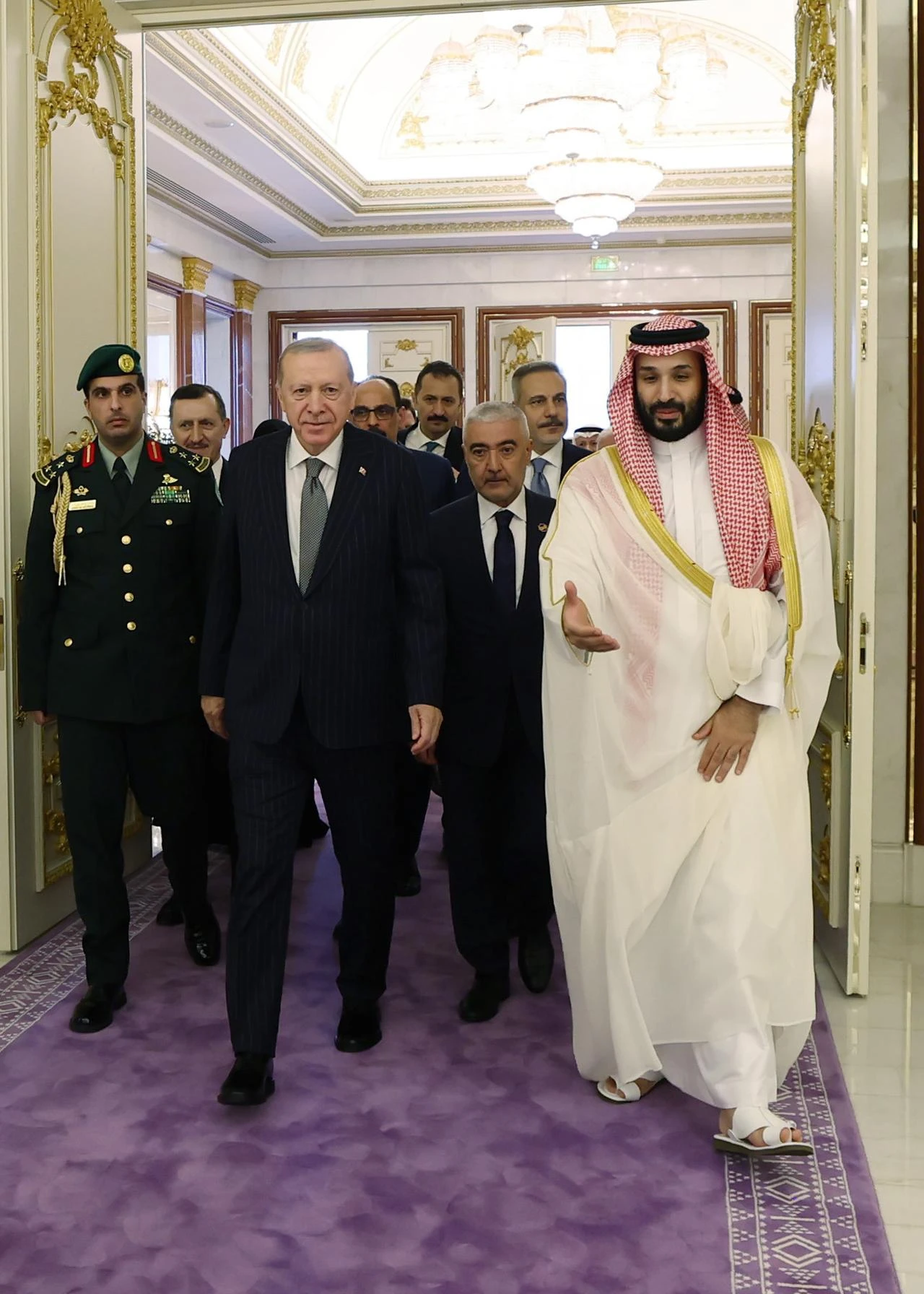
Presidential Communications Director Burhanettin Duran called the agreement "a historic step that further reinforced shared history, deep-rooted brotherhood and a strong will for solidarity on strategic ground," in a post on his X account.
"Under the leadership of our President Recep Tayyip Erdogan, a strong Türkiye continues to resolutely contribute to regional and global peace, security and stability through strategic partnerships developed with friendly and brotherly nations amid a changing and increasingly complex global security environment," Duran said.
"The Mecca Joint Defense Agreement signed between Türkiye, Saudi Arabia and Pakistan is a historic step in terms of further reinforcing our shared history, deep-rooted brotherly ties and strong will for solidarity on a strategic ground," he added.
"The Mecca Agreement, which does not target any country, will strengthen the collective security and deterrence of the three countries while advancing defense industry cooperation and military interoperability, making significant contributions to preserving peace and stability in our region," the Turkish official noted.
"This strong will demonstrated by Türkiye, Saudi Arabia and Pakistan is a concrete manifestation of brotherly nations standing shoulder to shoulder in difficult times to uphold shared values and of a determination to build the future security architecture together, in solidarity," Duran said.
Duran stated he hoped the agreement would bring good fortune to the three "brotherly" countries, expressing his desire to further strengthen the deep-rooted brotherhood and strategic cooperation among Türkiye, Saudi Arabia, and Pakistan.
 1 min read
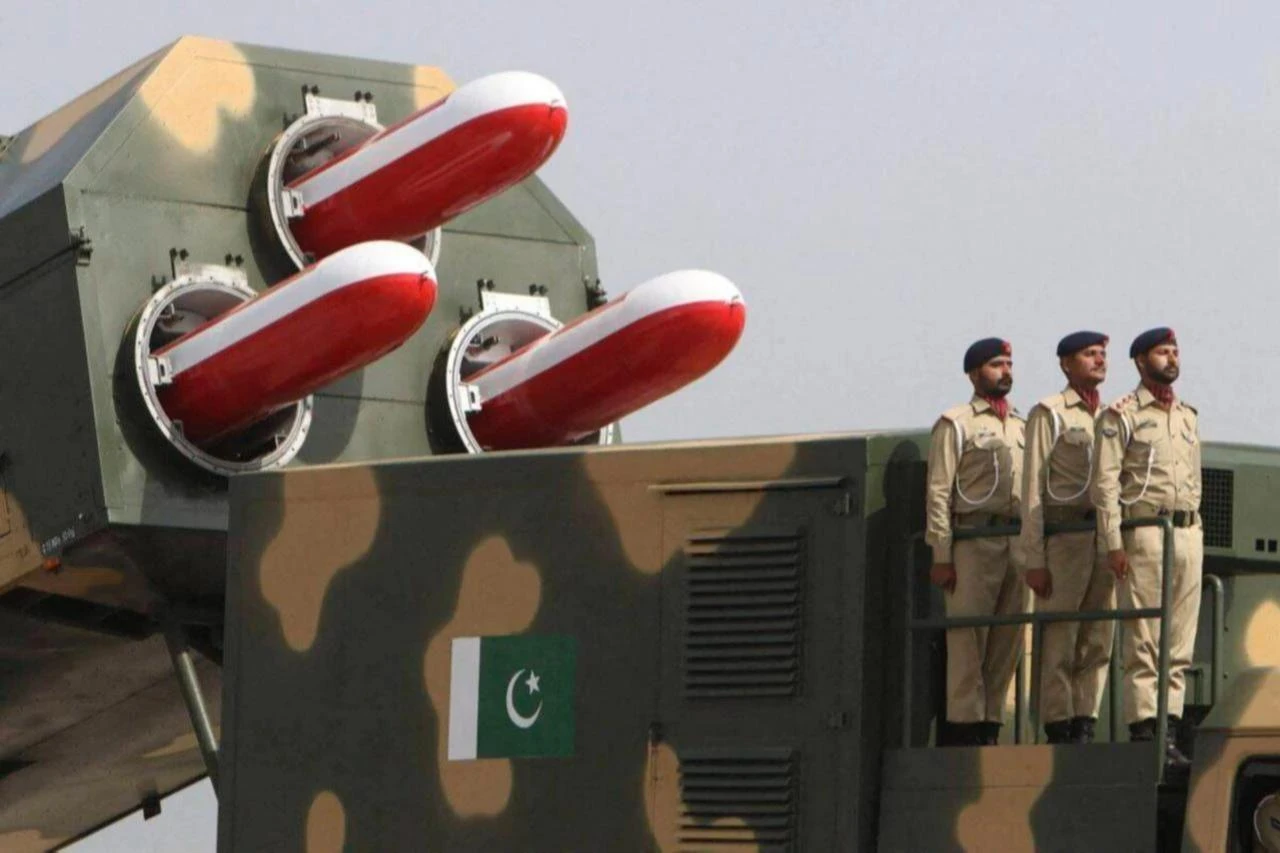
Riyadh is seeking to strengthen its security ties against the backdrop of the war between the United States and Iran, which has drawn in surrounding nations and disrupted shipping through the Strait of Hormuz and the Red Sea.
The war has emboldened Iran and its Houthi allies in Yemen, both of which have attacked Saudi Arabia, while analysts say Washington is increasingly seen as an unreliable partner.
Iran and its allies have been firing on Saudi Arabia and other Gulf states and blockading their energy shipments since the U.S. and Israel attacked Iran on Feb. 28 in a major escalation of years of regional tumult.
Tehran has attacked U.S. bases and civilian infrastructure in Saudi Arabia, Kuwait, Bahrain, Qatar, the United Arab Emirates, Oman, Jordan and Israel.
A source close to the Saudi military and government told Agence France-Presse (AFP) before the signing that although the agreement had been under discussion for a long time, "the latest developments in the region expedite it."
Speaking to AFP, Umar Karim, an expert on Saudi foreign policy at the University of Birmingham, called the deal a "highly significant development," saying the alignment "is clearly oriented towards Iran and meant to address Iran's new strategic approach which is geared towards dominance of the broader Gulf region."
He said the fact that Türkiye and Pakistan border Iran means they could "exercise a different kind of leverage" on Tehran.
Speaking to AFP, Andreas Krieg of King's College London said the deal reflects a clear desire to diversify alliances beyond the United States. "Saudi Arabia, Türkiye and Pakistan are not trying to replace the United States," Krieg said.
"They are building the capacity to protect their interests when Washington cannot or will not do so," he added.
He said Riyadh "wants several layers of security rather than one American umbrella" after the shock of the Iran war, adding that the deal supports Saudi Arabia's ambitions to become an organizer of regional security while Türkiye and Pakistan gain political clout and access to potential Saudi investment.
Speaking to Reuters, Abdulaziz Sager, chairman of the Gulf Research Center, a Saudi-based think tank, called the political symbolism of the summit significant, saying three of the Muslim world's most influential states convening at a moment of heightened uncertainty demonstrates a growing willingness among regional and middle powers to coordinate more closely on security matters. If institutionalized, he said, the trilateral framework could strengthen the three countries' collective diplomatic and defense weight while contributing to a more regionally driven security architecture.


 Set as preferred source
 Set as preferred source


 1 min read