Newsletters


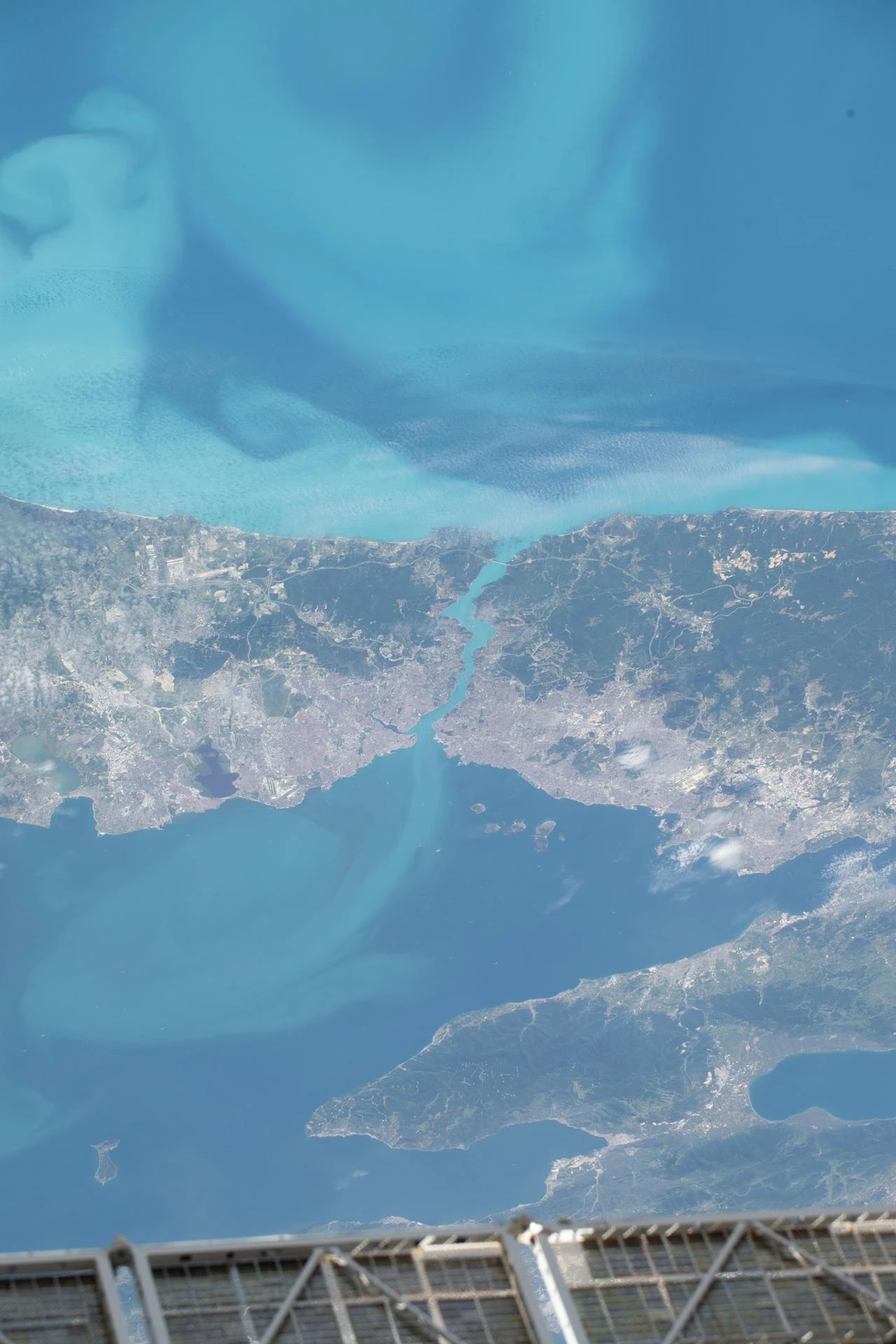
Satellite and space station imagery released by the U.S. National Aeronautics and Space Administration (NASA) shows a turquoise color change across the Black Sea, Marmara Sea and Istanbul's Bosphorus during the spring and summer months.
Images captured by NASA's PACE satellite and from the International Space Station (ISS) highlight a dense turquoise-colored phytoplankton bloom stretching across the Black Sea, the Marmara Sea and the Bosphorus.
The color change had previously been documented by drone footage over the Bosphorus and Marmara Sea, and the new satellite and space station images now offer a comparative view from orbit.
According to NASA, the Black Sea and Marmara Sea appear in dark blue and near-black tones for most of the year, but a turquoise shift spreads across wide areas in late spring and early summer.

The Ocean Color Instrument (OCI) aboard NASA's PACE satellite, launched Feb. 8, 2024, recorded the Black Sea's color change with high precision on June 22, 2026. The images show large sections of the Black Sea taking on light blue and turquoise tones.
Scientists attribute the color to a dense bloom of microscopic phytoplankton known as coccolithophores. These organisms, coated in calcium carbonate plates, reflect sunlight and give the sea surface a milky turquoise appearance.
NASA said diatoms with silica shells are more common during other times of the year, giving the sea its darker coloring.
About a month earlier, on May 27, 2026, an astronaut with the Expedition 74 crew aboard the ISS photographed turquoise currents stretching along the Bosphorus.
The image also captured phytoplankton movement and current patterns extending from the Black Sea toward the Marmara Sea.
NASA said the satellite and space station images, taken roughly a month apart, illustrate seasonal phytoplankton movement and natural change within the region's marine ecosystem.
Experts note that phytoplankton form the base of the marine food chain and help capture carbon from the atmosphere.


 Set as preferred source
 Set as preferred source


 0 min read

 1 min read