Newsletters


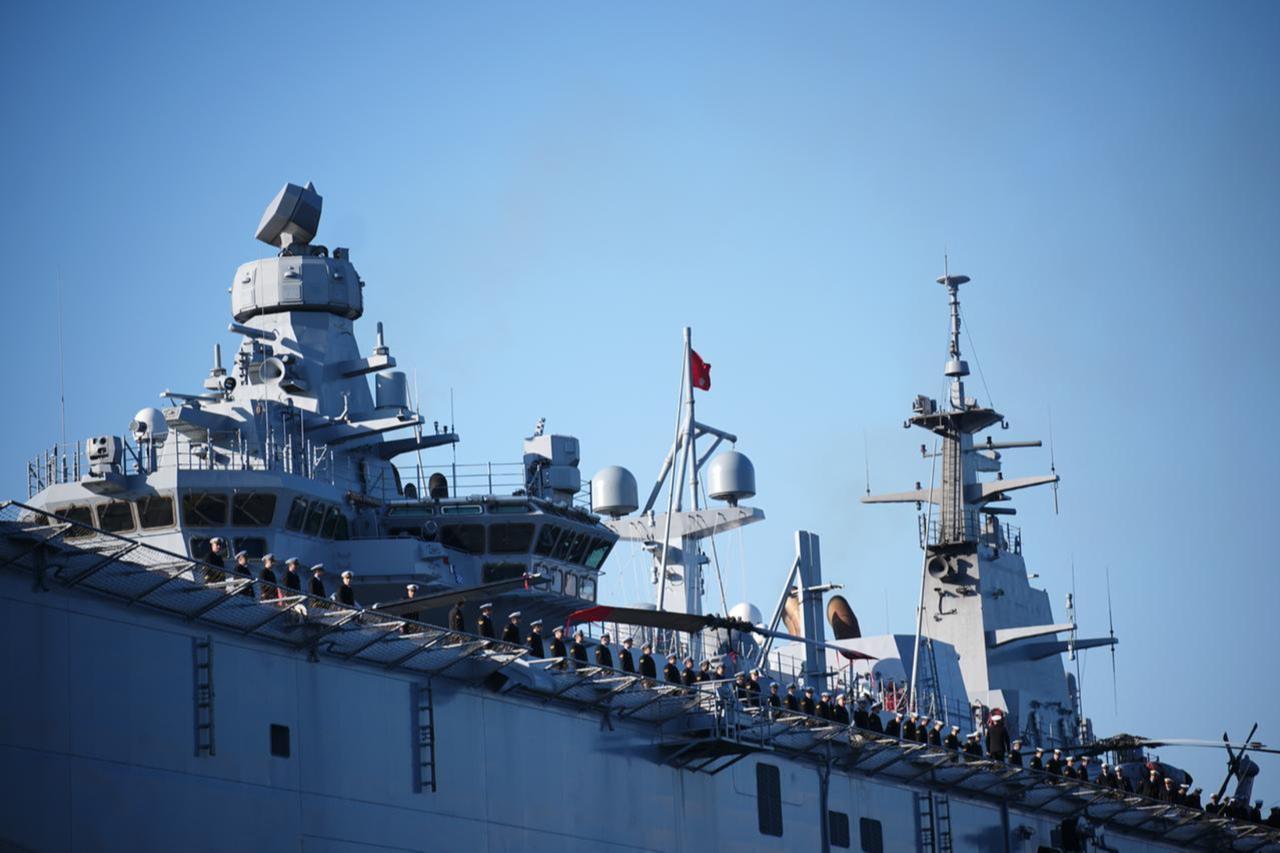


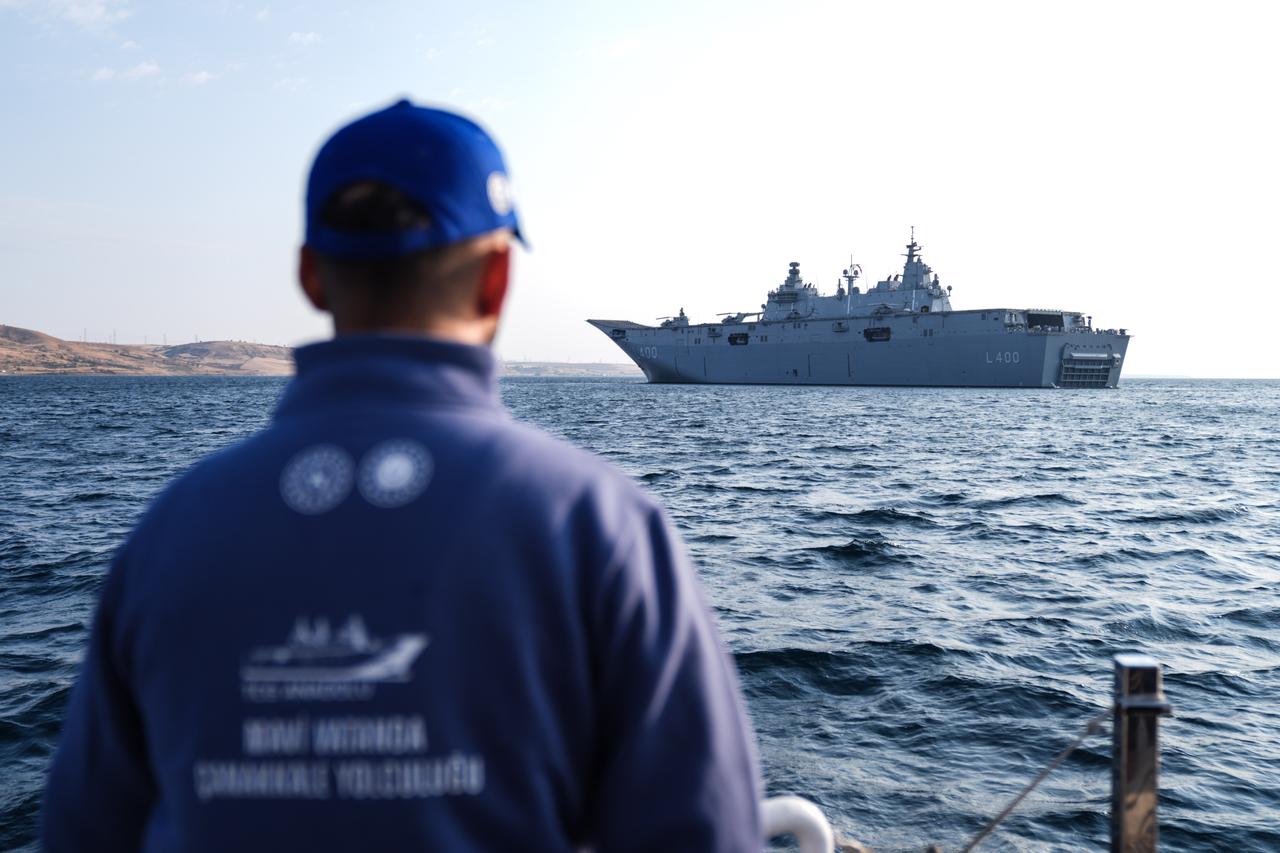
NATO is sending the Turkish drone carrier TCG Anadolu to waters off Latvia as part of Operation Eastern Sentry, placing the world's first dedicated unmanned aerial vehicle carrier at the heart of the alliance's air defense architecture along its most exposed frontier with Russia.
NATO Allied Joint Force Command Brunssum announced on February 20 that the vessel will operate under NATO Air Command (AIRCOM), bolstering air surveillance and defense capabilities in the Baltic region amid what the alliance has described as persistent airspace violations attributed to Russia. The deployment, JFC Brunssum said, "sends an unmistakable message: NATO stands vigilant, united, and ready to defend every inch of its territory."

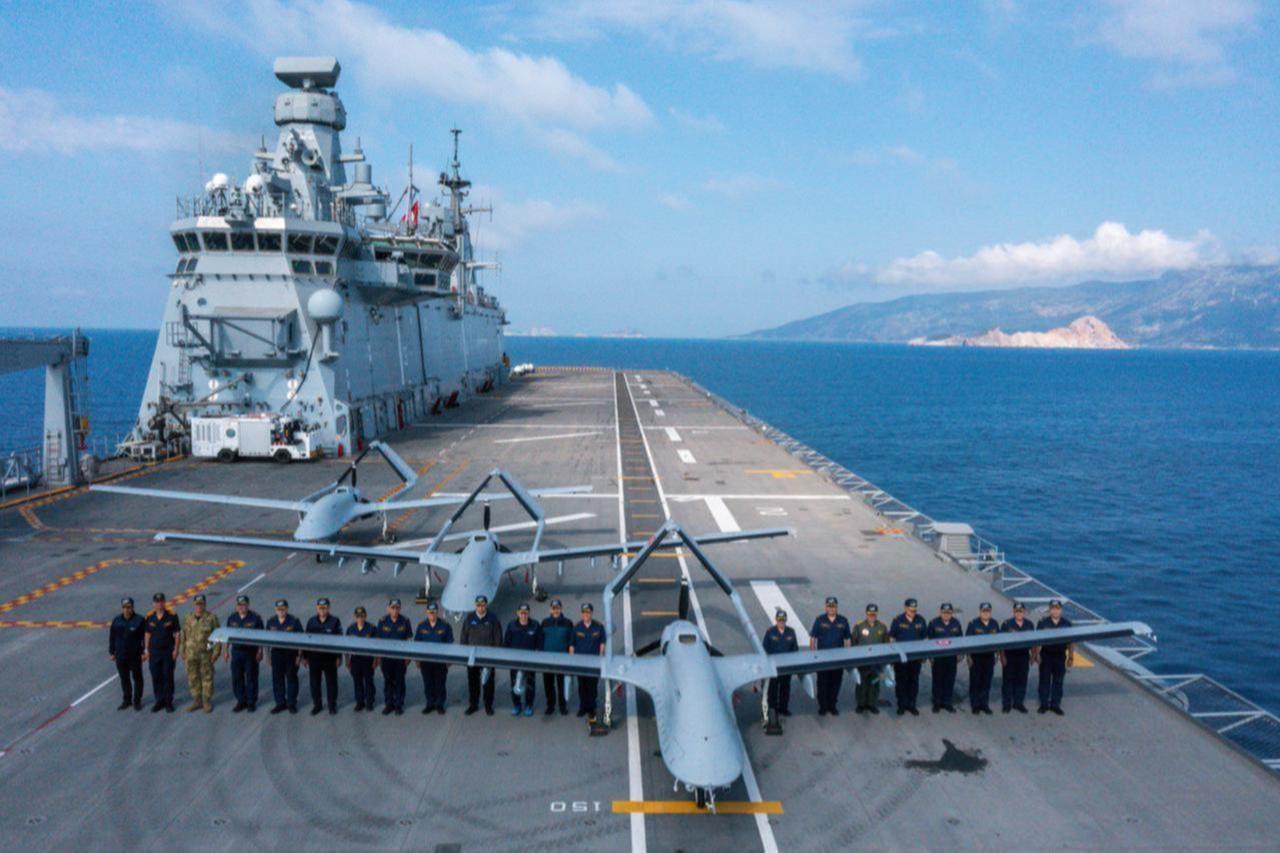
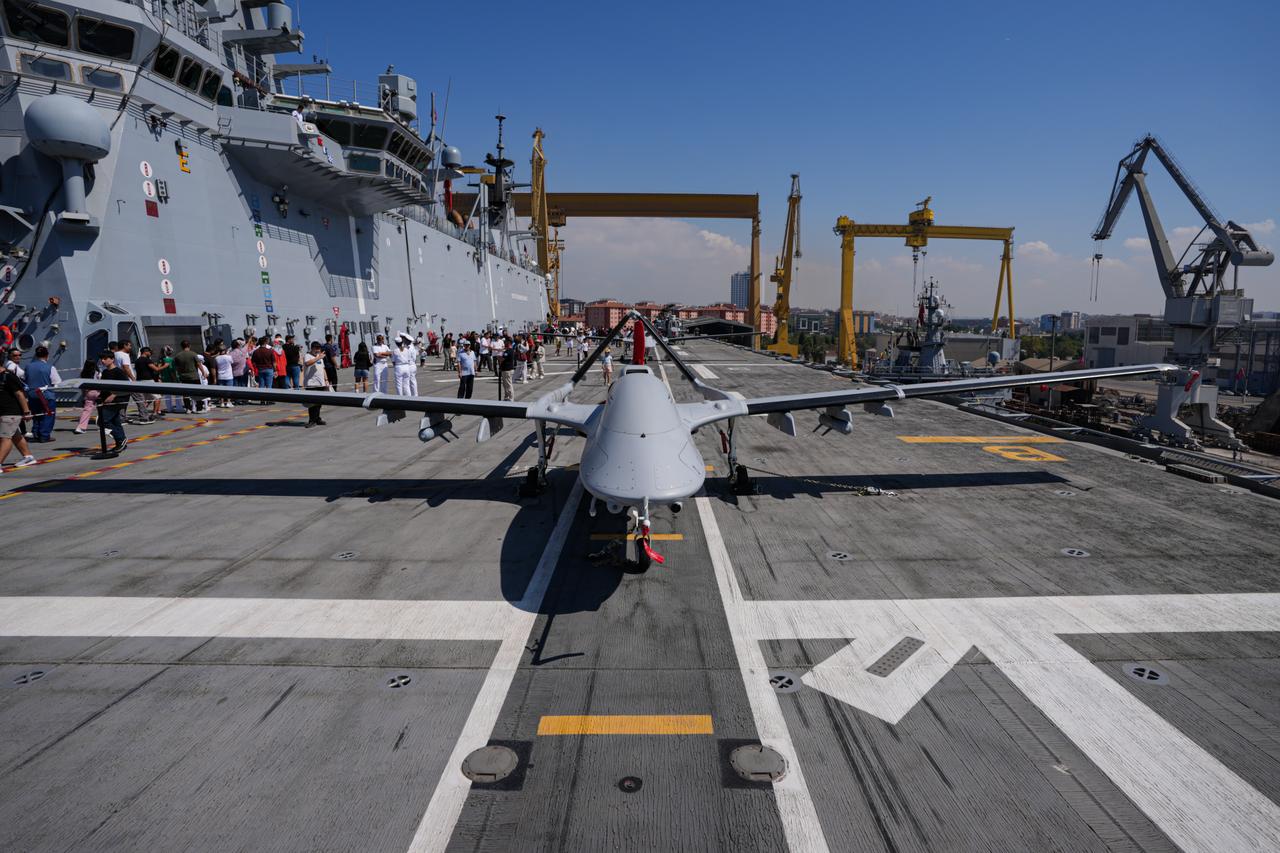
The TCG Anadolu is no ordinary warship. Displacing over 27,000 tons and based on the Spanish Juan Carlos I design, the vessel was adapted by Türkiye specifically as a drone carrier, equipped with a full-length flight deck capable of operating Turkish-made Bayraktar TB3 unmanned combat aerial vehicles alongside helicopters. The TB3, a carrier-capable medium-altitude long-endurance drone, can stay airborne for more than 24 hours and is fitted with electro-optical and infrared sensors for day-and-night intelligence, surveillance, reconnaissance, and precision strike missions.
The ship carries an advanced sensor suite of its own, including a SMART-S Mk.2 3D radar for medium-to-long-range air and surface surveillance, an infrared search-and-track system, and the GENESIS-ADVENT combat management system, which integrates identification-friend-or-foe capabilities, tactical data links, and satellite communications into a single operational picture. Under AIRCOM authority, TCG Anadolu can feed real-time tracking data directly into NATO's Integrated Air and Missile Defence network, extending the alliance's radar and electro-optical coverage over the Baltic Sea.
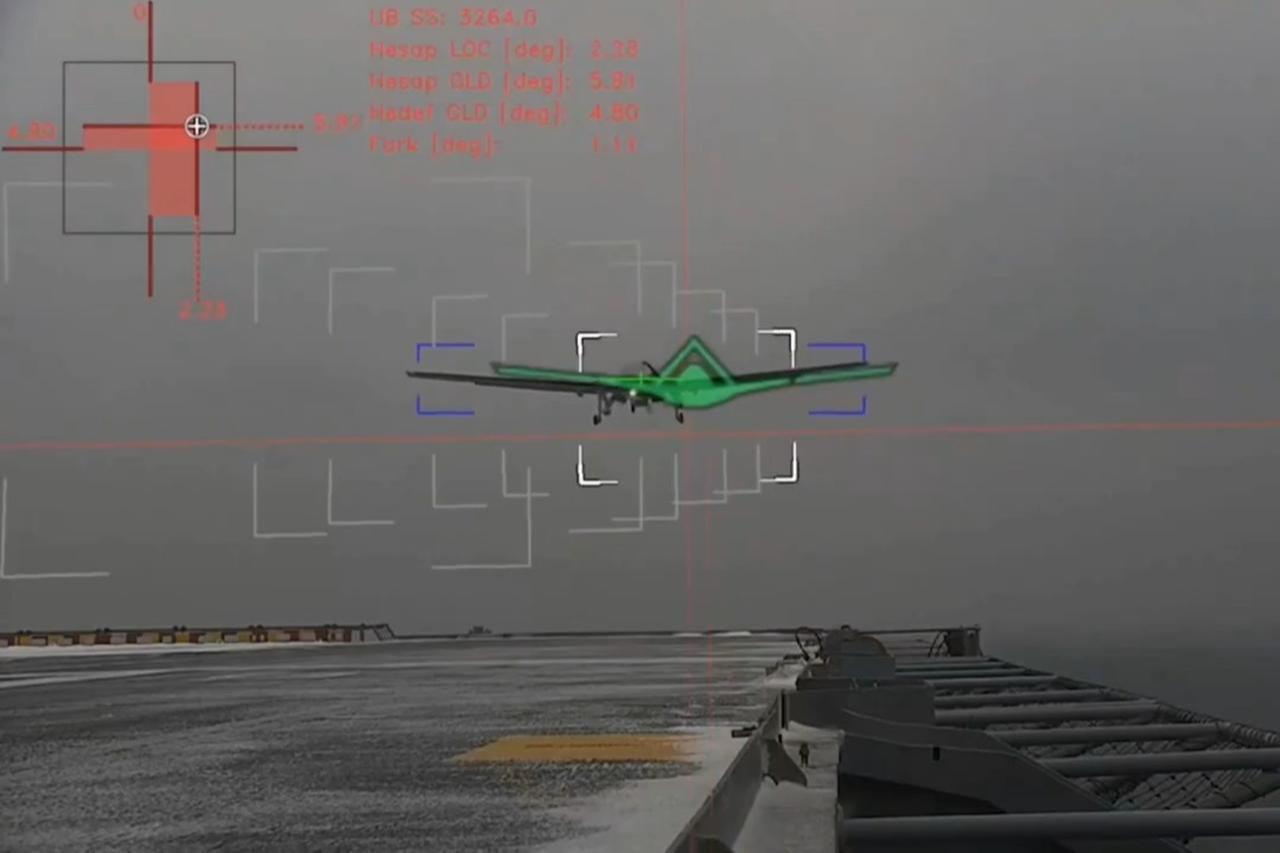
Recent NATO exercises have already demonstrated the ship's operational capability. During the Steadfast Dart 26 exercise, a TB3 launched from TCG Anadolu completed a full mission cycle, including a precision strike on a surface target with guided munitions, before recovering to the ship under NATO control procedures, proving both its strike potential and its viability as a persistent airborne sensor plugged into allied command and control.
Although JFC Brunssum's announcement focused on TCG Anadolu alone, the vessel operates as the flagship of a broader Turkish naval task group committed to a year-long NATO mission spanning European waters from the Mediterranean to the Baltic. The formation includes the frigate TCG Istanbul (F-515), a modern I-class warship displacing around 3,100 tons and equipped with a 3D air-search radar, a 16-cell vertical launching system for surface-to-air missiles, and a Gokdeniz close-in weapon system. The Barbaros-class frigate TCG Orucreis (F-245), recently modernized with an updated combat management system and Mk 41 vertical launch capability for medium-range surface-to-air missiles, provides additional area air defense coverage. The fast combat support ship TCG Derya (A-1590), fitted with its own 3D surveillance radar and close-in weapon systems, rounds out the group with logistics capacity and supplementary sensor coverage.
Together, the escorts transform the Anadolu Task Group into a distributed surveillance and air defense network capable of sustaining extended operations in the Baltic.
The deployment directly addresses vulnerabilities exposed by repeated Russian drone incursions into Polish and Baltic airspace. Low-altitude unmanned platforms approaching civilian airports and critical infrastructure have highlighted the limitations of relying solely on land-based radars and fighter patrols. By positioning a maritime UAV carrier off Latvia, NATO gains a mobile platform that can shift patrol patterns rapidly, operate outside the constraints of national airspace boundaries, and maintain continuous surveillance over coastal and maritime zones that are otherwise difficult to monitor.
Stationed near the Latvian coast, TCG Anadolu can maintain TB3 orbits along likely aerial approach corridors between the Russian exclave of Kaliningrad and the Russian mainland, while its shipboard radar and infrared sensors build a continuous track of manned and unmanned contacts. Those tracks, shared via tactical data links, can be correlated with data from shore-based radars, Baltic Air Policing fighters, and NATO AWACS aircraft to sharpen identification and, if necessary, support engagement decisions.
The fact that a non-Baltic NATO navy is contributing the platform underscores the alliance's position that defending the eastern flank is a collective, not a regional, responsibility. It also represents a doctrinal evolution for the alliance, which is now integrating unmanned naval aviation into the core of its deterrence posture on what has become one of Europe's most strategically sensitive boundaries.
Türkiye, a NATO member since 1952 and the alliance's second-largest military by personnel, has steadily expanded its defense-industrial footprint in recent years, with its Bayraktar drone family becoming one of the most widely exported unmanned systems in the world. The deployment of TCG Anadolu to the Baltic marks the first time a dedicated drone carrier has been tasked with a frontline NATO air defense mission.


 Set as preferred source
 Set as preferred source


 1 min read
 1 min read