Newsletters


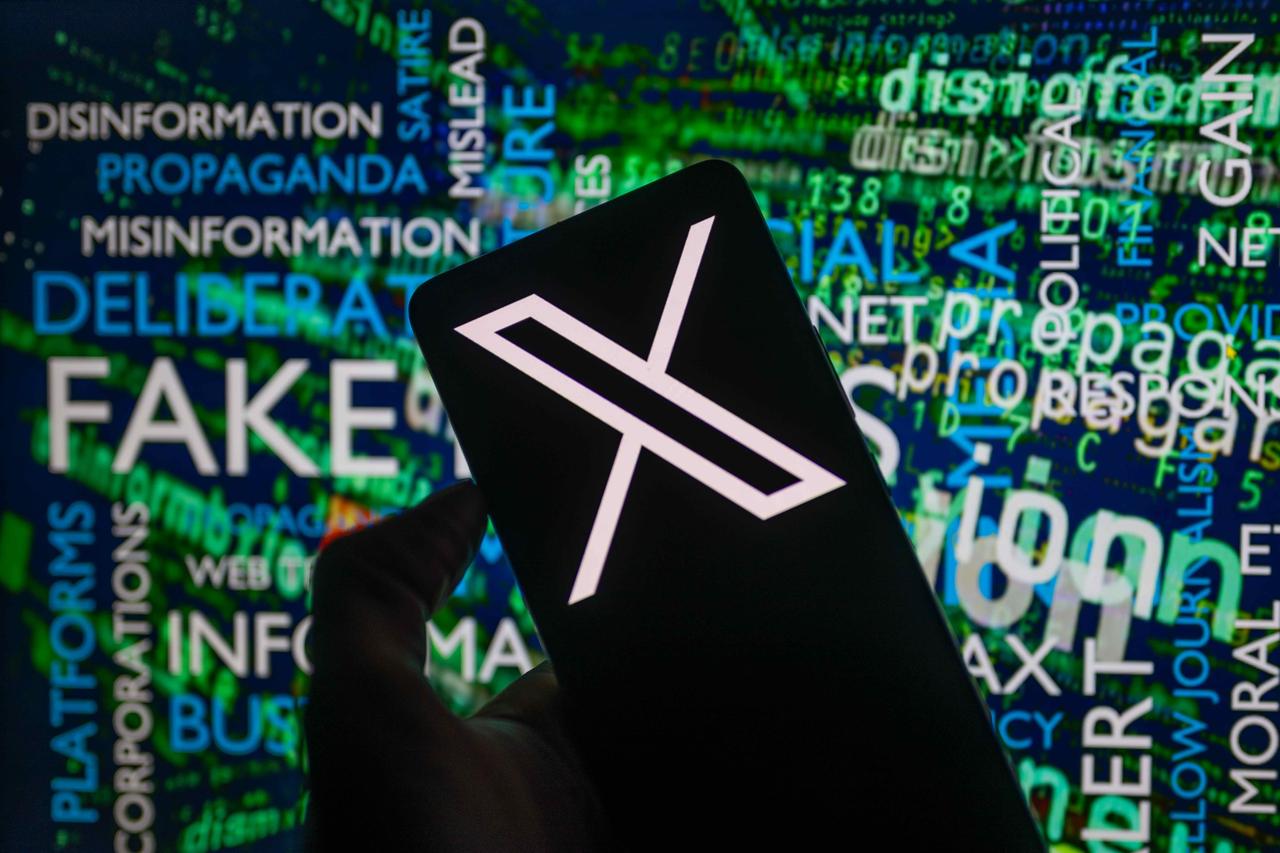


A growing debate across Turkish digital media has placed the role, funding, and political orientation of high-impact social media news platforms under scrutiny.
These platforms operate outside traditional press regulations and command the attention of millions of domestic users through rapid-fire content delivery.
Over the past years, the emergence of such accounts has fundamentally altered how the Turkish public consumes political and international news. Observers now point to a network of accounts that allegedly coordinate messaging to shape national sentiment.
While defenders portray these accounts as grassroots media actors filling a credibility gap left by traditional outlets, critics contend they operate as tightly coordinated influence nodes, blurring the line between journalism and organized information warfare.
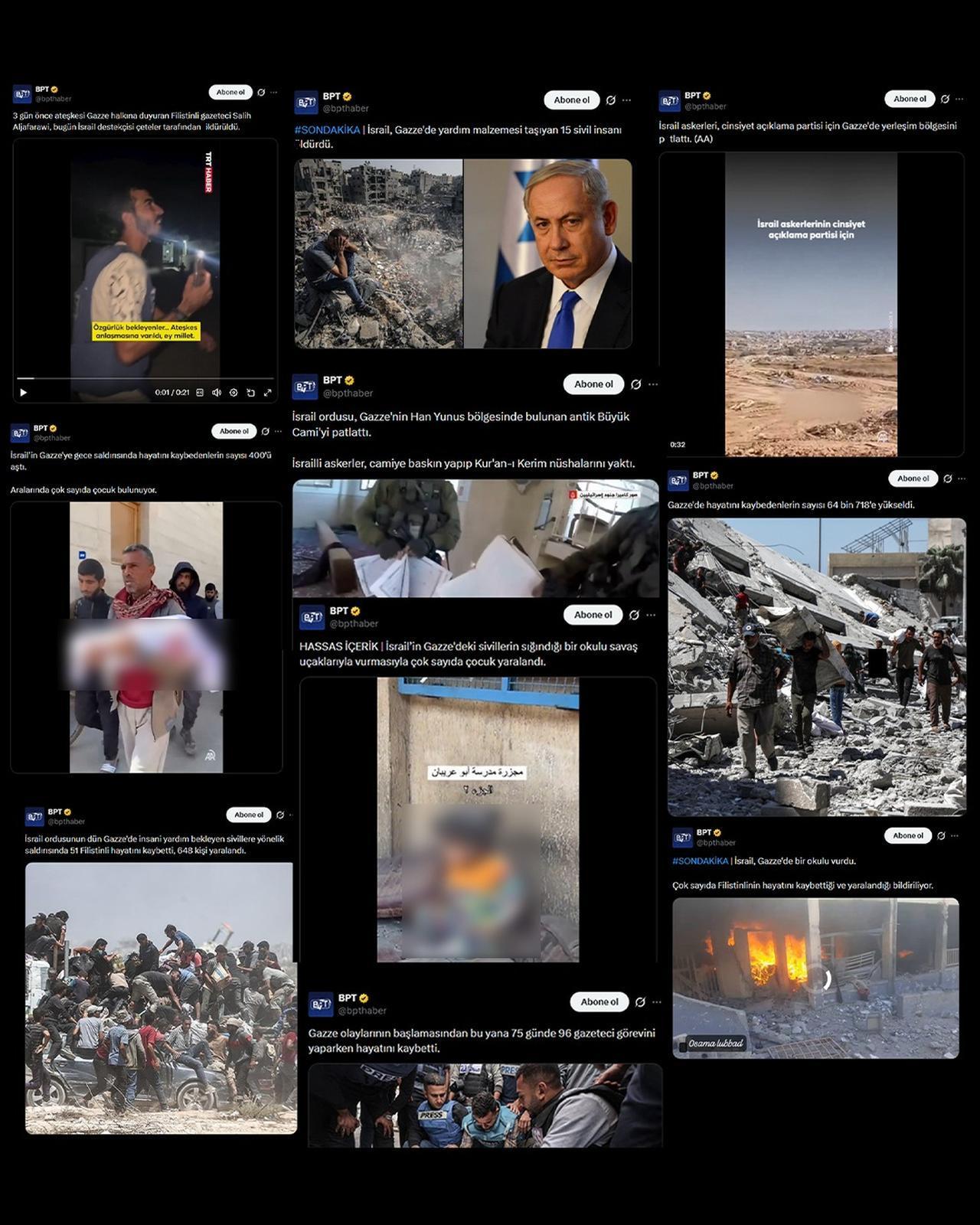
Altay Cem Meric, an author and prominent religious commentator, recently initiated a public confrontation by accusing several high-profile platforms of operating as "fifth-column" entities. He specifically alleged that accounts such as BPT, Pusholder and Muhbir receive covert financial support to disseminate narratives favourable to Israeli interests.
In response to these claims, the management of BPT issued a formal statement categorically denying any links to foreign funding. They described the accusations as baseless slander and confirmed that legal proceedings have been initiated against Meric for his remarks.
While BPT has chosen a litigious path to defend its reputation, other mentioned entities like Muhbir have remained silent on the matter.
A central pillar of the allegations suggests that these accounts engage in the synchronized amplification of content sourced from the Israeli military’s Turkish-language propaganda channels.
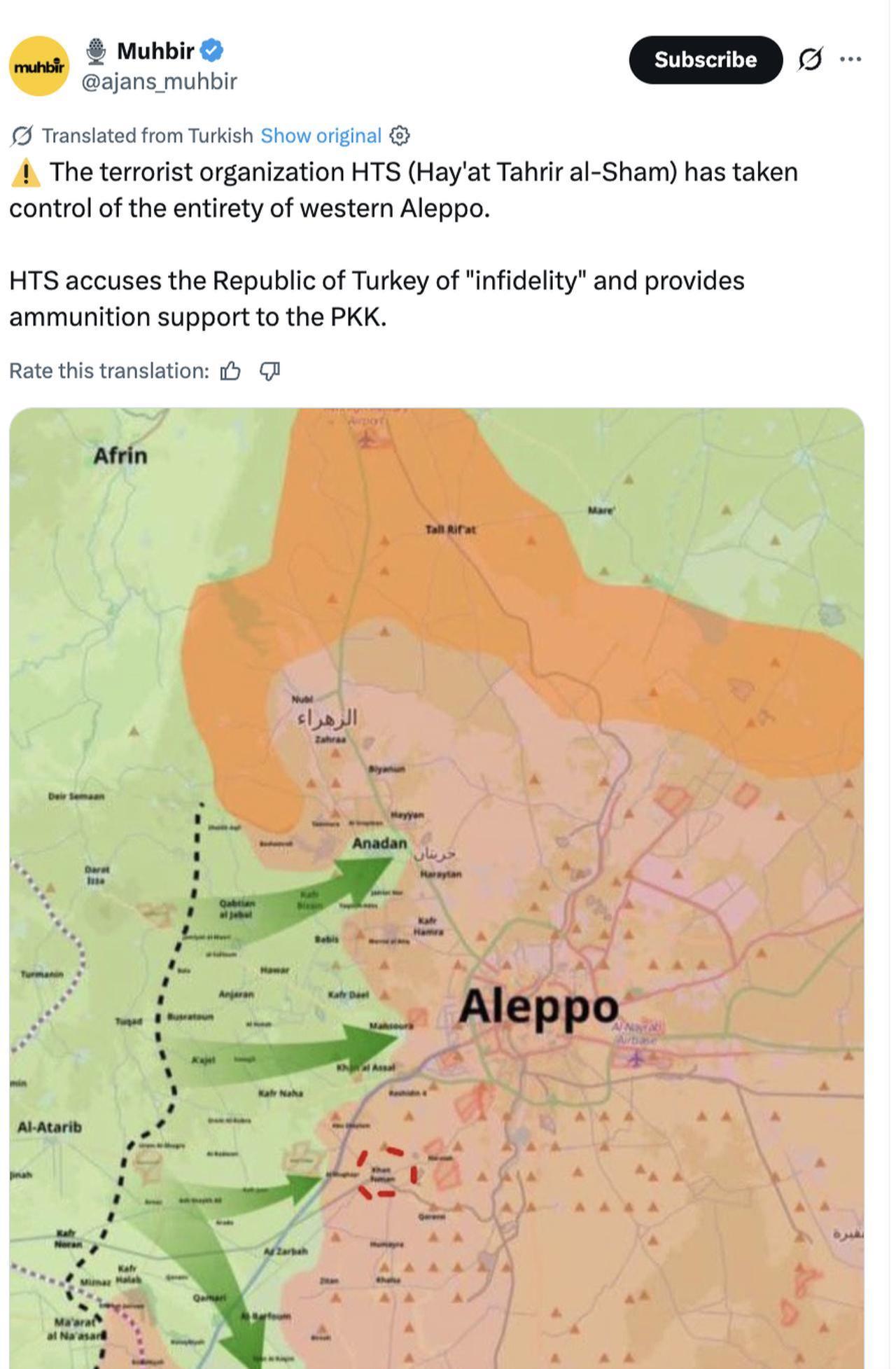

Critics like Meric maintain that this network enables the rapid spread of curated narratives under the guise of breaking news. The consistency in timing and tone across multiple accounts suggests a degree of organizational synchronization that skeptics find suspicious.
According to the Youtuber Meric, "the operational model of these aggregators relies on a mutual support system designed to bypass standard algorithmic limitations". By cross-promoting each other's content, these platforms allegedly create an artificial consensus that often obscures the original source of information.
Defenders of these platforms argue that their content reflects a diverse range of viewpoints rather than a singular foreign agenda. They point to recent pro-Palestinian posts as evidence that the allegations of a pro-Israel bias are factually incorrect.
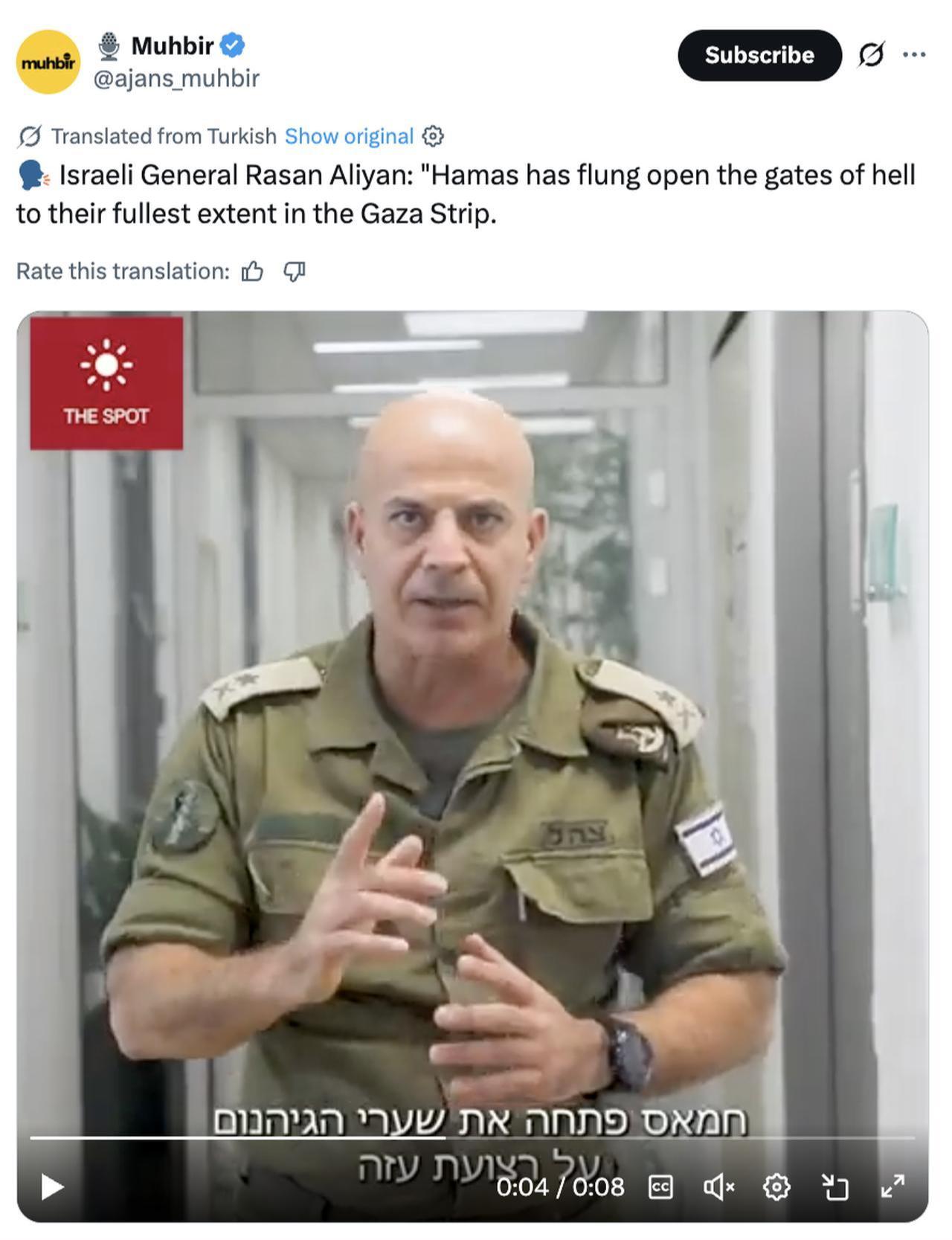
Meric's content analysis of these platforms suggests a distinct pattern in their coverage of the ongoing humanitarian crisis in Gaza. He claims there is a tendency to employ softening language when discussing Israeli military actions while maintaining a hostile tone toward Palestinian groups.
Conversely, representatives from the accused accounts assert that their reporting is balanced and inclusive of various regional developments. They contend that sporadic accusations of bias ignore the breadth of their daily output regarding the conflict.
The influence of these pages also extends to the conflict in Syria, where they frequently question the Turkish government’s foreign policy choices. By framing certain regional actors as inherent enemies, they are accused by Meric of complicating the diplomatic efforts of the Turkish state.
Newly emerged secular Turkish nationalism may possess ideological links that influence the reporting style of these digital accounts. The social media group members over the recent years have drawn inspiration from the 1990s, a period defined by a strategic rapprochement and ideological alignment between Türkiye and Israel.
In the years leading up to recent regional escalations between Türkiye and Israel, certain secular-nationalist circles began to view the latter as a potential ally against shared regional challenges. This perspective was often rooted in a preference for a foreign policy that prioritized anti-migration stances and a Western-aligned secular identity.
The Zafer Party, often seen as a political representative of this worldview, has contained voices that openly called for such a rapprochement prior to Oct. 7. While the party leadership has since joined the national consensus in condemning the Gaza campaign, these earlier positions highlight a distinct ideological current within the nationalist right.
The discourse promoted by these digital entities frequently emphasizes a version of secular-Turkish nationalism that Meric describes as explicitly divorced from Islamic identity. This "type of secular nationalism" is allegedly designed to appeal to younger, urban demographics who are increasingly active on social media as the Turkish nationalist voter base mostly relies on an Islamic version of nationalism.
By positioning ethnic identity against religious affiliation, these accounts are accused of exacerbating existing sociological fault lines within Turkish society. This ideological framing is seen by critics as a potential source of internal polarization.
The rise of these digital influencers indicates a shift in the power dynamics of Turkish political communication. As traditional outlets lose their gatekeeping authority, the role of unregulated digital networks becomes a central discussion point for those tracking the Turkish information space.


 Set as preferred source
 Set as preferred source


 6 min read