Newsletters


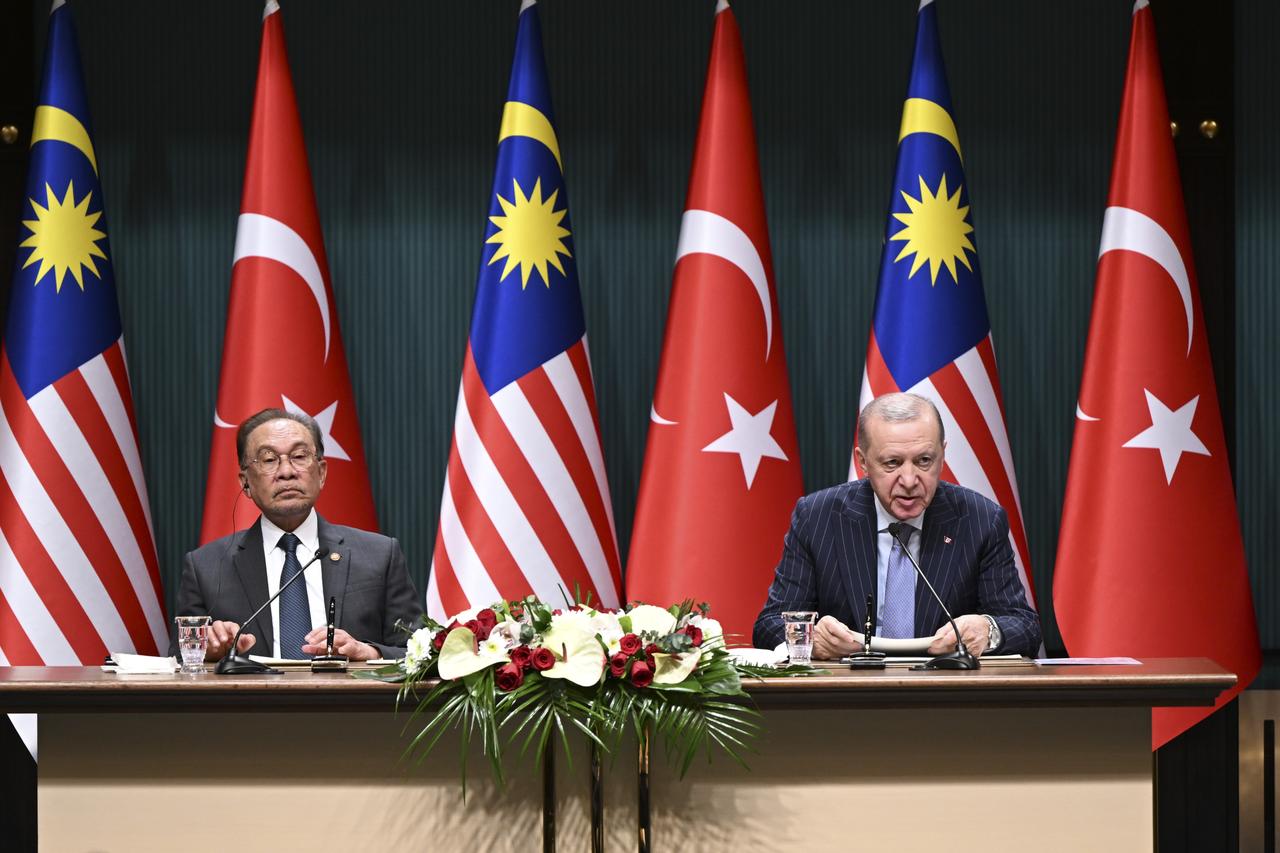


Türkiye and Malaysia signaled a new phase in bilateral relations this week as Malaysian Prime Minister Anwar Ibrahim held a series of high-level meetings in Istanbul and Ankara, focusing on defense, energy, and high technology cooperation.
The talks took place during Anwar’s official visit to Türkiye from Jan. 6 to 8 at the invitation of President Recep Tayyip Erdogan.
Speaking at a roundtable meeting with Turkish business leaders in Istanbul on Thursday, Anwar described Türkiye as an important partner for Malaysia and pointed to long-standing historical ties. He said trust between leadership, governments, and societies created a strong basis for expanding cooperation.
The meeting was organized by the Malaysian External Trade Development Corporation MATRADE and the Malaysian Investment Development Authority MIDA and brought together executives from 46 Turkish companies. Anwar said both countries could act as regional bases for wider economic and industrial engagement.
Trade between Malaysia and Türkiye reached about $5 billion from January to November 2025, according to figures shared during the meetings. Leaders from both sides have previously set a target of raising bilateral trade to $10 billion.
Anwar repeatedly highlighted Türkiye’s industrial capacity, especially in defense and aerospace.
He described Türkiye as one of the countries with the most advanced defense technologies, including drones, and said Malaysia has benefited from government-to-government defense cooperation, particularly in naval and aerospace projects.
Türkiye’s strengths in defense, construction, and manufacturing were matched, he said, by Malaysia’s advantages in energy, semiconductors, and electrical and electronics production. Malaysia has become a major regional hub for semiconductors, artificial intelligence, data centers, and rare earth-related industries.
“The combination of Türkiye’s strengths and Malaysia’s high technology and energy capabilities creates a strong foundation for long-term cooperation,” Anwar said during the Istanbul meeting. He added that joint investments and industrial partnerships could support technology transfer and regional market expansion.
The roundtable included major Turkish defense and aerospace firms such as Aselsan, Turkish Aerospace Industries, and STM. Seven Malaysian companies also took part.
Anwar invited Turkish companies to expand their presence in Malaysia, citing a stable investment environment, a skilled workforce, and access to the ASEAN market. He said the Malaysian government would support investors through more transparent and efficient processes.
The economic discussions took place alongside political talks in Ankara, where Anwar and Erdogan addressed regional and global issues.
During a joint news conference earlier in the week, Anwar praised what he called the capacity and strength of Türkiye’s industry in science and technology and said the $10 billion trade target was realistic.
Anwar also welcomed Türkiye’s stance on international issues, including Gaza, during his meetings in Ankara. He said global politics faced a deficit in moral leadership and called for a stronger voice of conscience.
The visit marked the first meeting of the Türkiye-Malaysia High-Level Strategic Cooperation Council. Turkish officials said both sides discussed the possible signing of documents to strengthen bilateral relations and reviewed cooperation across multiple sectors.
Malaysia and Türkiye already maintain close defense ties. Turkish Aerospace Industries operates an office in Malaysia that employs more than 100 Malaysian engineers. In 2024, STM signed an agreement to supply three corvette warships to Malaysia.
Malaysia is a member of the D-8, which was founded in Istanbul in 1997, and serves as the 2025 chair of ASEAN. Türkiye and Malaysia signed a free trade agreement in 2014, the first between Türkiye and an ASEAN member state.
Officials from both countries said the current talks aim to translate political goodwill into concrete economic results, with private sector cooperation expected to play a central role in the next phase of the partnership.


 Set as preferred source
 Set as preferred source


 2 min read