Newsletters


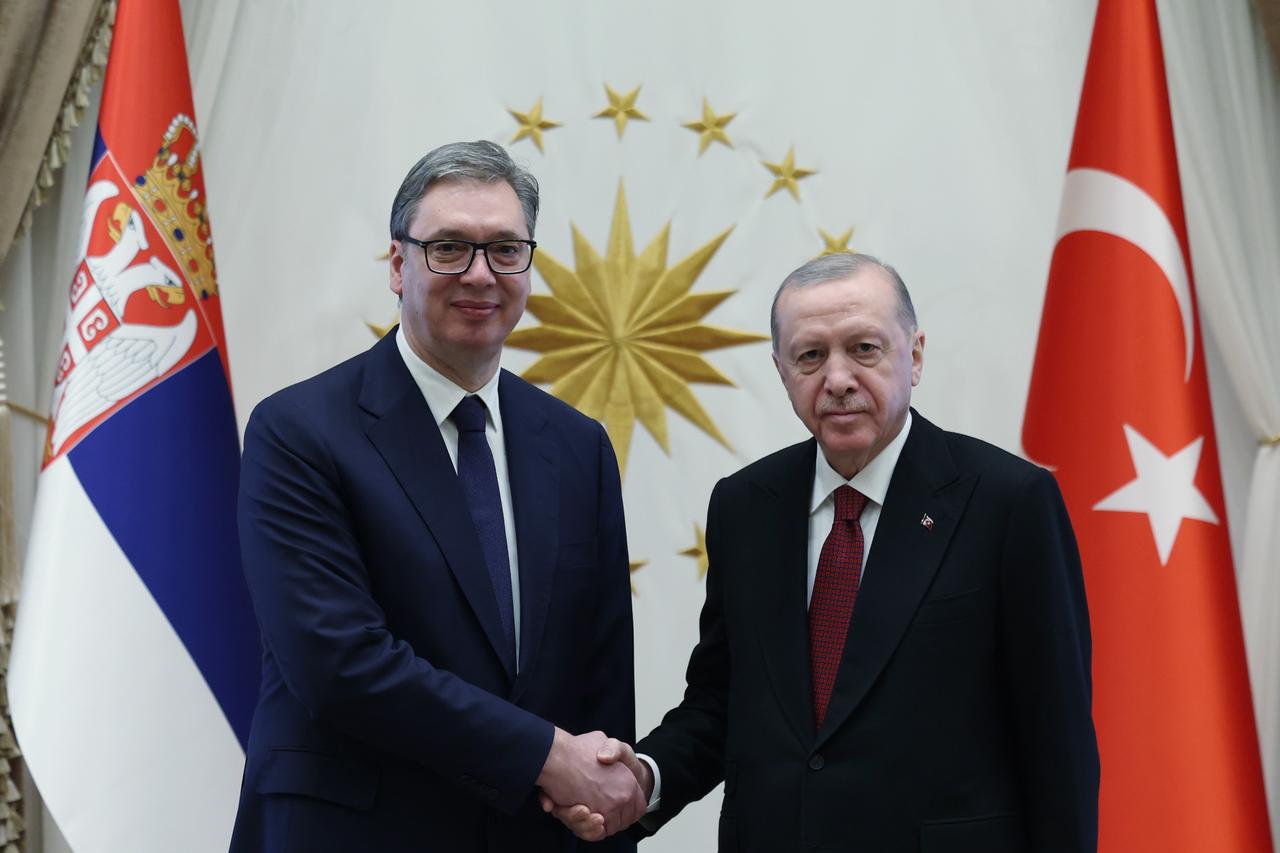


President Recep Tayyip Erdogan hosted Serbian President Aleksandar Vucic in the Turkish capital on Thursday for wide-ranging talks that underscored Ankara's deepening engagement with the Balkans, with the two leaders signaling ambitions to push bilateral trade toward $5 billion and expanding cooperation across investment, tourism and transportation.
The meeting, held at the presidential complex, came as Erdogan framed Türkiye's Balkan outreach within a broader effort to project stability during a period of global turbulence. "At a time of rising global uncertainty, Türkiye is working to ensure peace and stability in our region and beyond," Erdogan said at a joint news conference following the talks. "We never neglect the Balkans."

The economic dimension dominated much of the public messaging from both leaders. Erdogan said total trade volume between the two countries reached $3.5 billion last year, adding that the two sides are "moving step by step" toward a $5 billion target.
The investment relationship has also grown dramatically. Erdogan noted that the number of Turkish-capitalized firms operating in Serbia has surged from around 100 in 2015 to more than 1,500 today, with total investment reaching $300 million. The two leaders discussed how to maintain that momentum, including by increasing flight connections between the countries.
Türkiye has become the second most popular tourism destination for Serbian visitors, Erdogan said, while Turkish citizens now rank first among tourists visiting Serbia. The leaders also addressed growing interest in Turkish-language education in Serbia, with Erdogan saying efforts are underway to meet that demand through Turkish institutions.
Vucic struck a warm tone, saying the Ankara talks "made me very happy" and describing the exchange as a "very good dialogue between two friends who have known each other for a long time." He called Erdogan "a very experienced leader."
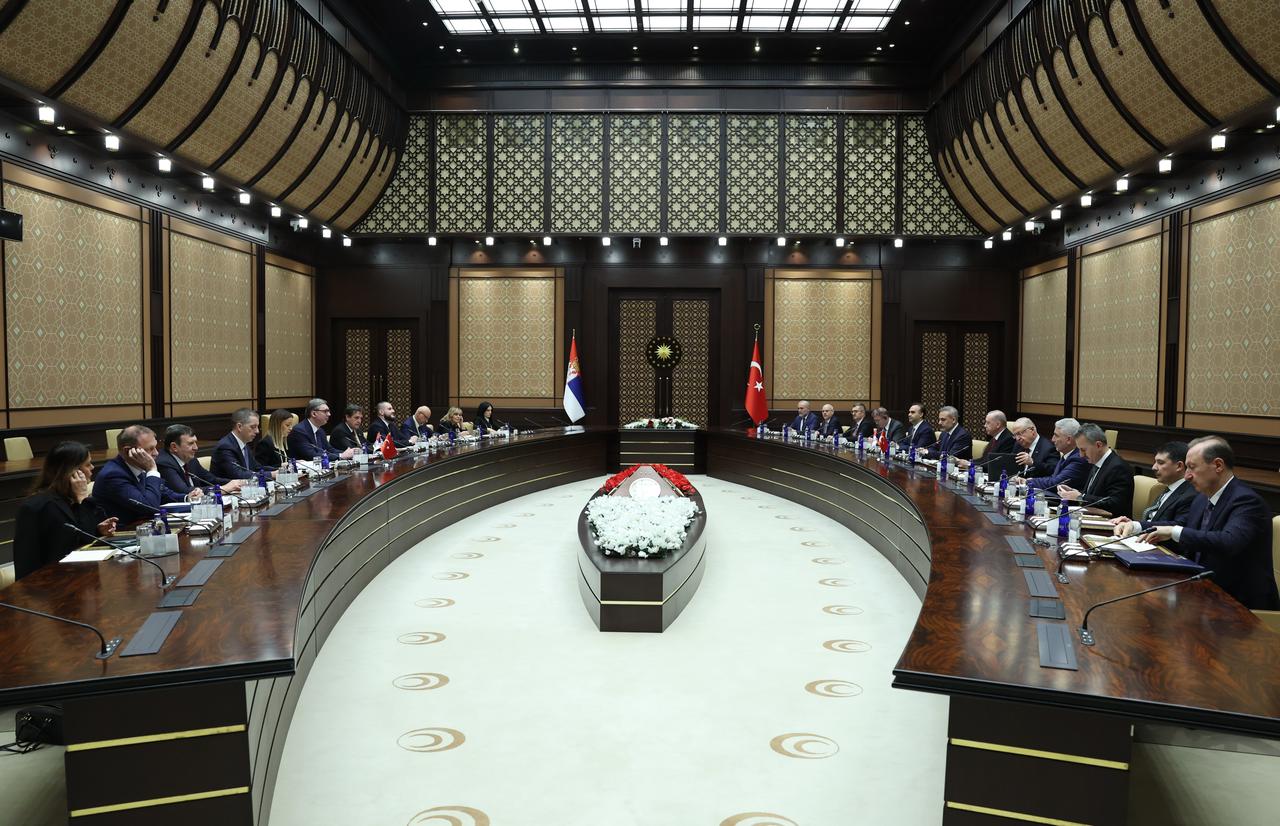
The bilateral and delegation-level meetings were attended by Turkish Foreign Minister Hakan Fidan and National Defense Minister Yasar Guler. Following the talks, the two presidents presided over a signing ceremony for bilateral agreements before addressing reporters.
Türkiye has historically positioned itself as a key interlocutor in the Western Balkans, leveraging Ottoman-era cultural ties and modern economic diplomacy to maintain influence in the region. Serbia, which is not a NATO member but holds European Union candidate status, has sought to balance its relationships with Western powers, Russia and regional partners like Türkiye.


 Set as preferred source
 Set as preferred source


 1 min read
 1 min read