

 Newsletters


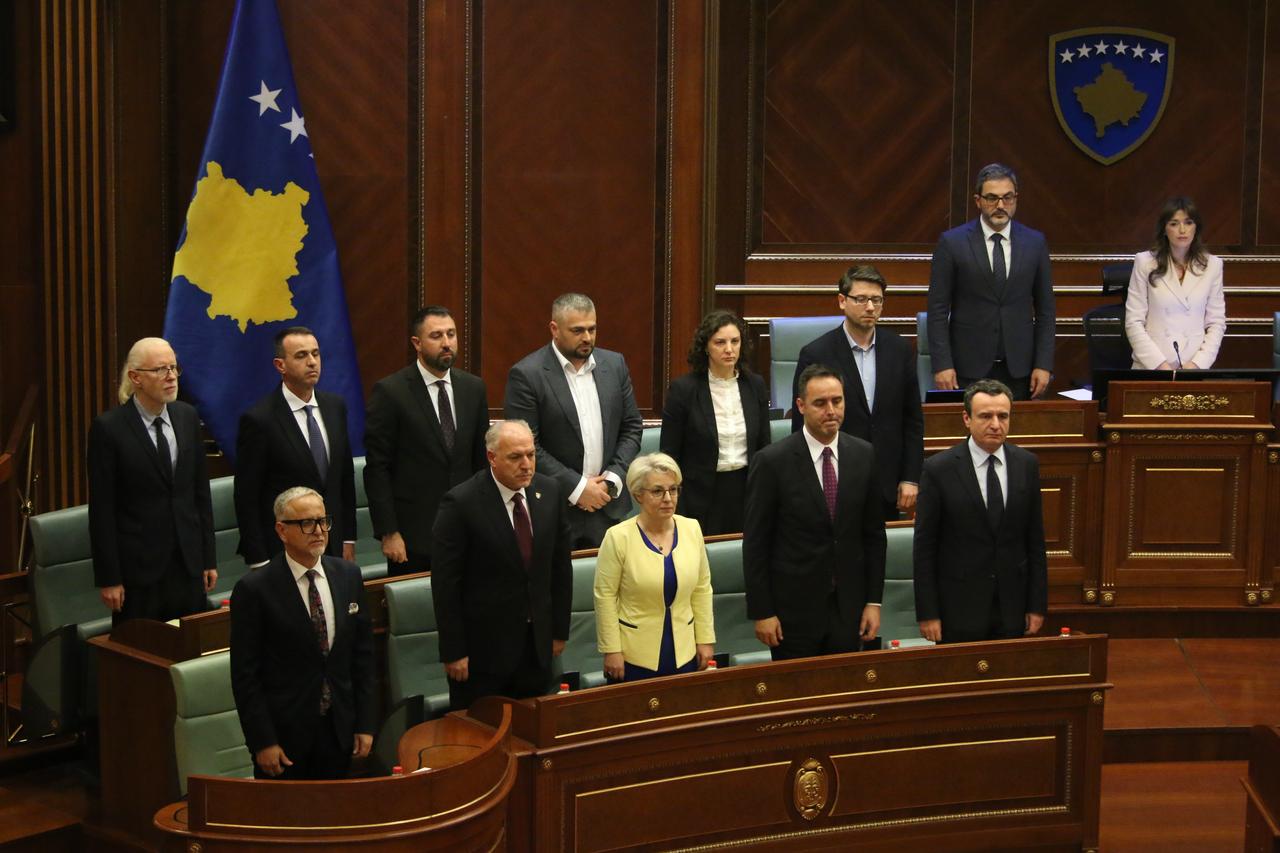
Kosovo’s parliament on Wednesday approved a new government led by Prime Minister Albin Kurti, ending more than a year of political deadlock after the country’s December snap election.
Kurti, who had remained in a caretaker role for 12 months, was confirmed as prime minister after his Vetevendosje (Self-Determination) party emerged as the largest force in the Dec. 28, 2025, vote.
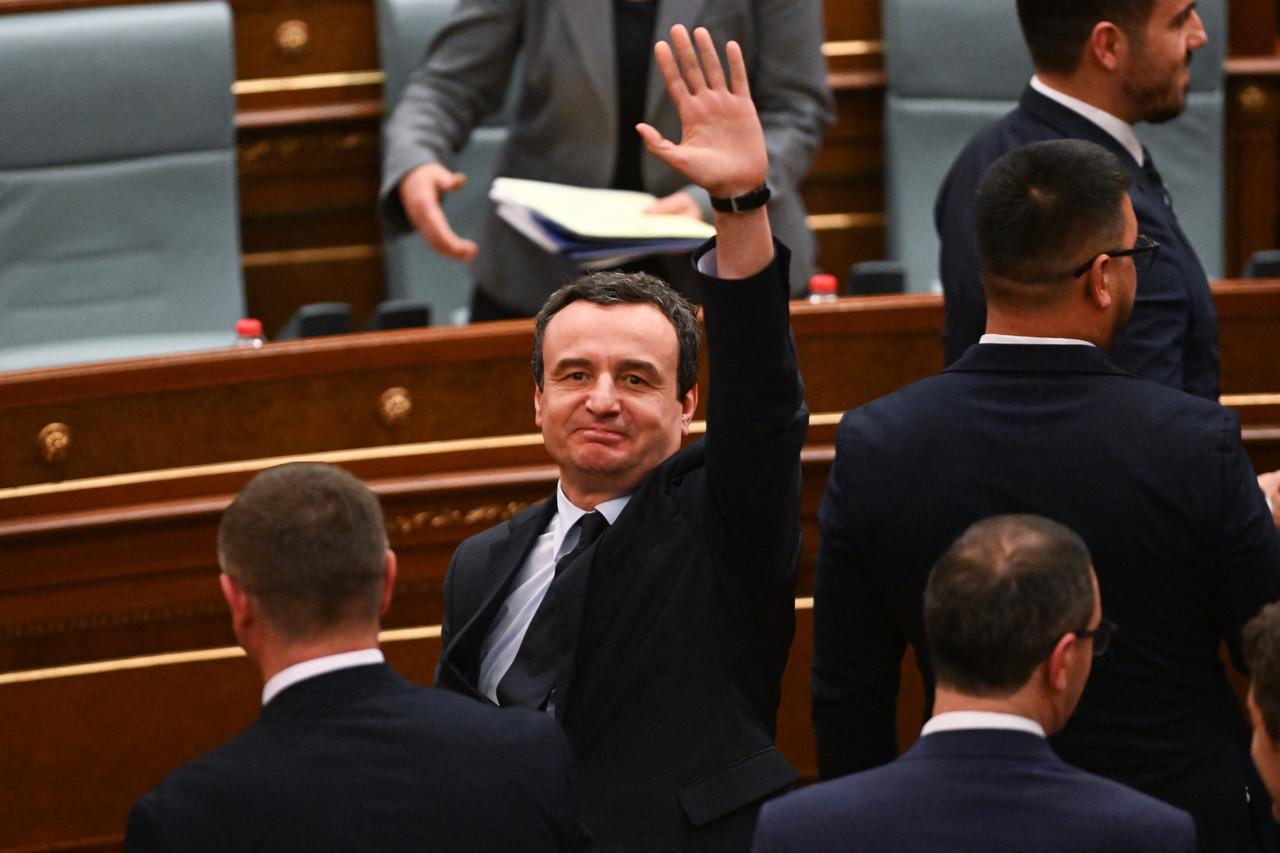
The government won approval with 66 votes in favor in the 120-seat assembly. Forty-nine lawmakers voted against, while five did not participate.
Kurti’s confirmation was met with applause from his supporters in the chamber.

Addressing parliament before the vote, Kurti said prosecutors’ requests for 45-year prison sentences for former Kosovo Liberation Army commanders on trial in The Hague “misrepresent the truth.”
Outlining his priorities, Kurti said his government plans to invest 1 billion euros ($1.18 billion) in defense over the next four years, expand investments in renewable energy and water resources, and support the development of Kosovo’s manufacturing sector.
He also pledged measures to boost women’s employment and said the minimum wage would be increased in line with economic growth.
On relations with Serbia, Kurti said normalization would be pursued through “constructive and creative dialogue,” while accusing Belgrade of ongoing pressure.
“During these years, as we have all witnessed, we have faced constant attacks and threats from Serbia,” Kurti said, referring to Kosovo’s northern neighbor, which does not recognize Kosovo’s independence.
He nevertheless pledged to continue efforts to normalize relations.
Tensions remain high in northern Kosovo, where most of the ethnic Serb minority lives, and normalization of relations is a key requirement for both Kosovo’s and Serbia’s aspirations to join the European Union.
A general election held a year earlier had left Kurti without the majority needed to form a government, leading to months of parliamentary paralysis. Lawmakers eventually agreed to hold an early election in December, which Vetevendosje won with more than 51% of the vote, securing 57 seats.
Certification of the results was delayed for weeks after alleged inaccuracies triggered a full recount and a criminal investigation. Over 100 election staff have been arrested as the probe continues.
Kurti has said he intends to move quickly to secure approval for key international loans, including funding from the EU, which requires a two-thirds majority in parliament.
Under the new Cabinet lineup, Glauk Konjufca was appointed first deputy prime minister and minister of foreign affairs and diaspora, while Donika Gervalla-Schwarz became second deputy prime minister and minister of justice.
Fikrim Damka, leader of the Kosovo Democratic Turkish Party, was named third deputy prime minister responsible for minority affairs and cooperation.
The parliamentary session concluded after the Cabinet members took their oaths of office.
According to official results from the Dec. 28 election, Vetevendosje won 57 of the 100 seats allocated through proportional representation in the 120-member parliament.
The Kosovo Democratic Party won 22 seats, the Democratic League of Kosovo 15, and the Alliance for the Future of Kosovo six, all surpassing the 5% electoral threshold.
The remaining 20 seats reserved for non-majority communities were distributed as follows: Serb List nine, Kosovo Democratic Turkish Party two, New Democratic Initiative of Kosovo one, Social Democratic Union one, New Democratic Party one, Party for Freedom, Justice and Survival one, VAKAT Coalition one, Egyptian Liberal Party one, Ashkali Social Democratic Party one, Unique Gorani Party one, and Progressive Movement of Kosovar Roma one.


 Set as preferred source
 Set as preferred source


 2 min read
 1 min read



