Newsletters


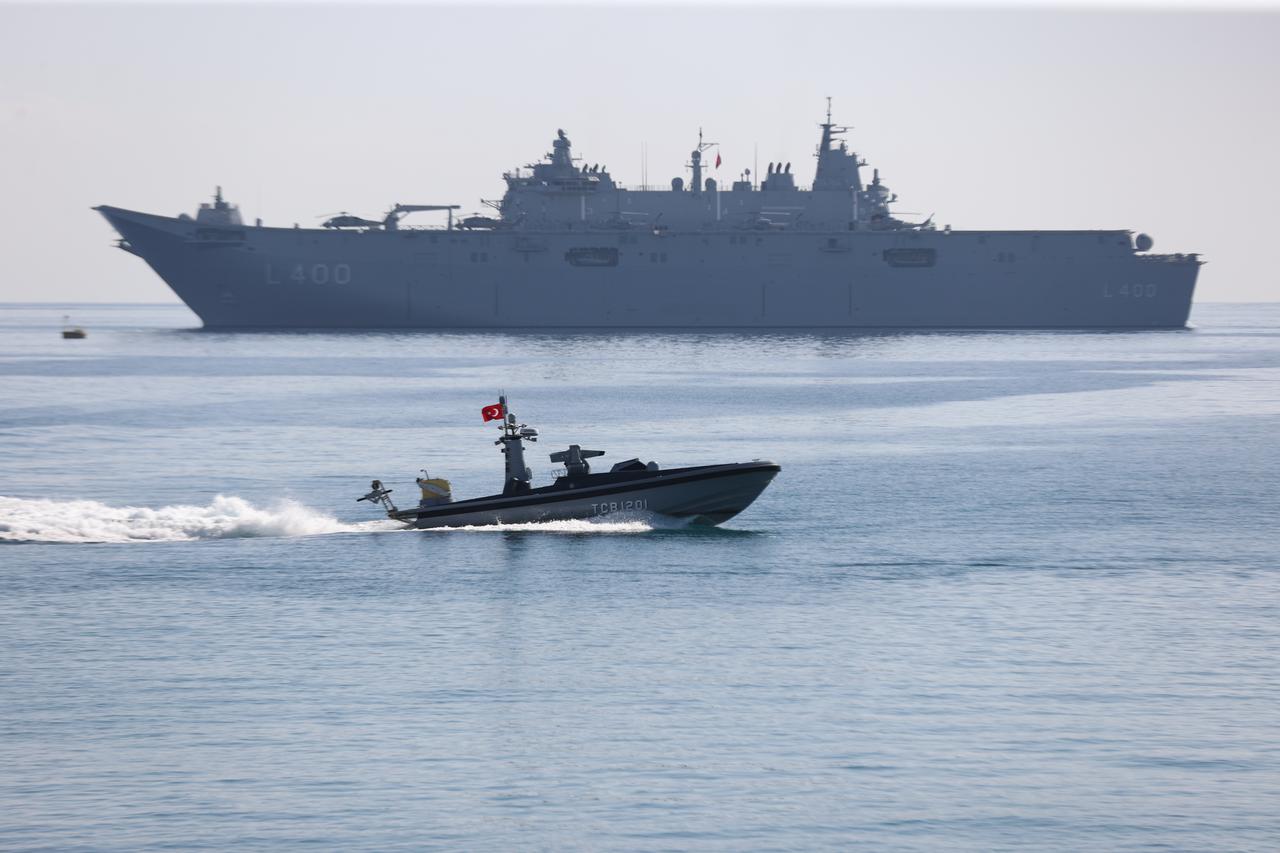


Türkiye’s national aircraft carrier, an indigenous aircraft carrier project known as MUGEM, set to go to sea next year, will be the first carrier to operate unmanned aerial, surface, and underwater vehicles together, Naval Forces Commander Adm. Ercument Tatlioglu stated on Sunday.
Tatlioglu spoke after the Distinguished Observer Day of the National Unmanned Naval Systems Exercise-2026 (TURNAs-2026) off Antalya, calling the first-of-its-kind drill a rehearsal for "the war we will wage in the future."
"On our national and domestic aircraft carrier, which we will put to sea next year, there will not only be unmanned aerial vehicles; there will also be unmanned naval vehicles, unmanned boats, unmanned craft and unmanned underwater vehicles," he said.
"Our aircraft carrier will be the first aircraft carrier where unmanned systems are used together, which in this sense makes it different from other aircraft carriers," the navy chief added.
"We are designing and building all our platforms, such as the national aircraft carrier under construction, the Tepe-class destroyer and the new-generation minehunter, to carry out hybrid operations with unmanned systems," Tatlioglu said.
"Today, the Turkish Naval Forces is one of the world’s leading naval forces in terms of unmanned aerial vehicles. We are also rapidly increasing the number of unmanned naval vehicles serving in different dimensions of naval operations," he noted.
"With the unmanned underwater vehicles and unmanned mini submarines we will add to our inventory in the near future, we aim to have a say in the underwater operational environment, which very few countries in the world possess," Tatlioglu added.
"Our priority is to develop systems that are reliable, sustainable, interoperable with different platforms and meet our operational needs. With this understanding, we are trying to rapidly add unmanned and autonomous systems to our inventory," he said.
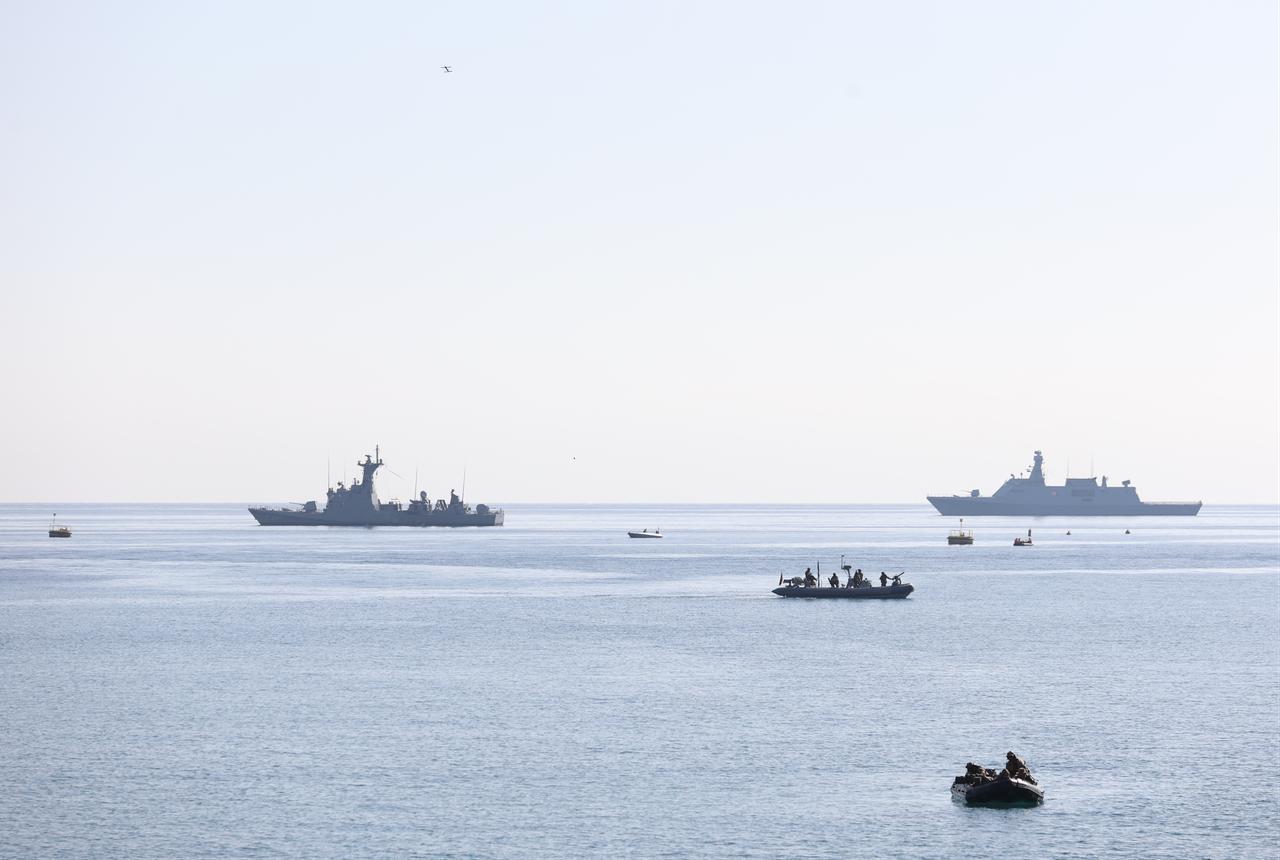

Tatlioglu said 41 systems from 17 companies took part in the exercise, testing hybrid use of unmanned surface, underwater, aerial and ground systems alongside manned platforms.
"This exercise is a historic exercise for our naval forces. It is the first time an exercise has staged a scenario in which unmanned aerial vehicles, unmanned surface vehicles, unmanned boats, unmanned craft, unmanned underwater vehicles, unmanned mini submarines, unmanned ground vehicles—all unmanned vehicles—will fight," he said.
"It is the exercise of the war we will wage in the future. In this sense, it is a very historic exercise for our naval forces," Tatlioglu added.
"Ongoing conflicts in the world and our immediate surroundings, regional instability and rapidly developing technologies are changing the security environment and the nature of military operations," he said.
"Lessons learned from today’s conflicts show that low-cost unmanned systems that can be rapidly developed and adapted for different missions can produce significant military results," the Turkish navy chief noted.
Tatlioglu said unmanned systems allow longer surveillance and reduce risks to personnel, especially in mine-threatened areas.
"As you know, there are hundreds of mines that have been released into the Black Sea due to the Russia-Ukraine war. Some of these mines get out of control and drift to our shores. We detect and destroy these mines. During this detection and destruction activity, we use our unmanned vehicles at the maximum level," he said.
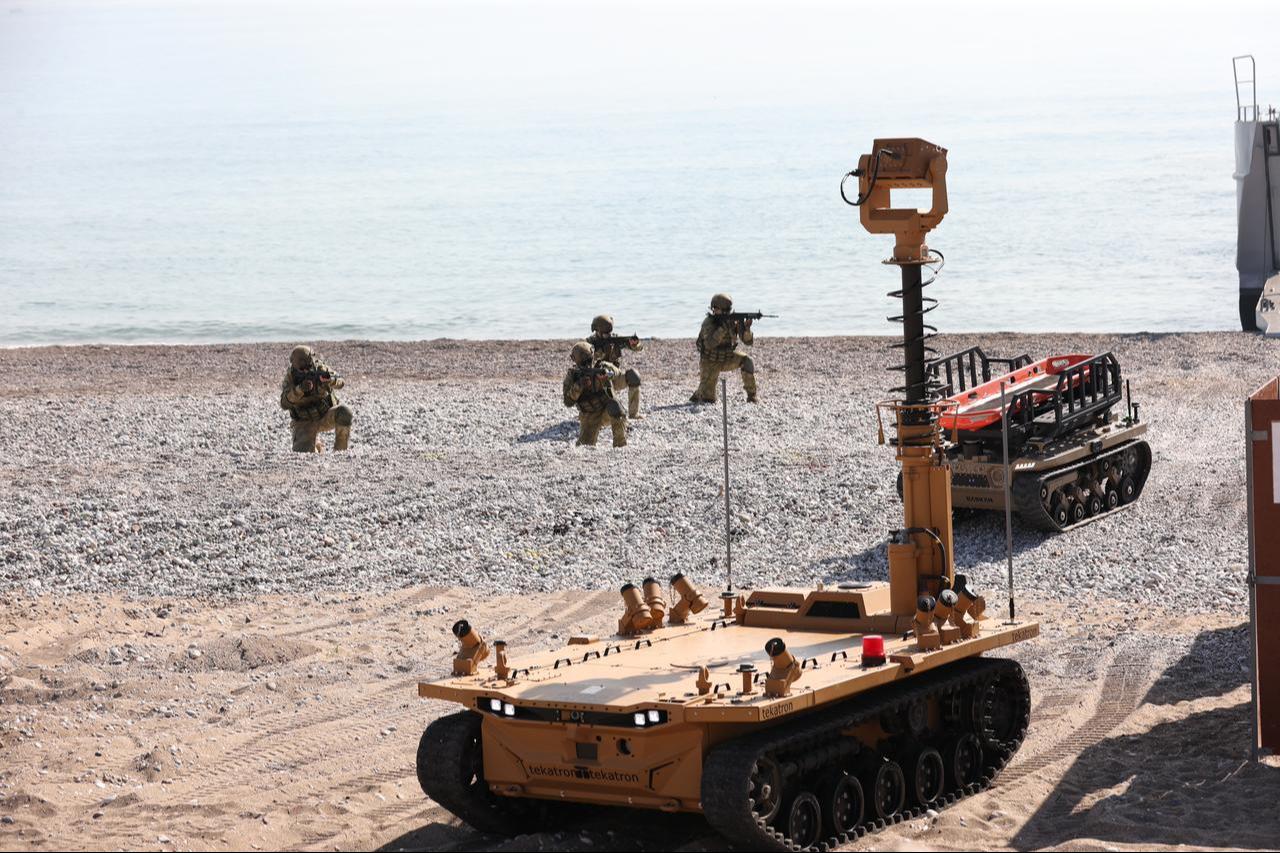
The Distinguished Observer Day off Sarisu Beach in Antalya’s Konyaalti district involved 18 ships, 11 aircraft and 1,300 personnel. Deputy National Defense Minister Bilal Durdali also attended.
Drills included covert reconnaissance, coastal mine detection and clearance, and reconnaissance and softening of an enemy beachhead.
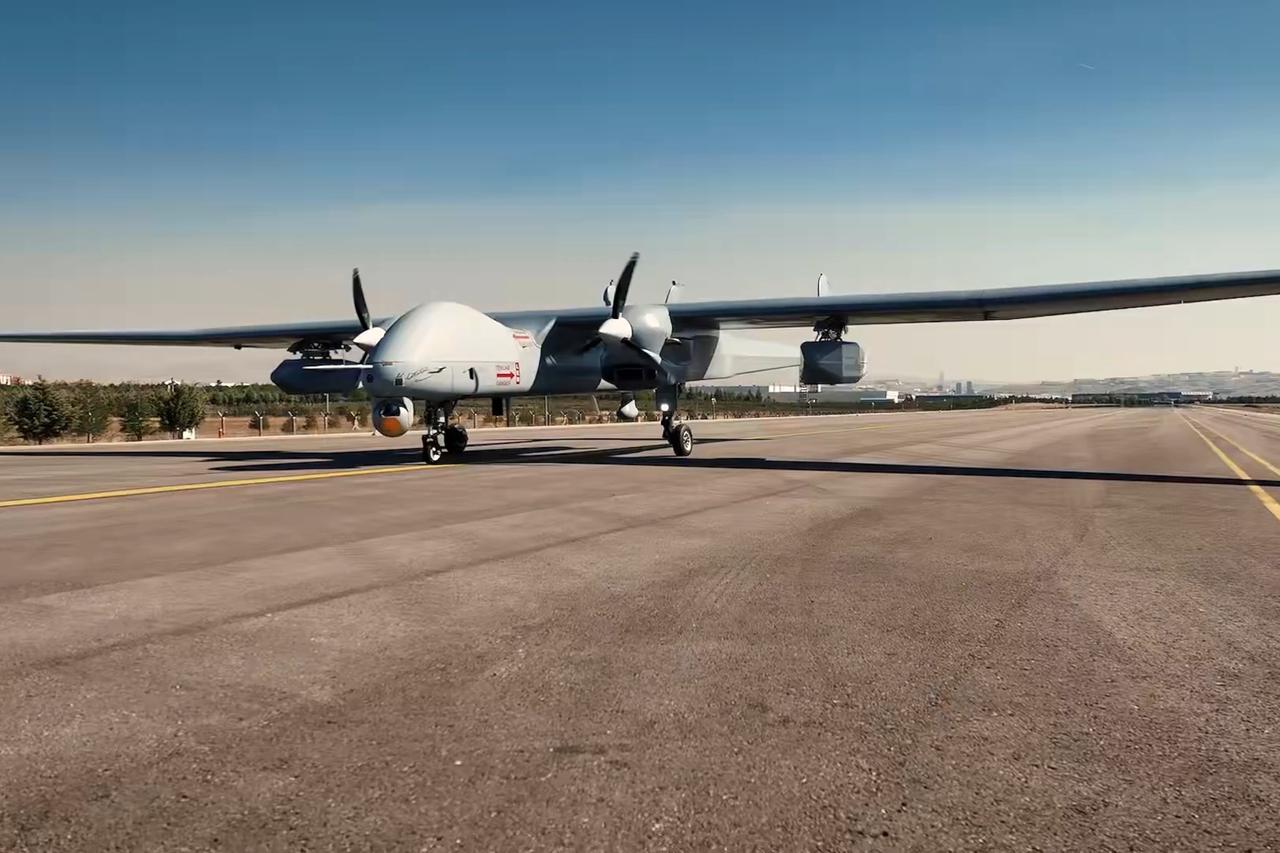
Turkish drone giant Baykar's Bayraktar TB3 and Turkish Aerospace Industries (TAI)'s Aksungur drones dropped sonobuoys; a Tunga-X radar-integrated interceptor drone carried out an attack; and an Anka-S drone launched a Simsek-K kamikaze drone.
An explosive-laden MKE-made Pirana kamikaze unmanned surface vessel (K-USV) also attacked a target.
The Tolga close-in air defense system's 20 mm twin-gun revolver was integrated into a warship for the first time, firing from TCG Beykoz to destroy drone and unmanned surface vessel targets, according to Machinery and Chemical Industry (MKE).
Tolga has an effective range of 1,000 meters.
Pirana, controlled via a Bayraktar TB2, struck its target with a 100-kilogram warhead. It was the system’s second surface strike in an exercise after Denizkurdu-I (SeaWolf-I).
"Our aim is to continuously develop and further strengthen our effective, deterrent, and respected naval forces that protect our country’s rights and interests at sea and carry out the duties assigned to them under all conditions," Tatlioglu concluded.


 Set as preferred source
 Set as preferred source


 3 min read