Newsletters


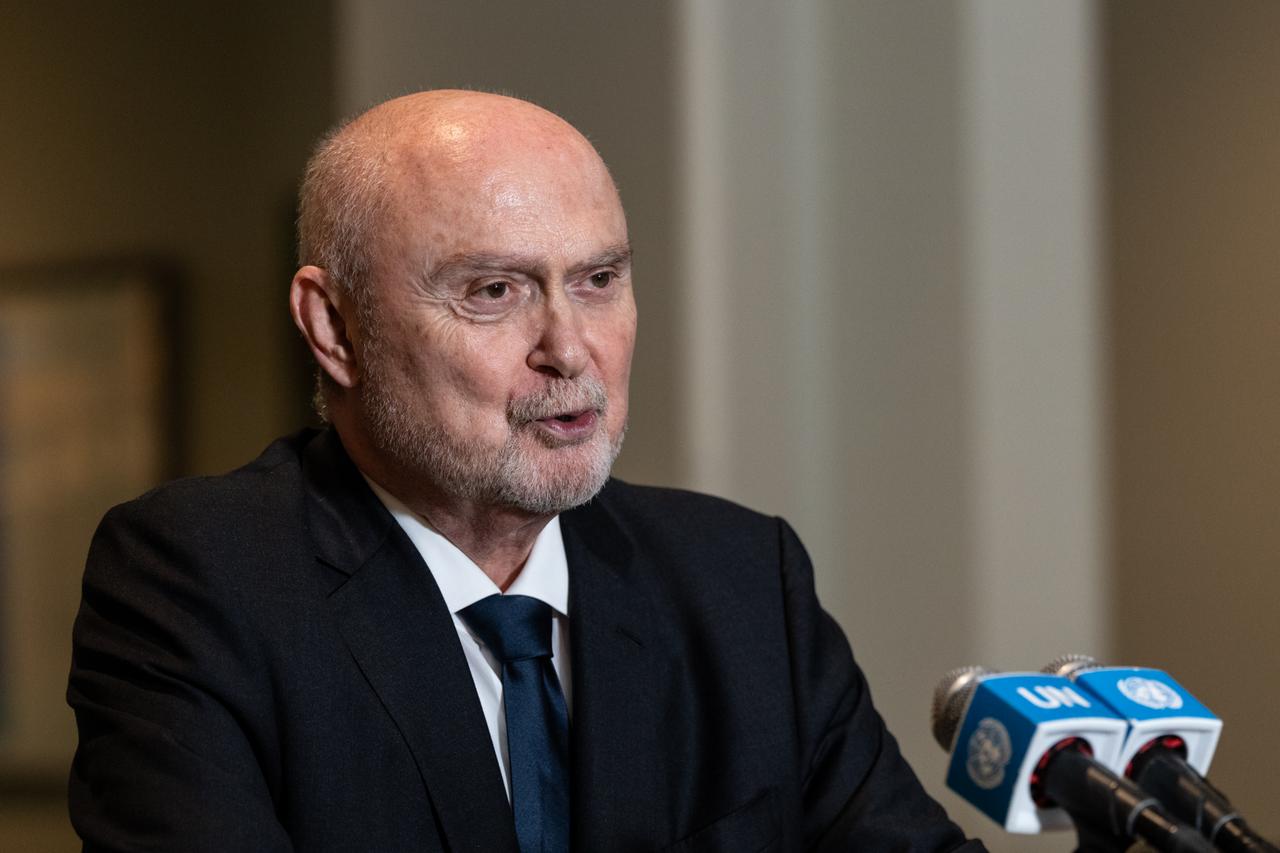


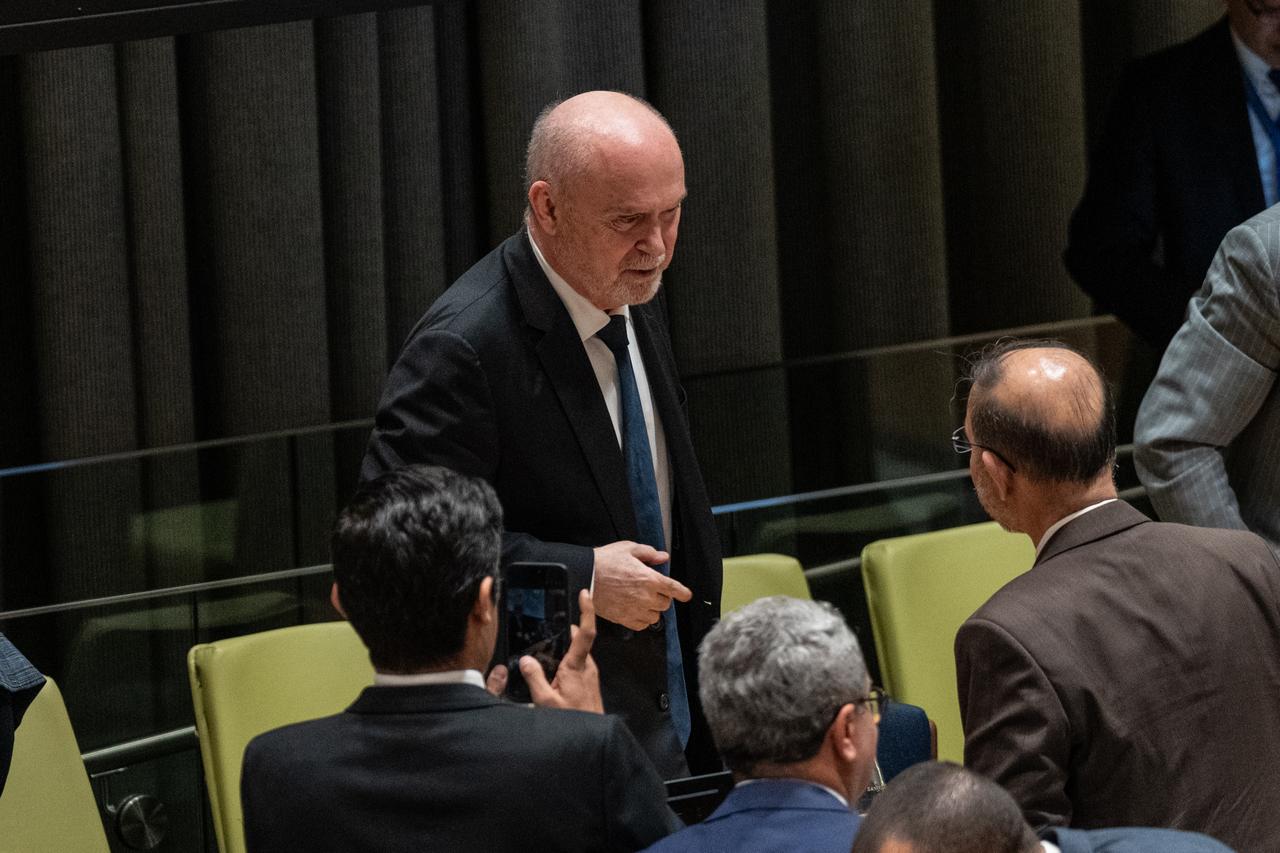
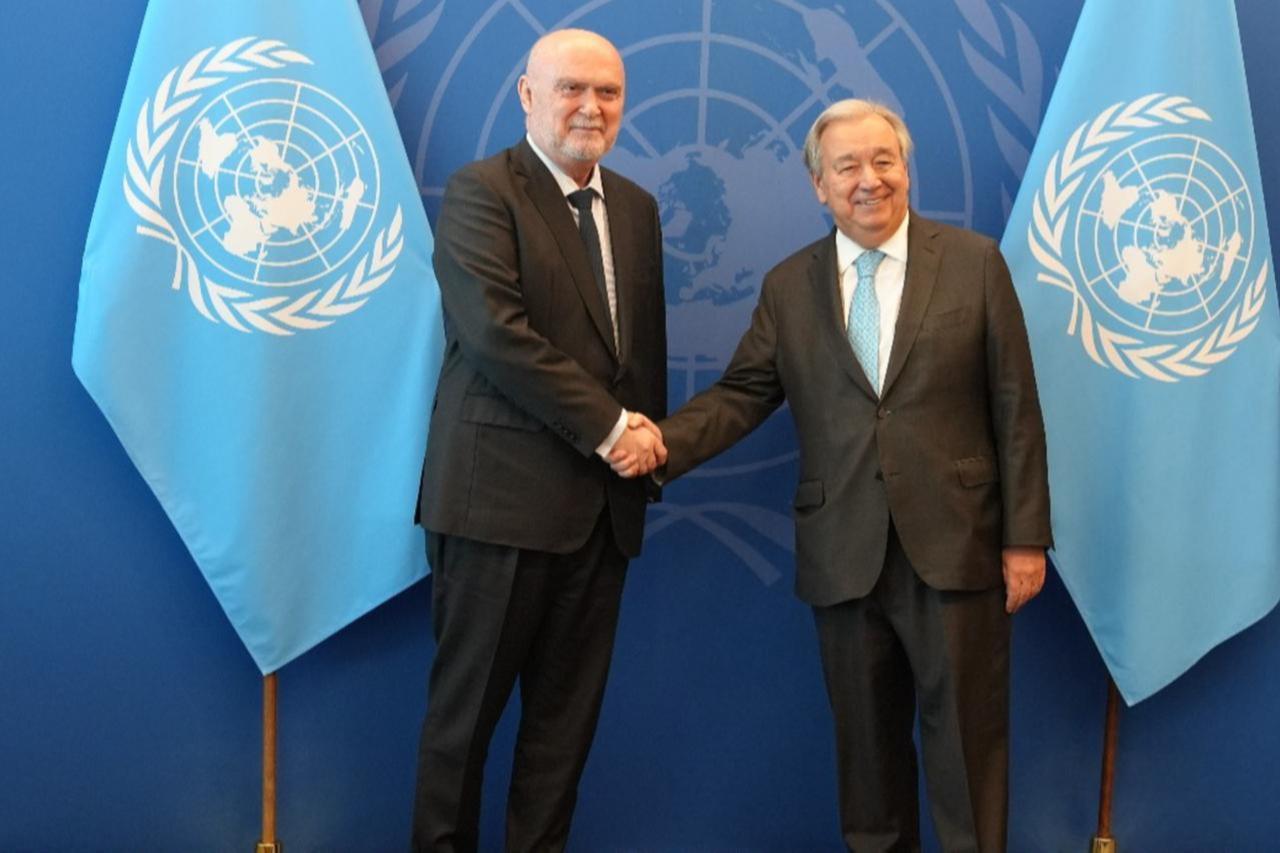
Türkiye's candidate for United Nations secretary-general, Feridun Sinirlioglu, pledged to prioritize the Palestinian issue and support a two-state solution if elected.
Türkiye formally submitted Sinirlioglu's nomination for the U.N.'s top post at the end of October. Sinirlioglu served as Türkiye's foreign minister from August to November 2015 before becoming the country's permanent representative to the U.N., a position he held from 2016 to 2023.
Speaking Friday during an interactive dialogue with U.N. member states and civil society representatives, Sinirlioglu also responded to questions from Israel's U.N. Ambassador Danny Danon over his position on Hamas and the Oct. 7, 2023, attack, insisting that his approach would be guided by international law.
He vowed to condemn terrorism in all its forms and hold Hamas accountable for violations of international law, while stressing the need for a comprehensive political settlement to the Palestinian issue.
Sinirlioglu, who currently serves as secretary-general of the Organization for Security and Cooperation in Europe (OSCE), also outlined five priorities for his potential leadership, including conflict resolution, restoring confidence in multilateralism, sustainable development, climate action and human rights.
He warned that the international system was struggling to address threats to global peace and security, with economic inequalities widening and international solidarity weakening.
During the session, a representative of the Arab Group asked whether Sinirlioglu would support the rights of the Palestinian people if appointed secretary-general.
"As secretary-general, I would place this historic responsibility at the forefront of my political engagement," he responded.
He described a just resolution of the Palestinian issue as essential not only for the Arab world but also for the stability of the global order, pledging to work toward a comprehensive political settlement based on a two-state solution.
The humanitarian situation in Gaza, he added, must remain a central priority. Danon subsequently asked whether Sinirlioglu would "clearly and unequivocally" condemn Hamas for the Oct. 7, 2023, attack.
Sinirlioglu, who served as Türkiye's ambassador to Israel for five years, emphasized that international law would guide his approach.
"I fully and unequivocally condemn terrorism in its every form. And Hamas or whatever organization, if and when they're violating any of the rules defined by the institutions and instruments of international law, then of course they should be held accountable and responsible," he said.
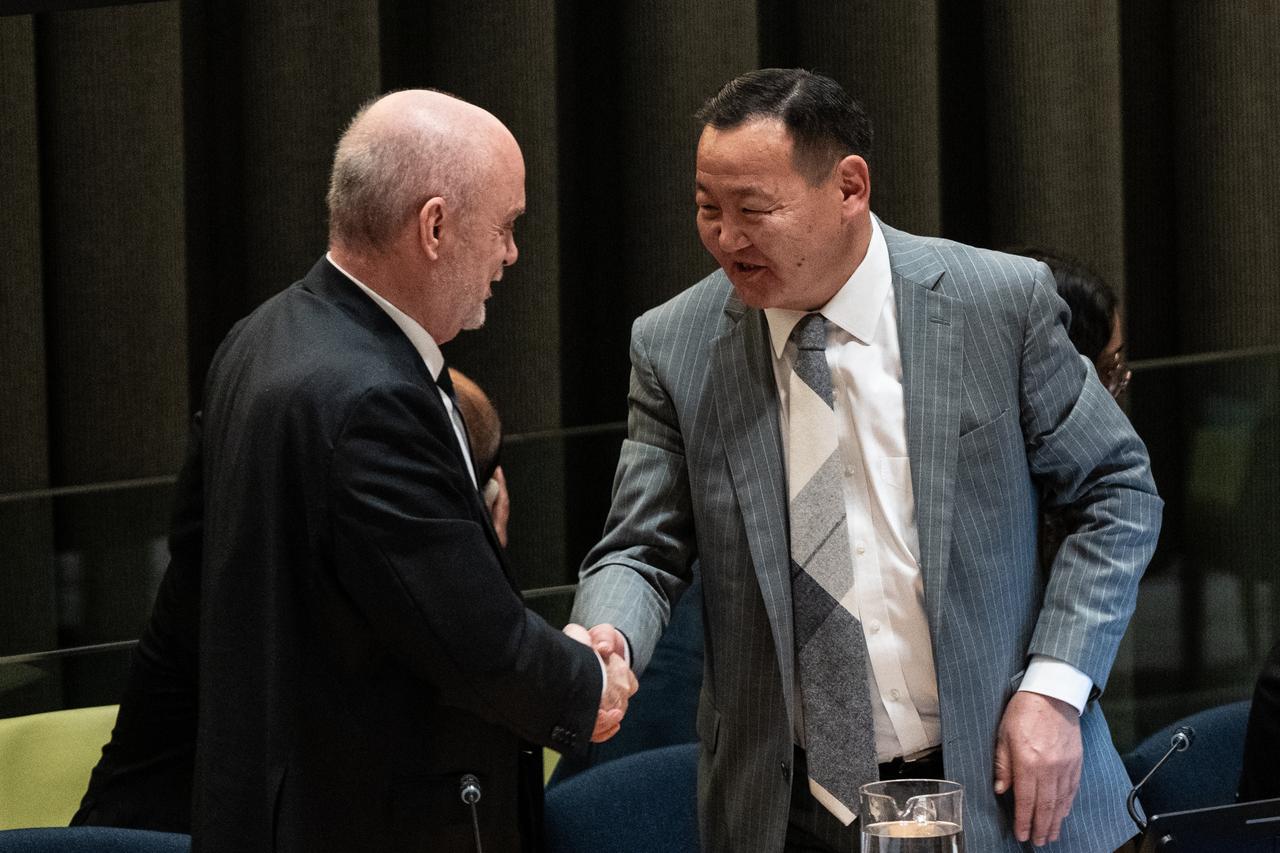

Setting out his agenda, Sinirlioglu identified five priorities for his potential leadership: preventing and resolving conflicts, restoring confidence in multilateralism, preparing for emerging challenges, accelerating sustainable development and climate action, and protecting human rights.
He also called for reforms to make the UN "more agile, transparent, digitally capable, financially responsible and accountable."
"Taxpayers around the world need to see where their money goes, what projects it finances, and what impact it creates," he added.
Sinirlioglu argued that the next secretary-general should take an active diplomatic role rather than focus solely on administrative responsibilities or representing the organization.
"Engaging with those with whom we disagree is not a concession, but a responsibility," he said.
He also stressed the importance of maintaining independence and impartiality, strengthening partnerships with regional organizations and ensuring that underrepresented groups have a role in shaping global solutions.
Sinirlioglu warned that geopolitical tensions were at their highest in decades, with the international system increasingly struggling to address threats to peace and security.
He also pointed to widening economic inequalities within and between countries, alongside growing human rights violations.
"Human rights are violated in plain sight and undermined by intolerable double standards," he said, arguing that the UN remained indispensable despite its shortcomings.
"Once rules do not matter to some, they won't matter to anyone, and that becomes a problem for everyone," he added, stressing the need to uphold international rules and strengthen multilateral cooperation.
Turning to maritime security, Sinirlioglu condemned attacks on commercial vessels, threats against civilian seafarers and unjustified restrictions on navigation in areas including the Strait of Hormuz and the Red Sea.
"Attacks against commercial vessels, threats to civilian seafarers, and unjustified restrictions on navigation are unacceptable, irrespective of their source or motivation," he said.
He outlined three guiding principles for maritime security: restraint at sea, dialogue among states, and respect for international law.
On sustainable development, Sinirlioglu called for increased investment and renewed commitment to the UN's 2030 Agenda, warning that concrete action was needed with only four years remaining.
"With only four years remaining, we need scaled-up investment, renewed commitment, and concrete implementation," he said.
He also acknowledged that gender equality remained a major challenge, arguing that a starting point was to recognize how much work remained.
Sinirlioglu pledged to continue improving women's representation in decision-making positions, pointing to efforts he had pursued at institutions under his leadership.


 Set as preferred source
 Set as preferred source


 1 min read
 1 min read