Newsletters


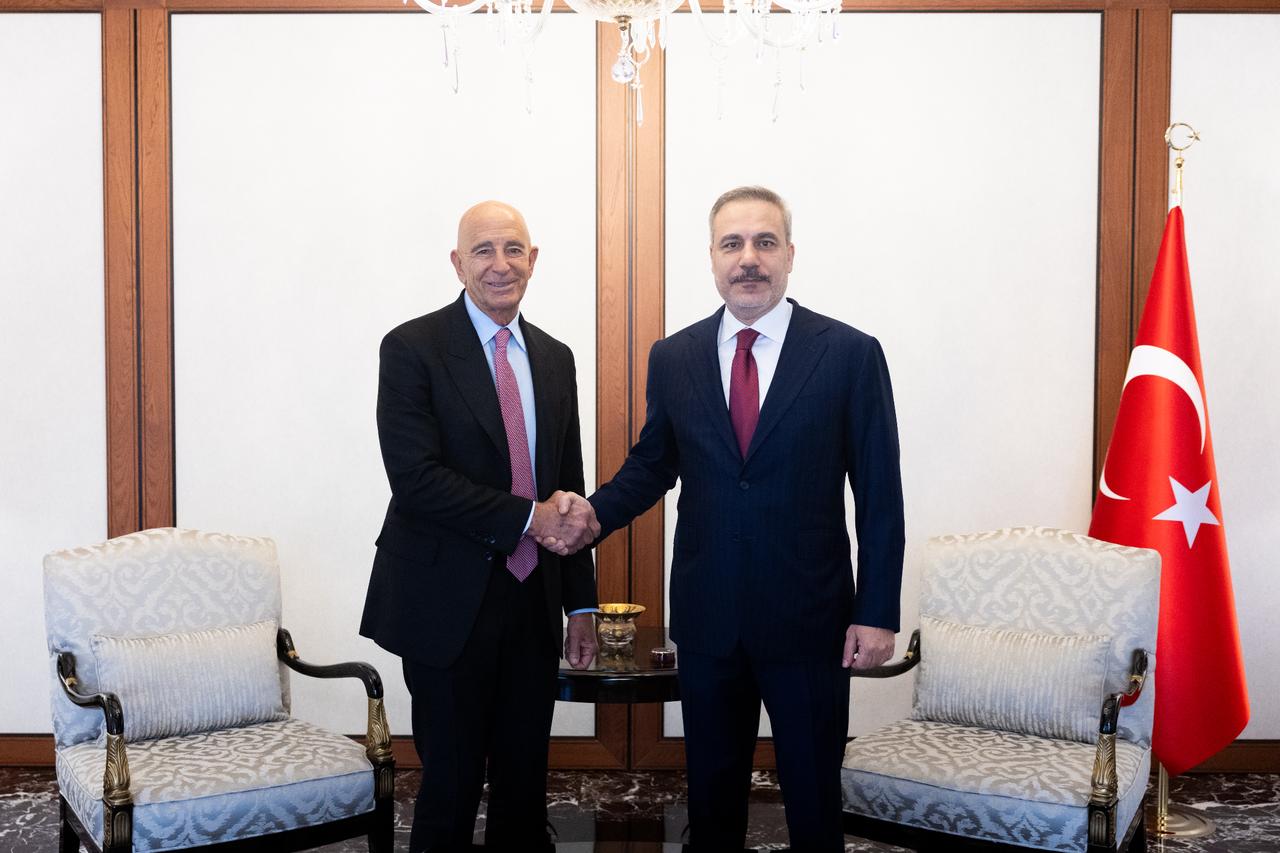


Turkish Foreign Minister Hakan Fidan on Thursday received United States Ambassador to Ankara and Special Envoy for Syria Tom Barrack in Ankara, Türkiye’s Foreign Ministry said.
In a post shared on the ministry’s X account, it said Fidan received the U.S. envoy. No further details were immediately available.
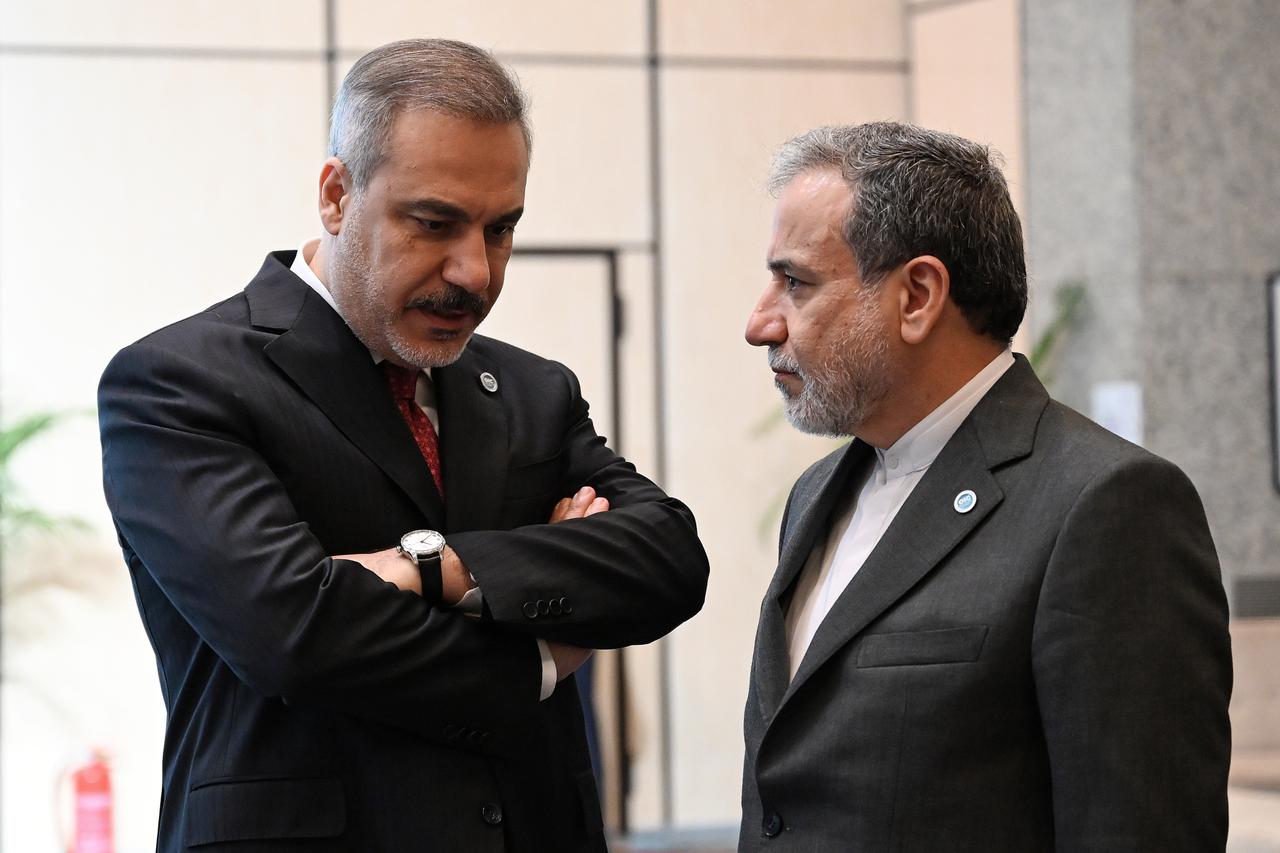
The meeting came a day before Iranian Foreign Minister Abbas Araghchi is set to visit Türkiye on Friday to discuss bilateral and regional issues.
During the talks, Fidan is expected to stress that relations between Türkiye and Iran—two countries with longstanding historical ties—are of key importance for regional security, stability and prosperity.
Araghchi last paid a bilateral visit to Türkiye on Dec. 2, 2024. He also visited the country on June 21, 2025, for the Council of Foreign Ministers meeting of the Organization of Islamic Cooperation.
The diplomatic activity comes amid escalating tensions between Washington and Tehran.
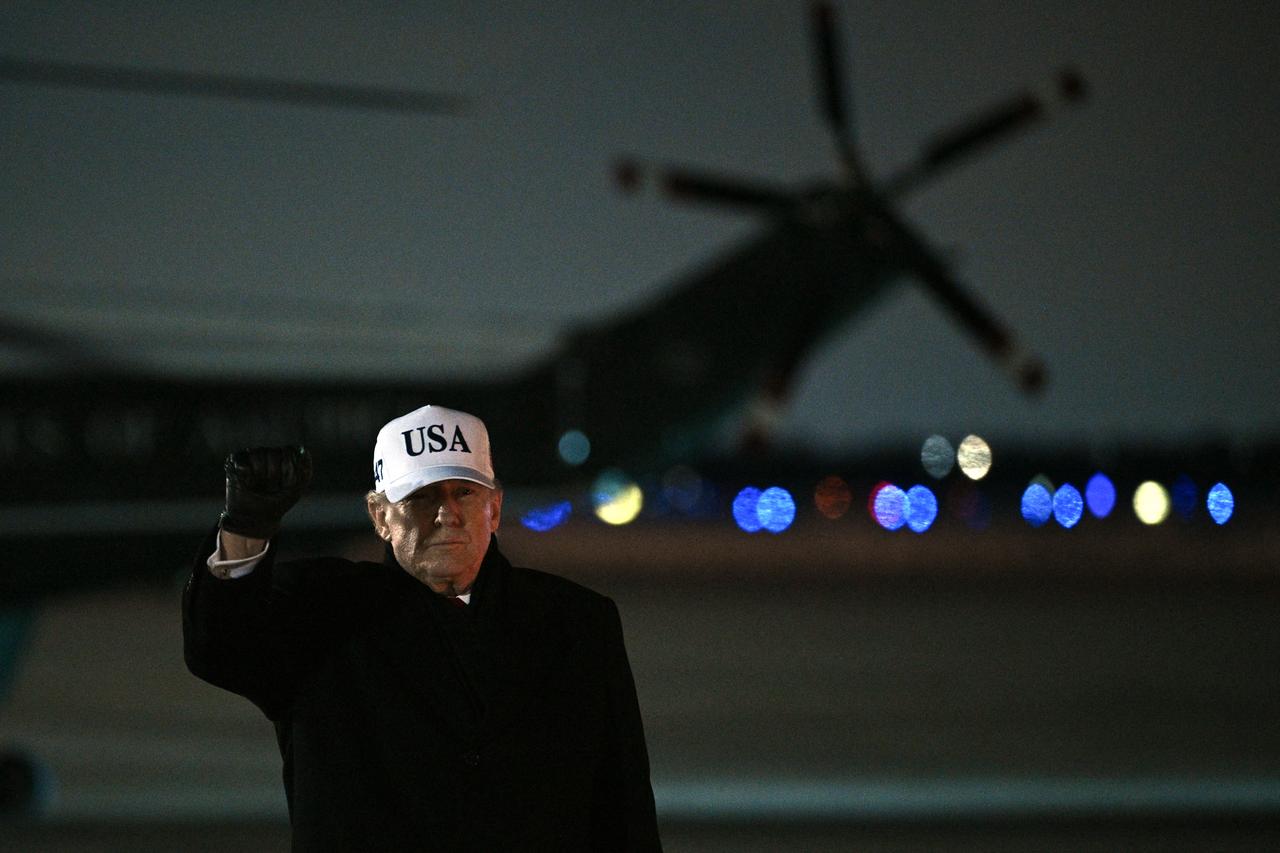
U.S. President Donald Trump issued a fresh warning to Iran on Wednesday, claiming a “massive armada” was heading toward Iranian waters as he urged Tehran to negotiate with Washington.
In a social media post, Trump said the fleet, led by the aircraft carrier USS Abraham Lincoln, was larger than the one deployed to Venezuela earlier this month before the ouster of Nicolas Maduro. He said it was “prepared to rapidly fulfil its missions with speed and violence if necessary.”
“Hopefully Iran will quickly ‘come to the table’ and negotiate a fair and equitable deal–NO NUCLEAR WEAPONS–one that is good for all parties,” Trump wrote. “Time is running out; it is truly of the essence.”
In response, Araghchi said Iran’s armed forces are fully prepared and have their “fingers on the trigger” to “immediately and powerfully respond to any aggression” by land, sea or air.
Earlier Wednesday, Araghchi told reporters in Tehran that attempts to impose diplomacy through military threats would not be effective.
 1 min read

He said Iran has not yet decided whether to resume negotiations with the United States, which were halted after the 12-day war between Iran and Israel in June last year.
Araghchi also confirmed that there has been no direct contact in recent days between him and Trump’s West Asia envoy, Steve Witkoff, though he said some regional countries are seeking to play a constructive role in easing tensions.
Iranian military commanders have meanwhile warned of a “strong response” to any new U.S. attack, saying American military bases across the region could become legitimate targets.
According to reports, several regional countries, including Saudi Arabia, Qatar and the United Arab Emirates, have said they will not allow their airspace to be used for any attack against Iran.


 Set as preferred source
 Set as preferred source


 1 min read