Newsletters


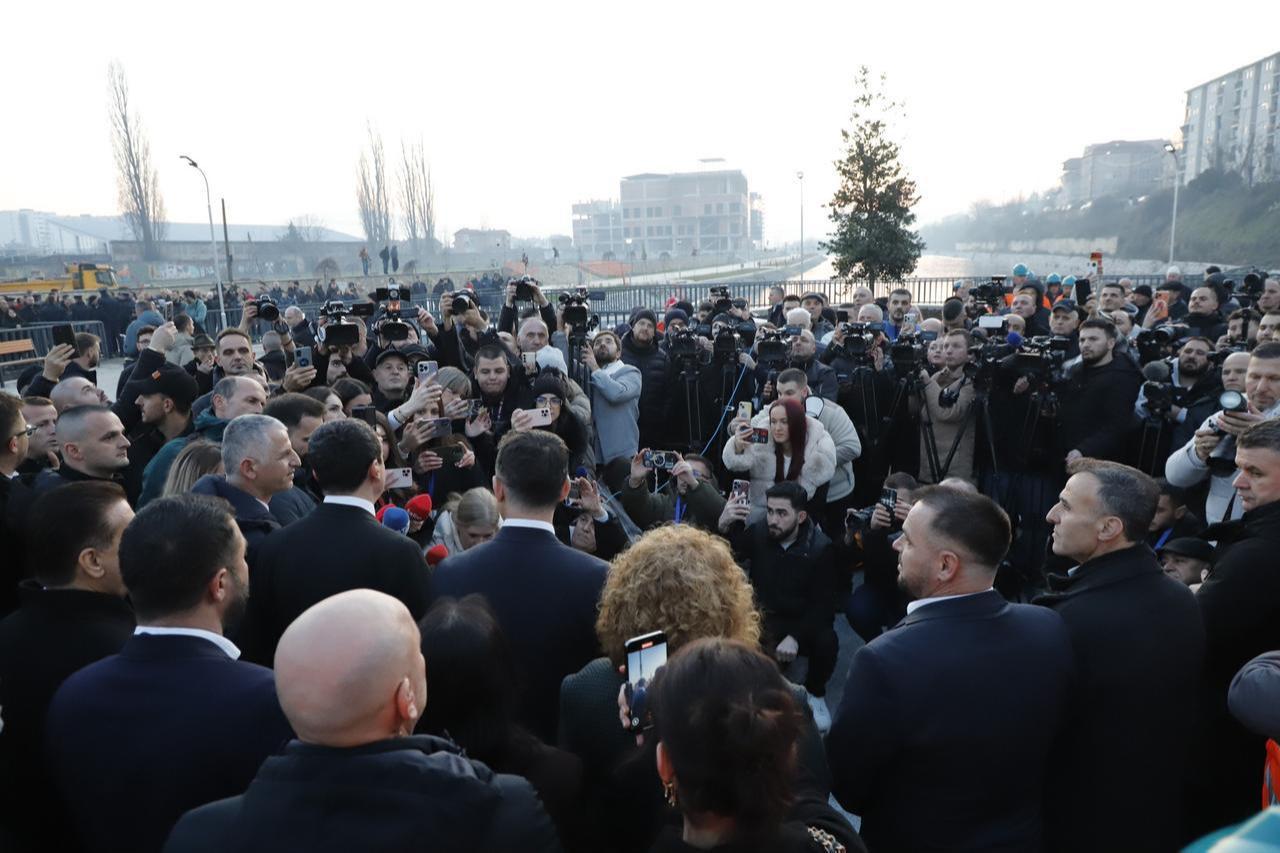
The opening of the pedestrian bridge over the Iber (Ibar) River in Mitrovica on Dec. 17 was officially described as a minor infrastructure milestone. In reality, it was something closer to a political Rorschach test. What Kosovo’s government presented as an act of normal urban governance, the European Union and Belgrade interpreted as a provocation. That reaction tells us far more about Europe’s habits in the Western Balkans than it does about the bridge itself.
For years, the Iber/Ibar has been treated not as what it plainly is, a river running through a city, but as something far stranger: a quasi-border inside a sovereign state, administered through international caution and local paralysis. The pedestrian bridge did not create this contradiction. It merely made it impossible to ignore.

Unlike the vehicular bridge opened in August, this second crossing carried no symbolism of force or speed. It was modest by design. A pedestrian bridge does not announce power. It normalizes presence. It asserts that walking across a river should not require geopolitical arbitration, and that cities are meant to connect, not freeze in perpetuity under the guise of “stability.”
That, precisely, is what unsettled Brussels and Belgrade.
Acting Prime Minister Albin Kurti framed the opening as an act of routine governance: infrastructure built for citizens, without ethnic footnotes or political disclaimers. His message was consistent with a position he has held for years—that the main Iber/Ibar bridge should also be opened, and that there is no defensible reason for permanent KFOR deployment on a single crossing in a city dotted with dozens of others along the same river.
One may agree or disagree with Kurti’s broader political style. But in this case, the charge that the bridge represents a partisan gambit collapses under scrutiny. This was not a project dreamed up in isolation or imposed through institutional muscle alone.
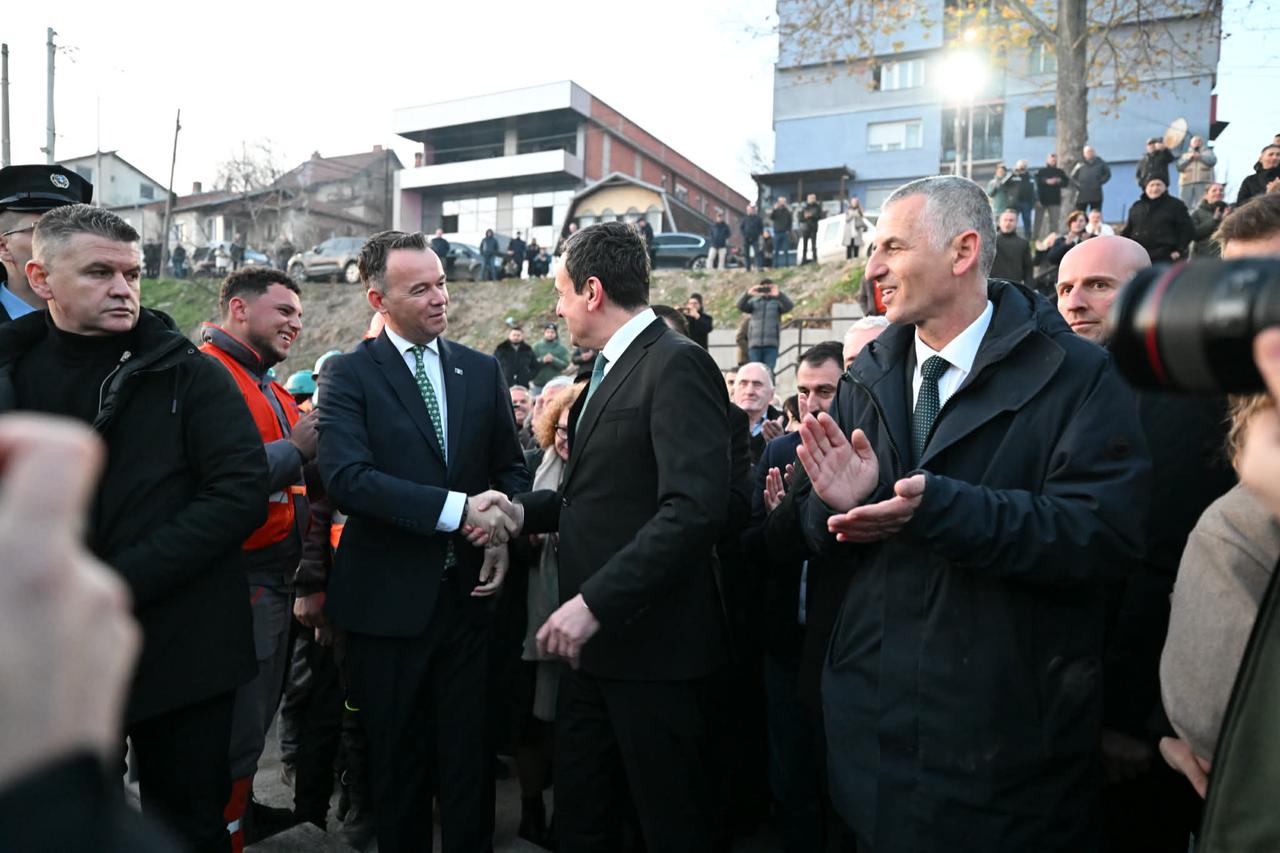
Enter Bedri Hamza—former mayor of Mitrovica, current leader of the Democratic Party of Kosovo, and a candidate for prime minister. Hamza has publicly stated that the idea for the bridge emerged from his office, following direct discussions with Kurti. The municipality financed the technical design and issued construction permits; the central government stepped in with funding once resources were available.
This detail matters, and not merely as a footnote.
In a political culture accustomed to zero-sum warfare, the bridge represents something rarer: evidence that Kosovo’s institutions can cooperate across party lines when the objective is state functionality rather than partisan advantage. Hamza’s involvement does not diminish Kurti’s role. It reinforces the legitimacy of the project as a shared institutional act—local governance meeting central authority without theatrics.
That kind of unity is inconvenient for those invested in a different story.
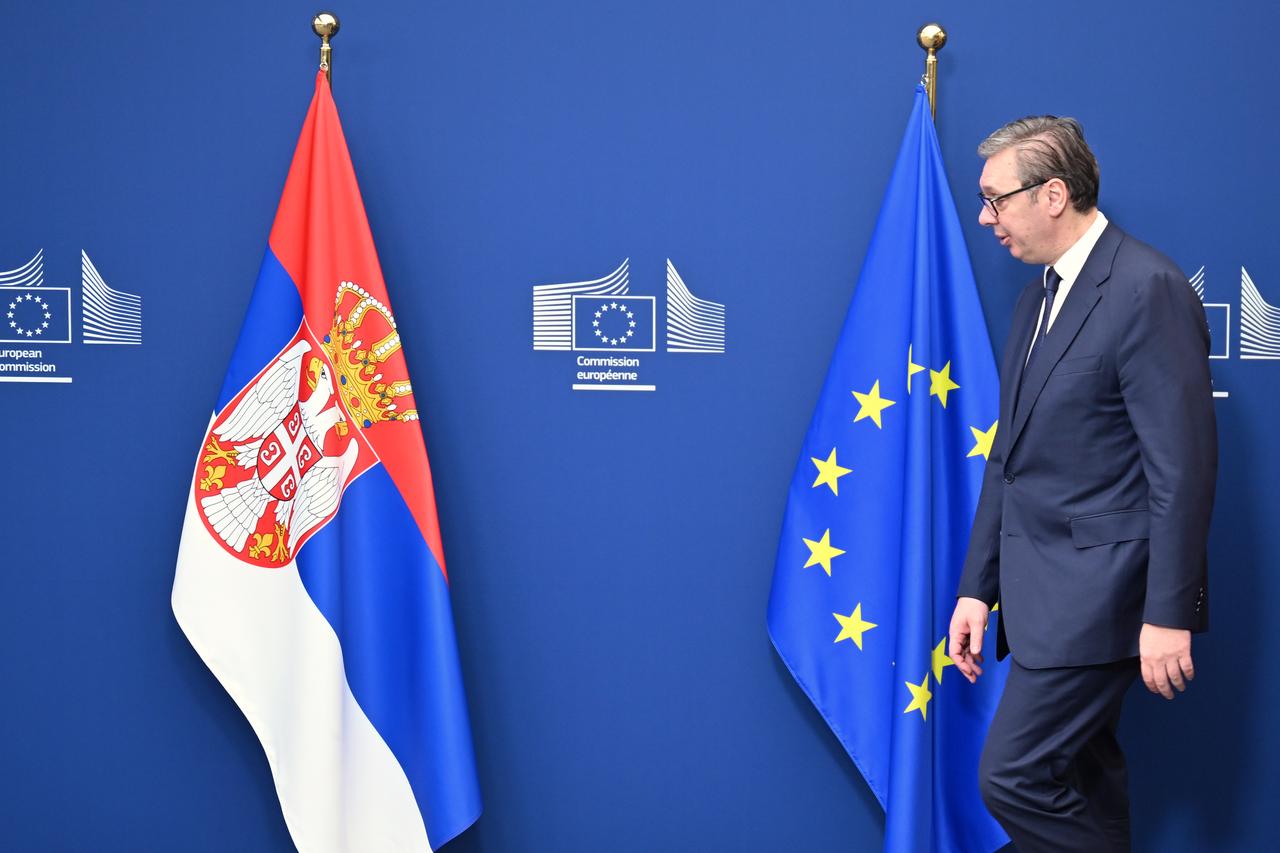
The European Union’s objections were delivered in familiar bureaucratic phrases: “lack of coordination,” “unilateral action,” “risk of escalation.” But stripped of euphemism, the argument is simpler and far less flattering: any alteration of the status quo along the Ibër/Ibar is considered dangerous, even when that status quo is manifestly unnatural.
For years, Brussels has tolerated a reality in which:
Belgrade, to its credit, has been more honest. Serbian officials have condemned the bridges not because they pose a security threat, but because they undermine a carefully maintained ambiguity—one in which northern Mitrovica is treated as politically detachable, hovering in a limbo sustained by international hesitation.
The convergence of EU caution and Serbian outrage is not coincidental. Both depend, in different ways, on preserving the Iber/Ibar as a line of exception: a place where Kosovo’s constitutional order is suspended in the name of stability, and where normality is perpetually deferred.
If the European Union genuinely believes in freedom of movement, local governance, and post-conflict normalization, then pedestrian bridges should not provoke alarm. That they do reveals a deeper problem: Europe has grown more comfortable managing division than dismantling it. Conflict management has replaced conflict resolution as policy, and symbols of separation are treated as assets to be preserved, not failures to be corrected.
The second bridge does not resolve the Kosovo–Serbia dispute. It does not erase political disagreement. But it does something more fundamental, and therefore more threatening to the old logic: it treats Mitrovica as a city, not as a bargaining chip.
The Iber River is not a border. It is not a buffer zone. It is not an EU-administered exercise in patience.
The opening of the second bridge makes one reality unavoidable: the true escalation is not building bridges, but insisting they remain closed.
In this instance, Kosovo’s institutions—local and central, government and opposition—behaved like institutions of a state. The question now is whether Brussels is prepared to engage Kosovo as one—or whether it will continue to confuse division with peace.
This article was first published on the Kosovo Dispatch website.
DISCLAIMER: The views and opinions expressed in this article are those of the author and may not necessarily reflect the editorial policy of Türkiye Today.


 Set as preferred source
 Set as preferred source


 1 min read
 1 min read