Newsletters


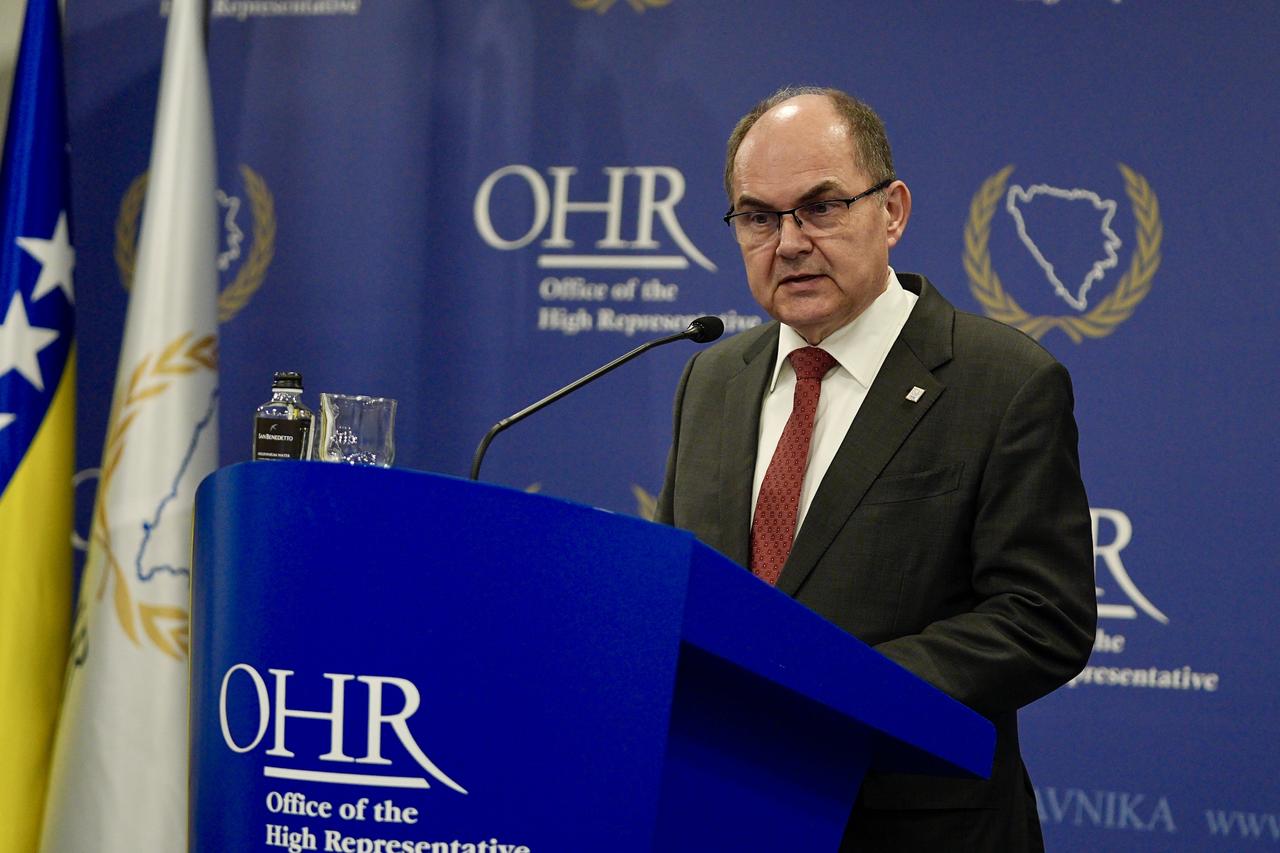


Christian Schmidt was never just Bosnia and Herzegovina’s High Representative. For years, he became the man everyone blamed.
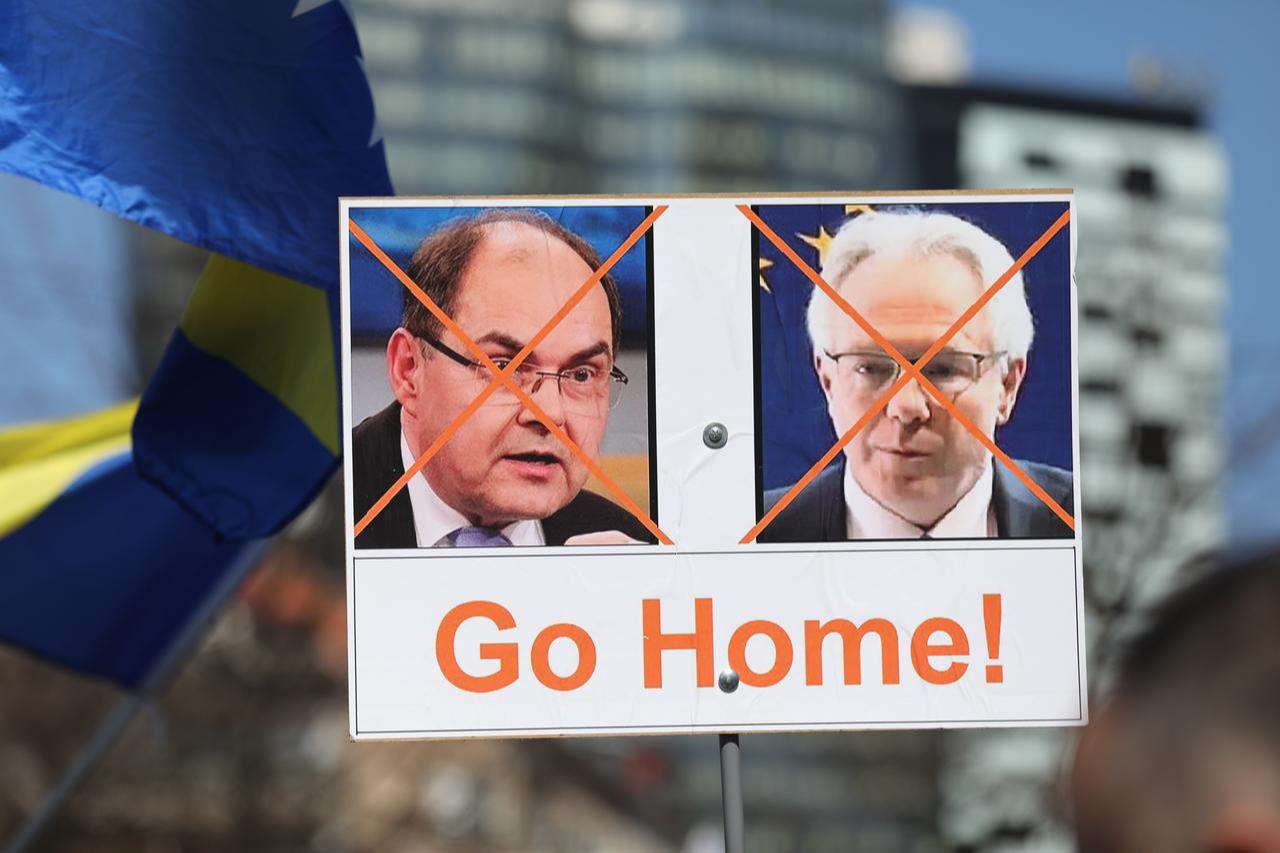
For Republika Srpska de facto leader Milorad Dodik and his allies, Schmidt represented everything they claimed was wrong with post-Dayton Bosnia: foreign supervision, Western interference and an international official they insisted lacked legitimacy because his appointment was never formally confirmed by the U.N. Security Council.
Backed politically by Moscow, Republika Srpska’s leadership used that argument to reject nearly every major intervention Schmidt made during his mandate.
To Banja Luka, he was not a guarantor of the Dayton Peace Agreement but its manipulator.
Every time Schmidt used the Bonn Powers, annulled Republika Srpska legislation, suspended laws, or defended state institutions against separatist moves, he became an even larger political target.
Dodik and his allies portrayed him as a “colonial administrator” standing in the way of Republika Srpska’s autonomy and political ambitions.
But Schmidt was not only attacked by Banja Luka.
In Sarajevo, many Bosniak and civic-oriented politicians increasingly accused him of favoring Croat nationalist demands, especially after his controversial election-night changes to Bosnia’s Federation constitution and electoral system in 2022.
Critics argued that those interventions strengthened ethnic power-sharing structures while weakening civic representation and deepening ethnic divisions inside the Federation.
For part of the Bosniak public, Schmidt became a symbol of selective international interventionism: decisive when Croat political demands were blocked, cautious when civic reforms or Bosniak-majority concerns were at stake.
In the end, Schmidt became the rare international official opposed by almost every political camp in Bosnia, each for completely different reasons.
Republika Srpska saw him as an illegitimate foreign ruler. Many Bosniaks viewed him as too accommodating toward HDZ BiH and Zagreb.
Some Western diplomats considered him too interventionist. Others believed he acted too late and too weakly.
That political isolation became part of the story itself. Now his resignation lands at perhaps the worst possible moment.

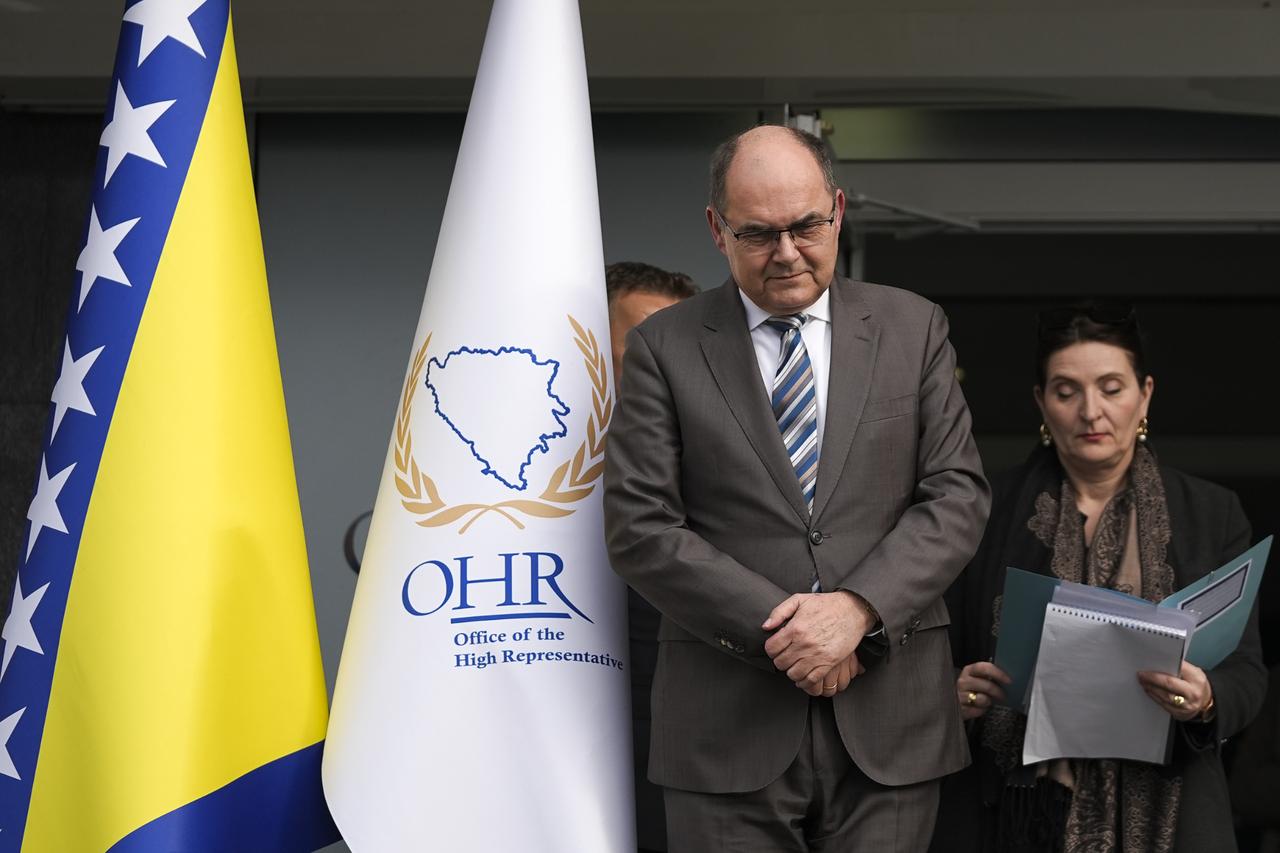
In his final briefing to the U.N. Security Council last week, Schmidt warned that Bosnia and Herzegovina was facing its deepest institutional and constitutional crisis in years.
He described escalating attacks against the Dayton framework and Bosnia’s state institutions, particularly from Republika Srpska’s leadership, while warning that political paralysis and nationalist tensions were undermining the country’s European future.
Ahead of the session, Schmidt met U.N. Secretary-General Antonio Guterres to discuss what the Office of the High Representative described as “ongoing challenges to the Dayton Peace Agreement” and the preservation of Bosnia’s institutional stability.
That warning now reads differently in light of his resignation.
It is mainly because Schmidt’s departure is not simply the exit of another international official from Sarajevo. It is becoming a test of something much larger: whether the European Union still possesses the political coherence and strategic influence to shape outcomes in the Western Balkans.
For years, Brussels insisted the Office of the High Representative remained indispensable for Bosnia’s stability, while simultaneously claiming Bosnia was progressing toward becoming a sovereign European democracy capable of managing its own future. Those two narratives were always difficult to reconcile.
Now the contradiction is impossible to ignore.
The coming fight over Schmidt’s successor is no longer only about Bosnia. It is about who defines the next phase of international influence in the country: Brussels, Washington or external actors increasingly aligned with Moscow’s vision of weakening Western oversight in the Balkans.
An increasingly visible divergence is also emerging between parts of the European Union and voices in Washington over how Bosnia should be handled in the future.
While much of the EU establishment continues to defend the OHR as essential, there are growing indications that some actors would prefer a less confrontational approach toward Banja Luka and a broader rethinking of the international role in Bosnia altogether.
That creates a dangerous vacuum.
Because Bosnia does not simply face a domestic political crisis. It faces a geopolitical one.
A weakened European Union defending the institution of the OHR at all costs while failing to shape its future strategically risks handing one of the most powerful international instruments in Bosnia to actors with very different geopolitical goals.
Europeans should resist the temptation to rush into appointing a successor simply to preserve the appearance of continuity.
A hurried process without a coherent strategic vision risks weakening both Bosnia and the credibility of the European Union itself.
Instead, the EU should keep Schmidt in office until after Bosnia’s next elections and use that time to open a serious political discussion—together with Bosnia’s newly elected leadership—about the long-term future and eventual closure of the Office of the High Representative.
Because the real question is no longer whether Bosnia can survive without the OHR.
It is whether the West still knows what Bosnia is supposed to become with it.


 Set as preferred source
 Set as preferred source


 1 min read

 1 min read