Newsletters


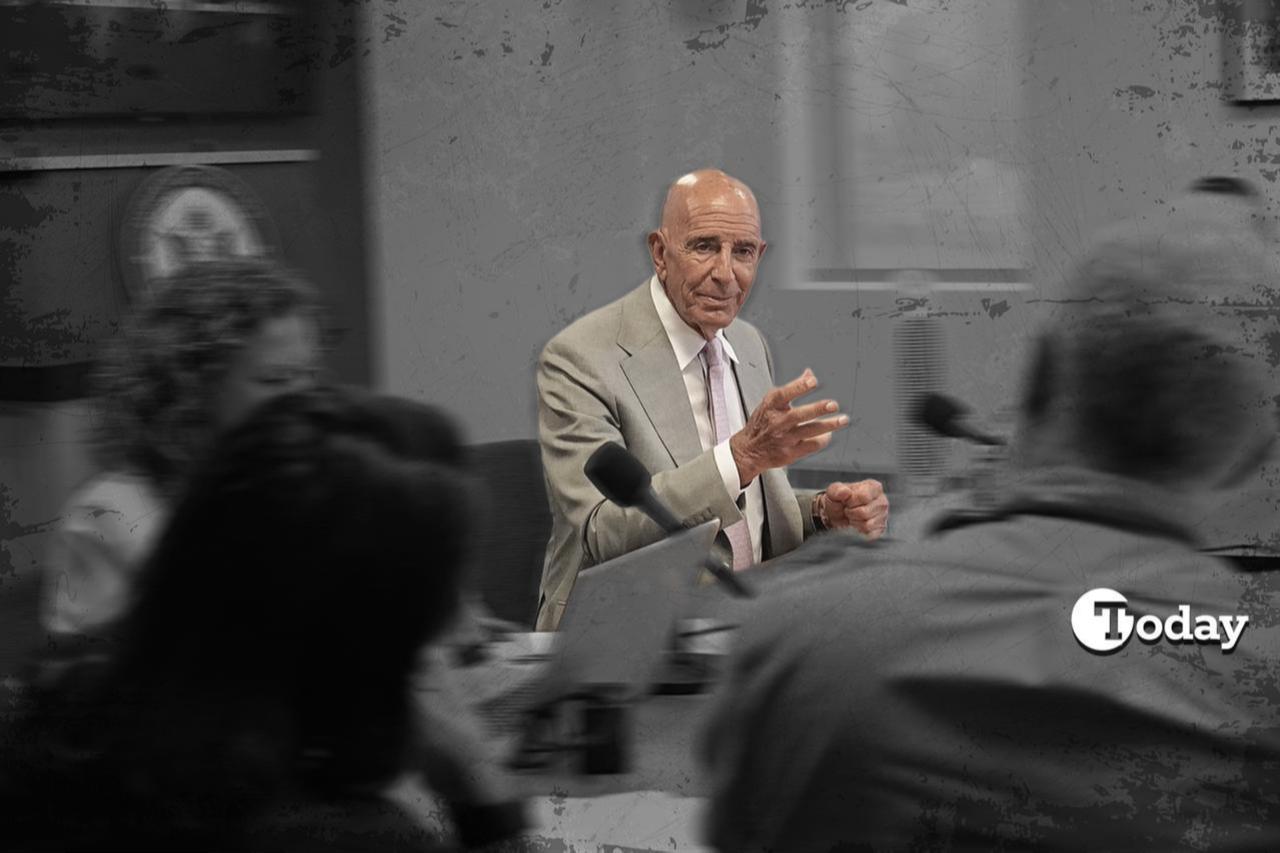


Last weekend, U.S. Ambassador to Türkiye Tom Barrack looked like he might become the world's wealthiest diplomat to lose half his wardrobe.
A tweet on May 30 by Barrack’s immediate boss, the United States Secretary of State Marco Rubio, suggested so:
“Ambassador Tom Barrack (sic) has played an invaluable role as our Special Envoy to Syria. While that title is expiring, he will continue to play a leading role for the Trump Administration in both Syria and Iraq, where his expertise, relationships, and understanding of the American First agenda will continue to deliver wins on behalf of our great country.”
There has been no comment on Barrack’s primary role as Ambassador Extraordinary and Plenipotentiary of the United States to the Republic of Türkiye, a post he assumed alongside the Syria brief in May 2025, which drew attention on social media.
But about 18 hours later, Rubio announced that Barrack was not only keeping his two hats but also adding a third one as U.S. Special Envoy to Iraq.
In fact, Barrack had taken over the Iraq job in January when the previous special envoy, Mark Savaya, had to step down for apparently failing in his mission to prevent the largest Shiite political bloc in Baghdad, the Coordination Framework, from nominating Nouri al-Maliki to return as Iraqi prime minister.
During his previous tenure as Iraq’s chief minister, Maliki not only failed to address his country’s post-U.S. occupation woes but also worsened sectarian strife by offending his Sunni Arab compatriots and enabling Daesh to gain massive public support, leading to the fall of the country’s second-largest city, Mosul, and a quarter of Iraqi territory in 2014.
Only a Truth Social post by President Donald Trump that labeled Maliki’s past policies “insane” and threatened to cut off all U.S. aid to Iraq, along with a full-court press by Barrack and others to get the Coordination Framework to reverse that decision, led to the appointment of little-known 40-year-old businessman Ali al-Zaidi as Iraq’s new prime minister.
So far, so good. Now what?
Conversations with regional experts and diplomatic circles in Ankara point out that Barrack has been very good for Turkish-U.S. ties in Syria by supporting the interim government of Syrian President Ahmed al-Sharaa.
Barrack has been instrumental in ending U.S. support for the SDF, the main umbrella group led by the PYD/YPG, which is the terrorist outfit PKK’s Syrian branch, thus removing one of the main obstacles to reuniting Syria and restoring overall regional stability, experts said.
Still, despite being personally very fond of the U.S. ambassador, sources wonder if Barrack’s new job will take critical time away from his main job of improving bilateral ties between Ankara and Washington. Especially salient is what is perhaps the most troublesome issue in Türkiye-U.S. relations, the S-400/F-35 impasse, along with Israeli lobbying against Ankara in Washington and the overall worsening of Turkish-Israeli and Turkish-Greek ties.
It seems that Barrack’s successes so far have only raised expectations for his future performance.
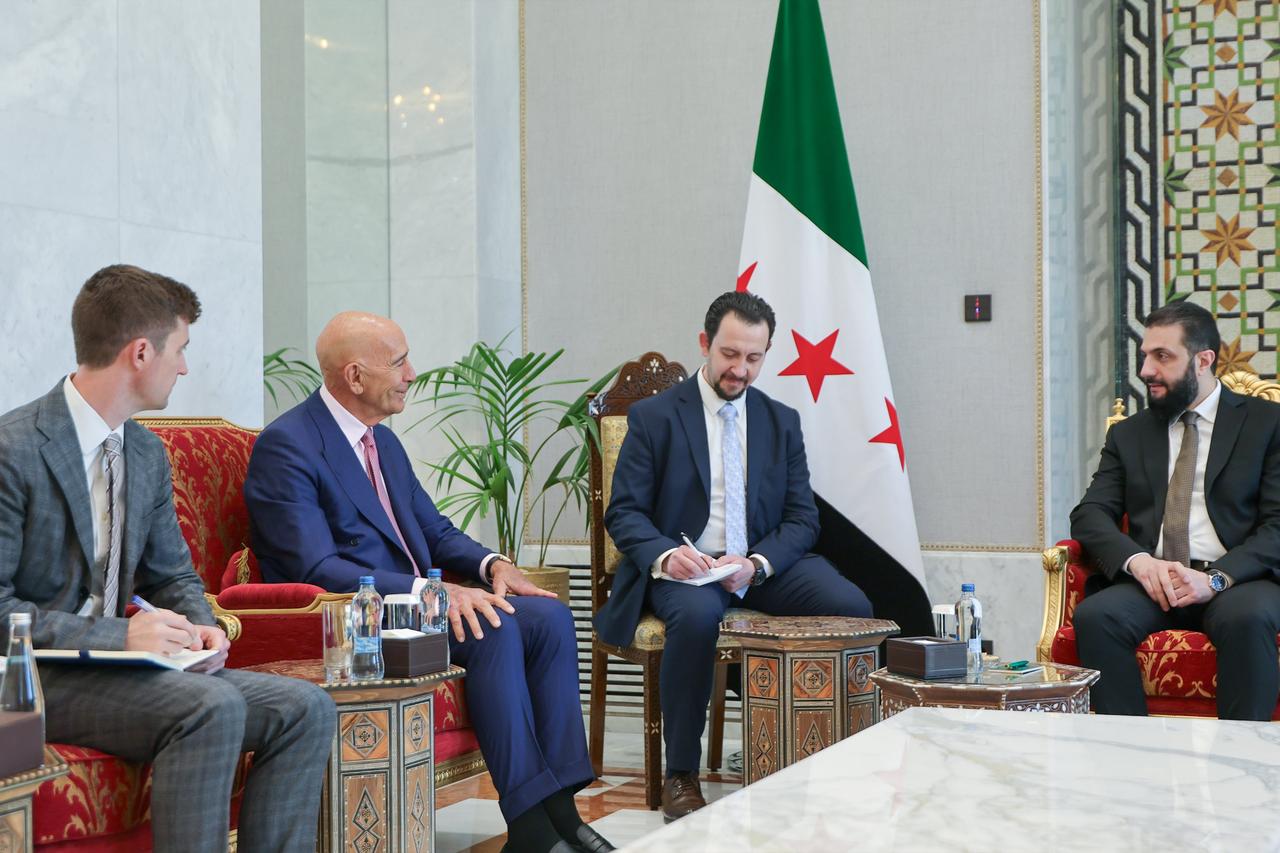

According to leading Iraq expert and researcher Mehmet Alaca, Barrack’s appointment as envoy to Iraq is directly tied to the overall U.S. vision for the Middle East and an extension of Trump’s decision to get Türkiye to lead regional integration efforts.
Alaca called this “a regional order where middle-power states are consolidated with strong central authorities and maintain close contact with the United States.”
"I think the U.S. no longer looks at Iraq strictly as a security issue but as part of regional integration and connectivity plans coming out of the Türkiye-Syria-Iraq axis. Items such as energy corridors, trade routes and border security will gain more prominence in Washington’s new approach to Iraq,” Alaca told Türkiye Today.
He added that Barrack’s close ties with Turkish Foreign Minister Hakan Fidan are proof of close Turkish-U.S. coordination of various regional integration efforts and results-oriented diplomacy involving direct contact with regional actors.
Alaca pointed directly to Barrack’s deep roots in real estate and financial services to explain the strategy.
The main objective in Baghdad, Alaca argued, is to sell the new Zaidi government on a sleek, business-focused approach. and the need to curtail the pro-Iran militias, and by extension, Iran’s overwhelming influence in Iraq.
Barrack’s work seems to be paying off already.
In recent days, several pro-Iran militias in Iraq, such as the Asaib Ahl al-Haq and Imam Ali Brigades, announced that they would hand over their weapons to government authorities. The development took place after the lead of Shiite cleric and nationalist leader Muqtada al-Sadr, who is no longer aligned with Iran despite close connections in the past. Sadr had made a similar announcement for the disarmament of his Saraya al-Salam (Peace Companies) on May 27.
Other pro-Iran groups like Kataib Hezbollah and Harakat Hezbollah al-Nujaba remain unwilling to disarm.
The situation in Iraq and Syria that Barrack helped to create “offers new opportunities and serious challenges to Kurds,” Alaca said.
"Barrack's approach in supporting the central government in Syria gave indications of his expectations from Syrian Kurds. That he might have similar expectations from Iraqi Kurds would not be too far-fetched. If so, for Kurds to become an effective player in regional affairs, leading Iraqi Kurdish groups such as the Kurdistan Democratic Party (KDP) and Patriotic Union of Kurdistan (PUK) will have to strengthen their internal unity and coordinate their positions regarding regional integration efforts,” he said.
Both the KDP and PUK have their own intelligence units and militia forces, the Peshmerga, which, despite years of U.S. pressure, have yet to integrate at the regional level or work more closely with federal forces for Iraq’s overall defense and security.
With Barrack having a lot on his plate, stakeholders in Ankara want him to spend more time in the Turkish capital, where his direct line to Trump can both improve Türkiye-U.S. ties and shape a broader Middle East approach that benefits both sides.
“The Turkish side appreciates many things about the U.S. ambassador, especially his unusually frank remarks in public and in private meetings and his unwillingness to get bullied into reversing his positions," one diplomatic source said.
The source pointed to not only Barrack’s occasional comments on recent Middle Eastern history that have offended various circles in Türkiye but also his remarks at the Antalya Diplomacy Forum in April calling for a “time out” between Lebanese Hezbollah and Israel in Lebanon and calling both sides “untrustworthy.”
Barrack’s statements in Antalya caused some waves in Washington, leading to accusations that he was equating the closest U.S. ally in the world, Israel, with an Iran-backed “terrorist” group.
In a written interview with Fox News, Barrack doubled down and questioned the wisdom of Israel’s “mowing the lawn” analogy, a term the Jewish state often uses for its periodic military operations to cut armed groups around the region to size.
But another source said, “All of that is nice and well, but Barrack will have to do more to help Türkiye-America ties.”
“It was a ‘win’ for Ambassador Barrack and Ankara-Washington relations for President Trump to host President Erdogan at the White House last September."
"It is also clear that Ambassador Barrack is coordinating with his counterpart in Athens, Ambassador Kimberly Guilfoyle, to keep Turkish-Greek tensions at bay. But it would be helpful if he could use his influence with Trump to get some pressure off Türkiye’s back in the U.S. Congress,” the source said, referring to pro-Israel and pro-Greece lobbying in Washington.
The source pointed to the S-400/F-35 impasse in which the U.S. Congress has barred the sale of F-35 fighter jets to Türkiye for acquiring the Russian-made air defense system.
For the Turkish side, there is no indication that even if Ankara were to get rid of the S-400, the U.S. would supply the F-35s to the Turkish Air Force, including the six units that Ankara has already paid for but are sitting in U.S. hangars.
The source further said: “Barrack occasionally mentions the S-400/F-35 deadlock, but so far, we have not seen much movement on that front. He had set January as a deadline when he became ambassador but then extended that by six months and again raised hopes that it might be resolved this summer.”
But the source then brought up the recent exchange at the U.S. House of Representatives Foreign Affairs Committee between Secretary Rubio and Rep. Dina Titus, where Rubio admitted that Türkiye was still barred by U.S. law from obtaining the F-35s.
“Many Turks in government and some in the public like Ambassador Barrack,” the source said, adding, “but they would like him even more if he could get us our fighter aircraft.”


 Set as preferred source
 Set as preferred source


 7 min read