Newsletters




This article was originally written for Türkiye Today’s weekly newsletter, Saturday's Wrap-up, in its July 4, 2026, issue. Please make sure you subscribe to the newsletter by clicking here.
A more relevant NATO—or "NATO 3.0," as it is increasingly called—is widely seen as a positive development by the Turkish leadership and media circles. Yet, Türkiye's path to securing tangible benefits from this new era is fraught with strategic minefields.
The Atlantic Council's head, Frederick Kempe, told Türkiye Today this week that he had never felt transatlantic tensions as great as they are right now, recalling his recent gathering in Brussels.
Trump, he said, was "deeply disappointed" with the Europeans over what he considered their insufficient help regarding Iran, while Europeans were just as alarmed over sudden freak-outs concerning Greenland, tariffs, and force reductions that nobody flagged ahead of time.
For years, President Trump has been pushing Europe to take on more responsibility across various fronts. Though there are still clashing voices, a European side that has only just been convinced on defense spending acting hesitant regarding other operational duties caused the American administration's patience to officially boil over.
For the eastern side of the Atlantic coast, it is a tough combination to maintain: a continent without enough manpower to defend itself turns out to also be lagging behind both militarily and technologically. Remember, they even cancelled the European FCAS fighter jet program simply because Germany and France were utterly unable to come to terms.
Internal fights within NATO are obviously not great for the alliance as a whole, but a Türkiye that consistently pulls its weight has been the party profiting from this exact friction. Furthermore, while fulfilling its defense spending metrics, Ankara's domestic defense industry breakthroughs provided it with serious strategic leverage.
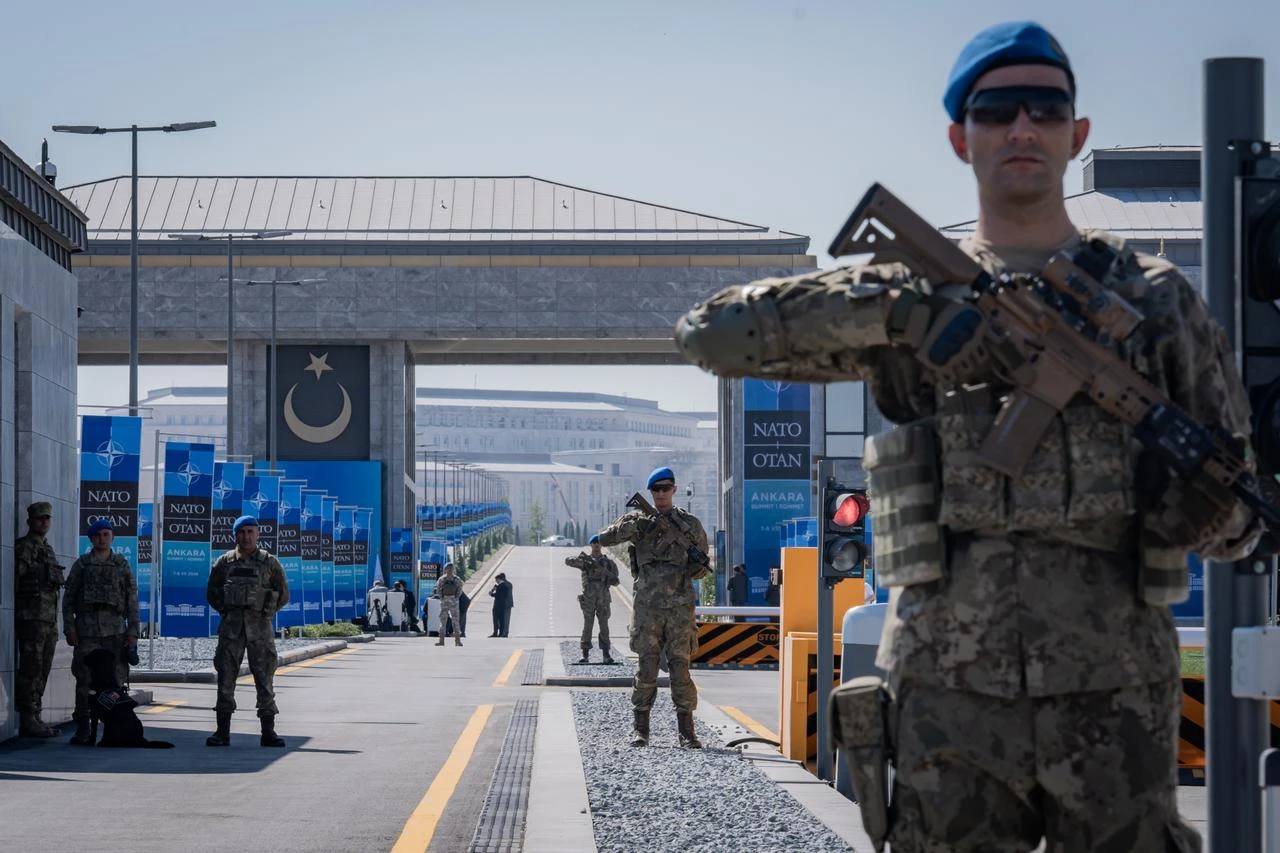
Given that the upcoming historic Ankara summit is basically meant to manage these very tensions and is being widely celebrated by some circles in the capital, it could actually cause Türkiye to lose a massive amount of its hard-earned edge—not just politically, but purely in terms of the defense industry.
Because in recent years, the European side of the Atlantic has rapidly evolved. They have moved past incremental defense-industrial growth and are transitioning into something closer to capitalist consolidation at scale—Rheinmetall-style, multi-billion-euro single-line financing that multiplies production capacity rather than merely nudging it upward.
Türkiye, under this upcoming new scheme, must not allow itself to turn into a mere low-cost, low-tech manufacturing base for NATO military products. Türkiye is genuinely advanced in developing drones and electronics, a fact that absolutely nobody in Brussels disputes. In fact, NATO leadership, as NATO Secretary-General Mark Rutte has stated repeatedly before, is practically in awe of the capabilities coming out of companies like Aselsan.
But there is a catch.
Ankara is technologically perfectly aligned with the NATO 3.0 spirit. Yet, it is simply not capitalized for it. A capital bottleneck, over a long enough timeline, is exactly how you lose a strategic lever you didn't realize was load-bearing.
The danger inherent in the current transatlantic setup is understated yet critical: while Ankara provides advanced technological components, Western nations retain control over the final platforms and, crucially, the invoices and financial profits. This creates a rigid industrial hierarchy that effectively relegates Türkiye to a permanently subordinate position.
Yes, Türkiye must join the supply chains that NATO needs, but the system should not be designed to lock Ankara into permanent supply-chain subservience.
Speaking to Türkiye Today, defense analyst Arda Mevlutoglu points out a parallel reality: European institutions and major capitals still predominantly view Türkiye through this exact subcontractor lens. Mevlutoglu suggests that Europe is currently caught in a tight geopolitical squeeze between Washington and Beijing. Yet, European leaders continually avoid entering into meaningful partnerships with their immediate periphery.
This structural exclusion means Turkish defense firms might soon face the bleak prospect of competing against heavily subsidized European giants. The recent summit at The Hague already signaled this commitment, and the Ankara summit might officially materialize it and put a hard roadmap in place.
It will truly be a historic NATO summit. Yet, this brings a lot of questions with it. If NATO becomes a more active military organization facing current geopolitical challenges, will Türkiye end up distancing itself from Russia more and more? Will all NATO countries create more cooperation in other areas, including tech and the economy? Will it position itself against China?
All of these questions remain to be answered.


 Set as preferred source
 Set as preferred source


 7 min read