Newsletters


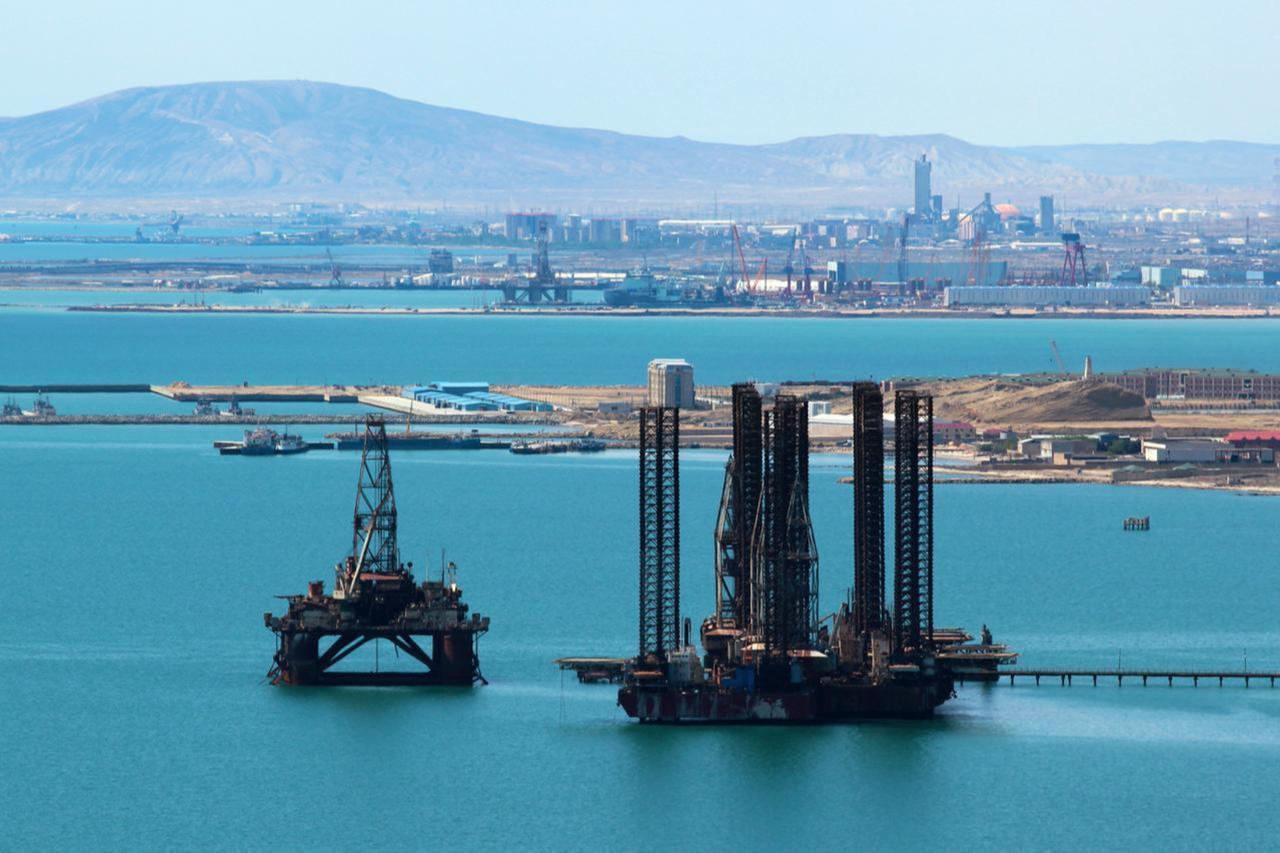


At a time when global trade is being reshaped, and supply chains are becoming fragile due to geopolitical risks, Azerbaijan is increasingly asserting its claim to be a rule-setting actor, moving beyond its traditional role as a transit country.
Azerbaijan President Ilham Aliyev's recent statements suggest that Baku aims not only to facilitate trade flows to the West, but also to directly influence the direction, pace, and security of these flows. In this context, the idea of a “Turkish trade corridor” that has come to the fore cannot be considered a simple transport project, but rather signals a new power structure in Eurasian geopolitics.
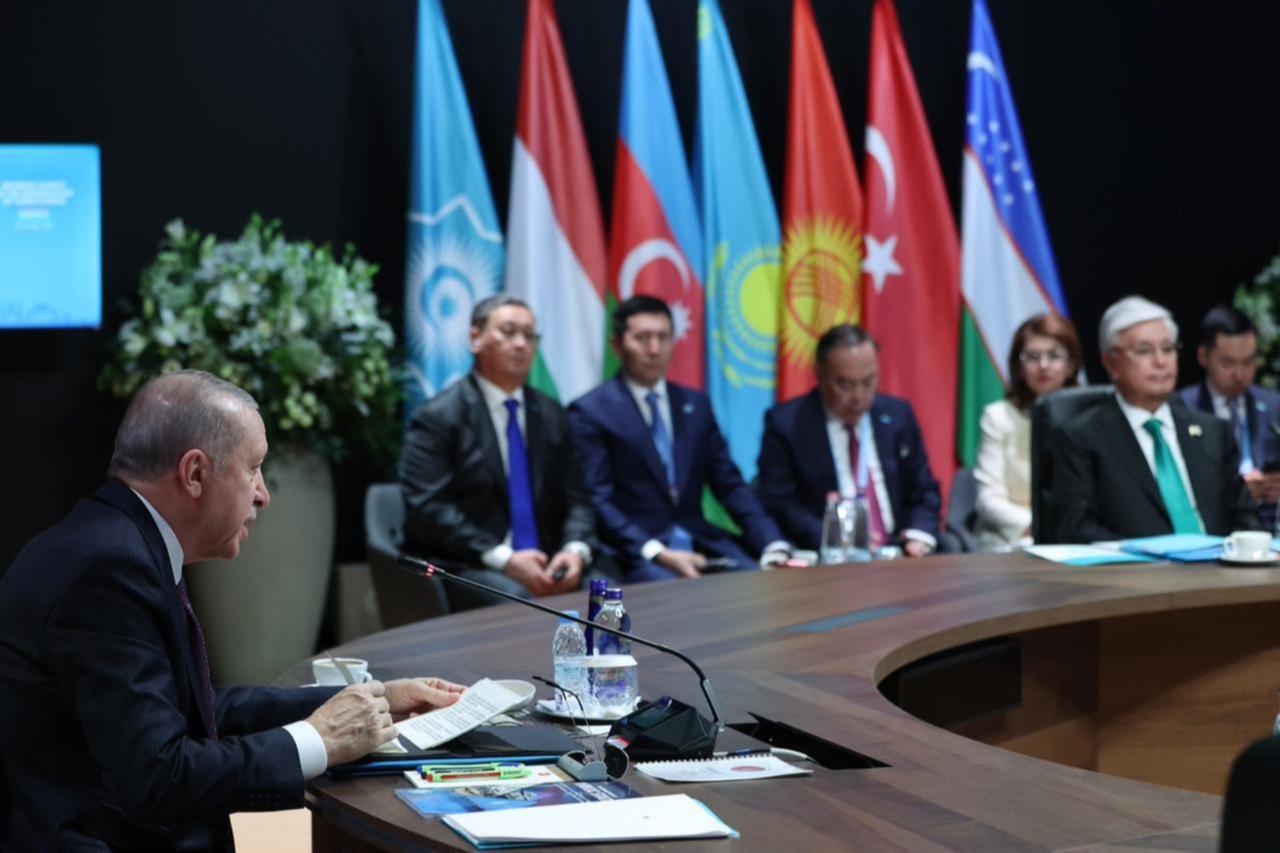
Azerbaijan’s positioning of itself as the “only reliable geographical link” between Central Asia and the West is no coincidence. With the Russia-Ukraine war making northern routes risky, Iranian routes surrounded by political uncertainty, and the Afghanistan-Pakistan axis unable to offer a predictable trade route, Baku has become a natural hub country. In this context, the trade corridor vision, shaped under the umbrella of the Organisation of Turkic States (OTS), represents a new phase in which Azerbaijan combines its geo-economic rationale with a geopolitical strategy.
Azerbaijan's role in the Middle Corridor has been known for a long time, but recently this role has undergone a qualitative transformation. Capacity increases at the Port of Baku, investments in railway infrastructure and Caspian transit projects are transforming Azerbaijan from a “transit point” into a centre where logistical decisions are made. President Aliyev's emphasis on Azerbaijan as the “only reliable country” capable of connecting Central Asia to the West is the clearest expression of this transformation in political discourse.
One of the most noteworthy aspects of this strategy is the deepening of Azerbaijan's institutional ties with Central Asian countries. The transformation of the C5 format into C6 with Azerbaijan's full membership signifies more than just an expansion of the diplomatic framework; it represents a strengthening of the capacity for joint action in the areas of trade, energy and transport. While Baku describes this step as a “major political and diplomatic success,” it also asserts its claim to influence which route Central Asian resources will take to reach Western markets.
The concept of the Turkish trade corridor can also be interpreted as the “Turkification” of the Middle Corridor within this framework. The fact that the routes forming the backbone of the corridor are largely under the control of the Turkish states brings together the technical dimension of trade with the axes of identity and strategy. This situation signals the emergence of a new and predictable Eurasian partner for the West, apart from Russia and China, while for Azerbaijan, it carries the potential to create a sphere of political influence that is not limited to transit revenues.
The unabated continuation of infrastructure investments in Baku also supports this claim. The planned energy cables and fibre optic lines across the Caspian Sea, along with increasing container traffic, demonstrate that Azerbaijan's current capacity is already proving insufficient. Aliyev's statement that “We thought the infrastructure we had created would be sufficient for many years, but we see that this is not the case” reveals that Baku has anticipated the growing demand and is preparing to manage it.
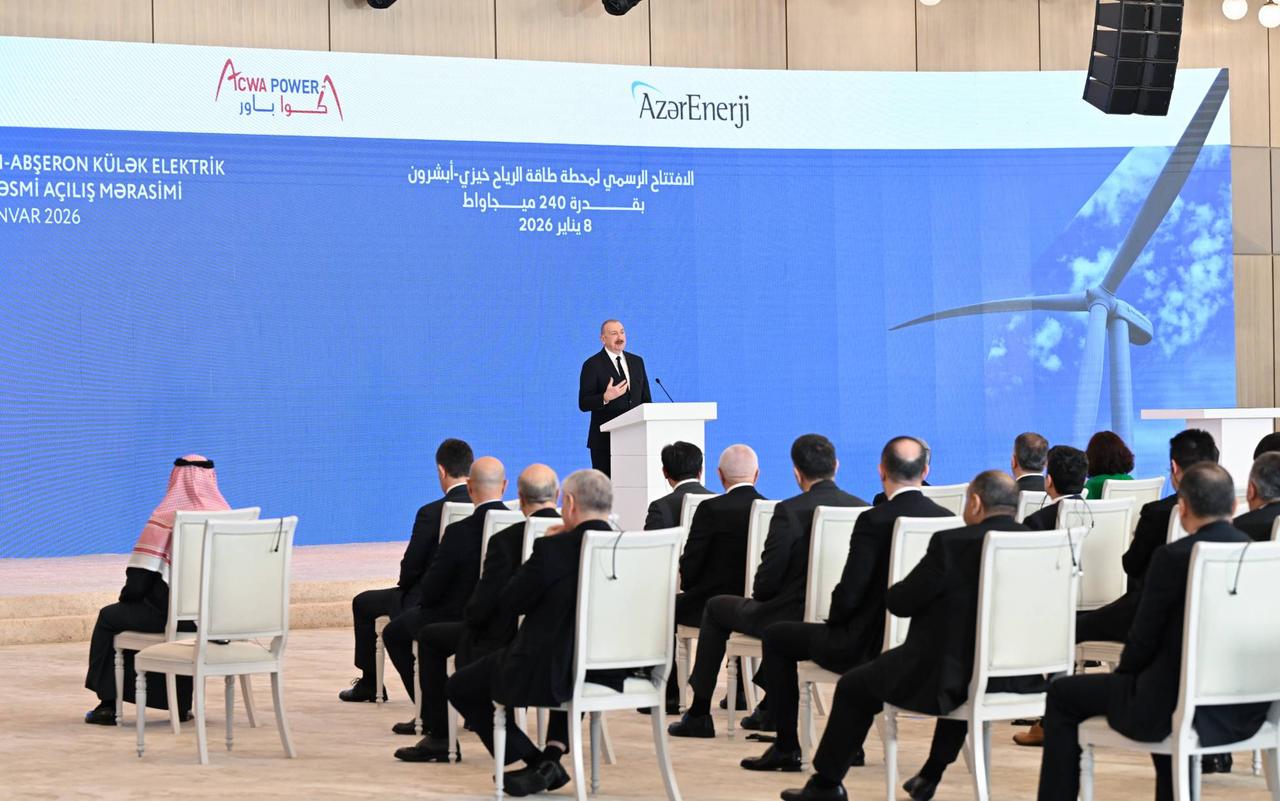

The fundamental element that makes the Turkish trade corridor distinct and open to debate is that this route is not viewed as an economic initiative and that the security dimension is also placed at the centre of planning. President Aliyev's calls within the OTS for increased defence and security cooperation demonstrate that trade security is now seen as a military and strategic issue. The offer to host joint military exercises in 2026 stands out as a concrete manifestation of this approach.
This perspective differs markedly from the classical liberal understanding of trade. Aliyev's stark observation that “there is no such thing as international law in today's world” clearly demonstrates that Azerbaijan views the global system through the prism of power balances. In this approach, trade routes are positioned as fundamental elements of national security and political independence, alongside economic prosperity.
The Zengezur corridor, also known as TRIPP, which will pass through Armenia, constitutes the most critical and fragile link in the Turkish trade corridor in this context. This line, which is still under construction, promises an alternative and shorter route for trade extending from Central Asia to the West, beyond connecting Azerbaijan to Nakhchivan and from there to Türkiye. Baku's view of this line as a “settled matter” is also a reflection of Azerbaijan's confidence in the regional balance of power.
The security dimension of the Turkish corridor also has a dual meaning for the West. On the one hand, it offers access to Central Asia via a route bypassing Russia and Iran, while on the other hand, the increased military coordination among Turkic states supporting this route raises the possibility of a new bloc formation in Eurasia. Thus, Azerbaijan transcends the definition of a “transit country” and rises to become one of the founding centres of the emerging new geopolitical axis.
In conclusion, Azerbaijan's vision for a Turkish trade corridor demonstrates that its goal of controlling trade with the West has evolved into a multi-layered strategy. This strategy reflects a comprehensive approach spanning infrastructure investments, diplomatic expansion, economic cooperation, and security structures. With this move, Baku aims to move beyond its definition as a passive geographical area through which freight trains pass and become a decisive actor shaping the rules of Eurasian trade. From this perspective, the Turkish trade corridor should be seen as the most concrete and ambitious manifestation of Azerbaijan's geo-economic rise.


 Set as preferred source
 Set as preferred source


 1 min read
 1 min read