Newsletters




The global energy order is undergoing a fundamental restructuring process under the pressure of geopolitical tensions, supply security concerns and the accelerating green transformation process.
In such a context, the Organisation of Turkic States (OTS) is beginning to take on an increasingly strategic and political role, going beyond the framework of purely technical cooperation in the field of energy.
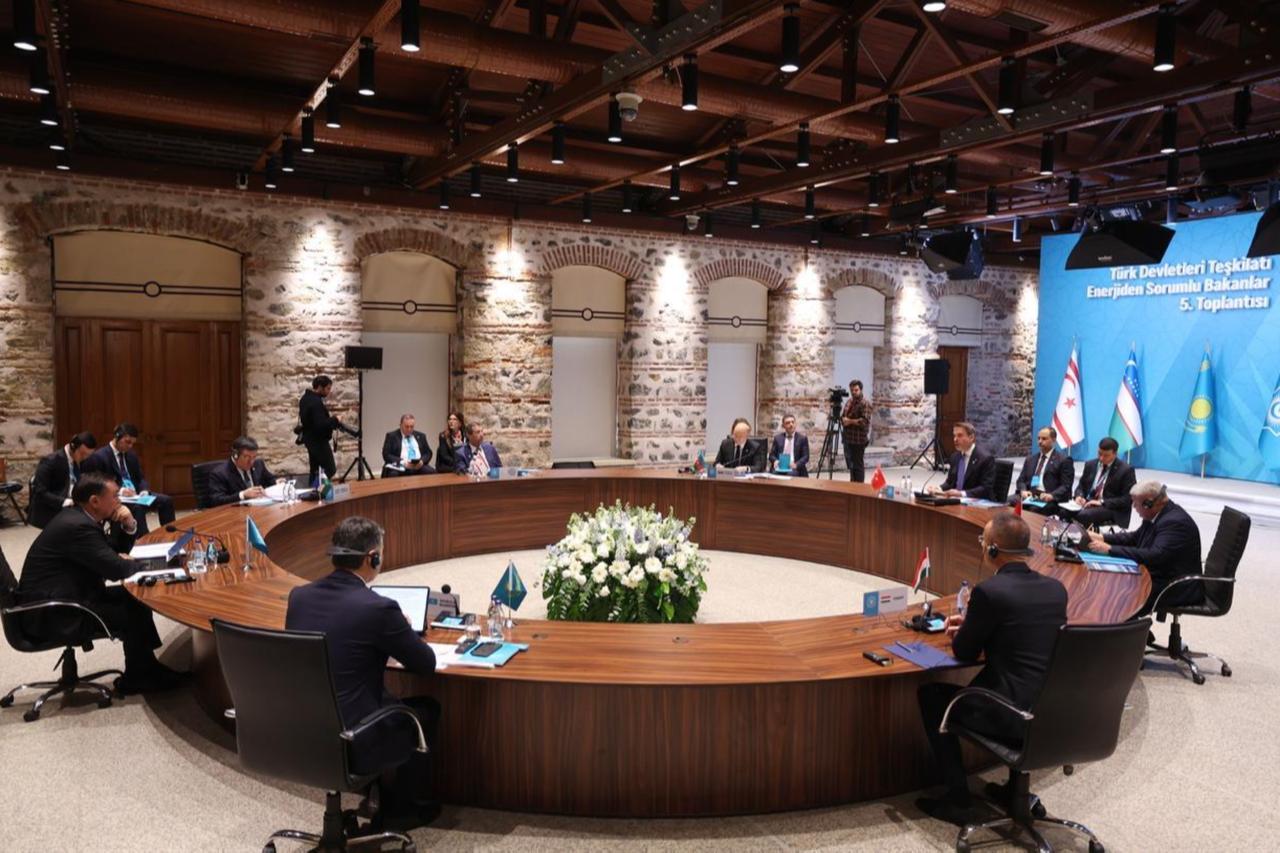
The 5th Meeting of OTS Ministers Responsible for Energy, held in Istanbul, demonstrates that this trend is not merely a temporary discourse but rather signals an institutional transformation.
Located at the center of energy routes stretching from Central Asia to the Caucasus and from Anatolia to Europe, the Turkic world is approaching the threshold of becoming a decisive actor in the global energy equation, rather than a passive element, to the extent that it can combine its resource potential with a common strategic vision.
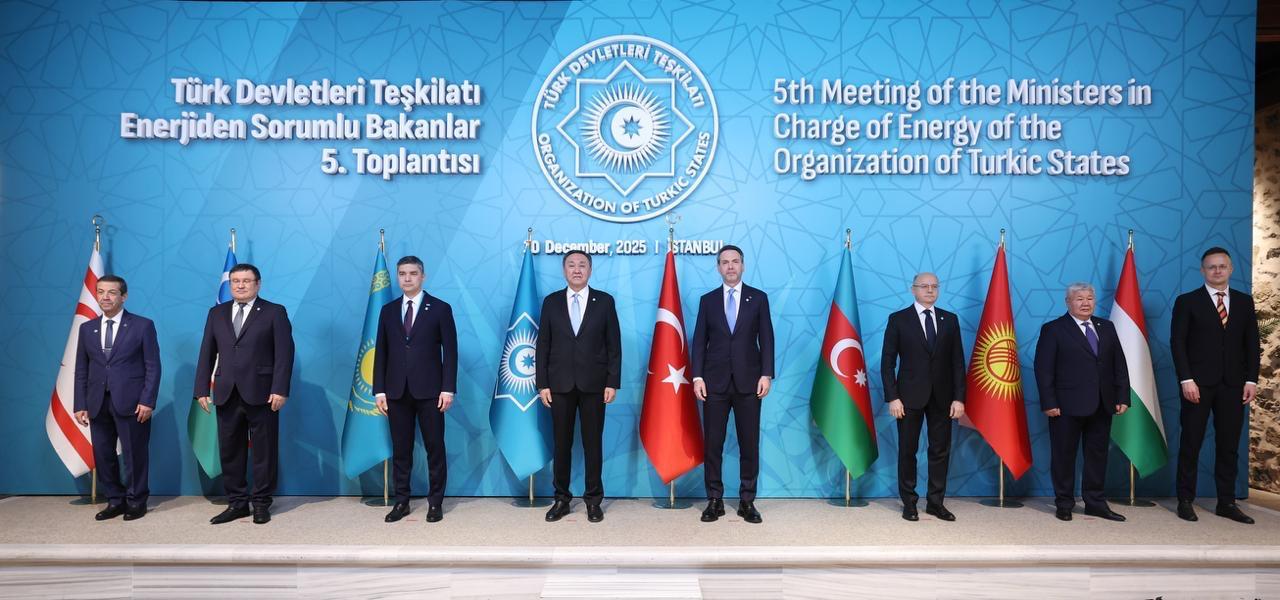

Despite possessing significant global potential in terms of natural gas, oil and renewable energy, the Turkic world has struggled to transform this power into a comprehensive strategy.
The main reason for this is that cooperation in the energy sector has been limited for many years to bilateral agreements, fragmented projects and short-term national priorities.
The message conveyed at the OTS Energy Ministers' Meeting held in Istanbul indicates that this approach is unsustainable.
At a time when global energy markets are becoming increasingly politicized and energy supply is being used as a tool for pressure and sanctions, the “everyone for themselves” approach is no longer realistic. Today, energy security is being built beyond borders, through regional integration and mutual dependence.
Projects such as Baku-Tbilisi-Ceyhan, TANAP, and the Southern Gas Corridor have clearly demonstrated that, if the Turkic states act in concert, they have the capacity to exert a decisive influence on Europe's energy security that goes beyond their own economic interests.
It is therefore no coincidence that the Trans-Caspian Natural Gas Pipeline has been brought back to the forefront and that emphasis has been placed on the “concrete phase.”
With this step, the Turkic world is moving away from an attitude of avoiding risk-taking in the energy field and demonstrating its determination to become an actor ready to assume geopolitical responsibility.
At this point, the critical threshold for the OTS is clear: Energy will either remain solely an exported resource and source of economic revenue, or it will serve as a lever that strengthens the regional stability of the Turkic world, enhances its strategic autonomy, and increases its weight in the global balance of power.
The meeting in Istanbul reveals that the second path is no longer a choice but a necessity whose cost will increase if delayed. Every step toward integration not taken today will necessitate adaptation to an energy architecture determined by others tomorrow.
For the Turkic world, the key determining factor is not so much the existence of resources as the continuity of the political will to harness this potential within a common strategy.
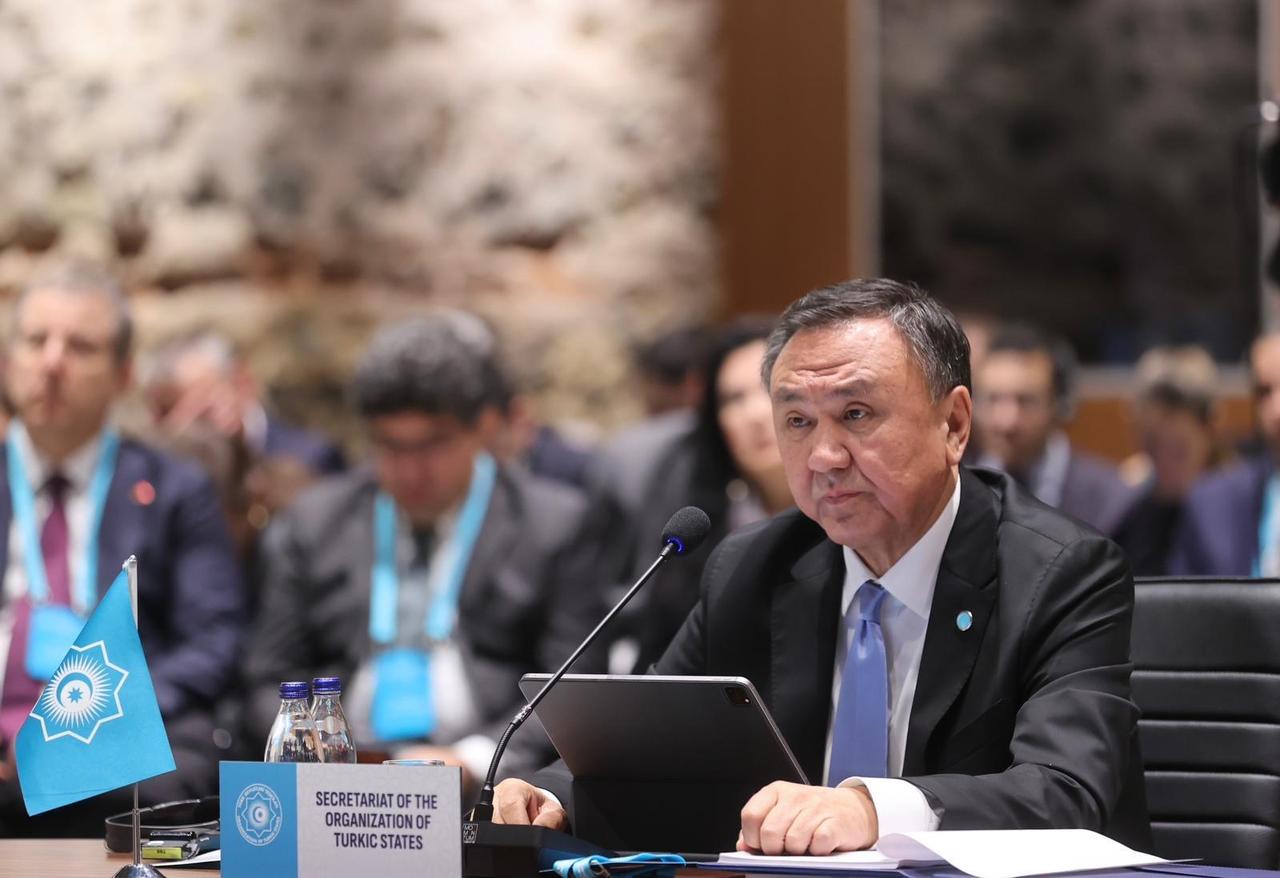
To view the Green Energy Corridor merely as a technical energy project would be a serious oversight. This initiative is one of the most tangible indicators of the mental shift in the Turkish world's approach to energy.
This corridor, which aims to transport electricity generated from renewable energy sources in Central Asia via the Caspian Sea to Türkiye and then on to Europe, clearly demonstrates that energy diplomacy will no longer be shaped solely around pipelines and hydrocarbons.
This model, which for the first time aims to connect the electricity systems of Turkic states within a holistic framework, necessitates a new generation of integration.
This is precisely why Türkiye's role has become decisive. In this process, Türkiye is neither a passive transit country nor merely a technical connection point.
Thanks to its transmission infrastructure, energy trade experience, financial capacity, and access advantage to European markets, it is the natural center of this corridor.
More importantly, Türkiye is positioned here not so much as an energy-carrying actor, but rather as a diplomatic actor that negotiates, mediates, and guides. This orientation is one of the clearest reflections in the energy field of the multidimensional foreign policy that Ankara has been striving to build in recent years.
In an international environment where energy markets are becoming increasingly politicized and at times even turning into an ideological battleground, the Green Energy Corridor serves as a strategic tool for the Organization of Turkic States.
In light of the deep vulnerabilities in energy supply even within the European Union, the establishment of a common energy market and coordination mechanism within the OTS is both ambitious and rational.
However, it is important to emphasize that the realization of this vision depends on the establishment of robust and functional institutional structures rather than strong rhetoric.
Without the introduction of joint investment funds, the clarification of technical roadmaps, and the establishment of effective decision-making mechanisms, the Green Energy Corridor cannot truly have a “game-changing” impact.
The meeting in Istanbul demonstrates that a strong political will exists in this direction. If this can be transformed into a sustainable strategy, the Turkish world can transcend its role as an energy supplier and rise to a more visible position in the global balance of power as a rule-setting and direction-setting actor.


 Set as preferred source
 Set as preferred source


 7 min read