Newsletters


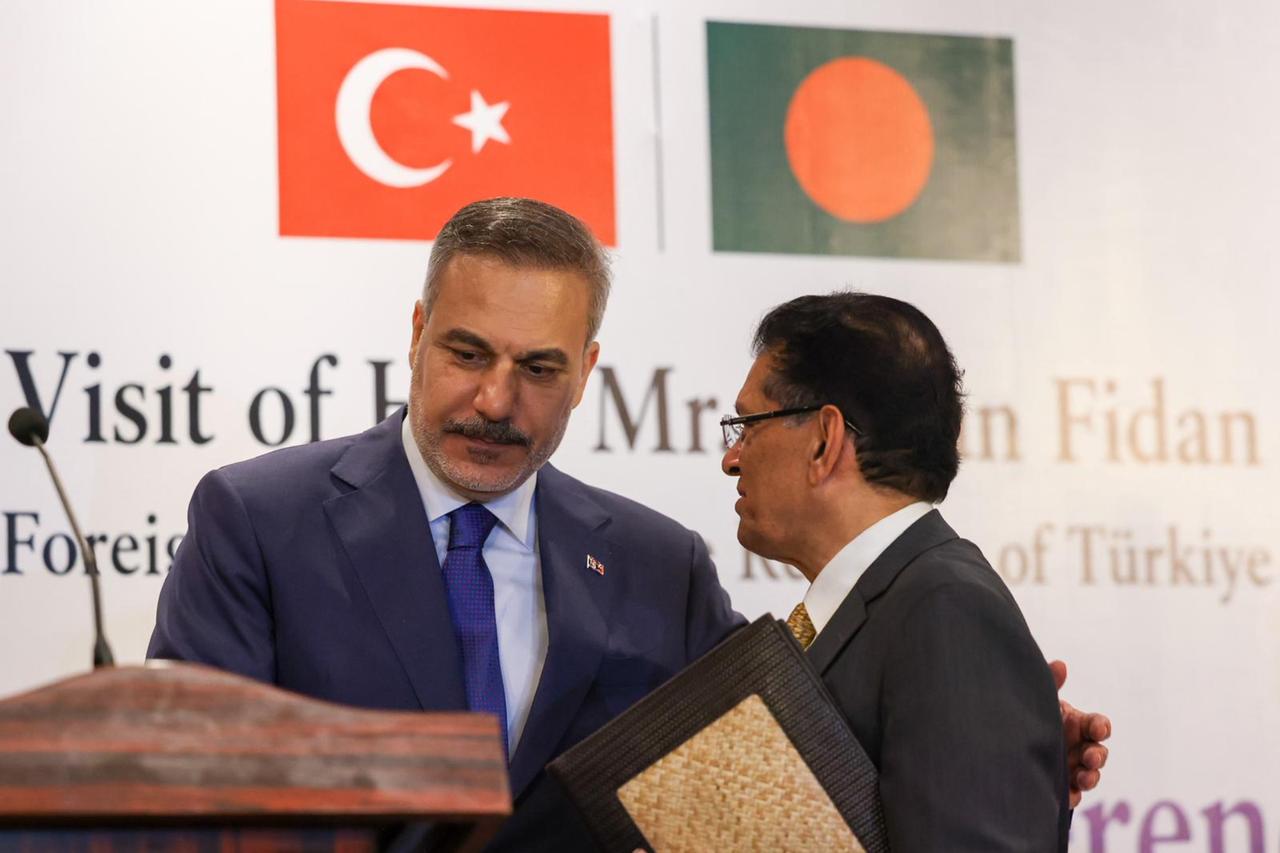


Turkish Foreign Minister Hakan Fidan’s recent visit to Bangladesh should not be seen as a routine diplomatic stop. It came at a time when Dhaka is trying to redefine its external relations after a major political transition, and when Ankara is searching for a wider role in Asia beyond its traditional partnerships.
The visit, therefore, carries a meaning larger than bilateral courtesy. It points to a possible new strategic equation between Bangladesh’s search for autonomy and Türkiye’s expanding Asian vision.
For Bangladesh, the question is urgent.
The country is surrounded by India on almost all sides, sharing one of the longest land borders in the world with its giant neighbor. Geography alone does not make India an adversary, and Bangladesh cannot afford a hostile relationship with New Delhi.
Trade, water, migration, border security, connectivity and history bind the two countries together. But geography does create vulnerability when one neighbor becomes too dominant in a country’s diplomatic, economic and security calculations.
For more than a decade, Bangladesh’s foreign policy operated under a government widely seen as close to India. New Delhi had strong access, influence and confidence in Dhaka during the Awami League years. From India’s perspective, this was useful. It provided stability on its eastern frontier and reduced uncertainty in a sensitive region.
But from inside Bangladesh, especially among large sections of the opposition and civil society, the relationship increasingly appeared unequal. Indian support for Sheikh Hasina’s government, especially amid controversial elections and the decline of democratic values, damaged India’s public image among many Bangladeshis.
The fall of Sheikh Hasina's government in 2024 changed the equation.
A post-Awami League Bangladesh cannot simply return to the old foreign policy script. The new political leadership in Dhaka must show that Bangladesh is not a subordinate state in South Asia. It is an independent country capable of building diversified partnerships.
This is not about anti-India rhetoric. It is about political credibility at home and strategic room abroad.
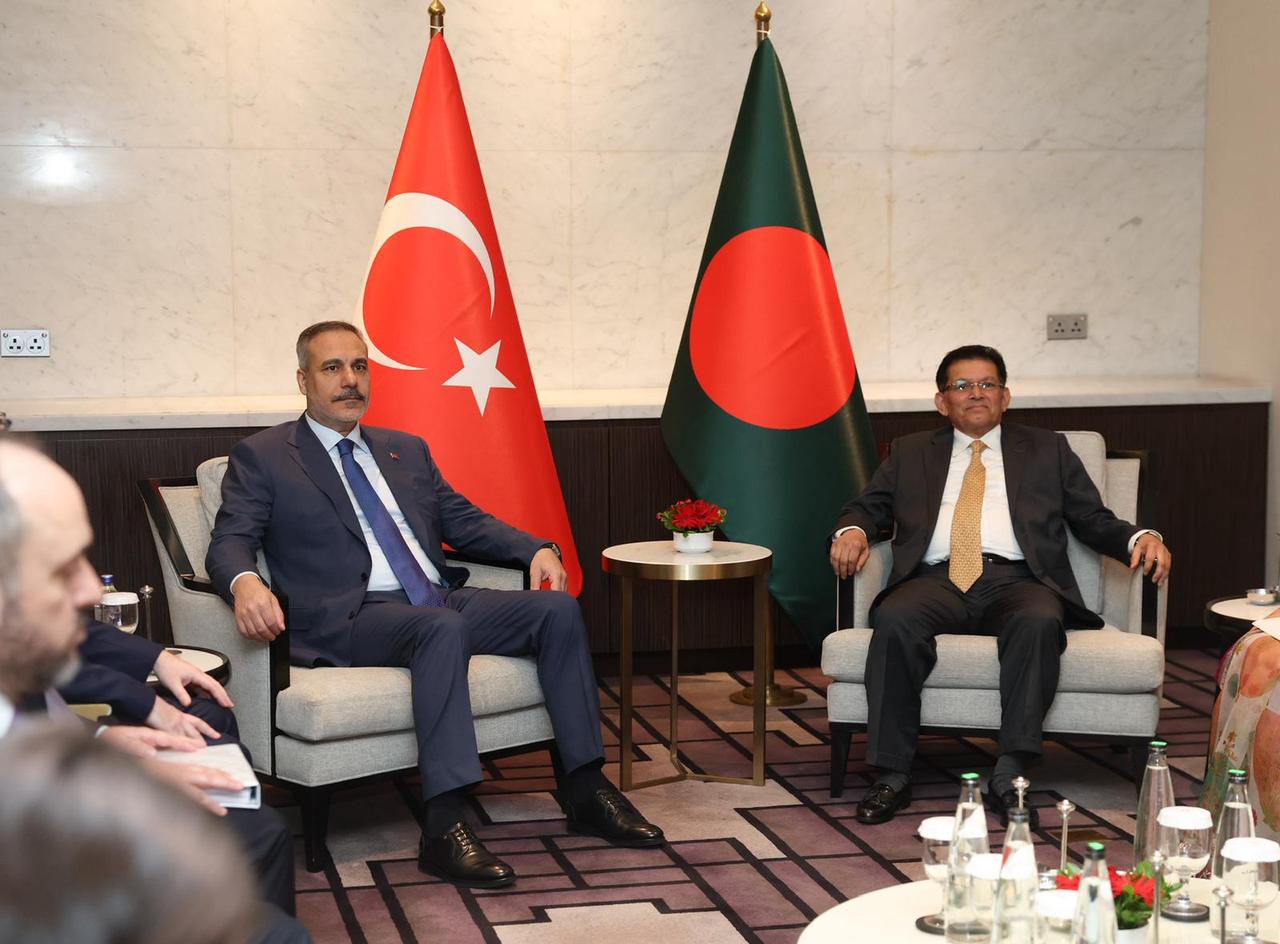

This is where Türkiye enters the picture.
Bangladesh does not need a military alliance against India. Such a move would be unrealistic, provocative and damaging. What Bangladesh needs is a structured defense-industrial and strategic partnership that reduces dependence on any single country.
China has long been a major defense supplier to Bangladesh, but excessive dependence on Beijing carries its own risks. Western defense partnerships, on the other hand, often come with political conditions, slow procedures and strategic hesitation.
Pakistan remains historically sensitive in Bangladesh’s domestic memory. Türkiye, by contrast, offers a rare combination: political goodwill, defense-industrial capacity, Muslim-world legitimacy, NATO-linked experience and distance from South Asia’s direct rivalries.
This makes Türkiye a “third strategic option” for Bangladesh.
It is not India. It is not China. It is not Pakistan.
It is a capable middle power with an expanding defense industry and a foreign policy that increasingly looks beyond its immediate neighborhood. For Dhaka, that combination is valuable.
The defense dimension is already visible. Bangladesh has shown interest in Turkish drones, rocket systems, armored platforms and other defense technologies. Türkiye’s defense industry has become attractive to many countries because it offers systems that are tested, relatively affordable and often more accessible than Western alternatives.
But the next stage should not be limited to arms purchases. Bangladesh needs training, maintenance, technology transfer, joint production, coastal surveillance, border monitoring, cyber capacity and defense education. A serious partnership with Türkiye should be built around capacity, not dependency.
The Maldives offers a useful but limited example. President Mohamed Muizzu’s government pushed for the withdrawal of Indian military personnel and sought alternative security partners, including Türkiye. But Bangladesh is not the Maldives. Its population, economy, land borders, internal politics and relationship with India are far more complex.
Dhaka cannot follow an “India Out” model, nor should it. The lesson from the Maldives is not confrontation with India. The lesson is that smaller South Asian states are increasingly uncomfortable with excessive security dependence on one regional power. Bangladesh’s answer must be more careful, more institutional and more strategic.
This is why a Türkiye-Bangladesh defense partnership should be framed around strategic autonomy. It should allow Bangladesh to modernize its armed forces without becoming a proxy in any great-power rivalry. It should reassure India that Dhaka is not inviting hostile encirclement, while making clear that Bangladesh has the sovereign right to diversify its security partnerships.
It should also give Türkiye a long-term role in a region where it has often been viewed mainly through Pakistan.
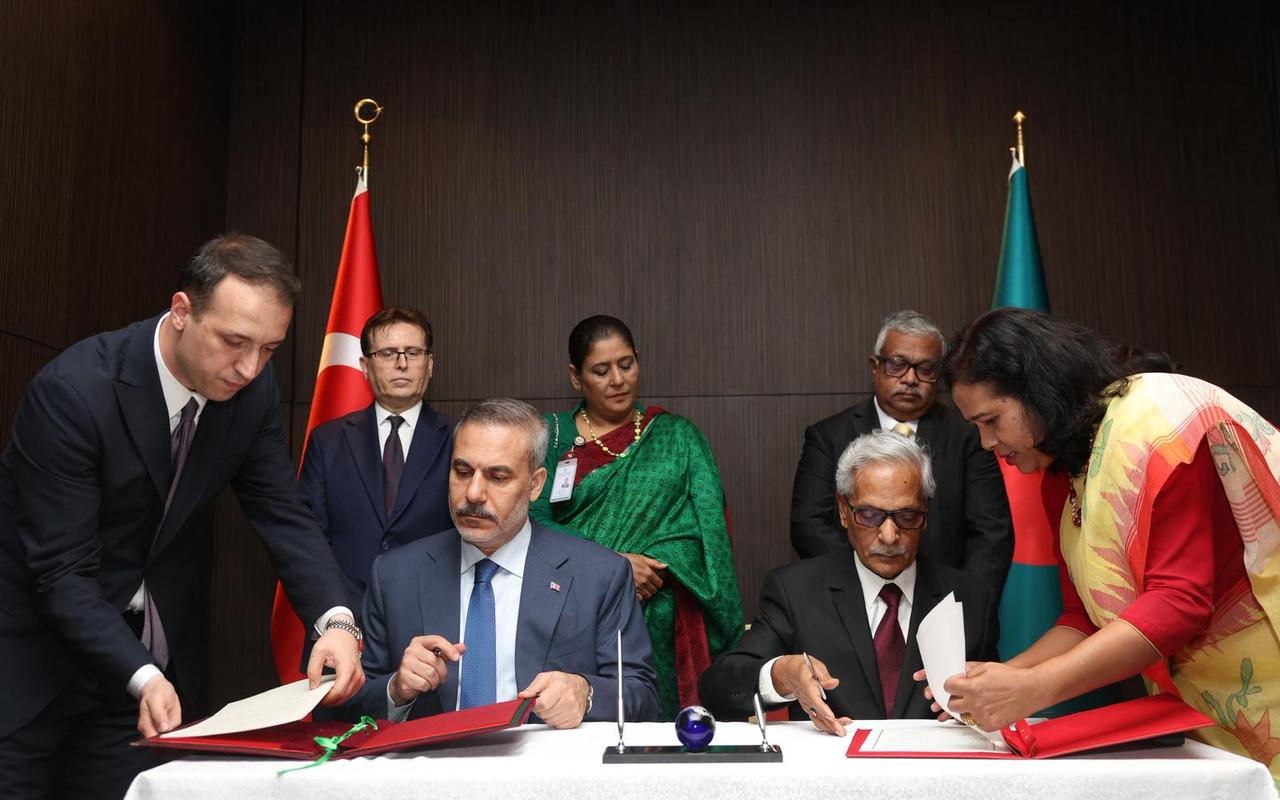
For Ankara, Bangladesh should not be seen merely as a defense market.
That would be far too narrow.
Bangladesh is a Bay of Bengal nation with a large population, a growing manufacturing sector, a strategic position between South and Southeast Asia and a central role in the Rohingya crisis. A deeper relationship with Dhaka would provide Türkiye access to a geography connecting the Indian Ocean, Myanmar's borderlands, Northeast India, ASEAN trade routes and the broader Indo-Pacific conversation.
This requires a more updated Turkish understanding of South Asia.
For decades, Türkiye's strategic imagination in the region was shaped largely by its relationship with Pakistan. That partnership remains important, but it is no longer sufficient. South Asia is not a single political space.
Bangladesh possesses its own history, economic trajectory and strategic concerns. A Pakistan-centered reading of the region cannot adequately explain the Bay of Bengal, the Rohingya crisis, Bangladesh's manufacturing rise or Dhaka's efforts to balance relations with both India and China without becoming overly dependent on either.
Fidan's visit, therefore, matters because it has the potential to open a more substantive phase in bilateral relations.
The ongoing discussions on trade, defense cooperation, investment, education and humanitarian engagement should evolve into a structured framework. Annual foreign and defense consultations could provide continuity. A dedicated defense-industry working group could identify opportunities for joint production and maintenance. Military education exchanges could strengthen institutional trust, while maritime cooperation could focus on coastal security, disaster response and humanitarian logistics.
Think tanks and universities should also be involved so that the relationship does not remain confined to diplomats and defense contractors.
The Rohingya issue gives Türkiye an additional layer of legitimacy in Bangladesh.
Ankara has maintained a visible humanitarian presence in Cox's Bazar, and Fidan's visit to the refugee camps underscored that Türkiye's engagement extends beyond defense and commerce.
This matters.
A country that enters Bangladesh solely through arms sales will inevitably face skepticism. A country that combines humanitarian diplomacy, development assistance, education, culture and defense cooperation is far more likely to build durable trust.
The economic dimension is equally important.
Bangladesh needs export diversification, technology partnerships, energy cooperation and new investment. Türkiye needs reliable Asian partners and growing markets for its industries as well as a stronger position in the Indian Ocean region.
Defense cooperation can serve as the strategic backbone of the relationship, but it must be connected to trade, infrastructure, education and industrial development.
There is also a broader regional opportunity.
If Türkiye develops a serious Bangladesh strategy, it can gradually strengthen its position across the Bay of Bengal and the eastern Indian Ocean. Sri Lanka, the Maldives, Bangladesh and Indonesia do not form a single bloc, but they are connected by maritime routes, security anxieties and the search for diversified partnerships.
Türkiye’s Asian opening will become more meaningful if Ankara can read these countries not as distant markets, but as nodes in a changing southern Asian geography.
For Bangladesh, prioritizing defense cooperation with Türkiye is not a luxury. It is part of the country’s need to stand on its own feet after a long period of political dependence and regional pressure. For Türkiye, investing in Bangladesh is not charity, sentiment or symbolic Muslim solidarity. It is a strategic opportunity to enter the Bay of Bengal with credibility, usefulness and trust.
The future of Türkiye-Bangladesh relations will depend on whether both sides can avoid shallow language. Brotherhood is not enough. Trade numbers are not enough. Occasional visits are not enough.
What is needed is a patient, institutional and mutually beneficial partnership that gives Bangladesh strategic space and gives Türkiye a serious role in South Asia’s eastern frontier.
In the coming decade, the most important South Asian question for Türkiye may not be how to preserve old friendships, but how to build new strategic depth without importing old regional conflicts. Bangladesh offers that possibility.
It is not simply a market. It is not only a humanitarian file. It is Türkiye’s potential gateway to the Bay of Bengal, and perhaps the missing link in Ankara’s wider Asian future.


 Set as preferred source
 Set as preferred source


 2 min read

 1 min read