Newsletters





When India placed the Indus Waters Treaty (IWT) in abeyance last year, attention naturally focused on the diplomatic and legal consequences of the decision.
Yet the more consequential question may lie elsewhere: what happens when transparency begins to disappear from one of the world's most successful transboundary water-sharing arrangements?
The answer can be found in the long-running controversy surrounding India's Kishanganga Hydroelectric Project.
For more than six decades, the Indus Waters Treaty has survived wars, military crises and recurring periods of hostility between India and Pakistan.
Frequently cited as one of the world's most durable water-sharing agreements, the treaty established a framework through which both countries managed competing interests over a river system vital to hundreds of millions of people.
Today, however, the challenge facing the treaty extends beyond water allocation itself. It concerns transparency, compliance and the growing strategic value of information in shared river basins.
The controversy has acquired renewed significance following India's decision to place the treaty in abeyance after the April 2025 Pahalgam attack.
While the immediate debate focused on the legal and diplomatic implications of suspending treaty mechanisms, a less examined consequence has been the growing uncertainty surrounding data sharing, project transparency and compliance monitoring.
The move also raised concerns that data-sharing obligations and institutional monitoring mechanisms that had long insulated water management from political crises could become increasingly vulnerable to broader bilateral tensions.
In an increasingly water-stressed region, access to timely hydrological information is becoming as important as access to the water itself.
This shift is transforming water data into a strategic resource with implications extending far beyond a single hydroelectric project.
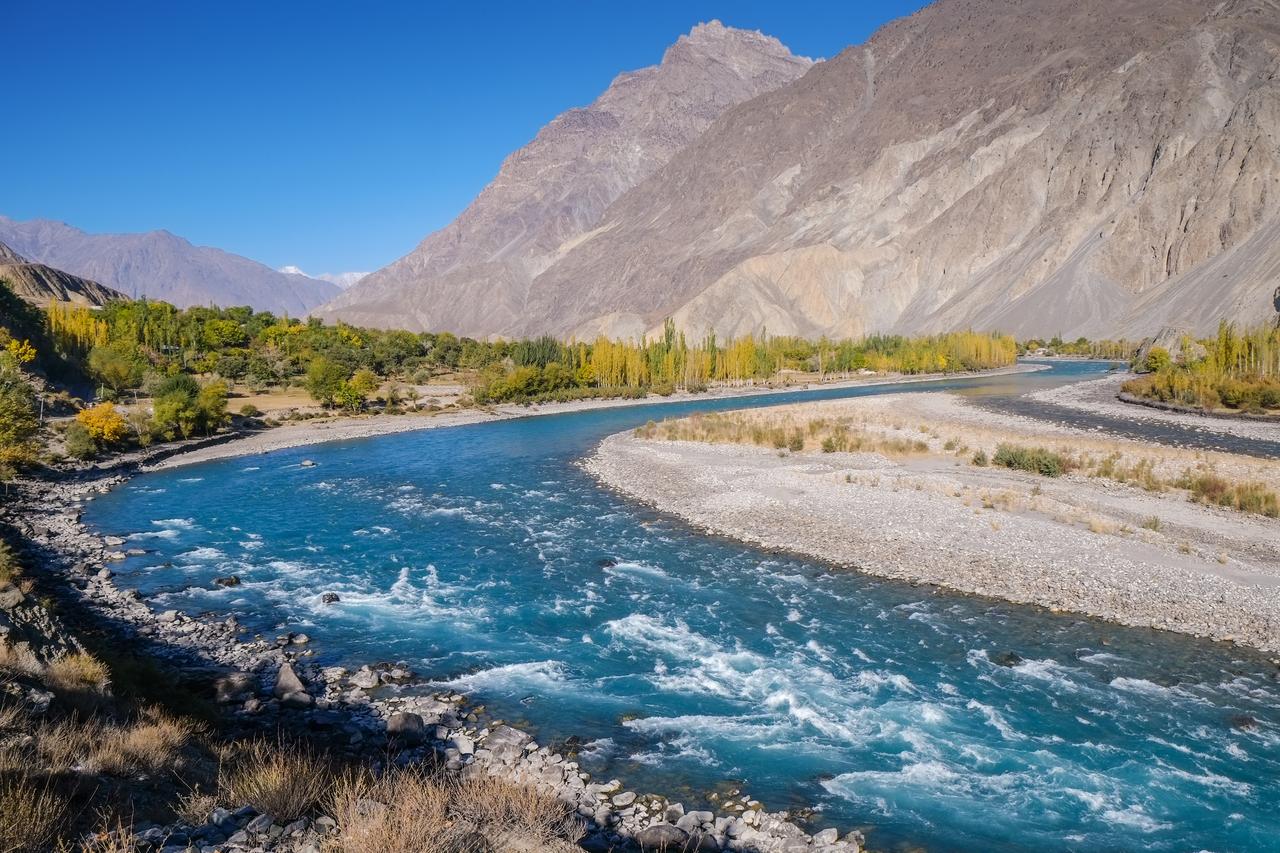

The debate over environmental flows is often treated as a technical matter. In reality, it is increasingly a security issue.
The Neelum Valley represents a fragile mountain ecosystem dependent upon sustained river flows that support biodiversity, agriculture and local livelihoods. Environmental flow requirements exist precisely because river systems perform functions that extend beyond electricity generation.
Reduced flows can alter aquatic habitats, affect sediment transport, accelerate riverbank erosion and place additional pressure on communities already adapting to environmental change.
Over time, such disruptions can produce economic and social consequences far beyond the immediate project area.
The stakes are considerable. The Indus Basin supports one of the world's largest irrigation networks and underpins roughly 90% of Pakistan's food production.
Nearly 80% of the country's cultivated land depends directly on waters originating from the basin, while agriculture contributes approximately one-fifth of national gross domestic product (GDP) and remains a major source of employment and rural livelihoods.
In such circumstances, even relatively small uncertainties regarding river flows, seasonal releases or reservoir operations can generate significant economic consequences.
This is why disputes over environmental flows can no longer be viewed solely through an engineering lens; they increasingly sit at the intersection of environmental security, economic stability and national resilience.
The Kishanganga dispute ultimately raises a larger question about the future of international river management.
The Indus Waters Treaty has long been regarded as a rare example of institutional success in a region otherwise characterized by geopolitical rivalry.
Its endurance demonstrated that legal frameworks, technical cooperation and dispute-resolution mechanisms could survive even when broader political relations deteriorated.
That achievement should not be taken for granted.
As climate pressures intensify and water demand rises across Asia, confidence in transboundary river agreements will become increasingly important. The challenge extends far beyond the Indus Basin.
From the Mekong to the Brahmaputra, governments are grappling with the same fundamental issue: how to balance national development objectives with the responsibilities that accompany shared water resources.
Similar disputes over upstream data sharing have emerged along the Mekong River, where downstream states have increasingly argued that limited transparency regarding dam operations complicates drought management, flood forecasting and agricultural planning.
In this environment, transparency becomes more than a procedural obligation. It becomes a cornerstone of stability.
The real danger is not simply the possibility of reduced river flows. It is the gradual erosion of trust that occurs when information becomes contested and treaty mechanisms lose credibility. Once confidence in institutional safeguards begins to weaken, technical disputes can quickly acquire political and strategic dimensions.
The Indus Waters Treaty has endured because both sides, despite their differences, generally accepted that cooperation remained preferable to confrontation. Preserving that principle will be essential as the basin enters an era of mounting environmental and geopolitical pressures.
In an age of climate uncertainty, control over hydrological information may prove as consequential as control over dams themselves. The future of the Indus Basin will depend not only on how water is shared, but on whether the data needed to verify that sharing remains available.
Once transparency erodes, trust follows. And in South Asia, where water security, food production and strategic stability are increasingly intertwined, that may prove the most consequential risk of all.


 Set as preferred source
 Set as preferred source


 2 min read


 1 min read