Newsletters




This article was originally written for Türkiye Today’s bi-weekly Balkans newsletter, BalkanLine, in its Dec. 19 issue. Please make sure you are subscribed to the newsletter by clicking here.
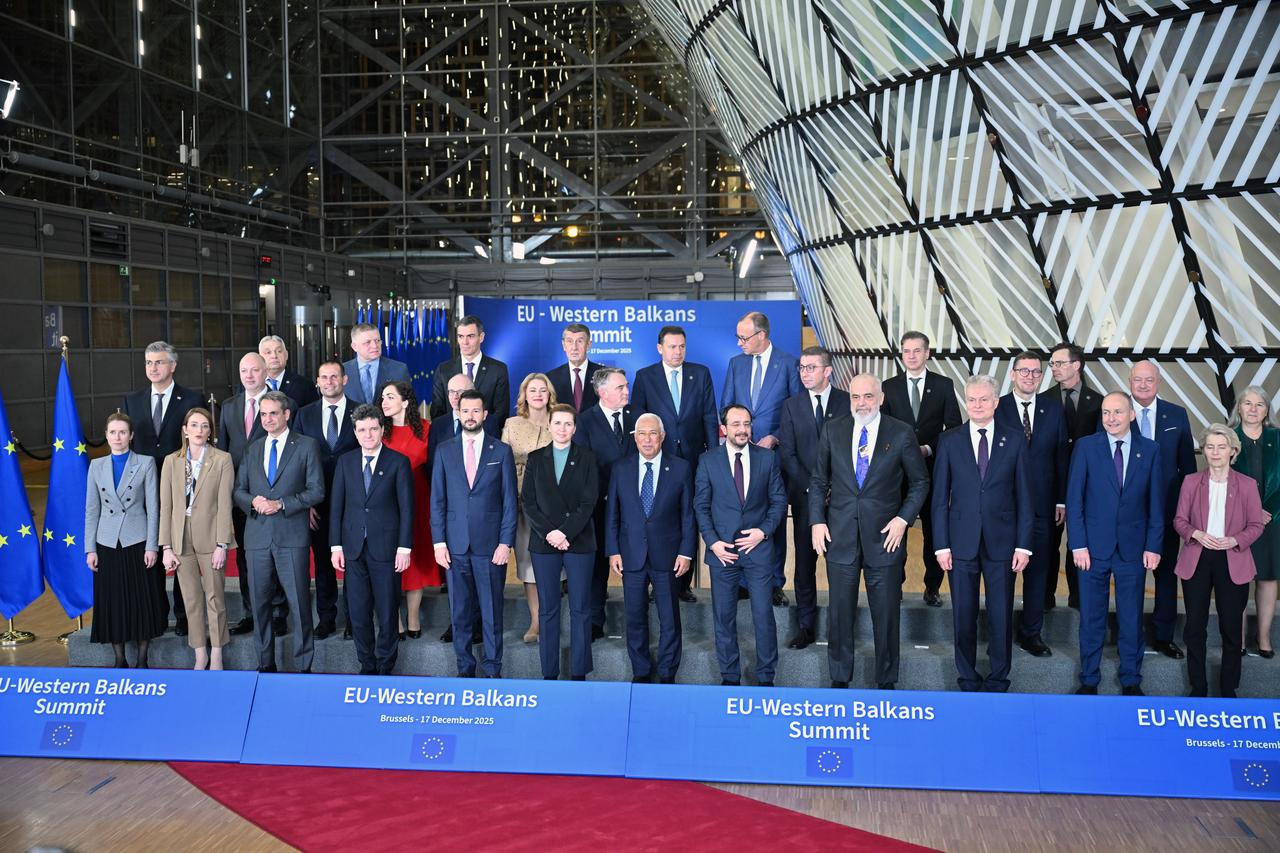
European leaders and Western Balkan partners gathered in Brussels for the annual EU-Western Balkans Summit on Wednesday, Dec. 17. The declaration underscored the need for “ever-stronger ties,” reinforcing the bloc's commitment to the region amid shifting geopolitical sands.
European Council President Antonio Costa struck a tone of urgent unity, stating, "Only by overcoming the past can the Western Balkans fully assume their role as future EU members and contribute to a stable, prosperous, and united Europe.”
However, the summit's message of unity was overshadowed by who wasn't there.
Serbia, the region's largest economy and a pivotal political player, left its seat empty. President Aleksandar Vucic announced he would not attend, a diplomatic snub that speaks volumes about Belgrade's current trajectory.
While Vucic traveled to Brussels just last week to discuss EU progress, asserting that the "most effective path" would be to admit all Western Balkan countries simultaneously, his absence at the actual summit highlights a growing rift.
However, beyond the theater of the boycott, there is concrete frustration: Belgrade is dissatisfied that there was, once again, no consensus on opening the long-awaited Cluster 3 in its accession negotiations.
Serbia has made little tangible progress in its EU bid since 2021, despite holding candidate status since 2012. The underlying friction remains Belgrade’s refusal to align with EU foreign policy regarding Russia.
Relying on Moscow for gas and historical support, Serbia has resisted imposing sanctions since the 2022 invasion of Ukraine. By boycotting the summit, Vucic is likely signaling that Belgrade will not be lectured on alignment while it continues its precarious balancing act between Brussels and Moscow.
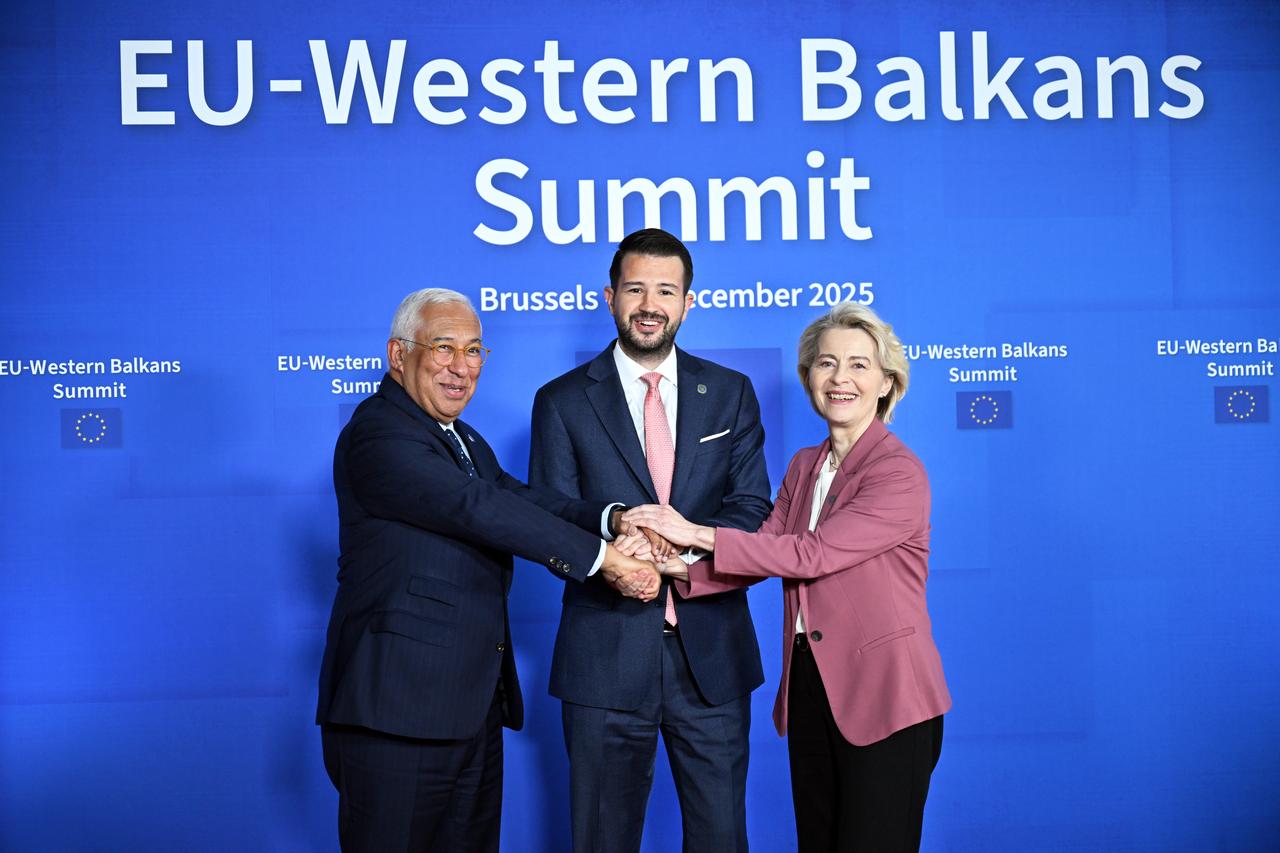

The summit also scrutinized the "scorecard" of other candidates, with Montenegro often cited as the frontrunner. The country, which is set to host the next summit in June 2026, recently reached a new milestone by closing five accession chapters, a technical prerequisite for joining the EU.
Yet, I think Costa’s warning about "overcoming the past" rang hollow against events on the ground. Just a day before the summit, graffiti praising Ratko Mladic, the convicted war criminal responsible for the Srebrenica genocide, was scrawled on the wall of the Bosnian Embassy in Podgorica.
This incident, in my opinion, forces a difficult question: Is Montenegro really ready? Technical benchmarks and closed chapters in Brussels mean little if the societal fabric is still torn by the glorification of war criminals. If the "frontrunner" cannot protect the diplomatic mission of a neighbor from hate speech, the definition of "readiness" may need recalibrating.
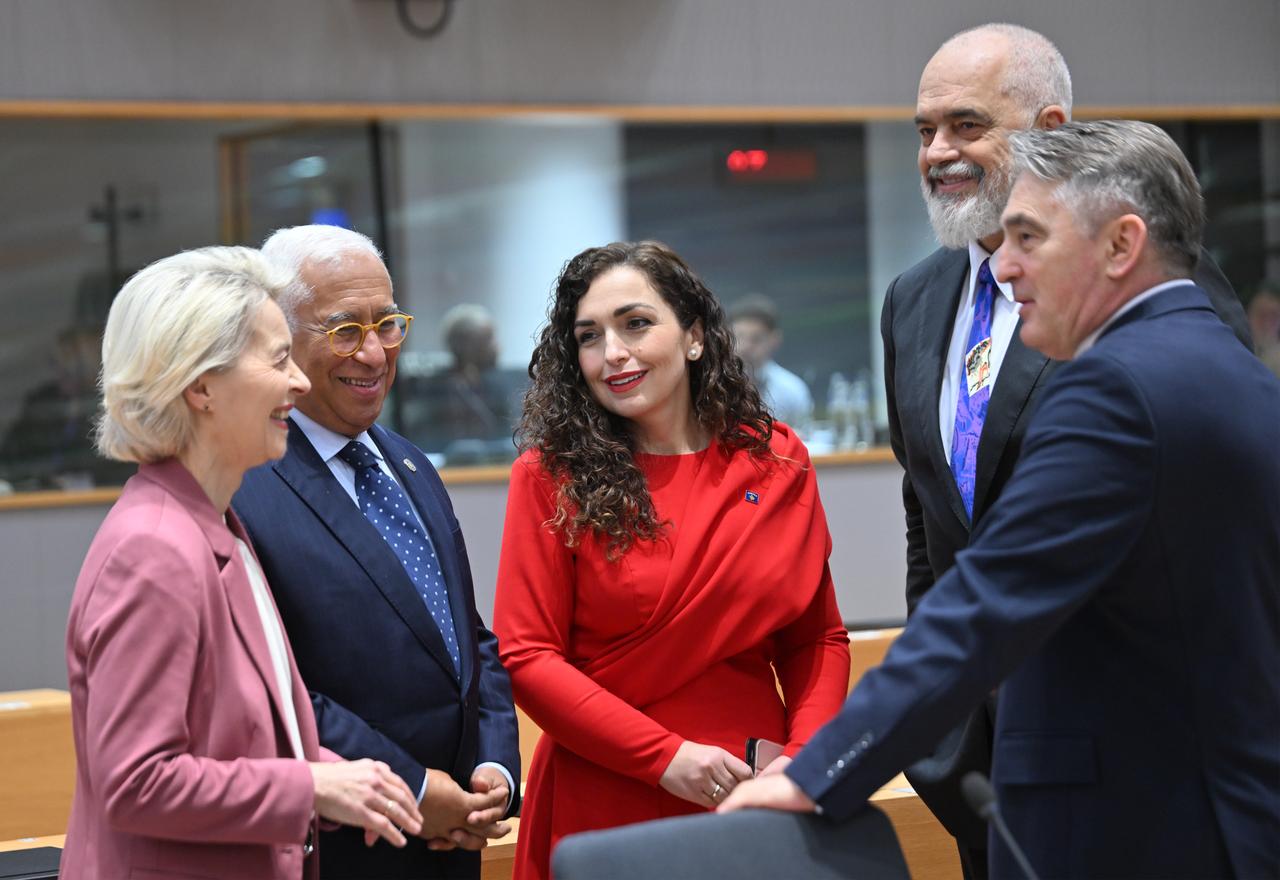
Meanwhile, Brussels offered a rare carrot to Kosovo. European Commission President Ursula von der Leyen delivered "good news," announcing the lifting of punitive measures imposed on Pristina in June 2023.
These measures, which included the suspension of financial aid, were a response to violence in northern Kosovo.
For Kosovo, this removal eliminates a major political and financial obstacle. However, while the EU linked the decision to de-escalation, the measures were politically perceived in Kosovo as disproportionate and asymmetrical from the start. Crucially, while this restores aid, it does not resolve the core issue.
Kosovo still remains the only country in the region without EU candidate status.
Costa also highlighted progress elsewhere: Albania has opened all negotiating clusters, Bosnia and Herzegovina has adopted its Reform Agenda, and North Macedonia is taking steps toward regional connectivity. The EU pledged in 2003 to integrate these nations.
Over two decades later, only Croatia (2013) has crossed the finish line. However, what Costa said after the declaration is perhaps more noteworthy than the text itself: "We share more than geography with the Western Balkans. We share responsibility for Europe’s security.”
It seems the EU has finally grasped that a stable Balkans is a security imperative, not just a bureaucratic project. With the Russia-Ukraine war grinding on and the U.S. prioritizing its own agenda, Brussels can no longer afford to neglect the region.
But recognizing the importance of the region is different from having the capacity to integrate it. The geopolitical necessity is real, but after 20 years of empty words, the question remains: Is the momentum real?


 Set as preferred source
 Set as preferred source


 2 min read

 1 min read