Newsletters




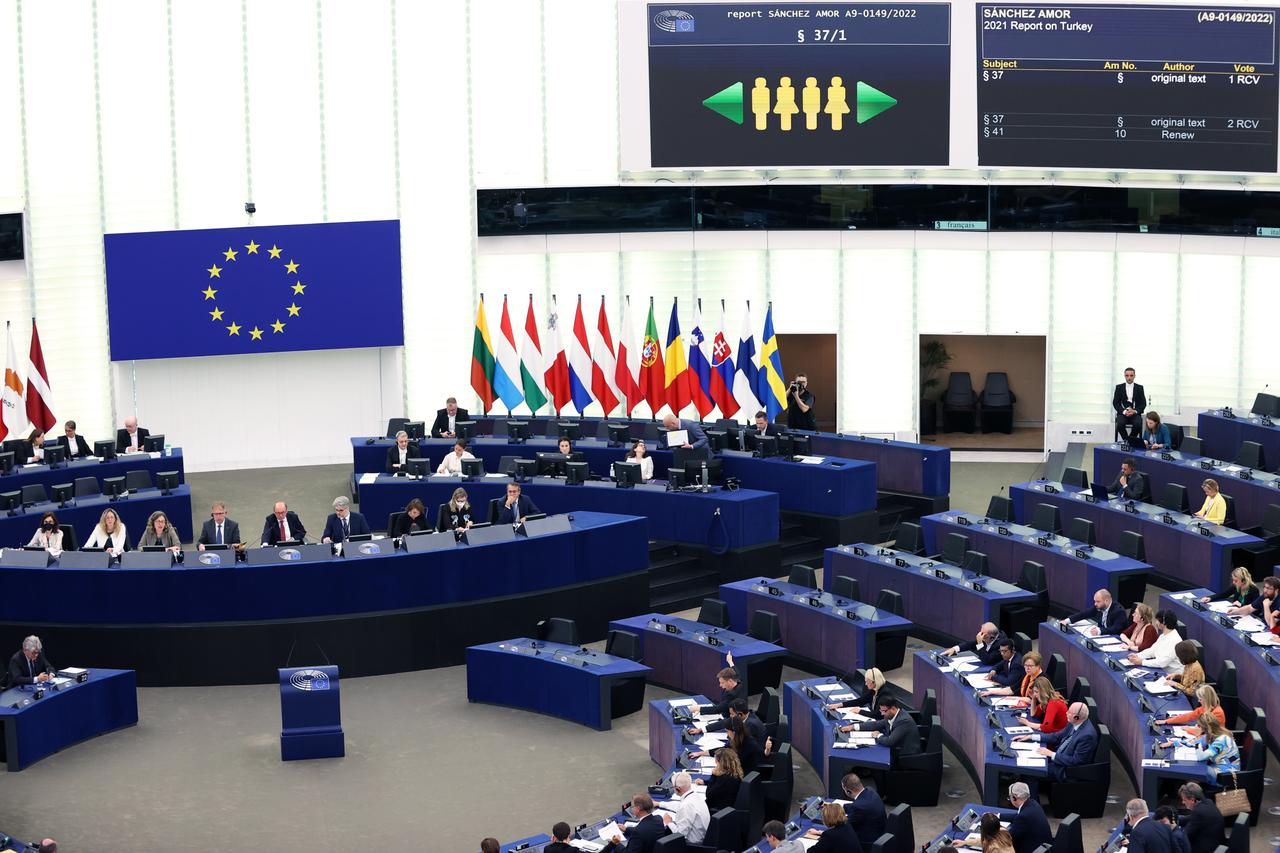
The European Parliament calls its annual Türkiye progress report a tool for "democratic oversight" and "accession process monitoring." In practice, it has become something else: a political manifesto that picks sides in Mediterranean and Aegean disputes under the cover of neutral assessment.
The problem runs deeper than tone. The report systematically misreads international law, cherry-picks treaty provisions, and ignores inconvenient judicial precedents.
The 2025 Türkiye Report, adopted on June 17 with 381 votes in favor, 107 against, and 171 abstentions, offers perhaps the most striking example of this structural tendency.
The rapporteur mechanism within the Committee on Foreign Affairs exercises a decisive influence over the report's preparation process.
The overwhelming majority of amendments tilt toward Greek and Greek Cypriot positions, producing a discernible asymmetry in the sections of the text relating to the Eastern Mediterranean.
In disputes involving both parties, Türkiye's legal arguments are qualified with words such as "claim" or "demand," while the opposing side's position is conveyed in predominantly neutral or approving language.
This method, described in academic literature as "framing asymmetry," seriously undermines the report's claim to objectivity.
As Türkiye's Ministry of Foreign Affairs noted in its statement following the report's adoption, the text appears to have been "prepared within the framework of a deliberate political agenda," with the positions of Greece and the Greek Cyprus reproduced through the rapporteur's pen.
The section of the report devoted to the Eastern Mediterranean characterizes Türkiye's Blue Homeland doctrine as an "expansionist" political project that is "contrary to international law."
This characterization stems from an incomplete interpretation of the provisions of the 1982 United Nations Convention on the Law of the Sea (UNCLOS) concerning the continental shelf and exclusive economic zone regime.
Türkiye'sdecision not to ratify UNCLOS doesn't leave it without a legal footing—it opens a different one. The principle of equity, which remains fully valid under customary international law, allows Türkiye to advance a position that the convention itself cannot simply override.
The jurisprudence developed by the International Court of Justice (ICJ) since the 1969 North Sea Continental Shelf judgment places the disproportion between coastal lengths, geographic configuration, and the need to give balanced consideration to the rights of the states concerned at the centre of the delimitation process.
The 1985 Libya/Malta Continental Shelf judgment established that small islands cannot claim full continental shelf rights against mainland states with large coastal lengths, and that in such cases, disproportion must operate as a corrective factor.
In the 2009 Romania v. Ukraine Black Sea Delimitation judgment, the complete exclusion of Snake Island from the delimitation calculation clearly confirmed that small islands producing disproportionate maritime entitlements against large continental landmasses is incompatible with the principle of equity.
It is precisely this accumulated jurisprudence that puts the Greek position under pressure. The claim that small islands sitting opposite the Anatolian coast can generate an EEZ covering a vast stretch of the Mediterranean is not settled law—it is a contested proposition. The report cites none of this case law. That omission is not neutral.
The report dismisses the 2019 maritime agreement between Türkiye and Libya as "a unilateral and illegal step." But the characterization barely survives scrutiny. The memorandum is a binding international agreement, concluded by two sovereign coastal states on the basis of mutual consent, and registered with the United Nations. Calling it unilateral is a contradiction in terms.
To describe a delimitation agreement concluded by a third state as "illegal" directly conflicts with the fundamental principle of treaty law, "pacta tertiis nec nocent nec prosunt"; an agreement does not create rights or obligations for states not party to it, but this does not nullify the validity of the agreement between the parties.
The same report that condemns the Türkiye-Libya agreement raises no objection to the Greece-Egypt maritime deal. Both rest on identical legal foundations: bilateral consent between coastal states. The selective outrage is not a legal judgment—it is a political one.
The section of the report concerning the Aegean addresses multifaceted issues such as the breadth of territorial waters, the scope of airspace, and the military status of islands within a one-dimensional framework.
Greece's grounding of its right to extend its territorial waters to 12 nautical miles in Article 3 of UNCLOS is accepted in the report without question; Türkiye's characterization of such a step as a casus belli, with due regard for the Aegean's nature as a closed sea, is conversely presented as a position contrary to the prohibition on the threat of force set out in Article 2(4) of the U.N. Charter and legally without merit.
This gets the legal reality wrong. Türkiye's 1995 parliamentary authorization was a conditional, pre-emptive response to a unilateral Greek act—not an executive threat of force. As long as it remains unimplemented, it simply does not meet the threshold the U.N. Charter sets for that designation.
Furthermore, while Article 3 of UNCLOS grants states the right to extend their territorial waters up to 12 nautical miles, it does not stipulate that this right must be exercised without exception and regardless of geographic context.
Articles 122 and 123 of UNCLOS explicitly require coastal states of enclosed or semi-enclosed seas to cooperate and give due regard to one another's interests when exercising their rights.
The Aegean is an exceptional geography in which the distance between the territorial waters of the coastal states does not exceed 24 nautical miles at many points and thus sits at the heart of this definition.
The question of the demilitarized status of the islands is not raised in any part of the report.
Articles 12 and 13 of the 1923 Treaty of Lausanne and the 1947 Treaty of Paris explicitly regulate the demilitarized status of the Eastern Aegean islands and the Dodecanese.
The military build-up observed on these islands in recent years constitutes a violation of treaty provisions, yet this matter is not examined in any section of the report.
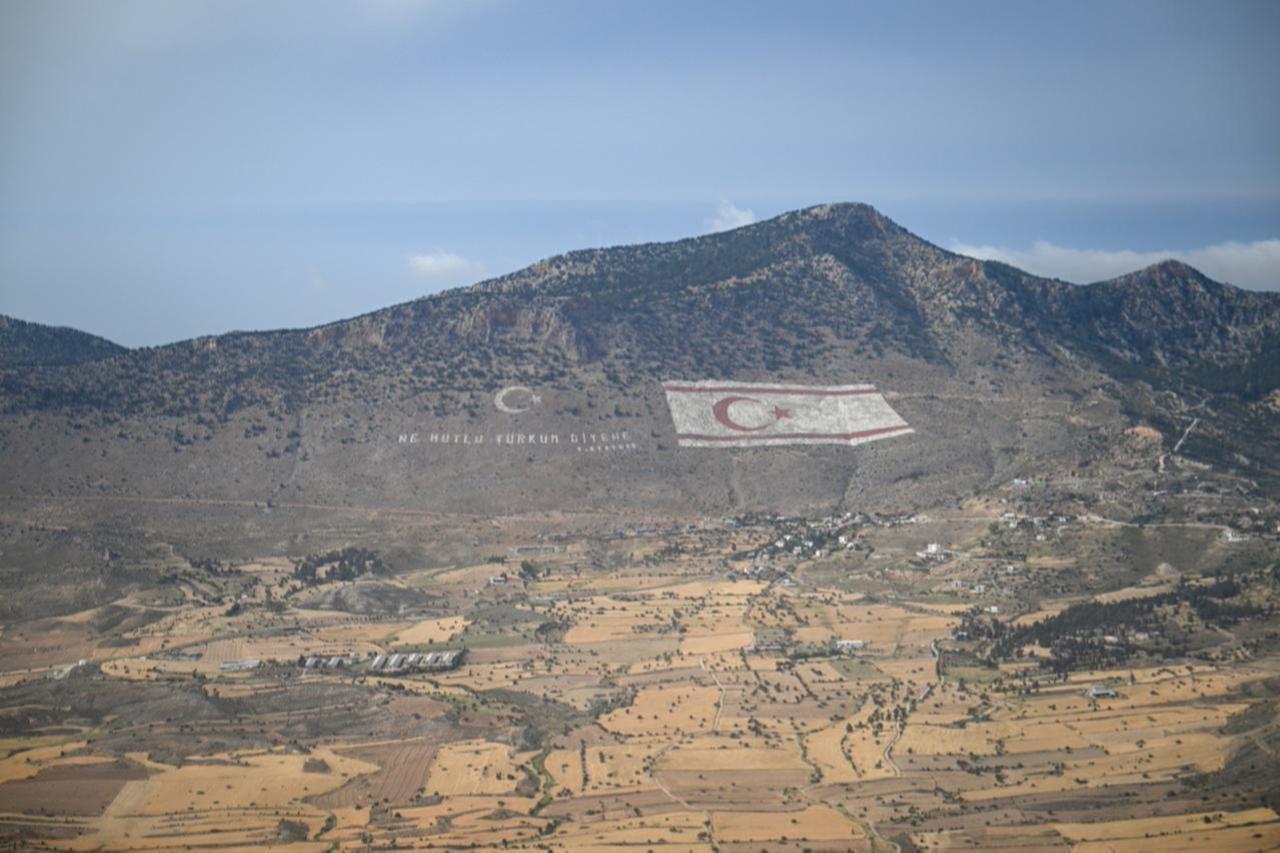
On Cyprus, the report is drafted in a language that ignores the bicommunal partnership structure established by the 1960 Treaties of Establishment, Guarantee, and Alliance.
The 1963 attempt by Greek Cypriots to unilaterally rewrite the island's constitutional arrangements—and the systematic exclusion of Turkish Cypriots from public life that followed—is the legal origin of the division. None of this appears in the report. Instead, the Greek Cypriot Administration is treated as the island's sole legitimate representative, as though the other half of the story simply doesn't exist.
In the 2004 referendum, Turkish Cypriots voted to accept the Annan Plan. Greek Cypriots rejected it. The EU then admitted the divided island's southern part regardless—a sequence of events documented in U.N. Security Council resolutions.
The proposal for a two-state solution is characterized as "a step undermining the process," while the responsibility of the party that has caused the federal model to stall for more than thirty years is not questioned in any way.
Article 26 of the report calls on Türkiye to recognize the public use of the "Ecumenical" title of the Ecumenical Patriarchate of Constantinople and to accept the Patriarchate's international legal personality; the reopening of the Halki Seminary is presented alongside these demands.
This framing deliberately conflates two structurally distinct issues. The demand for ecumenical status produces political and legal consequences that clearly extend beyond the framework of the 1923 Treaty of Lausanne.
While Articles 37-45 of Lausanne cover provisions relating to minority rights, the Patriarchate is nowhere mentioned in these articles in its capacity as an ecumenical authority.
Ismet Inonu, who conducted the Lausanne negotiations on behalf of the Turkish Parliament, made clear that the Patriarchate would remain solely a local religious institution serving the Greek Orthodox community in Istanbul.
Within the framework of Turkish law, the Patriarchate continues to exist as an institution subject to domestic law, devoid of political and administrative privileges, and managed by a Turkish national clergyman. What is being demanded is a transfer of status that departs entirely from this framework.
The historical origins of the title "Ecumenical" lie in the religious hierarchy of the Byzantine period, and this title was used even during the Ottoman period solely as an expression of religious respect.
Granting the Patriarchate international legal personality raises the prospect of establishing within Türkiye's sovereign territory an institution subject to a foreign legal order, a prospect that creates direct tension with the principle of the state's territorial integrity and sovereignty.
The insistence of Western states on securing "ecumenical" status for the Patriarchate of Constantinople as a means of counterbalancing Moscow's influence in the Orthodox world demonstrates that the issue extends well beyond the framework of religious freedom.
 2 min read
The bilateral disputes between Türkiye and Greece and the GCA are handled in the report across a broad spectrum stretching from migration to airspace, with a similar legal imbalance.
Greece's pushback actions in the Evros region and the Aegean islands, documented even in Frontex's own internal reports, are reduced in the text to a footnote addressed in extremely softened language.
Routine Turkish flights in international airspace are flagged as "tension-raising." Greece's claim to airspace that exceeds U.N. aviation body ICAO standards goes unmentioned. If the report applied its own logic consistently, it would have to scrutinize both. It scrutinizes one.
The question of "grey zones" in the Aegean, namely the sovereignty status of islands, islets, and rocks not covered by the Treaties of Lausanne, Paris, and cession, is not mentioned by name in any section; this structural ambiguity, which came to the fore with the 1996 Kardak crisis, continues to be among the least addressed sources of tension in the Aegean.
The same asymmetry runs through the energy section. Türkiye'sseismic surveys and drilling in waters it claims as its EEZ are "tension-raising." The identical activities carried out by Egypt, Greece, and Greek Cyprus in the same waters are not criticized once.
Singling out one party in a sea where the legal boundaries are genuinely contested significantly weakens the report's methodological consistency.
So long as the fundamental principles of international law, namely equity, "pacta tertiis," "pacta sunt servanda," and sovereign equality, are not consistently applied in the preparation of the report, it will not be possible for the text to function as a diplomatic instrument.
In current practice, the bulk of the report is shaped by the bargaining process between political groups, with international legal expertise relegated to a secondary position.
The perpetuation of this legal imbalance makes it harder for the EU to assume a credible mediating role in regional problems, while reinforcing Türkiye's tendency to shape its relations with Brussels according to political conjuncture rather than legal foundations.
Reversing this process, which serves neither party's long-term interests, is possible only through the reinstatement of legal consistency and mutual recognition.
The balance of power and the legal regime in the Eastern Mediterranean will continue to be one of the important items on the international agenda in the period ahead.
The European Parliament has a legitimate role to play in this process — but only if it maintains methodological objectivity. As it stands, it doesn't contribute to resolving regional disputes. It deepens them.


 Set as preferred source
 Set as preferred source


 1 min read