Newsletters


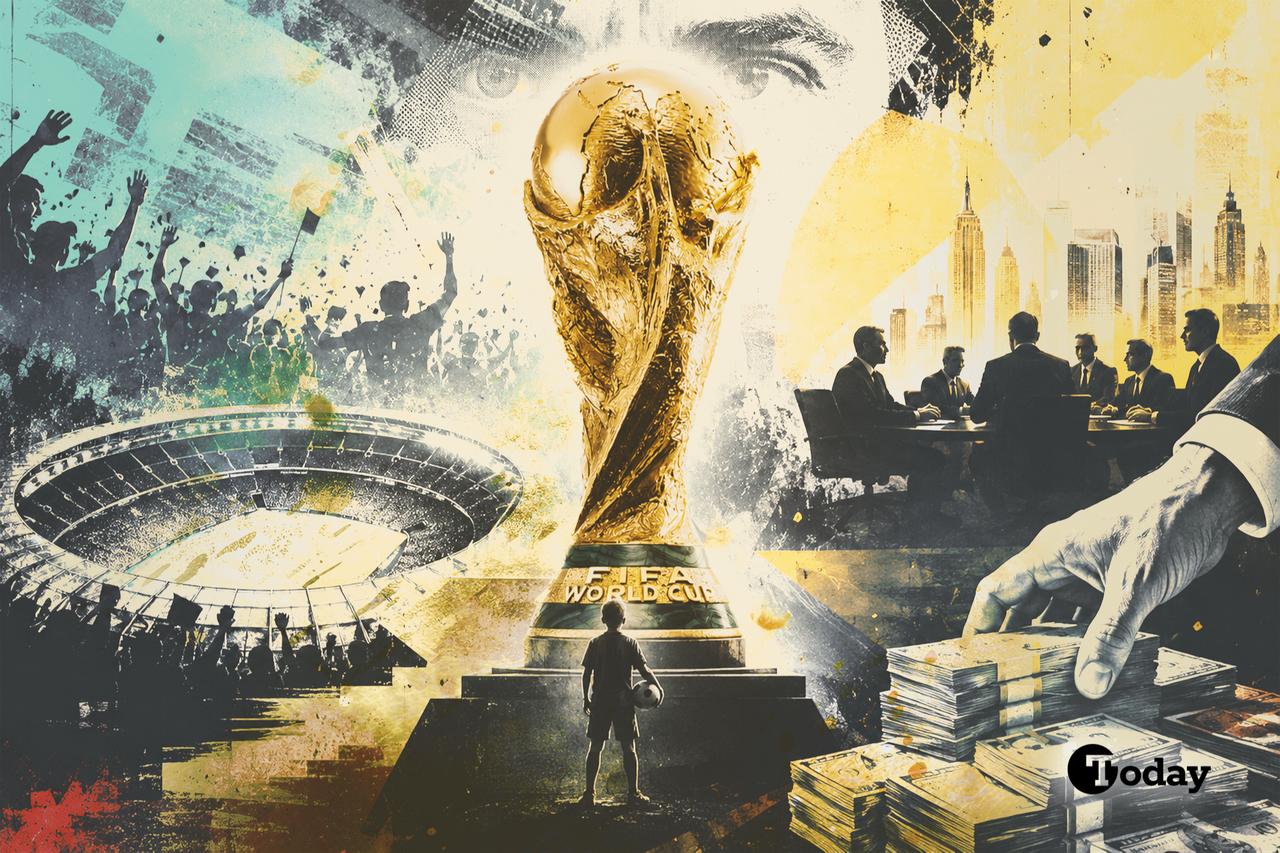


There comes a point in every great $13 billion global amusement—legal, illegal, or comfortably hovering between the two—when the people running it stop worrying whether anyone believes their story behind the profit margin.
Welcome to the never-ending story of the 2026 FIFA World Cup.
FIFA has its cash. The sponsors have their visibility. The broadcasters have bought their certainty. Politicians have posed for photos. Entire bureaucracies have committed themselves to outcomes presented as inevitable long before they occur.
At this point in the month-long competition, public opinion is meaningless. Like the weather, FIFA’s fiscal antics are something to observe through reinforced glass rather than anything capable of altering the route.
The football will be magnificent. That’s the complication. A match can still suspend time. A last-minute winner can still make strangers embrace one another as if they’ve survived the sinking of the Titanic.
The sport continues to produce moments so wholesome that they seem celestially inspired. Wrapped around those instants, however, is a commercial apparatus so vast and unapologetic that it appears less interested in football than in discovering how many times the game can be repackaged, resold and monetized before anyone notices the trick.
Somewhere at the center of this machinery sits the 18-karat gold FIFA World Cup Trophy itself, gleaming beneath spotlights as the modern Maltese Falcon. Governments pursue it. Corporations chase it. Administrators shadow it. Entire cities rearrange themselves around its arrival.
Like the famous black statuette of literature and cinema, the trophy’s power resides in the conviction that it possesses power. The chase is more important than the object. Vast sums are spent. Extraordinary accommodations are made. Public resources are redirected.
The trophy travels from city to city while an army of sponsors, consultants, brokers, hospitality firms and intermediaries follows in its wake, each convinced that proximity to the object confers legitimacy, profit or prestige.
“The cheaper the crook,” detective Sam Spade said of those chasing the falcon, “the gaudier the patter.”
The complaints surrounding the tournament are familiar enough. Ticket prices untethered from ordinary reality. Dynamic pricing systems that transform supporters into market opportunities. Fans discover that availability and affordability occupy different universes.
Photos of empty seats appear alongside declarations of unprecedented demand. Each controversy arrives with a brief burst of outrage before disappearing beneath another press release celebrating growth, engagement or record revenues.
None of this is particularly surprising. Every major institution attracts criticism. What is remarkable is the apparent irrelevance of the criticism itself.
Once upon a time, there was an assumption that embarrassment mattered. Newspapers exposed excess. Television panels expressed outrage. Politicians demanded answers. Executives became nervous. That notion now feels antique, a relic from an era when public disapproval represented a meaningful threat rather than an unavoidable operating condition.
FIFA understands something its critics do not: outrage only matters when it can be converted into consequences. Otherwise, indignation becomes background noise, another atmospheric disturbance moving harmlessly across the radar.
“You might say the Falcon belonged to the King of Spain" is how the Fat Man Gutman flippantly described the prized trophy. “But I don’t see how you can honestly grant anybody else clear title to it,” he snarled, “except by right of possession.”
Folks can grouse about who owns the World Cup. The media can mock the spectacle. Instagram can circulate photos of empty seats and describe them as evidence of FIFA’s failure.
Failure for whom? The sponsors will advertise. The broadcasters will broadcast. The hospitality suites will fill with dignitaries congratulating one another on the success of an event declared successful years ago.
A nightmare requires fear, and fear requires consequences. It’s difficult to identify any penalties that actually await FIFA, certainly any consequences that the Swiss-based organization doesn’t have the money to buy its way out of.
The public believes it is watching a sporting event. Increasingly, it’s watching a financial instrument disguised as one. That observation sounds cynical only because the disguise remains so effective.
The transaction arrives wrapped in patriotism. The extraction comes packaged as a celebration. The invoice wears a mascot costume. Football's genuine emotional power performs the same function as stage lighting in a theater, directing attention toward the spectacle while leaving the machinery in darkness.
FIFA President Gianni Infantino doesn’t need everyone to be happy. He doesn’t even need most people to be happy. He merely needs enough people to watch while whinging.
And tune in they will. The World Cup remains too compelling, too emotional, and too culturally important to fail.
Infantino understands clout. He’s the Sam Spade in FIFA’s version of “The Maltese Falcon,” whose author, Dashiell Hammett, described Hollywood’s most famous gumshoe as looking “rather pleasantly like a blonde Satan.”
Although Infantino is as bald as FIFA's $170 Official Adidas Trionda Pro Game Ball, the federation's top kick ruthlessly grasps that football's beauty protects his richly endowed bureaucracy.
Neither interpretation is false. One scales more effectively. Critics, however, argue about ownership—not legal ownership, but cultural ownership. They’re asking who the game belongs to.
The prickly answer is that the game belongs to whoever can monetize it most effectively. The language of shame, propriety, and public obligation sounds antiquated beside the language of growth targets, market demand, and revenue projections.
To question the hustle is to reveal oneself as a romantic. The objection is to demonstrate insufficient appreciation for the modern order.
So let the cash registers sing, and the supporters grumble about whether any of this still belongs to them.
By now, the answers are beside the point. The trophy has transcended sport. It drifts through history like the Maltese Falcon, a glittering totem of desire that drives otherwise sober institutions into fits of greed, vanity, and national delirium. Presidents covet it. Corporations worship it. Countries reorganize themselves around the trophy's arrival as if preparing for the visitation of some golden deity.
For a few brief weeks, whole populations will surrender to the fever dream. Billions will be gambled, promises made, scandals buried, and reputations wagered for the privilege of lifting a piece of metal into the night sky.
"It’s the stuff that dreams are made of," Sam Spade said of his Falcon. He might just as easily have been talking about the World Cup trophy: a golden phantasm powerful enough to send governments, billionaires, and millions of otherwise rational people charging off in pursuit, convinced that this time, somehow, the dream will belong to them.


 Set as preferred source
 Set as preferred source


 4 min read