Newsletters




Most commentary on the 2026 NATO Summit in Ankara has focused on Ukraine, European defense spending, and Türkiye’s position within the alliance. That is understandable.
The summit reaffirmed Article 5, announced major procurements, and placed defense-industrial production at the center of NATO’s future posture.
But beneath the familiar Euro-Atlantic headlines, Ankara also exposed a deeper shift: the Indian Ocean is becoming the corridor through which European security, Gulf stability, and Southeast Asian maritime order increasingly meet.
This does not mean NATO is moving into Southeast Asia or that the alliance has created an ASEAN strategy. NATO Secretary General Mark Rutte was careful to say in his post-summit press conference that closer engagement with Indo-Pacific partners does not mean extending Article 5 into the region.
However, his explanation pointed to a broader reality. He said the Euro-Atlantic and Indo-Pacific theaters are increasingly interconnected and that cooperation will focus on the defense industry, innovation, standards, and defense spending practices.
The connection, then, is not mainly territorial. It is industrial, technological, maritime, and infrastructural.
Consequently, Ankara discussions carry major implications from the Gulf to Malacca.
The Ankara Summit Declaration did not mention Southeast Asia. It did, however, mention the Strait of Hormuz, calling on Iran to respect freedom of navigation. For Southeast Asian economies, this is not distant geography.
Energy routes, shipping, insurance, and naval deployments connect the Gulf to the wider Indian Ocean, the Andaman Sea, the Malacca Strait, and the South China Sea. When NATO discusses Hormuz, it is speaking about one of the western gates of the Indo-Pacific maritime system.
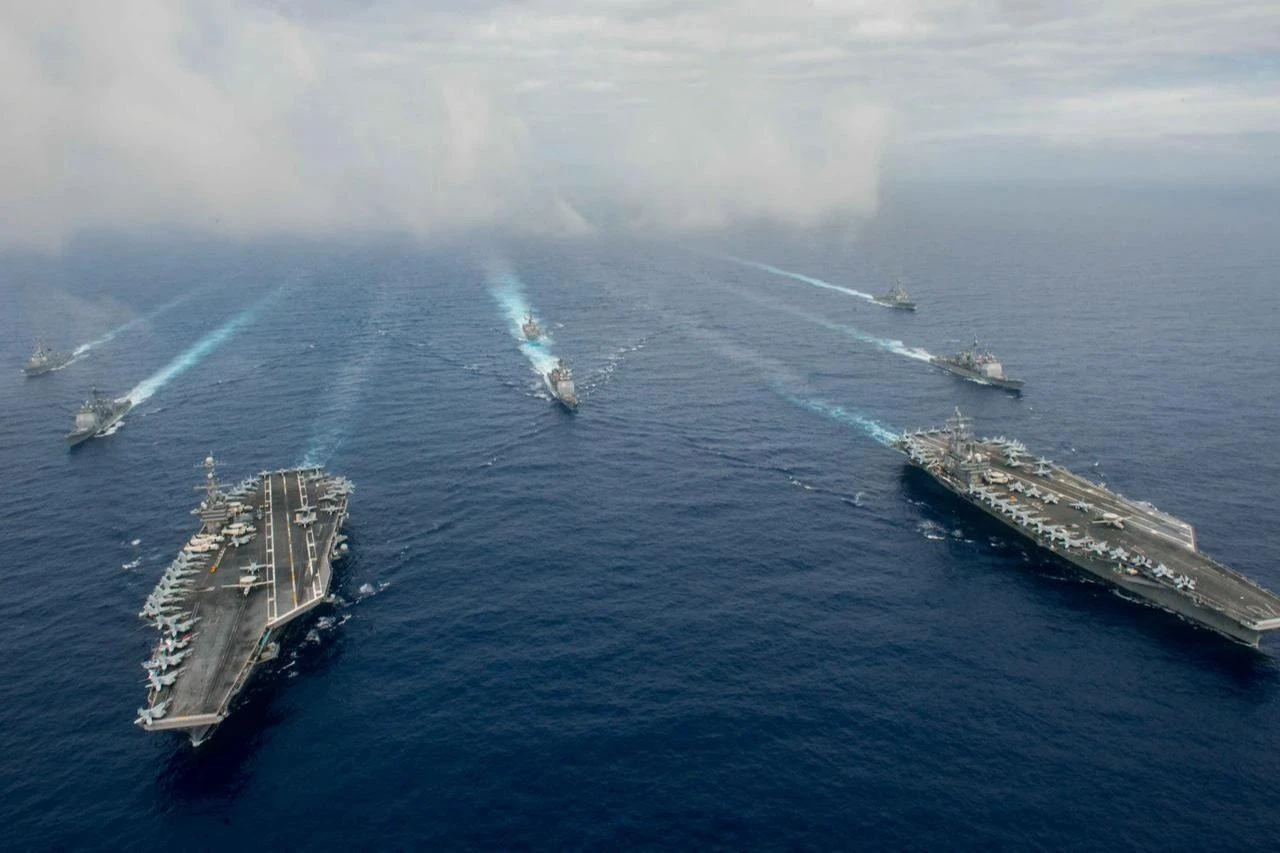

At Ankara, NATO announced the procurement of the Triton uncrewed aircraft to enhance maritime surveillance, alongside joint procurement moves involving airborne warning systems and the NATO Drone Edge initiative, which focuses on counter-drone systems and drone-operator training. These decisions are designed for NATO’s own deterrence and defense.
But their wider significance lies in standard-setting. When NATO and its partners invest in high-end surveillance and counter-drone ecosystems, they help define operational standards that other Western-aligned security networks may later adopt.
The Quad is already moving in this direction in the Indian Ocean. In May 2026, Quad foreign ministers launched the Indo-Pacific Maritime Surveillance Collaboration, initially focused on the Indian Ocean Region.
This builds on the Indo-Pacific Partnership for Maritime Domain Awareness, which aims to help regional states monitor their waters and develop a common operational picture. NATO is not the Quad, and the Association of Southeast Asian Nations (ASEAN) is not NATO.
But the technological overlap is clear: maritime surveillance, fusion centers, unmanned platforms, satellites, AI, and shared operating pictures are becoming the common infrastructure of security cooperation.
India sits at the center of this transformation. It is a Quad member, a major Indian Ocean power, and a state that wants strategic autonomy rather than bloc politics.
New Delhi’s maritime role is growing through the Indian Ocean Region component of surveillance cooperation, through the Information Fusion Centre-Indian Ocean Region, and through deeper security ties with Southeast Asian states.
For ASEAN, this creates a dilemma. The ASEAN Leaders’ Declaration on Maritime Cooperation reaffirmed external cooperation while insisting that ASEAN Centrality should remain at the forefront of collaborative initiatives.
This is the classic ASEAN method: engage everyone, avoid formal alignment, and keep regional architecture open. But technological and defense-industrial integration outside ASEAN is moving faster than the bloc’s consensus-based mechanisms.
The danger for Southeast Asia is not that NATO warships will suddenly appear as a permanent force in ASEAN waters. The subtler issue is that the region’s maritime environment may become shaped by standards and systems developed elsewhere.
If the western Indian Ocean becomes more closely integrated into Euro-Atlantic security planning, and if the Quad strengthens maritime surveillance across the Indian Ocean, Southeast Asian states will face new pressure.
They may not be asked to join an alliance, but they will be pushed to choose compatible systems, intelligence partners, drone standards, and maritime data networks.
Türkiye brings genuine leverage to the table, not just a host site. As a NATO member, Ankara holds sway across the Black Sea, the Eastern Mediterranean, and the Middle East, backed by a rapidly growing defense sector and expanding diplomatic ties in the Gulf.
NATO’s Istanbul Cooperation Initiative already links the alliance with Bahrain, Kuwait, Qatar, and the United Arab Emirates, while Oman and Saudi Arabia have also participated in selected formats. The Istanbul Cooperation Initiative (ICI) is not a military alliance, but it gives NATO a political and practical channel into the Gulf security environment.
Türkiye’s cautious centrality lies in its ability to speak simultaneously to NATO, the Gulf, Ukraine, Russia, Iran, and Asian partners, without reducing itself to a simple extension of any one bloc.
Ankara uses this caution as a deliberate strategic method. Türkiye wants to remain indispensable to NATO while preserving room for independent diplomacy. It wants to deepen defense-industrial exports without being trapped in a single geopolitical camp.
For Southeast Asia, the lesson from the NATO summit is not that NATO is coming East. The lesson is that decisions taken in Ankara can travel eastward through technology, production, maritime surveillance, Gulf stability, and Indian Ocean partnerships.
The Strait of Hormuz, the Arabian Sea, the Bay of Bengal, the Malacca Strait, and the South China Sea are not separate strategic maps anymore. They are parts of one maritime-security chain, a reality that Ankara has brought into sharper focus.
Ankara did not formally create this chain. But it made it more visible.
The summit’s real significance for Southeast Asia is not found in a single sentence of the declaration. It is found in the convergence of three moves: NATO’s defense-industrial acceleration, its deepening cooperation with Indo-Pacific partners, and its renewed attention to maritime chokepoints beyond Europe.


 Set as preferred source
 Set as preferred source



 7 min read