Newsletters


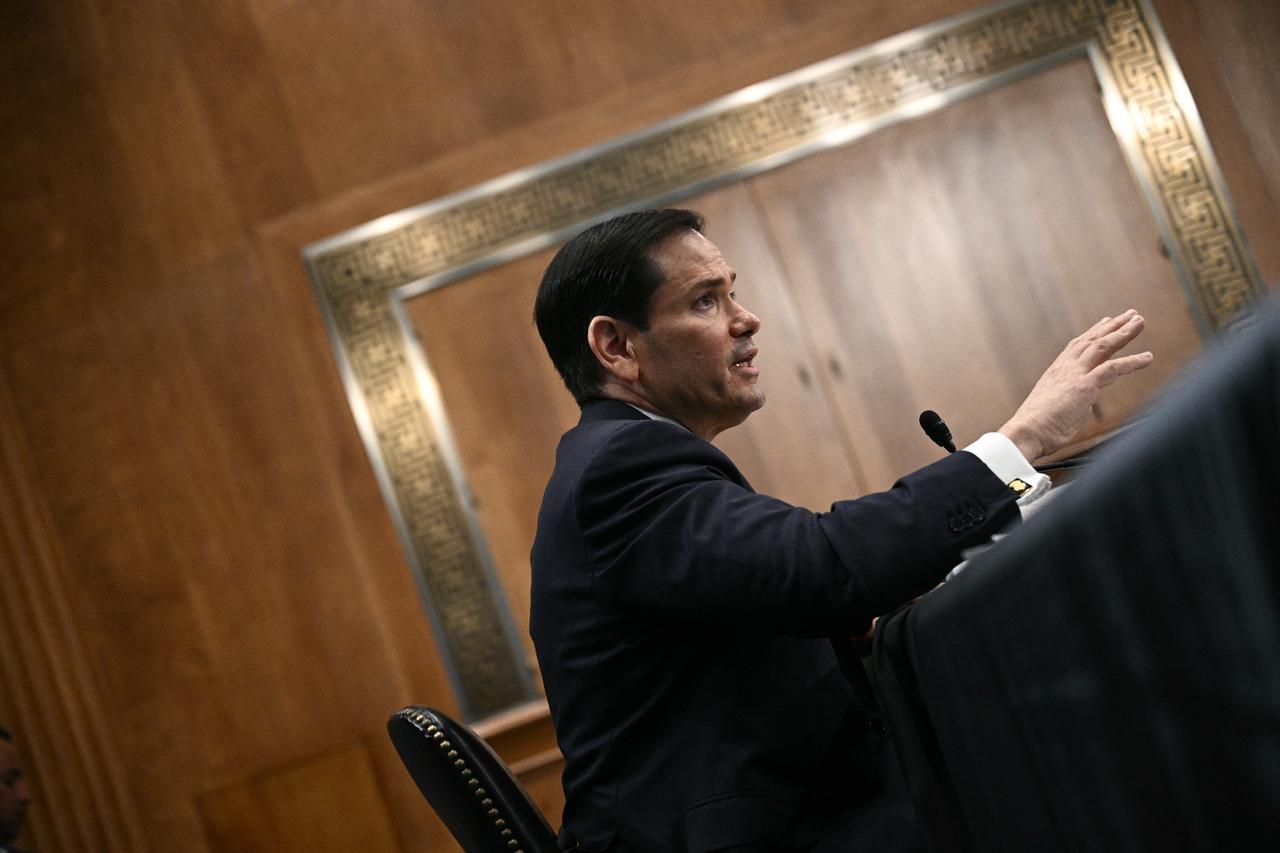


Secretary of State Marco Rubio’s June 3 testimony before the House Foreign Affairs Committee produced one of the clearest signals yet of how the Trump administration is approaching Greenland. Asked whether Greenland is part of Denmark, Rubio did not give the straightforward answer international law would suggest. Instead, he replied: “For now.”
The short phrase matters because Greenland’s status is not in question under international law. Greenland is a self-governing territory within the Kingdom of Denmark, its autonomy fixed by the 2009 Self-Government Act. It is not an unclaimed space, nor a sovereignty dispute open to outside powers. Rubio did not explicitly reject that reality. However, by adding “for now,” he implied that Danish sovereignty over Greenland could be treated as temporary or open to revision.
This is why the remark should not be dismissed as a joke or a casual aside. The contrast with 2019 is instructive.
Then, Trump proposed simply buying Greenland. He saw it as a "large real estate deal." The blunt claim drew an equally blunt rebuff. Prime Minister Mette Frederiksen called the idea "absurd," and Trump canceled a state visit to Denmark in protest. A direct challenge to sovereignty invites exactly that kind of backlash.
A phrase like “for now,” however, allows room for denial while still sending a message. It introduces doubt without requiring a formal policy declaration.
Rubio’s other remarks during the hearing reinforced that impression. He referred to Greenland in strategic terms, highlighting its importance for missile defense and collective security. Defending the president's interest, he said, a place is far easier to defend "when you have control and complete control of it.” That language matters because it shifts attention away from the political rights of Greenland’s people and toward the island’s military value.
That value is not imaginary.
Greenland hosts the Pituffik Space Base, the Pentagon's northernmost installation. The U.S. Space Force uses this base for missile warning, missile defense, and space surveillance, since the shortest path for a missile flying between Russia and North America passes over the island.
As Arctic ice retreats, new shipping routes are opening, and Greenland's rare-earth deposits, among the world's largest but still without a single commercial mine, are drawing fresh strategic interest. Washington frames all of it through its contest with Russia and China in the High North. The strategic logic is real. The question is whether it should be allowed to crowd out the people who live there.
This is not a small distinction. Once a territory is discussed mainly in terms of control, utility, and defense, the people living there risk disappearing from the conversation. Greenland becomes less of a political community and more of a strategic asset. In that framework, questions of consent and self-determination begin to look secondary.
Greenlandic actors have consistently pushed back against that logic. When the United States opened a new consulate in Nuuk on May 21, relocating from a cabin on the city's edge to a large downtown office, hundreds marched through the capital. They turned their backs to the building they had already nicknamed "Trump Towers," carrying signs that read "U.S.A., stop it."
Prime Minister Jens-Frederik Nielsen has said his country is "not an object of the rhetoric of superpowers" and asked for "no more fantasies about annexation." Foreign Minister Múte B. Egede insisted that Greenland's future is decided in Greenland. In a January 2026 statement, the leaders of all five parties in Greenland's parliament declared that Greenlanders wish to be neither Americans nor Danes. This is an important contrast. Washington’s language, at least in Rubio’s remarks, is the language of strategy and power. Greenland’s response is the language of political legitimacy and consent.
Denmark's response has run on two tracks.
First, it has answered with money rather than words. Since Trump revived his claim, it has committed roughly $6.3 billion to Arctic defense across two packages, ordered new patrol vessels and 16 more F-35s. In a striking irony, it moved to buy American air-defense missiles in a sale Washington cleared in December but had not yet finalized. Denmark's own defense intelligence service now lists American repositioning alongside Russian and Chinese activity as a source of Arctic uncertainty.
On the second track, the diplomatic one, Denmark and Europe still reach for international law, alliance language, and reassurance. These remain necessary tools. However, they are often slower and less politically effective than provocative rhetoric. A suggestive phrase delivered in a televised hearing can unsettle public understanding much faster than a formal rebuttal can restore it.
The timing also makes Rubio’s remark more significant.
At the same hearing, he called the NATO summit that Türkiye will host in Ankara on July 7 and 8 "probably the most important meeting in NATO's history.” Against that backdrop, “for now” does not sound like an isolated comment. It sounds like a sign of a broader political mood in which even the territory of allies may be discussed as strategically negotiable.
That should concern not only Denmark but also all U.S. partners who assume that alliance membership guarantees respect for sovereign boundaries. This is not new either.
Trump first floated buying Greenland in 2019, revived the demand in late 2025, and for much of the past year refused to rule out economic or even military pressure, before publicly taking the option of force off the table at Davos in January. Six years on, the goal is unchanged. Only the grammar has softened.
None of this means that a transfer of sovereignty is imminent. Denmark retains the legal claim, and Greenland's population has been clear—with around 85% opposing union with the United States in an early-2025 Verian poll for Berlingske and Sermitsiaq—that it wants control over its own future.
However, political language still matters. That is the real danger of Rubio’s “for now.”
It did not change Greenland’s status. However, it did suggest that a settled question could be rhetorically treated as unsettled if strategic interests demanded it. If the United States wants to reassure allies, it should do the opposite.
Washington should state clearly that Greenland’s future belongs to Greenlanders, that Denmark’s sovereignty is not a bargaining chip, and that strategic concerns do not override democratic consent. Anything less will deepen doubts about how this administration understands alliances, territorial integrity, and the limits of power.


 Set as preferred source
 Set as preferred source


 2 min read

 1 min read