Sign in
 Newsletters


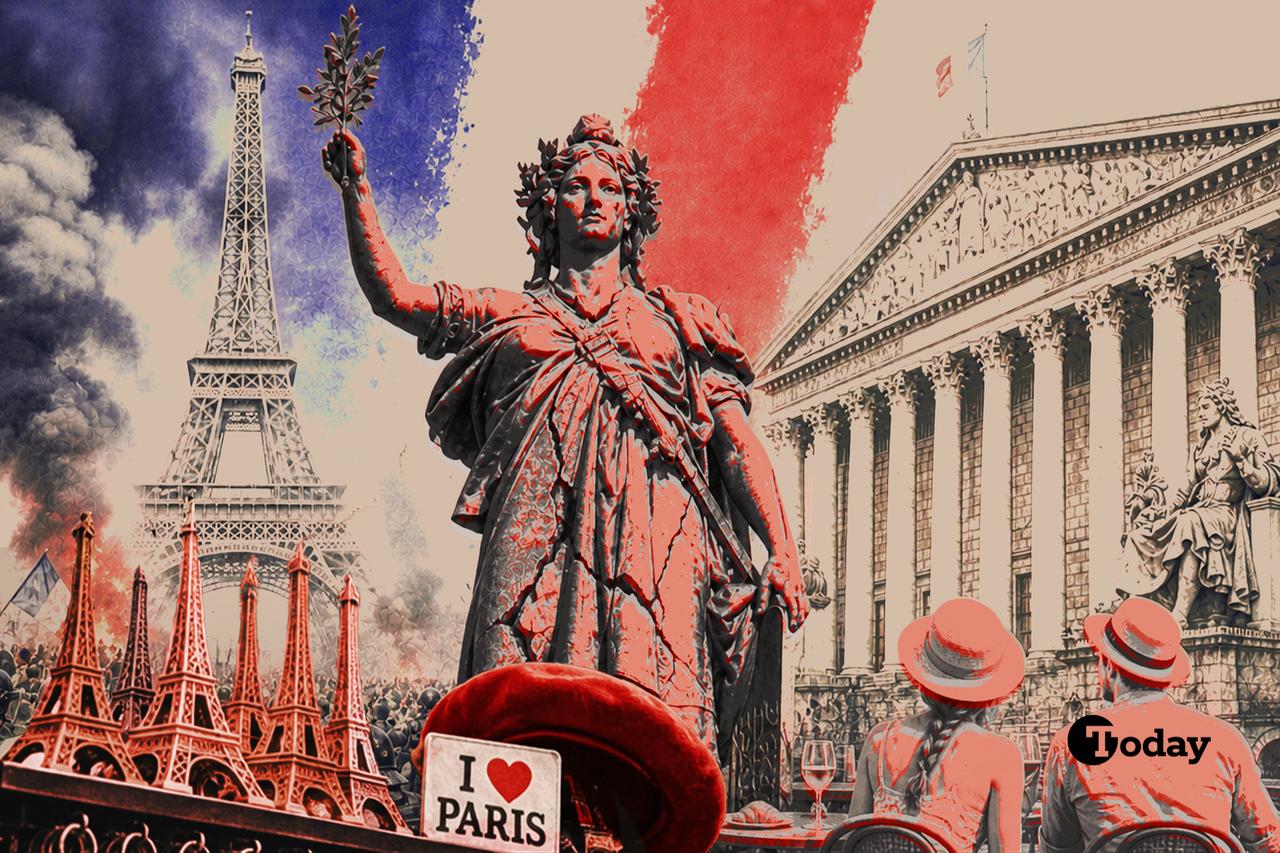


France, once the cradle of modern democracy and now the epicenter of global tourism, is preparing to elect a president. The country is in the middle of a national nervous breakdown that makes the French Revolution look like an orderly shareholders’ meeting.
France attracts around 100 million foreign visitors annually, an extraordinary achievement for a nation whose citizens have spent two centuries demonstrating their contempt for practically everybody, including one another.
Tourists come for the Eiffel Tower, Versailles and €14 café crèmes. The locals get taxes, strikes, riot police and the privilege of financing a government they despise.
This is "France For Dummies."
The presidential election begins April 18, 2027. Emmanuel Macron, constitutionally barred from a third consecutive term, is preparing to leave the Elysee after 10 years of discovering that governing the French is considerably harder than selling them overpriced coffee.
His potential successors include Marine Le Pen, heiress to France’s most durable political family business; Jean-Luc Mélenchon, the revolutionary left’s permanently outraged grandfather; and former prime minister Édouard Philippe, whose principal handicap is looking like somebody who might actually know what he’s doing.
The National Rally leads the presidential field, although Marine Le Pen's legal troubles could leave her protégé Jordan Bardella carrying the family banner.
To understand this carnival, forget the opinion polls, Macron’s economic charts and the Parisian conviction that civilization began with the Michelin Guide.
Pierre Poujade is where to start.
In 1953, Poujade, a stationery shopkeeper in Saint-Cere, southwestern France, declared war on the tax inspector.
His rebellion spread among shopkeepers, artisans and small businessmen convinced that Parisian bureaucrats were taxing them into extinction.
Poujade grasped something generations of French intellectuals, armed with doctorates and taxpayer-funded research grants, had overlooked: People who cannot pay their bills don't particularly care whether the economy is doing splendidly.
He also understood that the easiest way to start a political movement is to identify somebody everybody already hates. In France, the tax collector has enjoyed that distinction since Louis XIV.
Poujade organized the Union de Defense des Commercants et Artisans, transforming provincial tax rage into a nationalist crusade against politicians, financiers and anybody suspected of having a comfortable government pension.
His slogan was magnificently economical: "Sortez les sortants!" Throw the incumbents out.
In January 1956, the Poujadists captured 52 National Assembly seats with roughly 12% of the vote. Not bad for a man whose previous political experience consisted largely of selling paper and telling tax inspectors where to go.
Among his deputies was Jean-Marie Le Pen, a 27-year-old former paratrooper discovering that resentment was a commodity with an inexhaustible domestic market.
Poujade opened a shop selling political anger. Le Pen turned it into a franchise.
There was ugliness behind the counter: xenophobia, antisemitic attacks on Pierre Mendès France and nostalgia for French Algeria.
Poujade offered the seductive proposition that France’s troubles were caused by corrupt politicians, outsiders and the betrayal of national greatness.
His movement eventually collapsed. Le Pen's ambitions didn't.
In 1972, Jean-Marie co-founded the National Front, whose ideological inheritance and political machinery his daughter Marine would eventually repackage as the National Rally.
Poujade didn't find today's far right. He was something more consequential: the man who helped demonstrate how tax rage, wounded patriotism and hatred of parliamentary privilege could become a national political enterprise.
Seventy years later, the franchise is approaching the Élysée.
The customers haven't changed much.
In 2018, Macron's proposed fuel tax increases ignited the Yellow Vest rebellion, an uprising of motorists, pensioners and workers whose principal relationship with the French state involved receiving bills from it.
They occupied roundabouts, demolished speed cameras and occasionally transformed Parisian boulevards into expensive demonstrations of French pyrotechnical expertise.
Macron produced charts demonstrating that his reforms would eventually make everybody richer. The protesters produced bank statements demonstrating that they were currently broke.
This is the difficulty with macroeconomics. It explains why you're prosperous while standing in a supermarket wondering whether you can afford cheese.
The president offered a grand national debate. The demonstrators wanted purchasing power and an explanation for why the republic could afford everything except their lives.
The Yellow Vests weren't uniformly right-wing. But their revolt exposed Poujade's old fracture: provincial France against metropolitan authority, taxpayers against technocrats, ordinary citizens against the people who keep telling them how fortunate they are.
Then there's the republic's other magnificently bumfuzzling contradiction. France insists every citizen is equal, which is a beautiful principle, especially if you don't inquire too closely into whether everybody is treated equally.
In the immigrant-heavy banlieues, economic exclusion, contested policing and religious tensions have repeatedly turned republican promises into street battles.
France's reluctance to classify citizens by race or religion reflects the nightmare of Vichy, when bureaucratic identification helped facilitate persecution and deportation.
Under French law, unlawfully recording personal information about someone's racial or ethnic origins or religious beliefs can earn you five years in prison and a €300,000 fine.
 1 min read

There are exceptions, naturally. This is France, where even the right to count people comes with government paperwork.
But refusing to count social divisions doesn't make them disappear.
Le Pen campaigns on immigration, identity and security. Mélenchon courts immigrant-descended and economically marginalized voters.
The center tries to reconcile everybody while demonstrating that reconciliation is another word for paralysis. Macron's disastrous 2024 snap-election gamble left the National Assembly fractured and the president politically diminished.
France now faces enormous public debt, exhausted public services and politicians promising more spending, lower taxes, better hospitals and somebody else to pay for everything.
Unfortunately, somebody else appears to have left the country.
The National Rally understands Poujade's essential lesson: Anger is the one French commodity that appreciates faster than government debt.
Poujade died in 2003. He would recognize today's France immediately: the taxes, the bureaucrats, the furious shopkeepers and the politicians insisting everything is under control.
France spent 70 years treating Poujadism as a political disease; it had successfully quarantined it. Now its descendants are entrenched in parliament, its grievances dominate the national conversation and the old establishment is discovering that the quarantine failed.
The contagion has become the national health policy.
And while the French squabble over who gets to pronounce the Fifth Republic dead, the undertakers are already measuring the coffin.
Tourists will keep photographing the palace gates, buying miniature Eiffel Towers and congratulating themselves on visiting the birthplace of liberty.
Whatever happens to French democracy, at least one national institution looks certain to survive.
My money's on the souvenir industry.


 Set as preferred source
 Set as preferred source



 1 min read