Sign in
 Newsletters


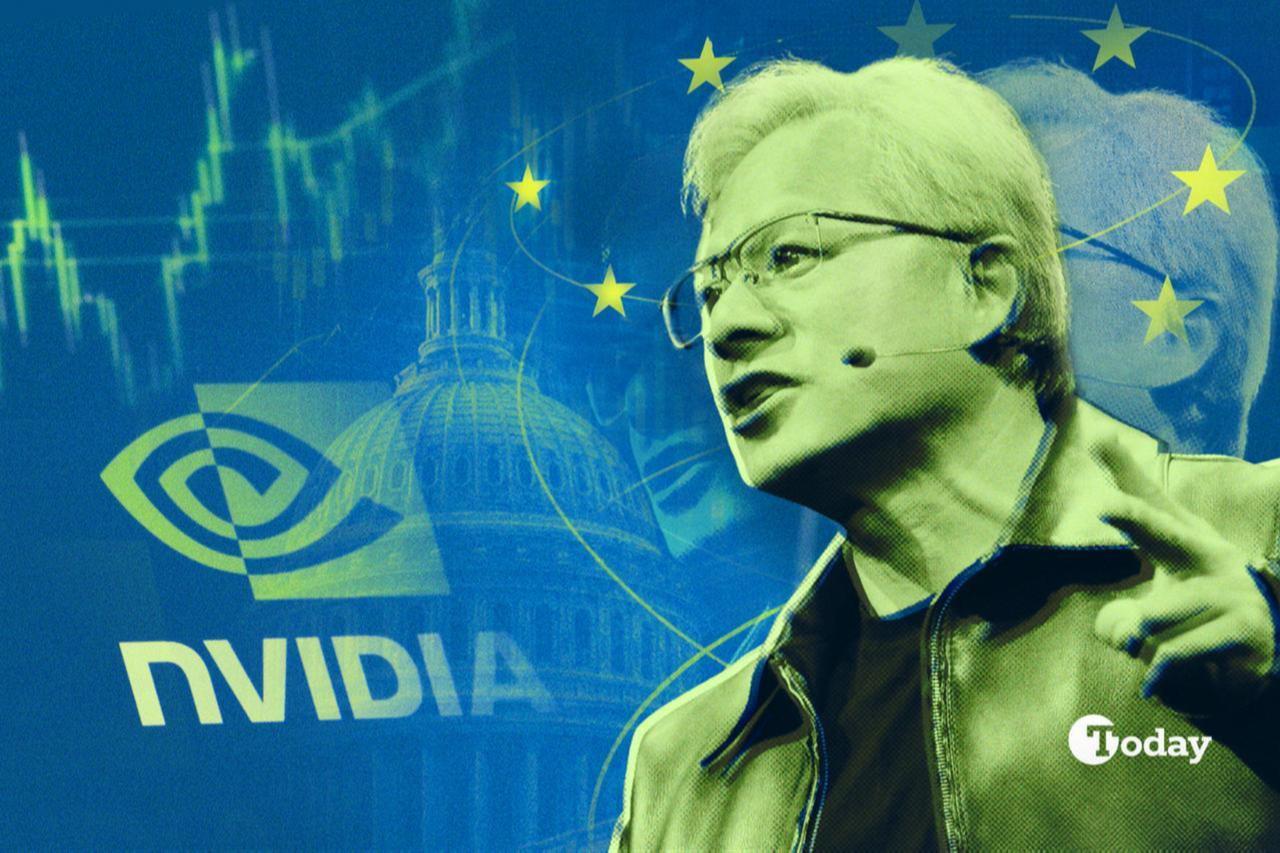


Jensen Huang, back at the helm of NVIDIA, is definitely the accessory of the moment.
Blame it on the growing valuations of artificial intelligence companies or the shrinking dimensions of corporate governance. Either way, the effect is the same: there is Jensen, Jensen, Jensen everywhere.
When Sotheby’s auctioned one of Huang’s signature black leather jackets for nearly $1 million in July, the auction house ventured into the territory of religious iconography. “This is not only a jacket. It is the uniform of a ‘first believer’.” Apparently, faith, like leather, becomes more valuable with the right degree of exposure.
On Wall Street, Nvidia shares rose more than 30% following his reinstatement. At OpenAI, Sam Altman had already made practically a fetish out of the ousted-and-reinstated chief executive look he introduced in his 2023 comeback.
At the White House, Donald Trump dropped his national security reservations to create an exaggerated pro-market effect.
More recently, Elon Musk lent his support to Huang’s return, and at Nvidia, Harvey Jones managed to wear two diametrically opposing board positions less than a week apart.
Corporate fig leaves that adapt to changing political circumstances appear to be in higher demand right now. And there is nothing that adapts to a changing narrative—or, more importantly, that makes a changing narrative—like Jensen Huang.
Indeed, there is a Jensen for everyone and every governing body (including yours).
For Silicon Valley, he is the visionary entrepreneur; for Wall Street, the engine of prosperity; for Washington, the guarantor of American technological supremacy; and for Beijing, potentially a rather more complicated proposition.
Case in point: Trump, whose approach to dressing up economic policy might be summarized by one rule—always be Jensening.
The U.S. president demonstrated what this meant by adding Jensen to his expansive vision of American technological dominance, with some inflatable market valuations underneath. Nvidia’s board then did much the same to an outfit composed of an internal investigation over a corporate code of conduct and a national security controversy.
Neither look appeared specifically designed to accommodate Jensen—there were, after all, some rather inconvenient ethical constraints involved—but each outfit took on a new, well, pulled-together form precisely because of Jensen.
Which is his magic.
Sure, it’s nice to have a tiny, tightly controlled corporate governance structure à la Sam Altman and use your board to underscore that fact, but increasingly, the chief executive makes the board, not the other way around.
This is true no matter the institutional shape: public corporation, nonprofit or democracy.
Jensen, after all, is a trompe l’oeil tool for creating economic contour. He draws a line that might not otherwise exist between private profit and public interest and can be used to conjure all sorts of illusions: technological sovereignty, national security, limitless growth and so on. Proportion is determined by market capitalization. You just have to understand the geometry behind the abracadabra.
Let’s mull the two-finger rule: Jensen, when attached to the American body politic, should feel like a gentle hug—not too regulated or too exposed. The way to tell if you’ve got it right is to slide two straight fingers between corporate interests and government policy.
You should be able to do it with just a bit of lobbying.
This will keep national security regulations from cutting into profit margins in an uncomfortable and sometimes unsightly way or creating awkward bunching effects in the Nasdaq.
Consider what impression you are trying to convey. If it’s ethical rigor, placing Jensen outside the company should be the goal, as Jones initially demonstrated.
If it is an extra-long market rally, aim for a higher valuation (but keep the definition of accountability relatively narrow, lest it end up interfering with quarterly earnings). Conversely, if you want to combat a shortening of investor confidence, reinstating Jensen will create a convincing illusion of institutional continuity.
“The Board believes Jensen is the right person to lead NVIDIA and that his reinstatement is in the best interests of our stockholders, employees, partners and customers,” said Jones, Nvidia’s chairman, on Monday. National security, it seems, was not part of the ensemble. One must be careful not to over-accessorize.
Colette Kress, who briefly cat-walked the more restrained, Jensen-free corporate silhouette, has already returned to her previous position.
And, of course, Jensen, himself.
If you want him to be the focus of a national security investigation, select a contrasting background of suspected Chinese espionage, advanced semiconductor exports and the activities of Megaspeed.
If you want him to fade into the background, opt for a more monochromatic narrative of American innovation and economic patriotism.
If the look you are going for is 1980s power player, an exaggerated market capitalization and a tightly cinched regulatory apparatus will do the job.
If what you want is ’90s corporate minimalism, a black leather jacket and a conspicuously thin layer of oversight have the right vibe.
There are few individuals in a democracy who occupy so little space in its constitution yet can do so much to determine how it is worn.


 Set as preferred source
 Set as preferred source


 1 min read

 1 min read