Newsletters




This article was originally written for Türkiye Today’s weekly newsletter, Saturday's Wrap-up, in its June 13, 2026, issue. Please make sure you subscribe to the newsletter by clicking here.
Picture this: it’s the summer of 2020, the Eastern Mediterranean is boiling, and France claims that a Turkish frigate locked its targeting radars on French warship Courbet—three separate times. Paris painted a dramatic scene of Turkish sailors hastily strapping on bulletproof vests and manning their light weapons, ready for an imminent showdown.
Türkiye brushed the whole cinematic saga off as completely "groundless." It was a moment that felt less like a slow-moving French art film, and more like a high-stakes Hollywood thriller. A classified NATO investigation into the incident ultimately found no evidence of wrongdoing by Türkiye. It was indeed a surreal scenario.
Back then, the real catalyst for this high-seas drama was Libya. French- and UAE-backed warlord Khalifa Haftar had just launched his grand "zero-hour" operation—a definitive offensive that, embarrassingly, never quite reached zero hour. Today, the tides have turned, and Haftar is friendlier toward Ankara than ever.
Fast-forward to Jan. 10 of this year, and the dynamic hasn't lost its sarcastic edge. Turkish Foreign Minister Hakan Fidan openly mocked France regarding its posturing on Syria and its vocal support for the YPG. Fidan said, "Frankly, I do not think the policies developed by some small countries in Europe—participating in certain operations under the U.S. umbrella and then trying to dictate terms—contribute either to themselves or to the region... We frankly do not take seriously countries that speak out to advance their own interests by using America's power and hiding behind it."
In April, French President Emmanuel Macron had stated, "If a threat comes from Türkiye, we will stand by Greece." This anxious statement came at a time when Türkiye’s potential place in Europe's broader security architecture was up for discussion.
It seems Emmanuel Macron’s France, much like a middle-aged man who suddenly buys a red convertible, takes up kite-surfing, and talks excessively about his "legacy"—is once again soul-searching in the Eastern Mediterranean.
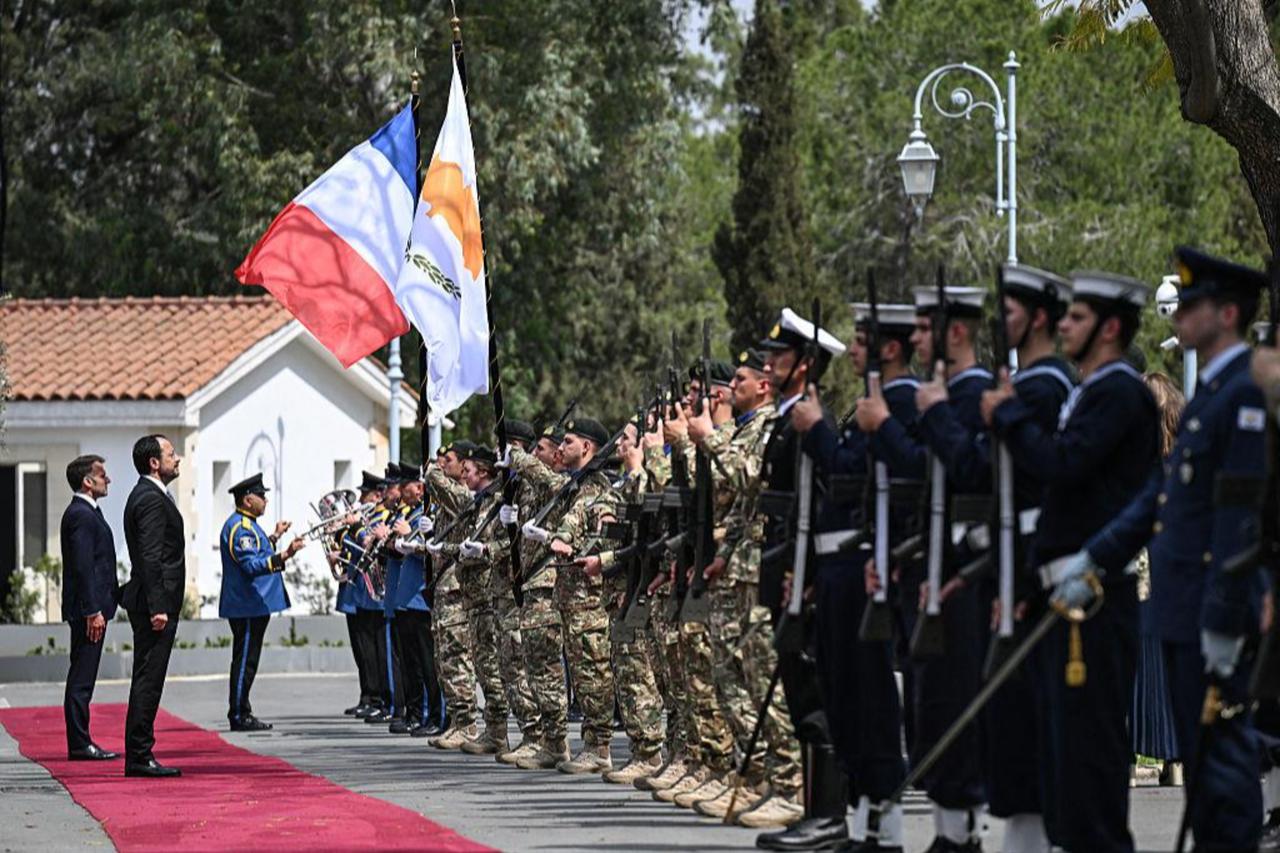
But what is the latest sign of this geopolitical identity crisis? Look no further than the June 8 Status of Forces Agreement (SOFA) signed between France and the Greek Cypriot Administration. For Macron and Greek Cypriot leader Nikos Christodoulides, the pact is framed as a vital step toward the "shared European objective of strengthening the EU's strategic autonomy.”
The French Senate outlines the deal as a robust legal framework for deploying troops, logistics, and naval assets to Greek Cyprus for operations and the evacuation of foreign nationals from a highly volatile Middle East. Nicosia’s push for deeper Western defense ties also follows a wake-up call in March, when a Hezbollah-linked drone struck a British airbase on the island. The agreement is also reported to include provisions on military technology sharing and joint exercises.
However, for France, reacting to a regional war in the Middle East by alienating the largest military power in the Eastern Mediterranean is a questionable strategy. From Ankara's perspective, France has no historical guarantor status in Cyprus. Turkish officials view the SOFA as a violation of the 1960 treaties that unilaterally alters the island's delicate balance.
Furthermore, Türkiye argues that by constantly expanding its military footprint, Greek Cyprus is gradually transforming into a heavily militarized staging ground, and practically a protectorate of Israel and Western powers.
While France busies itself with selling arms to Nicosia, Türkiye is operating on an entirely different strategic frequency. Things are definitely getting more vital and existential for Türkiye. If you want to understand real regional balancing, look at President Recep Tayyip Erdogan’s remarks regarding Israel last week. Erdogan said Israeli strikes in neighboring countries have “reached to a point where they also threaten Türkiye.” His speech fundamentally served as an early caution against Israel's increasingly aggressive efforts to reshape the Middle East around a Tel Aviv-centered order. When Erdogan stated this week that Türkiye's security begins not just at its borders but extends to Aleppo, Damascus, and Beirut, it was not just fiery rhetoric toward Israel.
Ankara is navigating genuine, existential geopolitical shifts: preparing for an anticipated U.S. drawdown, managing Iranian proxies, and checking an expansionist Israeli policy that threatens to ignite the entire region.
In contrast, France often appears to be playing the role of a neighbor who keeps throwing debris over the fence just to remind you they still live next door. It alienates a non-hostile, powerful neighbor, yet shrinks from acting meaningfully against the one setting the whole neighborhood on fire. In fact, Paris often gives the impression that the two are working in tandem.
By arming the Greek Cypriot Administration, France shifts its mandate toward unnecessary provocation, accelerating the militarization of a divided island. The fallout over this military pact will likely keep the Eastern Mediterranean locked in a cycle of tension.
The unresolved issues in Turkish-European relations remain volatile, with a new complication added to the dossier at a time when an aging, sluggish Europe may find itself needing Türkiye for its own defense.


 Set as preferred source
 Set as preferred source


 5 min read